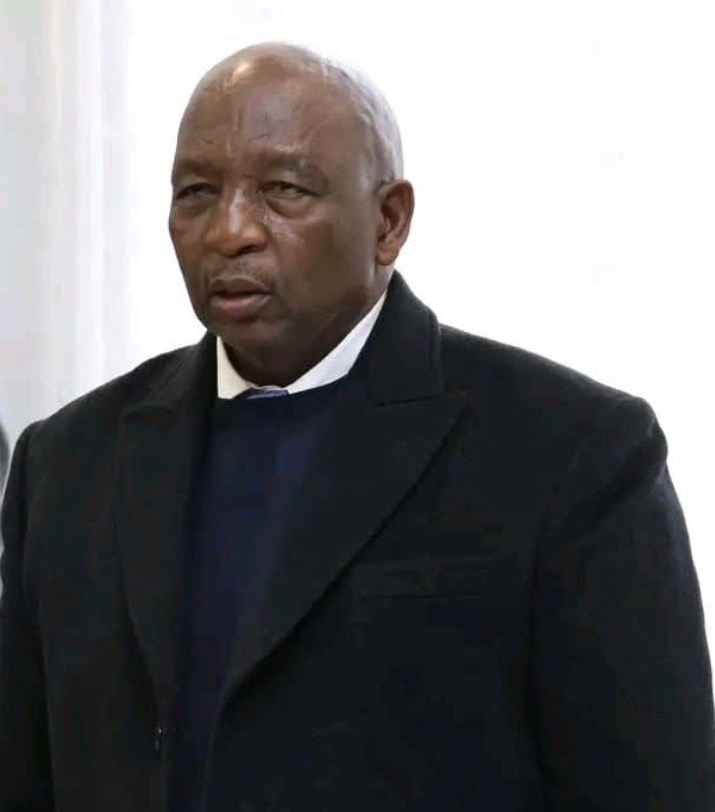
A member of the National Assembly has filed a formal notice of motion demanding that the Right Honourable Prime Minister appear before the House to answer questions on matters of national importance, after what the motion describes as attempts to excuse or prevent that appearance in breach of Standing Order 27.
The motion, filed by Hon. Pastor Remaketse Sehlabaka, contends that any resolution or decision purporting to excuse or prevent the Prime Minister’s attendance before the House is “inconsistent with Standing Order 27, and is therefore null and void.”
Standing Order 27 governs the obligation of the Prime Minister to appear before the National Assembly and submit to questioning by members. The motion asserts that this obligation is mandatory in nature and cannot be waived, suspended, or overridden by a simple majority vote.
“The obligation of the Prime Minister to appear before this House to answer questions and address matters of national importance is mandatory and cannot be waived, suspended, or overridden by a simple majority vote.”
The notice of motion sets out five operative clauses directed at the House, the Prime Minister, and the Clerk of the National Assembly. It instructs the Clerk to communicate the resolution forthwith upon adoption.
Notice of motion · operative clauses
- Declares that the resolution or decision purporting to excuse or prevent the appearance of the Right Honourable Prime Minister before this House is inconsistent with Standing Order 27, and is therefore null and void.
- Affirms that the obligation of the Prime Minister to appear before this House to answer questions and address matters of national importance is mandatory and cannot be waived, suspended, or overridden by a simple majority vote.
- Resolves that any failure by the PM to comply with Standing Order 27 constitutes a breach of the privileges of this House and an erosion of parliamentary oversight.
- Orders that the Right Honourable PM shall appear before this House on the next sitting day designated for questions to the Prime Minister.
- Directs the Clerk of the National Assembly to communicate this resolution forthwith.
The motion frames non-compliance by the Prime Minister as a breach of parliamentary privilege, going further than a procedural objection to characterise any absence as “an erosion of parliamentary oversight.” That framing is significant: a finding of privilege breach can trigger formal censure proceedings and is not subject to the same simple-majority threshold the motion seeks to invalidate.
The filing comes amid broader tensions between the executive and the legislature over accountability mechanisms. Parliamentary question time for the Prime Minister is enshrined in the Standing Orders as a core instrument through which the House exercises oversight of government. Critics of the executive have argued that repeated deferrals of the Prime Minister’s appearances have rendered that oversight function hollow.
If adopted, the resolution would create a direct order of the House requiring the Prime Minister’s attendance, with the Clerk mandated to serve formal notice. Failure to comply with an order of the House would expose the executive to escalating parliamentary remedies.
| Element |
Detail |
| Filed by |
Hon. Pastor Remaketse Sehlabaka, MP |
| Document type |
National Assembly Notice of Motion |
| Governing instrument |
Standing Order 27, National Assembly Standing Orders |
| Operative demand |
PM to appear on next designated PM question day |
| Clerk’s obligation |
To communicate the resolution forthwith upon adoption |
| Characterisation |
Non-compliance described as breach of privilege and erosion of parliamentary oversight |
The Tribune has sought comment from the Prime Minister’s office and the Speaker of the National Assembly. No responses had been received at the time of publication.