


The Tribune’s view
The 2026 FIFA World Cup was sold to the world as the most inclusive tournament in history. What has been delivered, at least for fans and officials from Africa and the Global South, is something closer to its opposite. FIFA owes those it failed a more honest accounting than it has so far offered.
Omar Artan arrived at Miami International Airport on 7 June 2026 with a valid United States visa and a FIFA appointment to officiate at a World Cup for the first time. He had navigated years of football in a country torn by conflict, officiated a continental final between Pyramids FC and Mamelodi Sundowns in Cairo, been named the CAF Men’s Referee of the Year for 2025, and had operated in conditions that would have ended most careers before they began. He had earned his place on football’s largest stage by any measure available.
He was questioned for hours at the airport, detained, and put on a flight back to Istanbul. The US Department of Homeland Security later told Al Jazeera that he had been “determined to be inadmissible due to vetting concerns”, without further elaboration. A State Department official subsequently told AFP that he was “associated with suspected members of terrorist organisations.” No evidence was made public. No appeal mechanism was offered. The first Somali referee to reach a World Cup did not officiate a single match.
His treatment is the starkest single example of what has gone wrong with World Cup 2026, but it is far from the only one. This newspaper believes the pattern of access failures that preceded and accompanied the opening of this tournament demands a serious editorial response, not because it makes for comfortable writing, but because football journalism that ignores it would be failing its readers.
“We are going to play it in a country where some of us do not feel welcome.”
South African journalist to FIFA President Gianni Infantino, Nairobi press conference
The facts, plainly stated
Senegal and Ivory Coast were added to the list of countries with partial US travel restrictions in December 2025, effectively barring fans without pre-existing visas from attending matches. Morocco’s supporters, some of whom had paid thousands of dollars for flights, hotels and tickets, reported visa denials without explanation in the weeks before the tournament. Scottish fans holding approved ESTA travel authorisations had their clearances revoked. Ivory Coast fan groups publicly disclosed that multiple supporters had been rejected despite completed applications. Iranian football federation officials, including FIFA committee members, were denied visas for the December 2025 World Cup draw in Washington and Iran boycotted the ceremony. When visas for the Iranian playing squad finally came through, they arrived ten days before Iran’s first match, with several key administrative and managerial staff still excluded.
The International Sports Press Association wrote to FIFA days before the tournament’s opening to demand intervention in what its president described as “countless” and “unacceptable” cases of accredited journalists being denied entry. African and Iranian journalists holding valid FIFA media accreditations were among those affected. Some African reporters who had been granted single-entry visas faced losing access entirely if their team’s fixtures required travel to Canada or Mexico and back. South Africa’s assistant football coach was initially denied a visa. Iraq’s forward Aymen Hussein was held up at Chicago airport on arrival. The Democratic Republic of Congo’s squad, competing for the first time at a World Cup, was required to observe a 21-day isolation protocol before the tournament due to an Ebola outbreak, a measure that public health officials said was not calibrated to actual epidemiological risk at the individual level.
The strongest counterargument, honestly put
Those inclined to defend the US position will make two arguments that deserve engagement rather than dismissal.
The first is that sovereign nations retain the right to control who enters their territory regardless of any international sporting commitment, and that the US government made a specific carve-out for competing athletes, coaches and tournament officials, the people most directly involved in the football itself. This is legally accurate. The US did not prevent teams from competing. The Iran squad played. South Africa played its opener against Mexico in Mexico City. The football happened.
The second argument is that security vetting is not inherently discriminatory and that at least some of the individual denials, including the case of Omar Artan, involved specific intelligence assessments rather than blanket national origin profiling. This too deserves honest acknowledgment: we do not have access to whatever information the DHS held on Artan, and it is possible, in the abstract, that security concerns were genuine and specific rather than pretextual.
We accept both points. They do not, however, resolve the central problem.
What makes this different
The issue is not merely that the US exercised immigration authority. Every host nation does so. The issue is the pattern of who was affected and how FIFA responded to it.
The countries whose fans and officials bore the heaviest burden of denial are, with few exceptions, from Africa, the Middle East, and parts of South and Central America, the very nations whose qualification for a 48-team World Cup represented a significant expansion of the tournament’s geographic reach. The enlargement of the competition to include nine African nations, first-time qualifiers such as Cape Verde, and historic participants like Somalia in its refereeing delegation was the centrepiece of FIFA’s universality argument for this format. The visa regime operated in direct tension with that argument.
FIFA, for its part, has responded to each incident with variations on the same formulation: that host government decisions on admissibility are outside its control, and that it sought assurances from the US government that qualifying nations would be admitted. Both statements are true. Neither is adequate. When FIFA accepted the US bid for a tournament beginning in June 2026, it did so in the full knowledge that the Trump administration had already, in its first term, implemented travel ban policies affecting the same countries whose fans were ultimately turned away. FIFA had the information it needed to negotiate stronger, legally binding access guarantees or, at minimum, to refuse to place group-stage matches for affected nations exclusively in US cities.
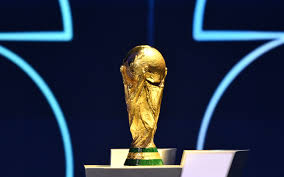
It did neither. Instead, FIFA’s president accepted a gold World Cup trophy from President Trump in the White House Oval Office, attended the presidential inauguration, and characterised the relationship between world football and the US administration as one of partnership. The International Sports Press Association, faced with colleagues being denied entry, used a different word: unacceptable.
What this means for Lesotho and Africa
Lesotho does not have a team at this World Cup. But Basotho footballers, coaches, officials, journalists and fans operate within the same regional ecosystem that has been directly affected, and the country is a member of both CAF and FIFA whose collective voice on governance matters. When a South African journalist feels compelled to ask the FIFA president in Nairobi whether fans from her continent will feel like second-class citizens at the tournament, that is not a fringe concern. It reflects a legitimate and widely held anxiety about whether African participation in global football is genuinely valued or merely tolerated when commercially convenient.
Omar Artan returned to Mogadishu to a stadium packed with Somalis who understood exactly what his exclusion meant. UEFA, to its credit, stepped in within days to appoint him to officiate the European Super Cup in August, between Paris Saint-Germain and Aston Villa. CAF president Patrice Motsepe praised him as having made “Somalia and the entire African continent extremely proud.” The football world, beyond the United States’ borders, knew what it had lost.
What should come next
This newspaper does not argue that the 2026 World Cup should be condemned in its entirety or that the matches now underway are somehow illegitimate. Football is being played and much of it will be memorable. We do not demand that FIFA sever its relationship with the United States, a relationship that funds development programmes across Africa and the rest of the world.
What we do argue is this: FIFA cannot simultaneously claim the mantle of universal inclusion and decline responsibility when its hosting arrangements produce systematic exclusion. The body that drew the 2030 World Cup bidding process and is now contemplating 2034 must enter future host agreements with enforceable access guarantees that cover not only players but fans, officials, journalists, and referees. It must be willing to place this requirement above the political comfort of proximity to powerful governments. And it must be honest with African football federations, not least through their representatives on FIFA’s own committees, about the limits of the assurances it is capable of providing when its commercial interests and its universality claims conflict.
Omar Artan did not deserve what happened to him. The fans from Senegal, Ivory Coast, Morocco, Iran, Haiti and the DRC who could not attend did not deserve it either. FIFA knew the risks. It chose comfort over accountability. The least it can do now is acknowledge that plainly, and commit to doing better before the next host city is announced.
By the Editor | Lesotho Tribune