

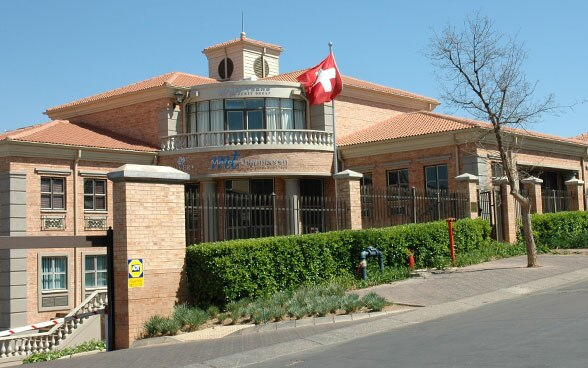
The Labour Court ruled it has jurisdiction to step in and granted every interim order Rets’elisitsoe Lesane sought, freezing a disciplinary hearing convened against him at Lesotho’s mission in Geneva.
THE Labour Court of Lesotho has halted a disciplinary hearing convened against a Ministry of Foreign Affairs and International Relations employee at Lesotho’s mission in Geneva, ruling that it has jurisdiction to intervene and granting all the interim relief he sought.
The applicant, Rets’elisitsoe Lesane, brought the matter on an urgent basis under case number LC/REV/67/2026. The court stayed the hearing pending the final determination of his review, barred the Principal Secretary and officers under his control from proceeding, and ordered the record of the disciplinary proceedings sent to the court and to Lesane’s attorneys within five days.
| Interim order | Effect |
| Stay | The Geneva hearing is suspended until the review is finally decided. |
| Interdict | The Principal Secretary and officers under his control may not proceed with the hearing. |
| Record | The ministry must produce the disciplinary record within five days. |
The three respondents are the Principal Secretary of the ministry, the chairperson of the disciplinary committee and the Attorney General. They filed no answering affidavit. Their only response was a preliminary objection that the court had no power to entertain the matter while the disciplinary hearing was still running. The court rejected it.
Lesotho’s courts ordinarily decline to interfere in disciplinary proceedings before they end. Intervention part-way through is reserved for exceptional cases where a gross irregularity would cause irreversible injustice that a later appeal or review could not fix. Lesane argued that his case met that test.
“Unless exceptional circumstances are present, a court of law may not intervene in ongoing disciplinary proceedings involving an employer and an employee.”
Court of Appeal, Khabele v Chairperson of the Disciplinary Hearing Committee, 2022
He challenged the appointment of the presiding officer. Under the public service disciplinary code, he argued, the chairperson of a hearing must be the head of section of the charged employee, and the wording is mandatory. In his case the Deputy Principal Secretary presided. That, he said, collapsed his right to appeal, because appeals from a head of section are heard by the Principal Secretary.
Lesane also argued that the same officer had chaired a staff meeting at the mission on 19 May 2026, at which grievances that later appeared on his charge sheet were discussed. A person cannot be both investigator and presiding officer, he submitted, and her earlier exposure to the matter disqualified her from hearing it.
He objected to a ruling that converted the hearing from oral evidence to written statements. That, he argued, removed his right to cross-examine witnesses under section 8(4) of the disciplinary code. The charges against him include sexual harassment of the initiator, which he said had also been reported to the police, and he argued that a charge of that nature could not fairly be answered on written statements alone.
Lesane, who is not legally trained, said he had been refused legal representation while the officer prosecuting the case is an admitted legal practitioner. He also objected to rulings that the hearing be kept confidential, that he sign an oath of secrecy, that he not record the proceedings, and that the hearing run outside working hours and on public holidays.
He was represented by Adv T. Lesupi of PILT Legal Chambers.
The interim orders stand until the review is finally decided. The ministry must produce the disciplinary record within five days.
You have 1 free article left this month. Create a free account for 15 articles/month.
Create free account