


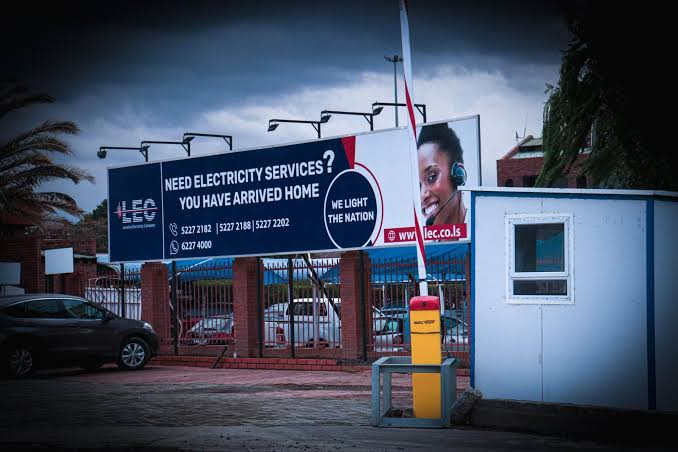
If you’ve followed developments at the Lesotho Electricity Company (LEC) over the past year, you might be wondering—how does a national utility end up in such a tangled mess?
To be fair, managing a public utility is no small task. But LEC’s recent troubles seem less about complexity and more about, well, carelessness. Or perhaps it’s something deeper—systemic governance breakdowns that no one really wants to take responsibility for. Whatever it is, the result is clear: millions of maloti gone, accountability missing, and public trust worn dangerously thin.
Take the recent procurement scandal. LEC reportedly spent M13 million on electrical equipment—meters, keypads, transformers—that, bafflingly, doesn’t work with the company’s current systems. That’s not a small technical oversight. It’s like buying diesel engines for an electric train. According to reports, 3,000 meters and keypads were bought from Landis+Gyr for M6 million. They now sit unused. Same with nine transformers from Power Link Holdings—ordered as Type 11400, delivered as 1142. Wrong specs. Still delivered. No one seems sure why.
And that’s not even the whole story. Apparently, the utility also spent another M5 million on meter-reading software from a company called Jagei (Pty) Ltd. It never worked. Then the company vanished—liquidated. It’s almost farcical. You’d think someone, somewhere, would’ve tested the system or checked if the vendor had staying power. But maybe no one asked. Or maybe they did and pushed ahead anyway.
An internal audit didn’t paint a prettier picture. Around M1.8 million in revenue was lost due to what auditors diplomatically call “collusion” between sales staff and clients. Electricity credits were being loaded without proper authorization. Weak controls, again. And in another corner of the organization, some suppliers were quietly being paid more than they were owed—well above contract prices. There’s little explanation on record. Just missing invoices. It’s that kind of thing that makes you wonder whether incompetence or something less innocent is at play.
You might expect, given this chaos, that Parliament would step in. It did. But LEC’s board, instead of cooperating, tried to stop a Public Accounts Committee (PAC) probe by going to court. Their urgent application to block the investigation was denied. That was back in June. Since then, the PAC, chaired by ’Machabana Lemphane-Letsie, has been digging deeper. But the mere fact that the board tried to halt oversight says a lot, doesn’t it?
Now, here’s where things get tricky—because it’s not just about one or two bad procurement decisions. This all touches on deeper governance issues, the kind ESG frameworks are meant to highlight: board independence, conflict of interest, and regulatory compliance.
Let’s start with the board. By law and by principle, it should act in the public’s interest. But when a board tries to dodge accountability, or defends questionable procurement, its independence comes into question. Who is it protecting—stakeholders or itself?
On conflicts of interest, there’s no smoking gun here. But the repeated failures in procurement and contract management create an uncomfortable fog. For example, how do incompatible products get approved unless decision-makers are either not paying attention—or benefiting in ways we can’t see? It’s hard not to be suspicious.
And then there’s compliance. The Auditor-General issued a disclaimer opinion—the most severe audit conclusion—for LEC’s financial statements. That means auditors couldn’t verify basic figures. They didn’t even have enough documentation to give an opinion. That’s not just poor bookkeeping. That’s a breach of public trust.
Of course, governance reform isn’t easy. It’s slow, messy, and—frankly—unpopular with those benefiting from the status quo. Some insiders argue that the utility is “too politicized” to fix. Maybe. But that also feels like a convenient excuse. Surely there’s a way to insist on transparency without shutting the whole place down?
At the very least, the LEC saga should push for stronger oversight mechanisms. Maybe a real-time digital procurement platform. Maybe an empowered audit committee that actually enforces consequences. Or perhaps—and this might sound too hopeful—a culture shift within public enterprises, one that prioritizes service delivery over internal protectionism.
Still, despite all that’s been exposed, there’s a strange sense of resignation in the public. These stories come and go. The outrage flares up, fades, and then—business as usual. It shouldn’t be that way. Because at the end of the day, these aren’t just accounting errors or procurement quirks. They represent the failure to safeguard public investment in one of Lesotho’s most essential sectors—energy.
And without energy, everything else stalls.
—
This article is part of Lesotho Tribune’s ESG Governance Series. For tips or leads, write to editor@lesothotribune.co.ls
Would you like a follow-up piece exploring the PAC’s findings once the hearings conclude?
You have 1 free article left this month. Create a free account for 15 articles/month.
Create free account