
By Ramahooana Matlosa
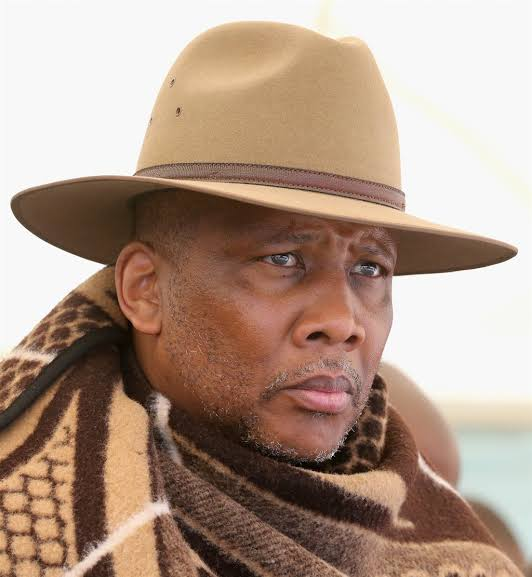
On January 10, 2025, a notable and unexpected development quietly entered the public domain: His Majesty King Letsie III of Lesotho is now a businessman. His Majesty is a founding shareholder in His Majesty King Letsie III Just Energy Transition Limited (HMKLIII JET), a UK-registered company, with a declared focus on the energy sector. The company’s registered address in Ruislip, London, makes it clear that the venture is serious and internationally positioned.
Then, on July 02, 2025, the King addressed an energy transition forum in Tokyo, Japan, organized by the United Nations University. In his keynote, His Majesty outlined the company’s vision and his personal dream of transforming Lesotho’s energy sector. Admirably ambitious. But here’s the catch, his travel, accommodation, and costs for this business-focused engagement were sponsored not by his private enterprise, but by public funds, in other words by our taxes.
Let me say this upfront: I have no objection to His Majesty venturing into the world of business. In fact, I welcome it. For too long, our monarchy has been ceremonial and disconnected from the gritty realities of economic life. In this sense, the King’s participation in the energy sector, an area where Lesotho faces significant challenges, is refreshing. It could even be a catalyst for change and innovation in an industry that desperately needs it. But the critical question remains: Should a monarch, now in business, still be carried on the back of the taxpayer?
We are entering a complex and unprecedented era in Lesotho. We now have a sitting monarch who is both a ceremonial head of state and an active participant in private enterprise. And not just any enterprise, a highly strategic and politically sensitive sector: energy. The optics are problematic. While His Majesty is within his rights as a private citizen to invest or form a company, we must consider the implications of him using public funds to finance what appears to be a private commercial venture.
There’s a clear distinction between a royal duty and a business interest. If His Majesty was attending a United Nations political summit as part of his constitutional role, that would be well within expectations and justifiable use of public funds. But in this case, he was promoting a private business, pitching to potential investors, and outlining a commercial vision, one that he stands to personally benefit from.
This dual role places him in a grey area that is neither entirely royal nor entirely private. On one hand, we continue to pay for his lifestyle, his travels, and his security as a head of state. On the other, he is entering a market where ordinary citizens, entrepreneurs, and start-ups must compete, often without the same access, networks, or state-funded exposure.
How are ordinary citizens supposed to feel when we fund the King’s travels for business purposes while we ourselves struggle to secure small grants or loans to support our own entrepreneurial dreams? How do we reconcile the principles of fair competition with a market player whose platform is amplified by royal privilege?
To be fair, the energy sector in Lesotho is in dire need of investment, innovation, and leadership. The idea of a “just energy transition” is timely and important. Load shedding, unstable grid supply, and dependency on imports continue to hold our economy hostage. If His Majesty’s involvement brings global investors to the table or shines a spotlight on renewable initiatives in the country, that would be a net positive. But transparency and fairness must accompany this involvement.
Public trust in our institutions is delicate. If we are to support His Majesty’s new role, we must be assured that there will be no conflict of interest, no unfair advantages, and most importantly, no misuse of public funds. The King has a choice: either he remains a constitutional monarch supported by the state, or he becomes a businessman responsible for funding his own ventures.
As citizens, we deserve clarity. Will His Majesty recuse himself from certain state privileges when acting in a business capacity? Will there be publicly disclosed financial boundaries between his royal duties and private investments? Will the companies he owns or is associated with be subject to the same regulatory and taxation frameworks as ours?
This is not about disrespecting the monarchy or denying His Majesty the right to evolve with the times. It is about fairness, accountability, and the principle that no one, no matter how revered, should operate above or outside the norms expected of every Mosotho.
So yes, I welcome His Majesty to the business world. Let him hustle. Let him show the youth that entrepreneurship is noble, necessary, and powerful. Let him contribute solutions to our energy crisis. But let him also finance his hustle like the rest of us, without leaning on the taxpayer.
If His Majesty is serious about being a businessman, perhaps it is also time he relieved us of the burden of maintaining his royal salary and privileges. A full transition into private enterprise could be the most powerful example of leadership in a new Lesotho, where even a King is willing to stand or fall on the merit of his ideas and investments, just like the rest of us. That would be a truly just transition.
In conclusion, I strongly argue that the Constitution of Lesotho does not permit the King to engage in business, primarily because His Majesty is granted immunity from legal proceedings. This immunity is meant to protect the dignity and impartiality of the monarchy. However, the situation becomes even more concerning with the revelation that the business in question is registered in the United Kingdom. This not only places the King within a foreign legal jurisdiction but also effectively strips him of the constitutional protection he enjoys at home. Should a business registered under his name breach a contract, it would inevitably raise serious legal and constitutional questions. The result is a potential constitutional crisis, one that threatens the very foundation of the monarchy’s role in Lesotho. For the sake of constitutional integrity and national stability, the King must make a clear choice: to be a sovereign above legal entanglements or a businessman subject to the law. He cannot be both.