
By: Gabashane Masupha
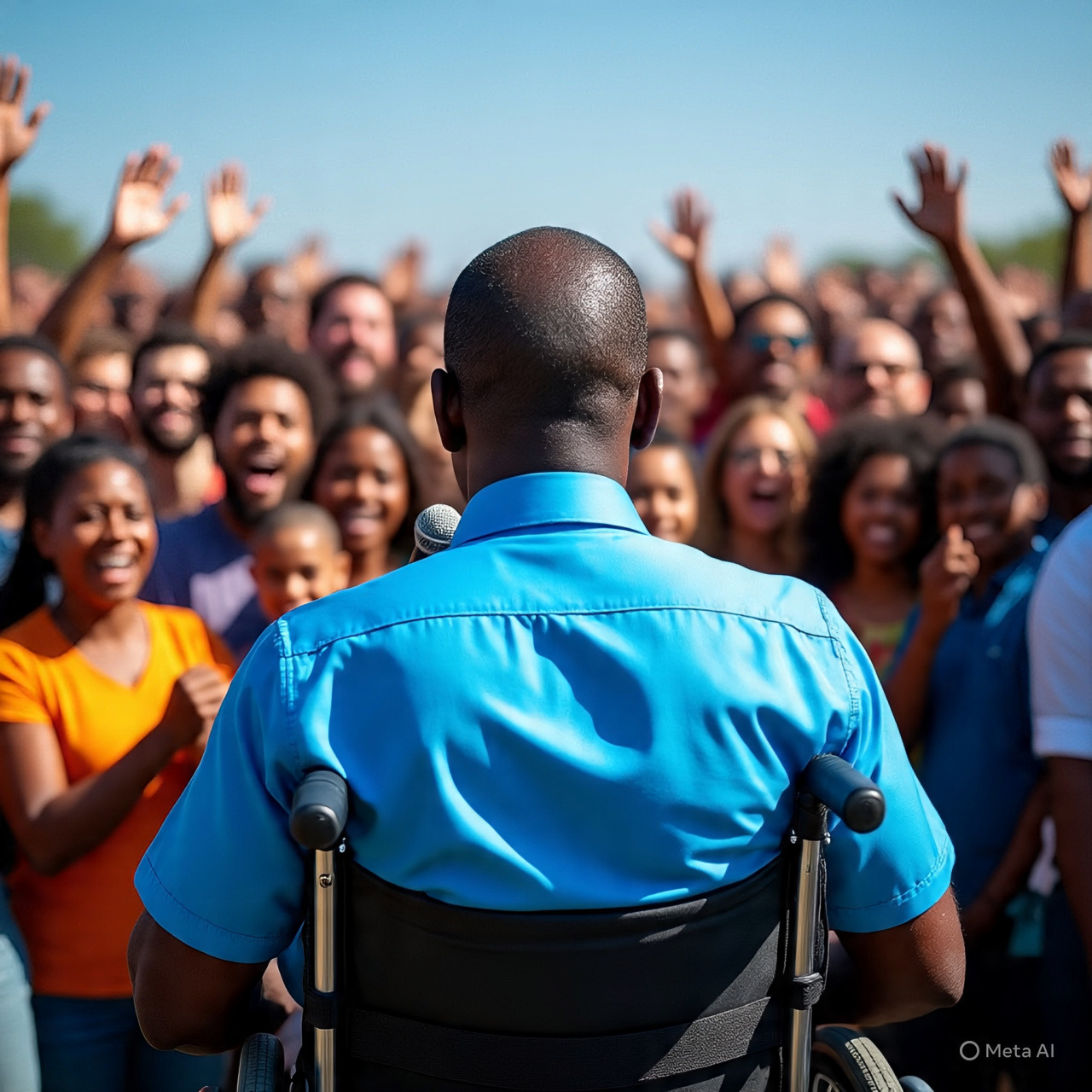
In a world striving for equity and dignity, leadership must reflect the full spectrum of human experience including disability. While Lesotho has had decades of governance by able-bodied individuals, the time has come to embrace a new possibility: a Prime Minister living with a disability. This is not merely a symbolic gesture; it is a transformative act that can reshape national consciousness, strengthen policy and affirm that leadership knows no physical or sensory bounds.
History reminds us that disability is not a disqualifier for greatness. Winston Churchill, one of the most renowned leaders of the 20th century, lived with multiple impairments. He battled what he referred to as the “black dog” of depression likely a form of bipolar disorder and faced a speech impediment. Yet, Churchill steered Britain through World War II with unmatched resolve, his disability not an obstacle, but a testament to the strength that diverse experiences bring to leadership.
Churchill’s story is a compelling reminder: ability is not confined to the body; it is rooted in resilience, intellect and vision. A Prime Minister living with a disability in Lesotho would bring precisely those attributes into the Kingdom’s highest office. We have tried, over and over, to entrust the future of this country to leaders with no lived experience of disability. Yet, social equity remains elusive for the approximately 46 000 Basotho living with disabilities. Why not give a new kind of leadership a chance one that understands, through lived experience, what it means to navigate systems that exclude, marginalize or patronize?
Lesotho has the chance to be a continental leader by establishing policies that embrace diversity at every level of governance, starting at the top. One innovative approach would be the introduction of “Impairment Corners” in public institutions, schools, parliament and community spaces. These would be physical and programmatic corners where disability-related information, tools and support services are available designed by and for persons with disabilities. Any Mosotho living with disability can direct such programmes, professionally and excitingly so.
Each impairment corner could offer sign language interpretation and teaching materials Provide Braille documents and assistive technology. Host monthly public awareness talks by people with various impairments. Serve as a channel for disability-inclusive policy dialogue Such corners would be a bold affirmation that accessibility is not charity it is a constitutional right. It is also time to consider mandatory sign language education in schools, government offices, and the media. Imagine having to be just convert means of communication to body language as policy would direct. Not as an add-on, but as part of core national identity. Disability is not a marginal experience it is a human reality, and communication must be inclusive. Lesotho must legislate sign language as one of its official languages, following the example of countries like South Africa and Kenya. Policies must use updated, inclusive terminology such as: Persons with psychosocial disabilities, persons with visual/sensory impairments.
Rember how strong former Employment and Labour Minister, Mr Refiloe Masemene was, who everyone still praise for rising above his disability. Maybe living with disability is living with ability to be better than the abled. Mr Masemene, who was visually impaired, left his cabinet position in 2010 and was involved in charity work for communities living with disability before he passed on.
Honourable Masemene was a strong believer in the congress political ideology which he stood by from a very early point of his life.
“He understood the ideology and stood by it throughout his life,” Dr Mosisili once said, adding the congress political ideology was “very different to the nationalist ideology”.
Honourable Mosemene had unique abilities which if he was a Prime Minister of Lesotho, maybe Lesotho will now be a real“Har’a mafats’e le letle ke lona”.