

Maseru — The United States and the Government of Lesotho have signed a five-year bilateral health cooperation agreement committing a combined $364 million to transition Lesotho’s health system toward long-term self-sufficiency, amid growing scrutiny over the effectiveness, governance and sustainability of donor-funded health programmes.
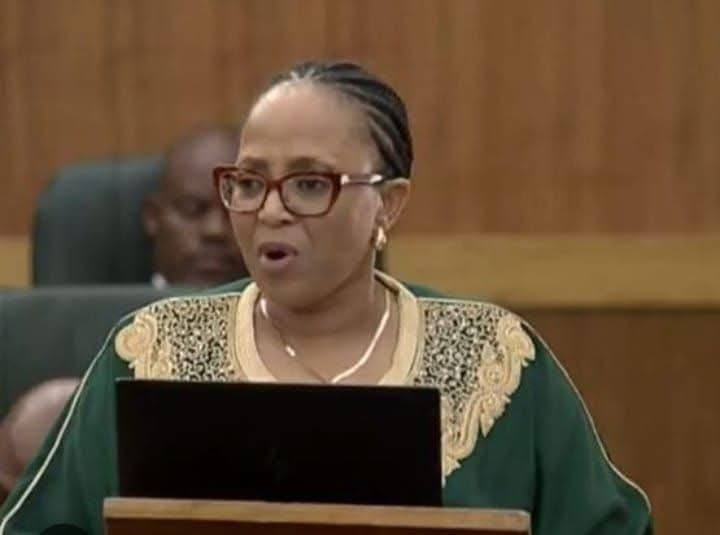
The Memorandum of Understanding (MOU), signed this week by U.S. Chargé d’Affaires Tom Hines and Minister of Finance Retselisitsoe Matlanyane, outlines a planned U.S. investment of $232 million alongside a $132 million co-investment by the Government of Lesotho over the next five years. The agreement is framed under the America First Global Health Strategy and is expected to take effect from April 2026.
According to the U.S. Embassy in Maseru, the agreement marks a strategic shift away from long-term dependency on foreign health aid toward domestic ownership, tighter accountability and measurable outcomes.
“The America First Global Health Strategy and the MOU build on the successes of past global health programs,” a U.S. Embassy spokesperson said on background. “However, our global health programs have become inefficient and created dependency among recipient countries.”
Rethinking a billion-dollar legacy
Over the past 25 years, the United States has invested more than $1 billion in Lesotho’s health sector, largely through HIV and infectious disease programmes such as PEPFAR. The embassy credits this support with saving millions of lives globally, preventing 7.8 million HIV transmissions from mother to child, and helping Lesotho achieve the 97-97-99 HIV treatment targets.
But U.S. officials now openly acknowledge structural weaknesses in how health aid has been delivered.
“Today, less than 40 percent of health foreign assistance goes to frontline supplies and health care workers worldwide,” the spokesperson said. “The remaining 60 percent of funds are spent on technical assistance, program management, and other forms of overhead costs.”
The newly signed MOU, the embassy said, is designed to correct these inefficiencies by enforcing “robust audit mechanisms” to ensure that “every dollar is accounted for, every outcome is measured, and every lesson is learned.”
Confidence in Lesotho’s capacity
Despite longstanding concerns around governance and procurement in the public sector, the United States says it is confident Lesotho can manage a self-sustaining health system within the five-year transition period.
“Yes. We would not have made a deal we thought could not be kept,” the spokesperson said, adding that benchmarks were developed jointly with the Ministries of Health and Finance and on-the-ground providers.
Lesotho’s commitment to raise $132 million in domestic HIV-related financing over five years is described as “phased and achievable,” with performance incentives built into the agreement. The embassy also noted that Lesotho already finances about 70 percent of its antiretroviral medication purchases, a contribution that counts toward the domestic funding target.
U.S. support over the years has also focused on strengthening core systems, including medicines supply chain management, which the embassy says now operates “efficiently with minimal external assistance.”
Safeguards against abuse
Against a backdrop of repeated donor concerns about corruption, political interference and procurement abuse in public programmes, the embassy said the MOU contains explicit safeguards.
“There will be robust audit mechanisms which have been agreed upon by both governments to regulate implementation measures over the five years,” the spokesperson said.
The agreement includes performance benchmarks and oversight provisions aimed at protecting both American and Lesotho taxpayer funds while strengthening Lesotho’s planning and supervisory capacity.
Transparency still to be defined
On whether progress and expenditure reports will be made public, the embassy stopped short of a firm commitment, noting that reporting mechanisms are still being finalised ahead of implementation.
“Transparency and accountability are steadfast goals,” the spokesperson said, but added that Lesotho retains full ownership of its health data under national laws. Any data sharing will continue to focus on aggregated, programmatic information used for monitoring and reporting to the U.S. Congress.
“Ultimately, Lesotho owns this effort, as well as its health system data,” the spokesperson said. “The Embassy cannot make this commitment on their behalf.”
A high-stakes transition
The agreement represents one of the most consequential shifts in U.S.–Lesotho health relations in decades. While it promises greater efficiency, accountability and domestic ownership, it also places significant responsibility on the Government of Lesotho to meet funding commitments, governance benchmarks and reform targets in a compressed timeframe.
Whether the transition succeeds may ultimately determine not only the future of Lesotho’s health system, but also how international partners recalibrate long-term aid relationships across the region.