

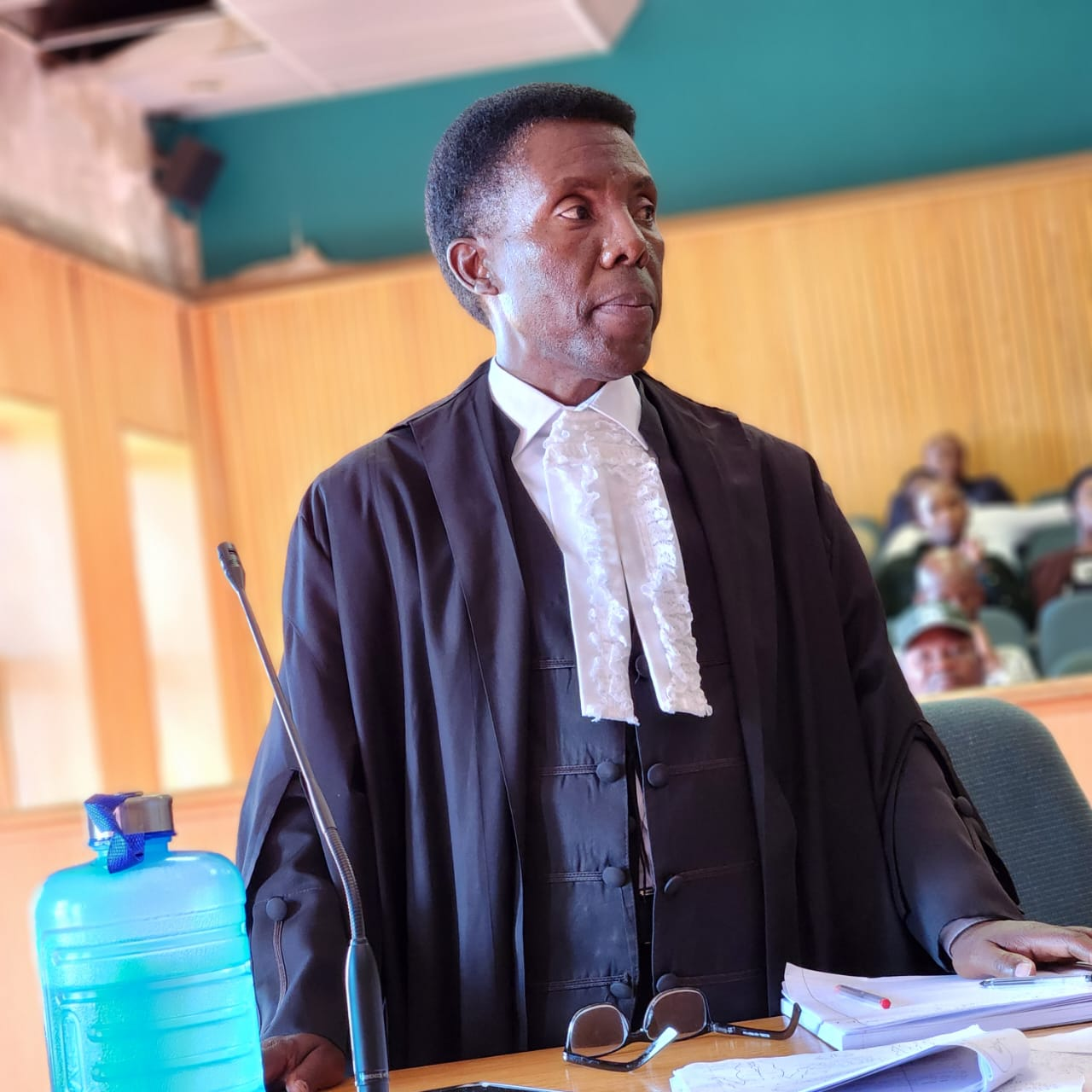
MASERU-A legal battle has erupted in the High Court over where a fraud and corruption case involving several accused persons should be heard, with senior lawyer Advocate Motiea Teele (KC) arguing that the matter properly belongs before the Thaba-Tseka Magistrate’s Court and not the High Court.
The case involves Bokang Nthimo, Mabela Lehloenya, Bahlakoana 1966 Group PTY LTD, Semenekane Khooa and Lehlohonolo Ntlama, who are facing charges of fraud and corruption. However, before the allegations can be verified, the High Court must first decide a procedural dispute concerning the correct forum for the trial.
Advocate Teele made his submissions this week during argument of a review application in which the applicants are asking the High Court to review, correct and set aside a decision made by the Director of Public Prosecutions (DPP). The DPP had removed the matter from the magistrate’s court and directed that it proceed before the High Court.
According to Adv. Teele, the DPP’s decision amounts to “forum shopping”, a practice where a party attempts to move a case to a court perceived to be more favourable. He argued that such conduct should not be permitted, as it undermines fairness and proper administration of justice.
He told the court that when the DPP initially decided that the matter should proceed before the magistrate’s court, she had already considered all relevant legal and factual factors. At that stage, she was satisfied that the magistrate’s court was competent to hear and determine the case and that justice would be served in that forum.
Adv. Teele emphasised that the case was already pending before the Thaba-Tseka Magistrate’s Court when the DPP reversed course. A hearing date had been set, and the matter was moving forward within the ordinary course of the criminal justice process.
He argued that there was no new development that justified removing the case from the magistrate’s court. In his view, the magistrate’s court is legally empowered to hear and determine the charges in question.
“The High Court should not be clogged with matters that can be meaningfully heard by subordinate courts,” Adv. Teele submitted.
He further stressed that the High Court, as a superior court, should focus on matters that require its exclusive jurisdiction or involve particularly complex legal issues. Allowing cases that fall squarely within the competence of magistrates to be routinely transferred to the High Court would, he suggested, create unnecessary backlogs and strain judicial resources.
The applicants are therefore asking the High Court to intervene and set aside the DPP’s directive, effectively sending the case back to the Thaba-Tseka Magistrate’s Court for trial. On the other hand, the state strongly opposed the application.
Advocate ‘Malerato Ntsatsi, representing the Directorate on Corruption and Economic Offences (DCEO), defended the DPP’s decision. She argued that the DPP was exercising her statutory powers when she directed that the matter be committed to the High Court.
Adv. Ntsatsi submitted that the DPP has constitutional and statutory authority to determine how prosecutions should proceed, including deciding the appropriate forum for trial. She maintained that the decision to move the case was lawful and proper.
“It cannot be said to be forum shopping,” she argued.
She explained that in criminal proceedings, the magistrate’s court often acts as a remanding court at the early stages of a case. During that phase, the accused may appear before the magistrate’s court for purposes such as bail applications or preliminary procedures. However, the DPP retains the authority to decide whether the matter should ultimately be tried in that court or committed to the High Court.
Adv. Ntsatsi acknowledged that the magistrate’s court has jurisdiction to hear the matter. However, she pointed out that there are circumstances in which the DPP may issue a directive that a case be referred to the High Court.
She told the court that the gravity and seriousness of the offences facing the applicants justify committal to the High Court. According to her, the nature of the charges, fraud and corruption carries significant public interest implications and may involve complex issues that warrant the attention of the superior court.
She further submitted that it is in the best interest of the state that the matter be tried before the High Court. In her view, the DPP’s decision was guided by considerations of justice, seriousness of the allegations and proper prosecution strategy, rather than any improper motive.
The High Court must now determine whether the DPP acted within the bounds of her powers or whether her decision can be reviewed and set aside.
At the heart of the dispute is the balance between prosecutorial discretion and judicial oversight. While the DPP enjoys wide powers in directing prosecutions, those decisions remain subject to review by the courts if they are shown to be irrational, unlawful or procedurally unfair.
If the court finds in favour of the applicants, the matter will return to the Thaba-Tseka Magistrate’s Court for trial. If it dismisses the application, the case will proceed before the High Court.
The ruling is expected to be delivered on March 26, 2026.
You have 1 free article left this month. Create a free account for 15 articles/month.
Create free account