


By: Ernest Che Moikangoa
I still remember my grandmother’s voice on those summer evenings in the township, telling us stories while we sat outside under the streetlight. She’d talk about pass laws, about neighbours who “disappeared” because they dared to speak out, and about how, in those days, a person’s dignity could be ripped away with just one word. It wasn’t only the laws that hurt — it was the names, the sneers, the daily reminder that you were less.
We come from a country where your skin colour decided where you stayed, who you married, and what dreams you were allowed to have. Africans, coloureds and Indians all carried that burden. But we also come from a country where those same communities — with a few allies here and there — fought side by side for freedom. We didn’t fight to replace one group with another on top. We fought for a South Africa where all of us could stand equal.
Thirty years on, we’re still building that dream, brick by brick. And ja, it gets messy. Old wounds open up. Harsh words get thrown. Sometimes it’s ugly. But how we handle those moments says a lot about whether we’re really serious about unity.
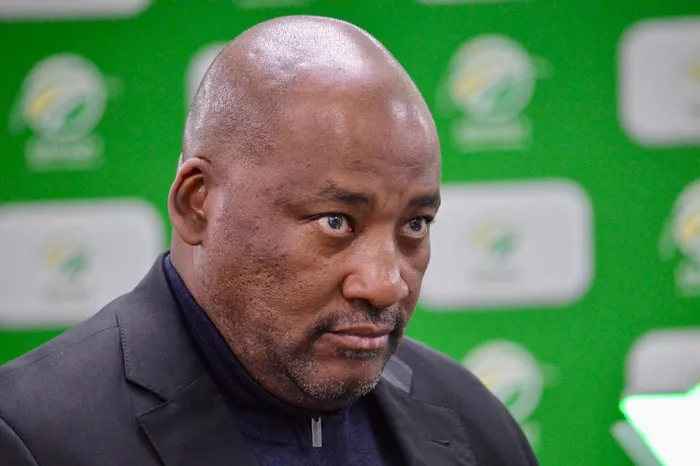
Now we’ve got this latest storm around Minister of Sports, Arts and Culture, Gayton Mackenzie. First, a podcast — two young creators making clumsy, hurtful jokes about coloured people. They’ve apologised since, but it hit a nerve. Then, not long after, people started sharing old social media posts where Mackenzie used the K-word.
Let’s be honest — that word cuts deep. For a lot of us, it’s linked straight to the humiliation of apartheid days. But here’s the thing: those posts weren’t from Mackenzie the minister. They were from Mackenzie the man — a black South African speaking, however harshly, about his own people. Same as how black Americans sometimes use the N-word among themselves. We all know it’s not a word for public praise, but when it’s said inside the house, so to speak, it’s not the same thing as someone from outside attacking you with it.
That’s a big difference. If a white South African used that word today, it would be a slap in the face, dragging up the old chains of oppression. When a black person uses it in frustration or critique, it’s coming from somewhere else. Still not pretty, still not clever, but not the same.
And those saying he’s “anti-African” because he speaks up for coloured identity — I think they’re missing the point. He’s been consistent for years: coloured and Indian communities also have struggles that deserve attention in transformation debates. That’s not anti-anybody. It’s about saying, “Hey, don’t forget us in the bigger black family.”
Of course, some opportunistic politicians and political parties are loving this drama. Instead of helping us have the conversation about race we actually need, they’ve turned it into a political soccer match — chasing headlines, scoring cheap points, while unity takes a knock.
Truth is, tensions between Africans, coloureds and Indians didn’t magically vanish in 1994. We still live with stereotypes. We still see the gaps apartheid left in our towns and suburbs. And sometimes we hurt each other with our words. Pretending it’s not there won’t help.
What will help is proper talking — not shouting matches, not X (Formerly) Twitter fights — proper talking. That’s where this whole saga might actually do some good. It’s a reminder that reconciliation is not just about black and white. It’s also about how we treat each other inside the broader black family, and then how we open that up to include everyone else in the country.
I must indicate that I hold no brief for McKenzie as I sometimes disagree with him on number of issues including the saga between his department and South African Roadies Association and without any fear of contradicting myself, I still hold the view that marginalizing SARA is tantamount to unfair practice.
Back to the issue at hand, If Mackenzie means what he says, his ministry is in a perfect position to lead this. Sport, arts and culture are some of the strongest ways to bring people together. Imagine cultural festivals where we all see our own history reflected. Imagine school sports where kids from Mitchells Plain, Chatsworth and rural Limpopo run on the same track, then share a meal and maybe a few new slang words. Imagine the National Dialogue not just as a talk-shop, but as something that actually shifts how we live together.
We can’t keep tearing each other apart every time an old post pops up. We need to know the difference between real racism and the messy, sometimes painful, family arguments that happen among our own.
On the same breath, I respectfully wish to encourage the Minister not to baiza nie and bear in mind that he’s a custodian of social cohesion and has to bear the responsibility for continuing to single himself out as coloured each time it’s convenient, he has to use this moment as a teachable moment for himself because his slogan NO DNA JUST RSA has to hold true even when there’s challenges, that we are not punitive people hence we chose the TRC as a process of our reconciliation instead of violence. The minister can’t be punitive in his actions whether or not it affects coloured people, he has to be measured, provide leadership and encourage social cohesion at all times. This way, he doesn’t reduce the office he holds into a politicking office but a truly national unity office
This is our country. Either we build it together — Africans, coloureds, Indians, whites — or we let the opportunists break it apart for their own selfish gain. The choice, as always, is ours.
Ernest Che Moikangoa is a member of the ANC, a Chartarist-social activist and writes in his personal capacity.