

Maseru
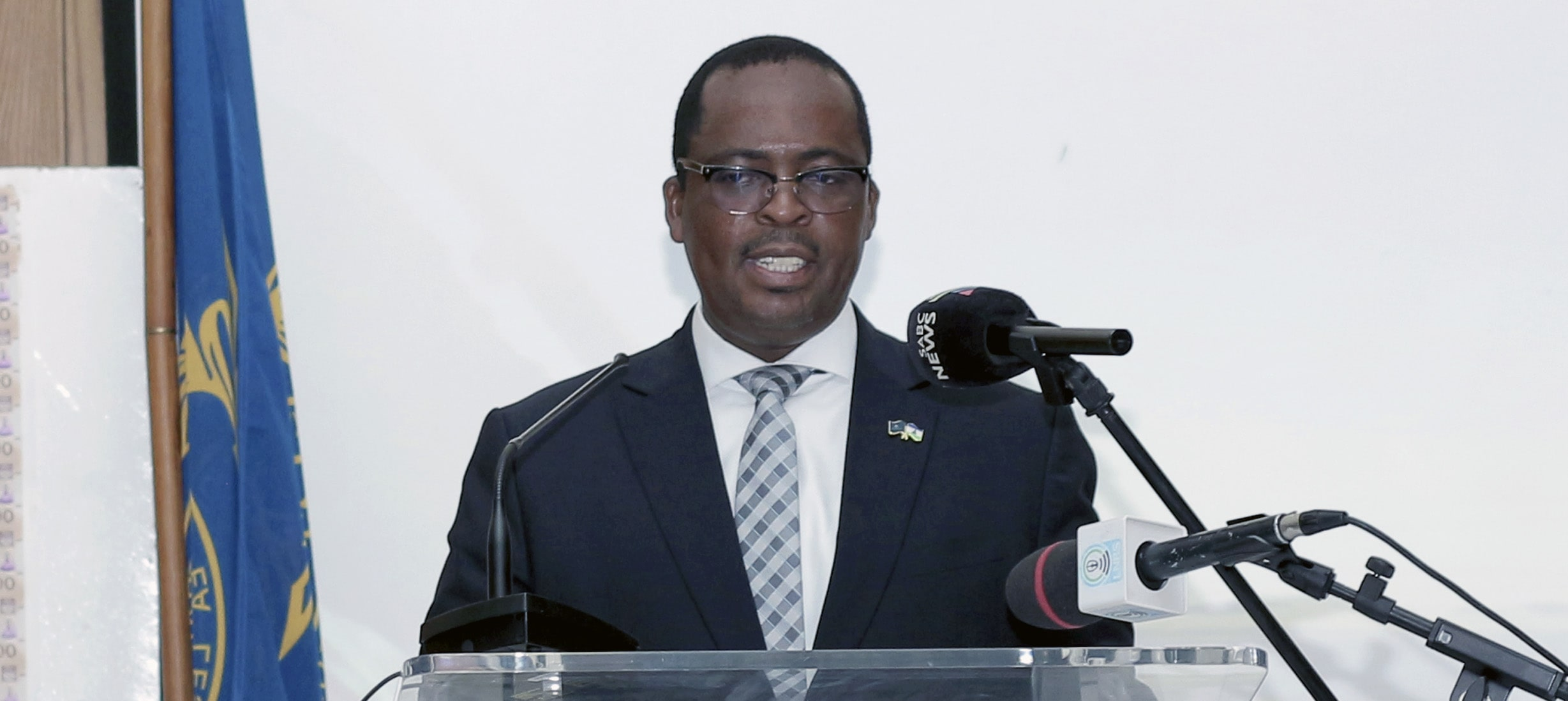
The Central Bank of Lesotho (CBL) has announced a reduction in its key policy rate, signalling a strategic move to align with regional monetary conditions and support domestic economic stability. The Governor of the bank, Dr MalukeLetete, announced this at the Monetary Policy meeting held in Maseru this week.
He highlighted that the bank had resolved to lower the CBL Rate by 25 basis points, bringing it down to 6.50 percent per annum from the previous 6.75 percent.
This decision, Dr Letete said, comes as the bank continues its commitment to maintaining the peg between the Loti and the South African Rand, following a similar rate cut by the South African Reserve Bank (SARB).
The Monetary Policy Committee (MPC) has therefore advised banks to set their prime lending rate at no more than the CBL Rate plus 350 basis points, warning also that the Net International Reserves (NIR) target floor has been revised downwards to US$830 million from US$840 million, a change deemed adequate to underwrite the Loti-Rand peg.
These decisions, DR Letete said, were informed by a comprehensive review of global, regional and domestic economic conditions.
The bank’s 2025 projections had predicted a slight upward revision, though the overall sentiment remains one of moderation, with advanced economies experiencing subdued activity. Likewise, inflation has generally eased across major economies but persists as a concern in selected regions while risks like trade tensions, labour supply shocks and financial vulnerabilities remain pertinent.
Dr Letete alerted that regionally, South Africa’s economy had demonstrated improved growth in the third quarter of 2025, primarily driven by household spending. Despite an uptick in inflation to 3.6 percent in October 2025, he said, the SARB also reduced its policy rate by 25 basis points to 6.75 percent, a move Lesotho has now mirrored to maintain monetary alignment.
He announced a shocking revelation, informing that Lesotho’s economy experienced a slowdown in the third quarter of 2025, attributed to weak manufacturing and subdued domestic demand, particularly in private spending. While the medium-term outlook suggests modest growth due to weaker exports and mining output, it was said that this is expected to be partially offset by anticipated stronger textile exports to South Africa.
On a lighter note, inflation in the country is said to have moderated to 4.5 percent last month, down from 4.7 percent in September. This easing, Dr Letete said, was primarily due to lower food prices, increased supply of vegetables, reduced fuel costs and a stronger Rand. However, he cautioned that inflation could remain moderately higher if food prices persist in their elevation.
In July, the government’s budgetary operations (GBO) recorded a notable surplus of 10.0 percent of GDP, a major boost by SACU receipts and water royalties while public debt-to-GDP saw a slight increase to 56.0 percent due to project disbursements. Meanwhile, the current account deficit moderated in the third quarter, a result of stronger exports, with SACU receipts and foreign investment income continuing to provide crucial buffers.
Dr Letete said the NIR increased by US$60.78 million between September and November, an increase that exceeded the bank’s revised target.
Looking ahead, the Governor emphasised the MPC’s commitment to closely monitoring global and regional developments, reaffirming its readiness to implement necessary measures to safeguard the credibility of the Loti-Rand peg while also ensuring continued financial stability for Lesotho.