


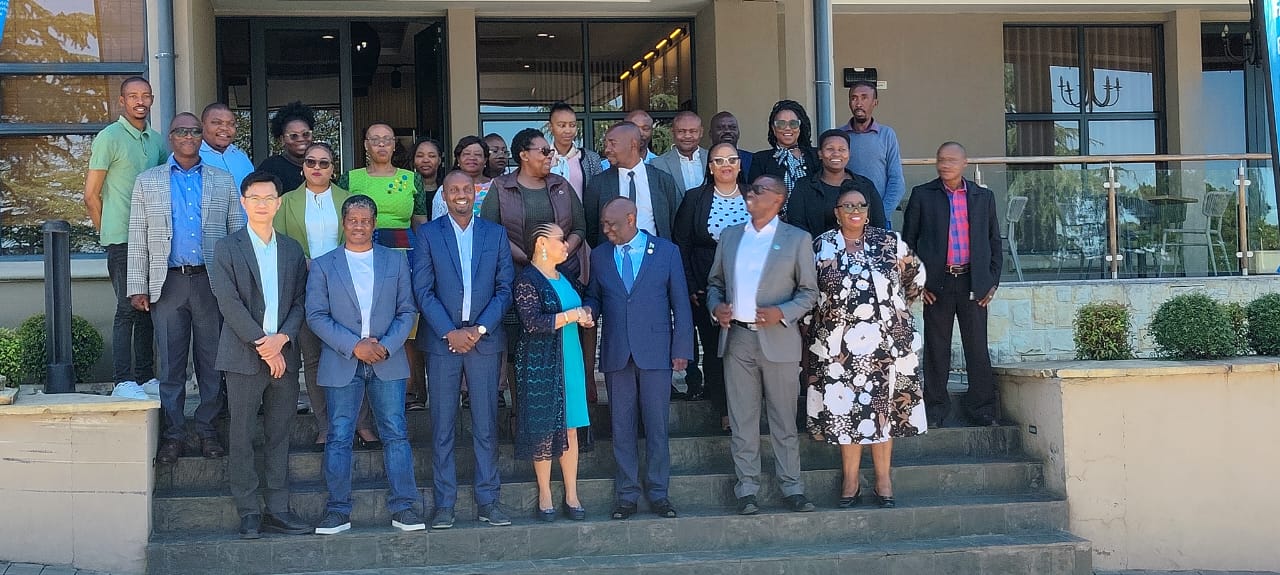
The Food and Agriculture Organisation (FAO) and the Ministry of Agriculture, Food Security and Nutrition conducted a validation workshop this week to review and validate the draft of the Fisheries and Aquaculture Governance Framework in Maseru.
The workshop marked a significant milestone in Lesotho’s efforts to transform its fisheries and aquaculture sector, promoting sustainable development, conservation and economic growth.
Speaking at the workshop, Minister of Agriculture Food Security and Nutrition, Thabo Mofosi, revealed that Lesotho’s fishery sector was historically developed to cater to colonial officials’ interests, focusing on sport fishing rather than agricultural development.
“For many years, this sector played only a marginal role in our national economy,” he said.
“A look into our history shows that fisheries in Lesotho were not developed as part of an agricultural agenda but rather to entertain colonial officials who viewed our rivers as suitable for sport fishing.
Mofosi shared the history of the sector, noting that the introduction of trout was driven by the personal interests of senior officers in the colonial police service.
“The trout we find in our rivers today were transported from Natal and introduced in the late 1930s by the police,” he said, adding that despite challenges, including unsuccessful trials with tilapia, Lesotho has made progress, with significant public investments in the 1960s, including the establishment of the Maseru Hatchery.
He expressed gratitude to FAO for providing critical decision-support information and a platform for policy dialogue.
He said the policy frameworks developed through this collaboration mark a decisive shift from the colonial legacy, placing aquaculture as a strategic priority for job creation, investment and inclusive growth in Lesotho.
This policy framework includes an Aquaculture and Fisheries Policy, Aquaculture Strategy, Aquatic Animal Health Strategy and aquaculture training curriculum; instruments that will guide updates to Lesotho’s legal and institutional frameworks aligning with the national vision for prosperity.
“We intend to leverage developments in the water sector, both in the highlands and lowlands to foster a sustainable, inclusive and globally competitive aquaculture industry,” Mofosi said.
Lesotho is already exporting significant volumes of trout to international markets, thanks to private sector investments in the Katse Dam.
The Minister emphasised that aquaculture in the country should not be the exclusive domain of large multinational companies but also accessible to small-scale players, especially in warm-water aquaculture in the lowlands.
“I am confident that the potential of these value chains will become evident in the coming months as selected lowland fish farmers receive technical mentoring and support,” he said.
The validation workshop brought together stakeholders to review and validate the draft Fisheries and Aquaculture Governance Framework. With the right coordination and incentives, Lesotho aims to develop a fully-fledged fishery industry, improving food security, nutrition and economic growth.
The sector’s potential is vast and with the new policy framework, Lesotho is poised to unlock its fishery and aquaculture potential, contributing to sustainable development and prosperity.