


The honest answer must begin with an uncomfortable admission: Lesotho does not produce most of the fresh food it consumes. The shelves of our supermarkets tell that story daily. South African produce dominates because, in truth, there is often no local alternative.
But there are exceptions. And those exceptions matter.
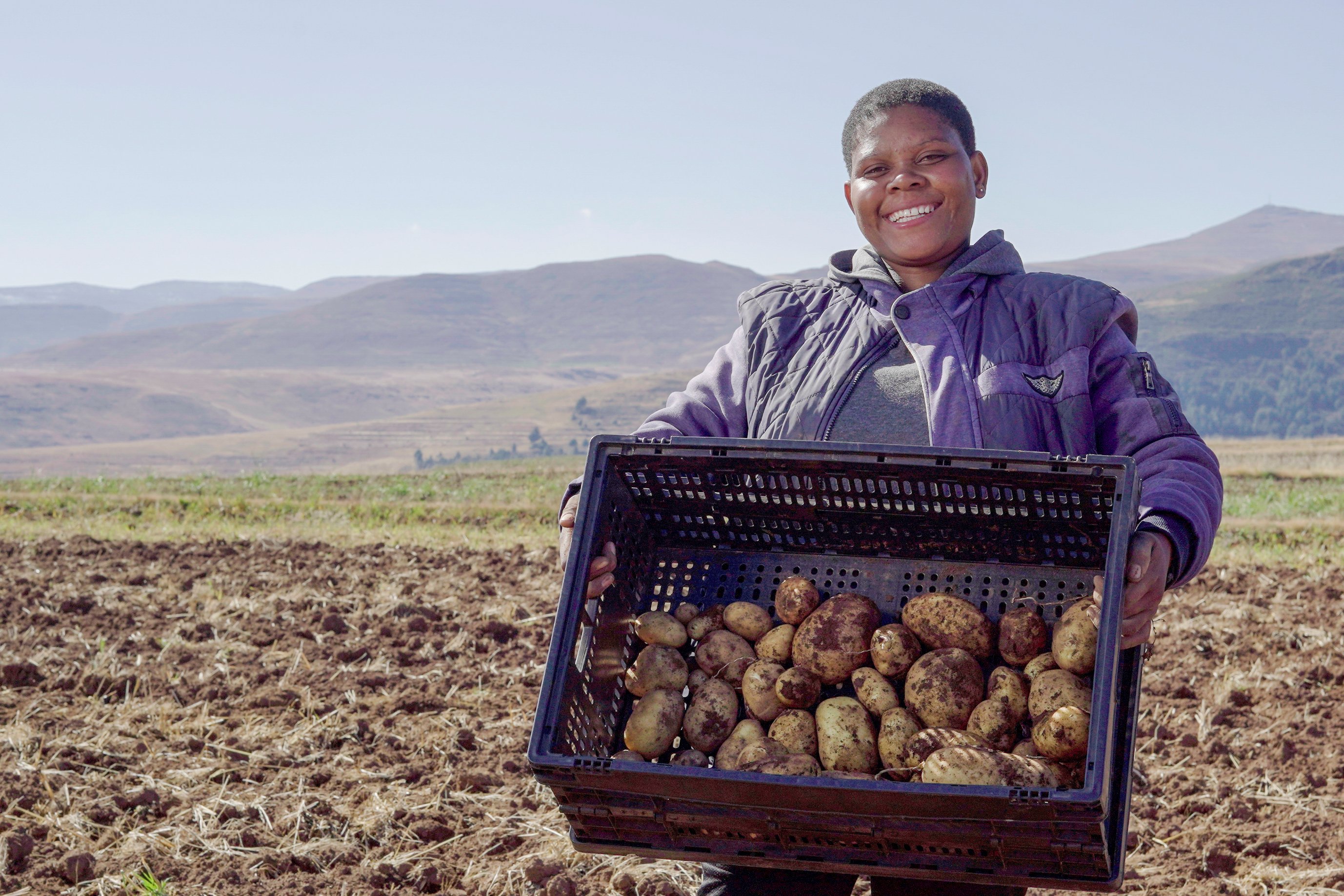
In recent years, and sometimes only in specific seasons, Lesotho has begun producing eggs, tomatoes, potatoes and cabbages in meaningful quantities. Not consistently. Not at scale. But enough to raise a question that policymakers have avoided for too long: what happens when local production finally emerges in a market that never pauses for it?
The moment Basotho farmers manage to produce tomatoes in season, they discover that imported tomatoes keep coming anyway. When local potatoes reach the market, cheaper imports remain stacked beside them. The signal to the farmer is unmistakable. Even when you succeed, the market will not adjust.
So the question is not whether Lesotho should ban imports because it is self-sufficient. It is not. The real question is whether Lesotho should reward the act of producing by temporarily protecting it when it finally happens.
No country develops agriculture by waiting until farmers are perfect before offering protection. That logic guarantees permanent dependence. Development works in the opposite direction. Protection creates the space to learn, invest, fail, improve and eventually compete.
Lesotho’s current policy does the reverse. It demands competitiveness from farmers before they have scale, infrastructure, storage, finance or market power. When they fail, we call it inefficiency. When they succeed briefly, we drown them in imports.
The result is predictable. Farmers hesitate to expand. Banks hesitate to lend. Young people hesitate to enter agriculture. Why invest in a sector where success is punished by price collapse and market saturation?
Critics will argue that import restrictions raise prices for consumers. That risk is real. But it is not the full story. Prices are already high, despite imports. Food insecurity persists, despite imports. Rural poverty deepens, despite imports. Import dependence has not delivered the outcomes it promised.
What it has delivered is convenience without capacity.
This is not an argument for permanent bans or isolation. It is an argument for discipline. Seasonal import controls tied to verified local supply. Clear thresholds. Transparent rules. When domestic tomatoes are available between November and March, imports pause. When the season ends, they resume. Farmers know the rules. Traders know the rules. Consumers understand the trade-off.
Many countries do this quietly. They do not call it nationalism. They call it planning.
There is also a moral dimension we rarely confront. A country that says “we will import everything until you are competitive” is really saying “we are comfortable never becoming productive.” That is not realism. It is surrender dressed up as pragmatism.
Lesotho’s problem is not that it produces too much. It is that it produces too little, and even when it does produce, it receives no policy signal that the effort is valued.
Perhaps Lesotho should not ban the importation of fresh produce available locally. Or perhaps it should, selectively and seasonally. But what cannot continue is a system where the appearance of local production is treated as irrelevant.
If producing food does not change the rules of the market, then producing food will eventually stop.
And when that happens, imports will not save us. They will simply own us.
You have 1 free article left this month. Create a free account for 15 articles/month.
Create free account