


By Silence Charumbira
Recent commentary has attempted to position China as Lesotho’s “biggest economic threat,” arguing that Beijing’s trade model structurally disadvantages small economies like ours. This narrative, while seductive in its simplicity, fundamentally misdiagnoses our challenges and dangerously misdirects our policy focus. “A more nuanced perspective is this: the key challenge for Lesotho’s economic development lies not in external factors like China or the West, but in our ability to fully embrace and act on the responsibility for shaping our own economic future.
Before we rush to blame external actors for our predicament, we must reckon with a basic principle of international relations: every country’s primary obligation is to its own citizens. China has no duty to industrialize Lesotho any more than the United States has a duty to build factories in rural Mississippi. Nations pursue their national interests. The question is not whether China protects its domestic market – of course it does – but whether we are competent enough to leverage the opportunities that do exist for our own benefit.
The sovereignty of self-interest
While economic statecraft denotes that every government must protect and nurture its local industry, China has overly opened up. In recent years, the Chinese market has increasingly become open to cooperating countries because opening up is basic national policy. While protectionism is the new norm for most countries especially in the West, as recently as November, China announced that it “had extended its unilateral visa-exemption arrangements for 48 countries”. And in December, China’s Hainan province “launched island-wide special customs operations, allowing freer entry of overseas goods, expanding zero-tariff coverage, and introducing more business-friendly measures”. “This initiative will significantly ease the entry and exit of people, goods, capital and data across Hainan, enhancing its position as a hub of global exchange,” said the People’s Daily in December.
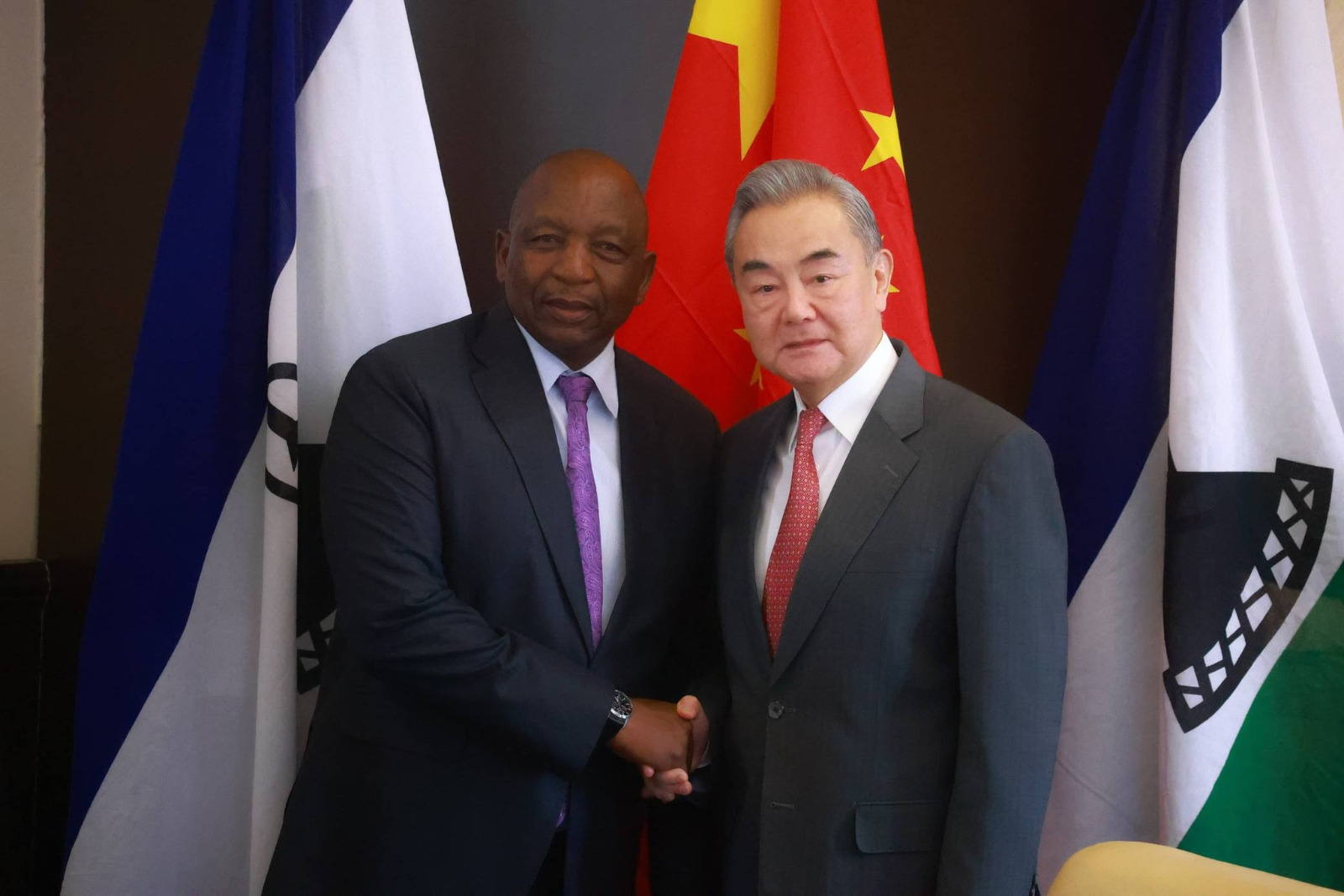
China has numerous policies and programs explicitly designed to benefit African countries: the Forum on China-Africa Cooperation (FOCAC), Belt and Road Initiative financing, concessional loans, technical assistance programs, and scholarship opportunities. China’s Foreign Minister, Wang Yi, told Prime Minister Sam Matekane last month during his historic visit to Lesotho that the Asian giant would “accelerate the implementation of its zero-tariff policy for Africa in Lesotho, expand bilateral economic, trade, investment, and industrial cooperation, facilitate greater access for Lesotho’s specialty products to the Chinese market, and continuously boost Lesotho’s national development”. These are not secrets. They are published, documented, and available. The onus is squarely on African governments to study these programs, understand their mechanics, and deploy them strategically for national development.
When Zimbabwe exports groundnuts to China, when South Africa exports minerals, when Ethiopia leverages Chinese financing for industrial parks, they are not being granted charity – they are executing policy. The question we must ask ourselves is stark: why have we failed to do the same? Can we attribute our challenges in capitalizing on available opportunities to China – or is this an area where we face ongoing work to build sufficient institutional capacity, consolidate political will, and refine strategic vision?
The infrastructure fallacy cuts both ways
The argument that “infrastructure without industrial development is a dead end” sounds compelling until you examine its inverse: industry without infrastructure is utterly impossible. No investor, Chinese or Western, will establish manufacturing operations in countries where roads are impassable, electricity is unreliable, and ports are nonexistent. Infrastructure is the prerequisite, not the afterthought.
China has built roads, airports, railways, and power stations across Africa. These are tangible assets that will outlast any political administration. They create the physical foundation upon which industries can be built. The reality that we have yet to fully leverage this valuable infrastructure points to areas where our policy alignment and implementation can be strengthened – not to any flaw in the infrastructure itself. When roads carry imported goods inland instead of local exports outward, the problem is not the road – it is what we have failed to produce.
The reality is this: creating industries is Lesotho’s job, not China’s. International partners can provide capital, technology transfer, and market access frameworks, but they cannot manufacture political will or bureaucratic competence. If we are still working to attract more investment despite improved infrastructure, it is worth exploring how we can further enhance our business environment, streamline our regulatory framework, and strengthen our governance structures. Blaming infrastructure donors for our inability to industrialize is intellectual evasion.
The West is no savior
Calling for renewed alignment with Western markets is proof that we are suffering from selective amnesia. Just months ago, Donald Trump – a symbol of Western policy priorities – dismissed Lesotho as “a country that nobody has heard of” before promptly imposing crushing tariffs. This is the partner we are told represents our economic salvation?
Let us not forget that colonialism, the most extractive economic system in modern history, was a Western invention. The same powers that now lecture Africa about fair trade are the ones that structured global commerce to perpetuate dependency. The idea that Western markets are somehow inherently more open or benevolent than Chinese markets is historically illiterate and empirically questionable.
What, exactly, are the attractive policies the West is offering small countries like Lesotho today? The African Growth and Opportunity Act (AGOA), often cited as a model program, exposes the hollowness of this narrative. AGOA provides preferential market access to the United States for qualifying African exports. On paper, it is generous. In practice, Lesotho has chronically underutilized it. That aside, it is clearly a tool to control and manipulate beneficiary countries. There is no reliability because the United States reserves the right to cancel anytime as a way to either whip nation states into line or to impose its own morals on them.
Why? Because accessing AGOA requires meeting rules of origin, compliance standards, quality controls, and supply chain documentation that many of our producers cannot satisfy. The problem is not the program – it is our capacity to use it. This is the pattern: opportunity exists, we fail to seize it, then we blame the opportunity provider. Whether the provider is China or the West is irrelevant if we lack the state capacity to execute.
Everyone serious imports less
The complaint that China is “increasingly importing less outside raw materials” betrays a fundamental misunderstanding of economic development. As countries develop, they naturally reduce reliance on imports by building domestic production capacity. This is not a Chinese conspiracy – it is the entire point of industrialization.
The United States imports less than it did decades ago relative to GDP. Europe does the same. Should we blame them for our failure to diversify and revitalize our production base? China is now growing some of the best crops globally, reducing its agricultural import dependency. This is success, not sabotage. If Zimbabwe and South Africa see declining groundnut exports to China, the question is whether they can compete on quality, price, and reliability – not whether China owes them perpetual demand.
Can we reasonably attribute Lesotho’s continued import of cabbages – despite agriculture being a stated economic pillar – to China? Should Beijing be accountable for gaps in our processing capacity, cold storage, or agricultural extension services? These are areas where targeted policy adjustments and capacity-building can deliver meaningful progress, rather than issues to be resolved through finger-pointing.
The South African example
Before we point accusatory fingers at China, let us examine our immediate neighbor. What does Lesotho export to South Africa beyond labor and water? More poignantly, what could South Africa possibly import from us? The answer is devastating: almost nothing of value-added significance.
South Africa has advanced manufacturing, sophisticated supply chains, and export capacity that dwarfs ours. If we cannot competitively produce goods for a market just across the Mohokare river, what magical policy intervention would make us competitive in Shanghai? The problem is not geographic distance or trade barriers – it is productive capacity or lack thereof.
This exposes the central fallacy in the anti-China argument: even if China opened its markets completely, Lesotho would still struggle to export because we do not produce enough goods of sufficient quality at competitive prices. Trade access means nothing without tradeable products. We can blame China for protectionism, but protectionism only matters if you have something to sell.
The devil is in the details
The fundamental issue might not even be whether China is a perfect partner but whether we are serious about development. China offers financing, infrastructure, technical cooperation, and market frameworks. So does the West, though increasingly with conditionalities and moral lectures. The question is not which patron to choose but whether we have the governance, vision, and execution capacity to use any of them effectively.
Why not explore ways to refine policies to make doing business in Lesotho as seamless as in our neighboring countries? How can we further develop and implement a clear, actionable industrial strategy? In what ways can we increase investment in skills development, research institutions, and technology adoption? How might we encourage a greater focus on productivity alongside governance priorities? As China implements its effective five-year plans, could we strengthen our own economic blueprint and deepen our commitment to its execution?These are questions that cannot be answered by analyzing Chinese trade surpluses or Western tariff schedules. They require looking inward.
Intellectual honesty is crucial
The narrative that China is our biggest economic threat is intellectually lazy and politically convenient. It risks allowing policymakers to look outward for explanations rather than inward for solutions, shifting focus from Maseru to Beijing. It is certainly simpler to highlight challenges with foreign trade policies than to address areas where domestic capacity, governance, or strategic focus can be enhanced.
China is a competitor, yes, but so is every other economy. Competition is the nature of international commerce. The question is whether we are equipped to compete. Currently, we are still building that competitive capacity – and that is a journey we can embrace proactively..
We must stop politicking without values, principles, or ideals. We must cease the endless blame-shifting that characterizes our public discourse. Development is not something done to you by benevolent foreigners – it is something you build through hard policy choices, institutional reform, and long-term strategic thinking.
China offers opportunities. So does the West. The failure to capitalize on either is not evidence of their inadequacy but of ours. Until we accept this fundamental truth, no amount of analysis about trade surpluses, market access, or dumping will change our trajectory. The threat to Lesotho is not in Beijing or Washington – it is in our own mirror.
We must change. The world will not wait for us to figure this out.
Silence Charumbira is an international journalist based in Maseru, Lesotho. He has worked with multiple reputable organizations like The Guardian, China Daily, Guangming, Xinhua, CNN and the Associated Press (AP) among others. He writes on diverse topics including China-Africa relations. The views expressed in this article are his own and do not necessarily represent those of the publication.