

A combined reading of Lesotho Tribune’s X and Facebook polls suggests that most respondents understand that any closure of the Strait of Hormuz would hit small economies like Lesotho hard, mainly through higher fuel, transport and food costs.
Across the two platforms, the clearest message is that the public does not see this as a distant Middle East story. It is being read, quite correctly, as an issue that could quickly filter into daily life in Lesotho through petrol prices, commuter fares, imported goods and general inflation.
The strongest sentiment came from respondents who showed a clear understanding that the impact would be serious. On X, 66 percent said the closure would have a serious impact on countries like Lesotho. On Facebook, the dominant response was that it would affect the cost of food and transport, showing that many readers are already connecting global oil disruptions to household economics.
That matters. Lesotho does not import crude oil directly from the Gulf in the way larger economies do, but it is still highly exposed to external price shocks because it depends on imported fuel, imported goods and South African logistics chains. When global oil prices jump, the pressure eventually reaches local consumers.
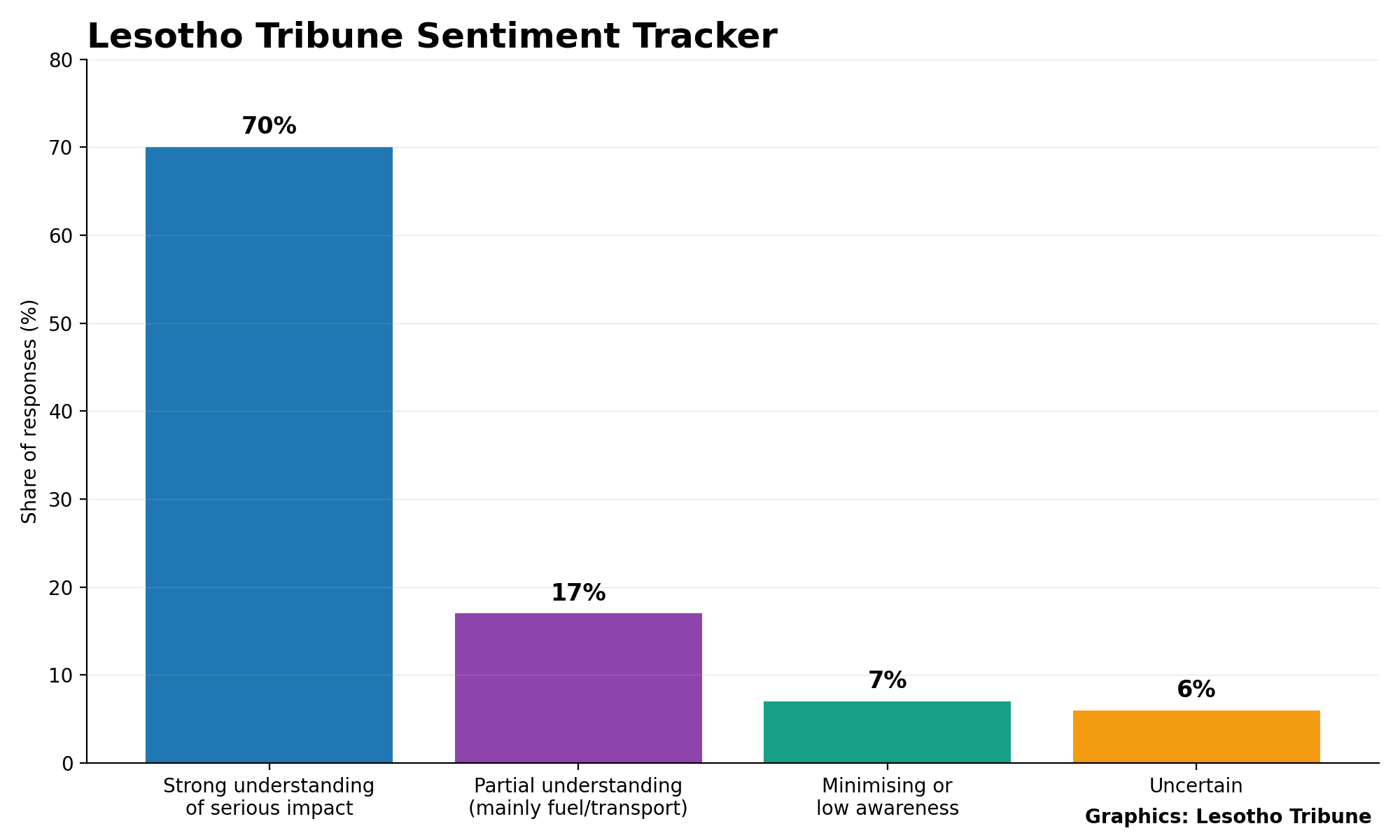
The combined sentiment also shows a second, smaller group that recognises some impact, but perhaps in a narrower way. These are readers who mainly associate the crisis with fuel prices only, or who say the effects would be only somewhat serious. That view is not entirely wrong, but it may still understate the wider knock-on effects. Fuel is usually only the beginning. Once transport costs rise, food prices, construction inputs, retail costs and service charges often follow.
A smaller minority appeared uncertain or dismissive. On X, 14 percent said not really, while 6 percent were unsure. On Facebook, uncertainty was also visible, while the dismissive option attracted little visible support. This suggests that while public awareness is fairly strong, there is still room for more economic explanation and public education.
The broader takeaway is that Basotho audiences seem alert to the danger, but not everyone fully appreciates how quickly a shipping disruption in one part of the world can show up in taxi fares, shop shelves and monthly household budgets here at home.
For Lesotho, that is the real lesson. The Strait of Hormuz may be far away, but the shock would not stay there.