


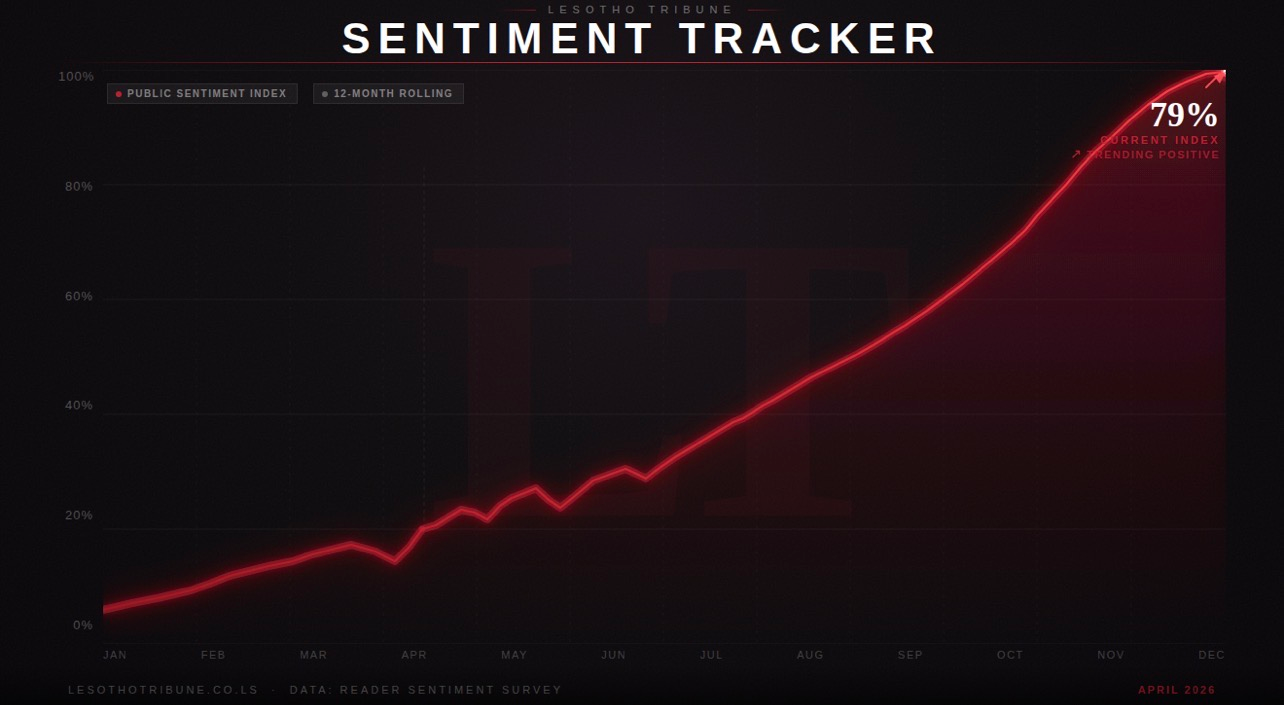
poll reveals near-unanimous distrust of water compensation model
Sentiment Tracker · Lesotho Highlands Water Project · Public Opinion
A clear public mood is emerging: Basotho are increasingly sceptical of the compensation model underpinning water exports to South Africa.
A Lesotho Tribune poll conducted across Facebook and X (formerly Twitter) reveals a strong and consistent sentiment that Lesotho is not receiving adequate compensation for water delivered to Gauteng under the current royalty framework.
The Question
South Africa pays Lesotho royalties for water delivered to Gauteng, calculated based on the savings South Africa makes by not sourcing water elsewhere. Is Lesotho being paid enough?
Poll Results Snapshot
Facebook · 127 votes
93 votes
24 votes
9 votes
X (Twitter)
Source: Lesotho Tribune Sentiment Tracker (Facebook & X Polls)
A Pattern Emerges: Distrust of the Formula
Across both platforms, one conclusion stands out. There is almost no meaningful support for the idea that the current compensation model is fair.
Instead, sentiment clusters around two positions: Lesotho is underpaid, according to the Facebook majority, and the formula itself is flawed or outdated, according to the X majority. These are not contradictory views. They point to the same underlying concern: the pricing mechanism is not working in Lesotho’s favour.
The Economic Tension Beneath the Poll
At the heart of the issue is how compensation is calculated. Lesotho’s royalties are not based on the market value of water, nor on the strategic importance of water security. They are based on South Africa’s cost savings.
That distinction matters. It means Lesotho is effectively paid based on what South Africa avoids paying elsewhere — not on what the resource is actually worth.
Why This Matters More Than It Appears
Water is not just another export. It is a strategic national asset, a long-term revenue stream, and a geopolitical leverage point. And yet, the current model treats it more like a cost-sharing arrangement than a sovereign resource transaction.
That imbalance is precisely what the public appears to be reacting to.
Facebook vs X: A Subtle Difference
There is a nuance worth noting. Facebook respondents lean more toward a direct grievance: Lesotho deserves more. X respondents lean toward a structural critique: The formula must be reviewed.
One is emotional and distributive. The other is analytical and systemic. Together, they form a coherent national sentiment: the deal is not working as intended.
“Lesotho deserves more.”
Emotional & distributive
X (Twitter)
“The formula must be reviewed.”
Analytical & systemic
What the Public Is Really Saying
Strip away the percentages, and the message becomes clearer: there is low trust in the current pricing model, there is no visible defence of the status quo, and there is growing awareness of the economic implications of the arrangement.
This is not just a poll result. It is a signal.
The Bigger Question
If compensation is tied to South Africa’s savings, then the obvious question becomes: who determines those savings, and how transparent is that calculation?
Because in any resource agreement, the side that defines the valuation framework holds the real power.
Bottom Line
Basotho are not merely questioning whether they are being paid enough. They are questioning the entire logic of how payment is determined.
And once that question takes hold, it rarely goes away quietly.
Graphics: Lesotho Tribune · Source: Lesotho Tribune Sentiment Tracker (Facebook & X Polls) · Information Liberates