


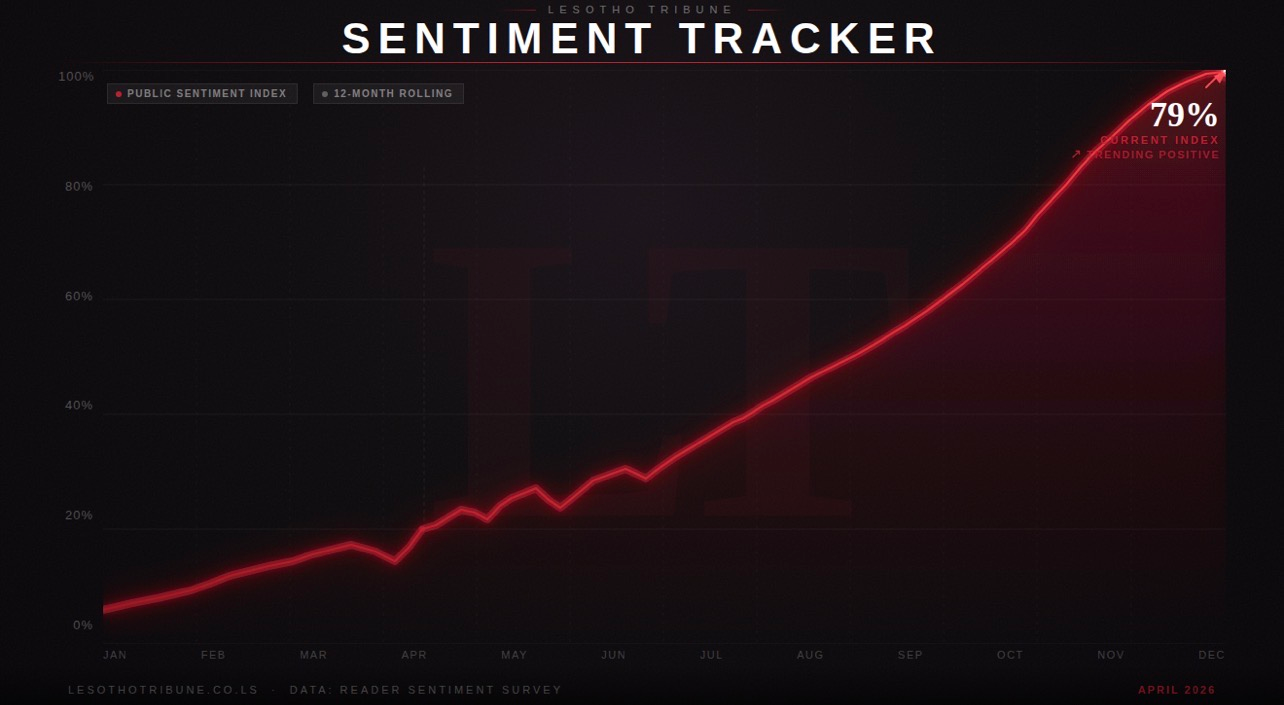
A Lesotho Tribune reader poll on fighting corruption in the public service reveals near-unanimous demand for automatic referrals to the Directorate on Corruption and Economic Offences when government employees are dismissed on suspicion of graft.
Source: Lesotho Tribune Facebook reader poll, April 2026. Results are indicative of reader sentiment and do not constitute a scientific survey.
The poll, posted by the Lesotho Tribune as part of its ongoing series on fighting corruption in the public service, drew 51 responses and produced a striking consensus: 46 respondents, representing 90 per cent of participants, backed automatic referrals to the Directorate on Corruption and Economic Offences for every dismissed public servant facing corruption suspicions.
Only three respondents, or 6 per cent, said referrals should proceed only when strong evidence exists. Two respondents, representing 4 per cent, said dismissal from public office was sufficient punishment and that further investigation was unnecessary. No respondent selected the “not sure” option.
“The public is saying dismissal is not enough. They want to see a full legal process, not just a quiet exit from government.”
The results reflect a broader mood of impatience with accountability gaps in the Lesotho public service. The DCEO, which is mandated to investigate corruption and economic offences, has faced persistent criticism over the pace of prosecutions involving government officials. Critics argue that dismissal without referral allows corrupt officials to escape criminal accountability and, in some cases, to be re-employed in the private sector or by local authorities.
The poll question asked specifically about automatic referral, a procedural step that does not presuppose guilt but ensures that a dismissal triggers formal scrutiny. Proponents of automatic referral point to comparable mechanisms in South Africa, where Section 34 of the Prevention and Combating of Corrupt Activities Act obliges certain office-holders to report corruption to the police, a provision that has been inconsistently enforced but which sets a statutory expectation of disclosure.
Whether Lesotho’s Public Service Act requires or could be amended to require automatic DCEO referral on dismissal is a question the Tribune will pursue with the Ministry of Public Service in a follow-up report. Readers wishing to contribute further views on public service accountability are invited to participate in the Tribune’s ongoing Facebook polls.