


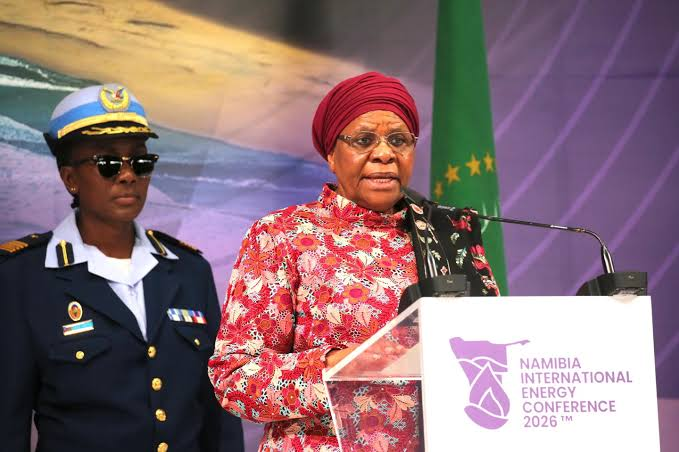
As the 8th Namibia International Energy Conference closes in Windhoek, the Lesotho Tribune examines whether Africa’s newest oil frontier can deliver on promises of governance accountability, social inclusion and a credible dual energy identity.
The mood at Droombos Estate this week was unmistakably one of arrival. Three days of high-level panels, bilateral deal-making and keynote addresses from the highest offices of the Namibian state closed what organisers described as a defining moment in the country’s energy journey.
The 8th Namibia International Energy Conference, held from 14 to 16 April, was not a gathering of prospectors hunting for possibility. It was the convening of a country that believes it already knows what it has found, and is now negotiating the terms on which it intends to extract it.
Major operators including TotalEnergies, Shell, Galp Energia, Rhino Resources, Chevron and Azule Energy are active across the Orange Basin. TotalEnergies is moving its Venus deepwater project toward a final investment decision expected by mid-2026. Rhino Resources is preparing to drill the Capricornus well in the coming months. Chevron confirmed it will drill the Nabba-1X exploration well by late 2026.
But it is precisely this moment of confidence that demands scrutiny. When resources are still theoretical, ESG commitments are easy to make and cheap to maintain. When billions of dollars in infrastructure are in motion and petroleum amendment bills are being rushed through parliament, the ESG architecture of an emerging producer faces its real test. NIEC 2026 offered substantial material across all three pillars of that test.
The dual identity problem
Namibia arrived at NIEC 2026 carrying two energy identities simultaneously, and the conference made no effort to hide the tension between them. On one hand, the country is an emerging deepwater oil producer with a pipeline of offshore projects that will generate significant hydrocarbon revenues for decades. On the other, Namibia has positioned itself as a clean energy pioneer, with green hydrogen, solar and renewable integration forming a stated pillar of its national energy strategy.
“The ESG question is whether these two tracks are genuinely integrated or whether they represent sequential aspirations rather than parallel ones.”
ESG Lens · Lesotho TribuneThe global evidence on dual energy strategies in emerging producers is not encouraging. Countries that discover significant offshore oil reserves tend to channel institutional attention and political capital into hydrocarbon development, with clean energy ambitions drifting into long-term planning documents. Namibia’s green hydrogen agenda, which has attracted interest from European off-takers and relies on the country’s exceptional solar and wind resources, is credible in principle. Whether it receives the same regulatory urgency as the Petroleum Amendment Bill announced this week is a different question.
The Orange Basin is a deepwater environment of extraordinary sensitivity. TotalEnergies’ Venus field, Galp’s Mopane development, and the broader cluster of exploration blocks sit in a marine ecosystem whose vulnerabilities are not yet fully characterised. NIEC 2026 produced detailed discussion of production timelines and investment decisions. Public discussion of environmental impact assessment standards, emissions accounting frameworks and decommissioning liability was, by contrast, notably thinner.
The women at the top and the workers at the bottom
If there is a dimension of NIEC 2026’s ESG story that deserves genuine recognition, it is the visibility of women at the apex of Namibia’s energy governance. President Netumbo Nandi-Ndaitwah, who opened the conference, is driving the petroleum reforms that will shape the sector’s regulatory environment for a generation. The Upstream Petroleum Unit is led by Kornelia Shilunga, whose stated priorities include transparent governance and broad-based empowerment, reinforced by strict asset declaration requirements for senior officials managing offshore resources.
The African Energy Chamber was explicit about the significance of this leadership configuration, arguing that Namibia’s oil boom is redefining what leadership looks like in African energy. Corporate voices reinforced the point: bp’s Exploration Manager for New Ventures framed diversity not as a social obligation but as a commercial imperative, arguing that building teams is about integrating diverse perspectives into core commercial decisions.
This is meaningful. But leadership visibility and structural transformation are not the same thing. The question NIEC 2026 did not fully answer is whether the women leading Namibia’s energy sector at its most senior levels are accompanied by equivalent progress at the workforce and community levels.
Local content, in its truest ESG meaning, is not only about who sits on panels in Windhoek. It is about who gets the technical training, who secures the service contracts, who benefits from infrastructure investment, and how communities adjacent to offshore operations are consulted and compensated. The next two to three years will reveal whether Namibia’s social commitments are structurally embedded or aspirationally stated.
Reform or rubber stamp?
The most significant development of NIEC 2026 from a governance standpoint was President Nandi-Ndaitwah’s announcement of the Petroleum (Exploration and Production) Amendment Bill. The stated purposes are the right ones: streamlining regulatory decision-making, improving sector coordination, strengthening investor confidence, and aligning Namibia’s hydrocarbons strategy with Vision 2030 and the Sixth National Development Plan.
The ESG caution is not with the intent of the bill but with the conditions under which it is being introduced. Legislative reform in the petroleum sector that is accelerated by investment pressure rather than deliberative process creates a structural risk that the academic literature on resource governance has documented repeatedly. When urgency to attract capital drives the pace of legal reform, the provisions most likely to be sacrificed are those that protect communities, require transparency, and establish accountability mechanisms for revenue distribution.
“Stability achieved by weakening accountability is not durable. It creates the conditions for the resource curse that has hollowed out other African producers.”
ESG Lens · Lesotho TribuneThe African Energy Chamber’s executive chairman, NJ Ayuk, has been consistent in his message across NIEC editions: regulatory and fiscal stability are inseparable from investment attraction. His warning, that Africa has seen countries make discoveries but fail to produce due to instability, is well-taken. But the ESG corollary is equally important.
NIEC 2026 confirmed that Namibia has built an ESG narrative around its energy development that is coherent, institutionally supported and visible at the highest level of government. The conference itself reflects this: a Namibian-owned, woman-founded platform that has grown from 120 participants at its launch to over 2,500 delegates from 46 countries.
But narratives are not outcomes. The ESG architecture on display, the local content policy, the Future Energy Leaders Programme, the UPU’s governance commitments, the renewable energy ambitions, is impressive as a structure. Its integrity will be determined by what happens in the production phase, when the pressure to deliver barrels on schedule meets the pressure to deliver benefits to Namibians.
Namibia is not there yet. First oil is still three years away. The amendment bill has not been tabled. What NIEC 2026 showed is that the country knows what it wants its energy story to be. The harder and more important work of making that story true has not yet begun.
For observers across southern Africa, including in Lesotho, the Namibia story carries more than regional interest. It is a live experiment in whether an African country can use a major resource discovery to catalyse inclusive industrial development rather than replicate the enclave extraction model that has failed so many of its neighbours. The SADC region has seen enough oil and gas windfalls converted into elite enrichment and deferred development to approach this question with scepticism.
The Lesotho Tribune’s ESG Lens column examines environmental, social and governance dimensions of major economic developments across the region. Information Liberates.
“`