Mohahlaula Airlines
Tuesday, July 21, 2026
Home Blog Page 2

Ministry restores full medicine supply to CHAL facilities

By Lemohang Botsane

The Ministry of Health has confirmed that medicines and essential health supplies are now available again at all Christian Health Association of Lesotho (CHAL) facilities. Patients who stopped attending due to shortages are encouraged to return.

The Ministry of Health has told the public that medicines and other health supplies are now available again at CHAL facilities. People who had stopped going to CHAL clinics because of shortages are being encouraged to go back.

According to Ministry of Health Public Relations Officer Mateboho Mosebekoa, the good news follows the signing of a new Memorandum of Understanding between the government and CHAL.

She said this MoU does not have an end date. Its goal is to strengthen health services at all CHAL facilities across the country.

New MoU guarantees supply to CHAL facilities

Under the agreement, the government will supply all CHAL health facilities with medicines and other essential health commodities.

Equal treatment at government and CHAL facilities

“The medicines and health commodities that are available at government hospitals and clinics will also be available at CHAL hospitals and health centres, without discrimination,” Mosebekoa explained.

This means patients will get the same treatment and same drugs whether they go to a public facility or a CHAL facility.

CHAL is one of Lesotho’s oldest health partners. It was founded in 1863 and works with six member churches. Today CHAL runs 8 hospitals and 70 health centres. CHAL provides about one-third of all healthcare services in Lesotho, especially in remote areas.

Public urged to return to CHAL clinics

For the past months, some CHAL facilities had problems with shortages of medicines. Because of that, some patients chose to stop going there and instead travel to government facilities.

With the new MoU in place, the Ministry says those problems will be addressed. The regular supply of drugs will help CHAL facilities serve patients better and reduce pressure on government hospitals.

Mosebekoa urged members of the public to return to their nearest CHAL clinic or hospital for treatment, check-ups, and to collect medication.

Bohlokoa

  • New MoU: Signed with no end date
  • Government commitment: Full supply of medicines to all CHAL facilities
  • CHAL network: 8 hospitals and 70 health centres
  • Healthcare share: Approximately one-third of all services in Lesotho
  • Founded: 1863, works with six member churches
  • Key message: Same medicines and treatment at government and CHAL facilities

“All essential medicines are now being made available. Please come back and access healthcare services.”
— Mateboho Mosebekoa, Ministry of Health Public Relations Officer

The Ministry added that it will continue working closely with CHAL to make sure there are no stock-outs and that communities continue to get quality healthcare.

A court says he’ll run NUL. The vice-chancellor wants his laptop back first.

Leaked letters seen by the Tribune show the National University of Lesotho resisting a Court of Appeal order that makes Pro-Vice-Chancellor K.E. Mosito acting vice-chancellor when the current VC’s term ends on 31 July, as Mosito warns of contempt and the court’s registry rejects the university’s bid to overturn the order.

A Court of Appeal order says Professor K.E. Mosito is to take over as acting vice-chancellor of the National University of Lesotho when the current vice-chancellor’s term ends this month. The university is resisting, and its two most senior officers are now in open legal conflict, according to leaked correspondence seen by the Lesotho Tribune.

Two letters, one from Mosito to Vice-Chancellor Professor I.O. Fajana dated 12 July, and one from the Court of Appeal registry to the university dated 14 July, set out a dispute that runs from a demand for the return of a laptop to a warning of contempt proceedings and a rejected attempt to have the court reconsider its own order.

The order that makes Mosito acting vice-chancellor

According to Mosito’s letter, the Court of Appeal delivered its reasons on 5 June 2026 in a matter numbered C of A (CIV) No. 24/2026. He says paragraph 39 of that judgment declares the legal consequences that follow when the office of vice-chancellor falls vacant by effluxion of time: section 17(4) of the National University of Lesotho Order 1992 operates automatically, and he is to assume and perform the powers and duties of acting vice-chancellor.

The order, he writes, also prohibits the university, its organs and anyone acting through them from taking steps that undermine, frustrate or circumvent that assumption of office, and is binding immediately unless a competent court discharges, rescinds or varies it. Fajana’s contract, Mosito notes, expires on 31 July 2026.

The laptop demand

The immediate trigger is a demand. Mosito’s letter responds to one from Fajana dated 10 July, which he says relied on an earlier precautionary suspension and exclusion and demanded that he surrender an HP Pavilion laptop, said to bear a stated serial number and university barcode.

Mosito rejects the demand. He denies possession of the laptop described in the letter, and says any device made available to him was issued during his first term as pro-vice-chancellor, from 2019 to 2023, under a contract that has since ended. He disputes that section 16(8) of the NUL Order, which he says concerns the vice-chancellor’s power to suspend or exclude staff, gives the university a power to recover property or withdraw facilities while a contract of employment is still running. He also states that the legality of his suspension is before the Labour Court, and so cannot be treated as settled.

He frames the timing of the demand as a concern. Coming after the Court of Appeal order and shortly before he is due to assume the acting office, the demand, he writes, creates a reasonable apprehension that it may be aimed at obstructing the operation of paragraph 39 rather than at verifying an asset. He asked the university to produce the asset register, procurement record and any signed acknowledgement for the laptop by 13 July.

“It is impossible for me to act against the clear provisions of the above cited statutes.”
Assistant Registrar, Court of Appeal of Lesotho, to the university

A warning of contempt, and of leaving the country

Mosito’s letter carries a formal warning. He states that any further step that treats the demand as established misconduct, brings disciplinary charges over a laptop he says was never issued to him, interferes with his assumption of office, or otherwise seeks to render the court’s order ineffective, will bring an urgent approach to the court for contempt relief, with costs sought against those responsible, in some cases personally.

He goes further. Because Fajana’s employment ends on 31 July and because, in Mosito’s words, it is understood he may then leave Lesotho, the letter warns that if there is objective evidence of an intention to depart in order to evade the court’s processes, urgent relief will be sought, which could include an order for the surrender of a passport. Mosito writes that departure from Lesotho cannot lawfully be used to defeat existing judicial authority.

The university’s bid to overturn the order, rejected

The second letter shows the university trying another route, and being turned away. Writing to the university’s Director of Legal Services, Advocate M. Makau, the Court of Appeal’s Assistant Registrar, Advocate Mosito Rabotsoa, addresses what the university called an urgent request for the “review and reconsideration” of the order in C of A (CIV) No. 24/2026.

The registry rejects it. It says the material the university delivered on 5 June did not amount to a process known to the Court of Appeal Act 1978 or its rules, and that a litigant cannot, by letter, ask the court to reconsider an interlocutory order while proceedings are still pending. The court’s limited power to revisit its own decisions, the letter says, applies only to final judgments in narrow circumstances, and cannot be used as a disguised appeal. The registry says it will take no further administrative action on the request in its present form, and that receipt of the correspondence does not confer validity on it.

The university has not, in the letters seen by the Tribune, accepted that it is bound to stand aside. The correspondence shows it demanding the laptop, relying on the suspension, and pressing the court to look again at its order.

The Lesotho Tribune has approached the university, the office of the vice-chancellor and Professor Mosito for comment. Their responses will be carried when received. The legality of Mosito’s suspension remains before the Labour Court and has not been decided.


Lindela Centre Overwhelmed as Basotho Flee South Africa

Lesotho’s migrant workers returning from South Africa face mounting obstacles as the Lindela Repatriation Centre grapples with capacity constraints amid intensifying xenophobic violence and labour displacement in the neighbouring country. According to reporting by Daily Maverick via AllAfrica News, the facility has begun turning away buses of migrants, with at least two vehicles carrying Malawian nationals refused entry last week after the centre reached maximum occupancy.

The crisis underscores the precarious position of Basotho nationals caught between deteriorating conditions in South Africa and inadequate reception infrastructure at home. Beyond capacity limits, emerging accounts of substandard living conditions at the facility—including reports of food shortages—compound concerns about the welfare of returning migrants. The situation reflects broader regional migration pressures as xenophobic incidents and economic contraction drive foreign workers to seek repatriation, straining the systems designed to facilitate their return.

Source: Original reporting by AllAfrica News: Southern Africa

El Niño drought threat demands urgent water strategy for Lesotho

Lesotho faces mounting pressure to strengthen its water management systems as El Niño weather patterns threaten to intensify drought conditions across the Southern African region. The warning aligns with earlier statements by government ministers emphasising the vulnerability of the nation’s highland communities and the critical importance of safeguarding the country’s water resources, according to reporting by AllAfrica News: Southern Africa on a statement by the UN’s Under-Secretary-General for Humanitarian Affairs and Emergency Relief Coordinator Tom Fletcher.

The humanitarian chief has urged early intervention to mitigate El Niño’s impact on vulnerable populations, a call that resonates directly with Lesotho’s exposure to climate shocks. The mountainous nation’s dependence on water from its highlands makes it particularly susceptible to shifts in rainfall patterns. Officials and development partners must now accelerate planning and implementation of adaptive water management strategies to protect both communities and infrastructure from prolonged drought.

Source: Original reporting by AllAfrica News: Southern Africa

Air Zimbabwe to Resume Direct Harare–London Flights

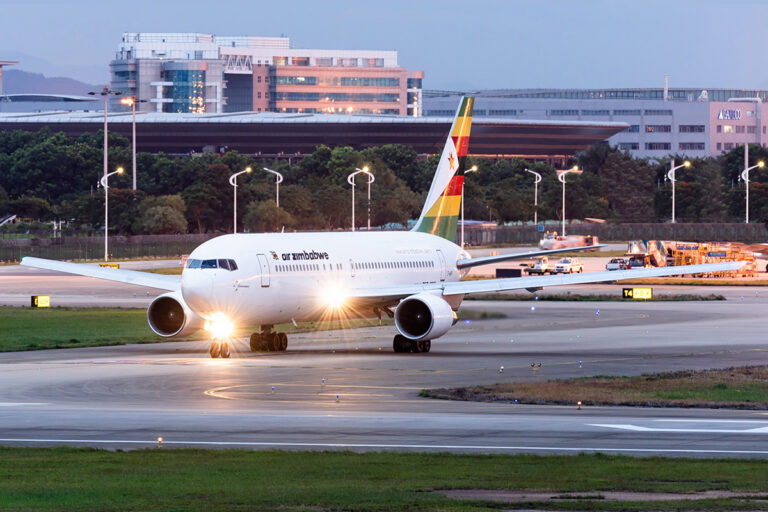
Air Zimbabwe will fly Harare to London Gatwick three times a week from 22 July, restoring a direct link between Zimbabwe and the United Kingdom.

AIR Zimbabwe will resume direct scheduled passenger flights between Harare and London Gatwick on 22 July 2026, the national carrier said in a statement from Harare on 9 July.

The service will operate three times a week. Flights will leave Harare on Sundays, Wednesdays and Fridays, with return flights from London Gatwick on Mondays, Thursdays and Saturdays. At Gatwick the airline will operate from the South Terminal.

Day Direction
Sunday, Wednesday, Friday Harare to London Gatwick
Monday, Thursday, Saturday London Gatwick to Harare

The airline said the route would support tourism, trade, investment and links with the Zimbabwean diaspora, and Zimbabwe’s economic engagement with the United Kingdom.

Air Zimbabwe has also published promotional opening fares, which it said are subject to availability and to its terms and conditions.

Route One way, from Return, from
London to Harare £490 (about M11,700) £675 (about M16,100)
Harare to London US$495 (about M8,000) US$900 (about M14,600)

Source: Air Zimbabwe. Maloti equivalents are approximate, at current rates.

The route has been suspended for years. Its return restores a direct connection between Harare and London for travellers who have had to fly via a third country.

Mofomobe: Use Lesotho Highlands water as leverage now

BNP leader Machesetsa Mofomobe has told Lesotho to use its Highlands water as leverage to secure better treatment from South Africa or remain a permanent underclass.

By Seipati Matobo

Machesetsa Mofomobe, leader of the Basotho National Party, has urged Lesotho to treat its Highlands water as strategic leverage in relations with South Africa.

Speaking at a press conference in Maseru, he said South Africa treats Basotho like dirt while the country is fully enclosed by its neighbour. He compared Lesotho Highlands water to the Strait of Hormuz.

“Lesotho Highlands water is our Strait of Hormuz.”

Mofomobe said it is time for Lesotho to use its only real leverage to negotiate better immigration conditions, higher royalties and arrangements that specifically benefit Lesotho.

Lesotho Highlands water as the key bargaining chip

The Lesotho Highlands Water Project is one of the largest transboundary water schemes in the world and South Africa’s biggest investment outside its borders.

Phase II, now under construction at Polihali, will raise annual water transfers from 780 million to 1,270 million cubic metres, supplying Gauteng. The project is years behind schedule but is now targeted for water delivery in 2028/29. More than a thousand workers are at the Polihali site.

Accusations of divided loyalties

Mofomobe argues that Lesotho’s weak negotiating position stems from political leaders who hold South African citizenship or passports. He has named several cabinet ministers, including the Prime Minister, and filed a motion in Parliament requiring MPs and senior officials to declare any South African documents.

Before 2018, Lesotho’s constitution banned dual citizenship. Mofomobe says its legalisation has created a leadership class whose loyalty is split between the two countries.

Risks for both countries

Mofomobe has called for South African workers to be expelled from the Polihali project. He says he will push major political reforms, including a retirement age for chiefs, if his party comes to power.

Any disruption carries high risks. Gauteng depends on the water, and further delays would hurt both economies. South African ministers have described the project as a model of cooperation and stressed that royalties are paid. Mofomobe’s question is whether the deal is fair.

That M15 million? BKB says it came from a politician, not an audit

The wool broker at the centre of the 2018 allegations says it was never charged, that its frozen account was released in 2023, and that the M15 million figure came from a political claim.

About this series · Part twoPart two of a Lesotho Tribune series on the dipping levy deducted from the earnings of Basotho wool and mohair farmers. Part one reported that Revenue Services Lesotho would not say whether it had examined how the levy was handled. Here the broker BKB gives its account. The Tribune is still seeking responses from other parties, and will update the series as they arrive.

THE South African wool broker BKB has rejected the allegations at the centre of a long-running dispute over Lesotho’s dipping levy, saying it was never criminally charged, that a freeze on its bank account was a tax measure since withdrawn, and that a figure of about M15 million (about US$925,000) widely attached to the matter came from a political claim rather than any audit or court finding.

BKB set out its account in a written response to questions about the collection and handling of the levy, a statutory charge deducted from farmers’ wool and mohair earnings to fund livestock disease control. Its answers cover the same matters on which Revenue Services Lesotho, in the first part of this series, declined to comment, citing taxpayer confidentiality and a policy of speaking only to matters settled by a court.

The frozen account

On the police enquiries, BKB said it was aware that officers looked into one of its Lesotho accounts in 2018 but that nothing followed. “No criminal charge was ever brought against BKB,” the company said, adding that it knew of no further enquiries since.

The company disputed the earlier account that police had frozen the account to preserve evidence. It said the freeze on its Standard Lesotho Bank account was a Third-Party Debt Order issued by the tax authority on 24 April 2019 under the Value Added Tax Act and the Income Tax Act, a mechanism for collecting tax rather than a criminal measure. It said Revenue Services Lesotho withdrew that order in a letter dated 17 August 2023 that instructed the bank to release the funds, and that Standard Lesotho Bank confirmed in a letter dated 23 August 2023 that the accounts were unfrozen and the funds available. The account, BKB said, is operating normally.

“No criminal charge was ever brought against BKB.”
BKB, in its written response

Where the tax dispute stands

On tax, BKB said its Lesotho position had been settled. It pointed to a Lesotho Revenue Authority notice of assessment dated 17 December 2020, which it said recorded a liability of M1 million (about US$62,000) in employees’ tax for the years 2012/13 to 2018/19, in full and final settlement, in respect of two staff who worked in Lesotho. It said the same authority confirmed in the letter of 17 August 2023 that all tax liabilities had been settled. The company said a minister had publicly alleged arrears of M1.4 billion (about US$86 million), a figure it said the assessment did not bear out.

Date Event, per BKB
2018 Police examine one Lesotho account; no charge follows
24 Apr 2019 Tax authority issues a Third-Party Debt Order freezing the account
17 Dec 2020 LRA assessment: M1 million employees’ tax, full and final
17 Aug 2023 RSL withdraws the order and says tax liabilities are settled
23 Aug 2023 Standard Lesotho Bank confirms the accounts are unfrozen
23 Feb 2026 RSL tax clearance issued to the subsidiary, Lihoai Consultancy

The dipping levy money

BKB was equally firm on the M15 million. It said the figure “did not arise from an audit or court finding but from a public political claim by the Minister” about the benefit of his own localisation policy.

On the levy itself, the company said the money reaches the state. “The dipping-levy funds BKB collects are remitted to the Government of Lesotho, through the Department of Livestock, as required by law, and have been since the levy was introduced,” it said. Each payment, it said, is accompanied by a reconciliation, and the payments are audited twice a year by its external auditors. “BKB has never handled levy funds in any other manner, and any statement to the contrary is incorrect,” the company said.

BKB also drew a line between itself and the growers’ association. It said a separate charge over alleged misappropriation of levy funds was brought against an office-bearer of the association, not against the company, and that BKB was never a party to it.

The allegations arose in 2018, when the wool and mohair licensing regulations barred farmers from selling outside Lesotho and routed their produce through a single licensed broker, rules later suspended and then amended after farmers objected. BKB was the broker that scheme displaced. The company said it now conducts its Lesotho business through a locally registered subsidiary, Lihoai Consultancy, which it said holds a Revenue Services Lesotho tax clearance certificate issued on 23 February 2026.

The Lesotho Tribune has also put questions to the Lesotho National Wool and Mohair Growers Association [internal link: dipping levy part one] about its role in receiving and administering the levy after 2006. Its response will be carried in this series. The Lesotho Tribune will update this report as further responses and supporting records are received.

Viral video compares South Africa treatment of Basotho to Israel and Palestine

A video arguing that South Africa’s treatment of Basotho mirrors Israel’s treatment of Palestinians has gone viral, drawing attention to Lesotho’s status as an enclave completely surrounded by its neighbour.

Editorial

A video posted by Wandile Bangisi Mvane has spread widely on South African social media. It argues that South Africa’s treatment of Basotho is the same as Israel’s treatment of Palestinians.

At the centre of the argument is a geographic fact: Lesotho is entirely surrounded by South Africa. It is one of only three enclave countries in the world. Its entire 909-kilometre border runs along South African territory.

“When a Basotho is banned from South Africa, they cannot simply go to another country. There is no Mozambique to the east, no Botswana to the north. There is only South Africa.”

For a Basotho citizen banned from South Africa, there is no other route out. The border becomes a complete barrier.

The Lesotho enclave and movement restrictions

The Lesotho government has raised concerns about the treatment Basotho receive in South Africa. Minister of Communications Nthati Moorosi said cabinet is worried about reports of Basotho being denied medical care and facing random arrests.

The Migrant Workers Association of Lesotho has received more than 60 reports of members denied access to clinics and hospitals, mostly in Soweto. Women migrants are the most affected.

Executive director Lerato Nkhetše described the denial of healthcare as a violation of human rights and international law. He said it is undermining Lesotho’s efforts to fight HIV.

The comparison and its limits

Mvane draws a parallel between checkpoints and barriers in the West Bank and the effective barriers Basotho face when trying to access services in South Africa.

The Lesotho Exemption Permit, which allows Basotho to live in South Africa under relaxed rules, has been extended to 2027. The Basotho Action Party has called for free movement using national identity cards.

The video argues that a powerful state controlling all access to a smaller encircled population creates structural dependency, even without physical walls or military occupation.

NUL launches Physical Education degree

0

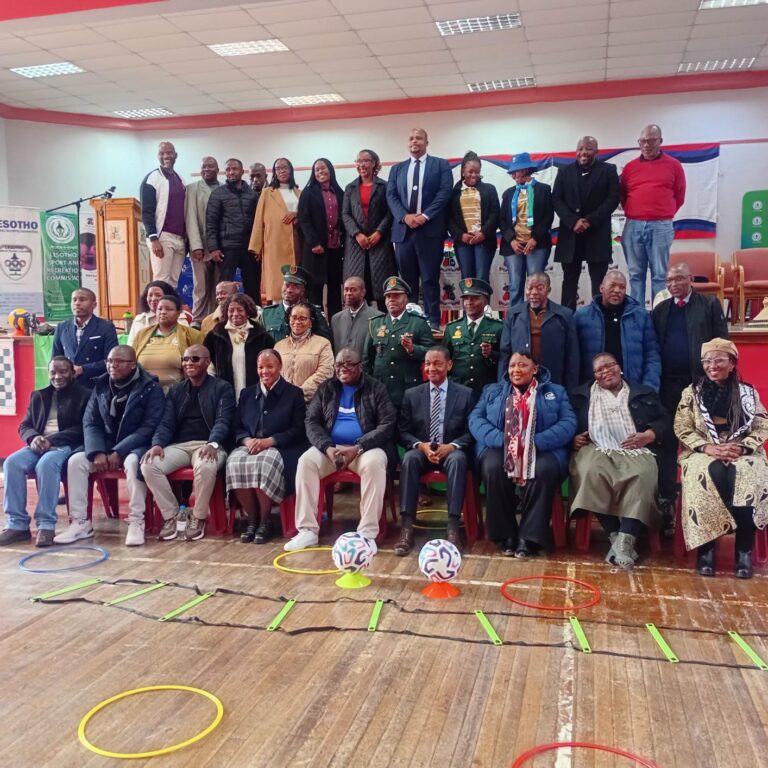
The National University of Lesotho has launched a new Physical Education degree. The programme starts with 20 students and aims to build professional careers in sport.

By Litšitso Letsunyane

The National University of Lesotho has launched a new Physical Education degree. The four-year course will take only 20 learners in its first intake, including students with disabilities.

Minister of Tourism, Sports, Arts and Culture Thabo Mputi described the launch as an investment in transforming sport in Lesotho from a hobby into a professional enterprise.

He said Lesotho owes a debt to Cuba. A team of Physical Education experts from Cuba helped NUL develop the programme through technical and content advice.

“When our athletes compete locally, regionally and internationally, they do more than pursue personal achievement. They carry the hopes and aspirations of a nation. They become ambassadors of Lesotho and demonstrate the resilience, courage and excellence that define the Basotho spirit.”

Mr Mputi noted that sport now creates jobs in coaching, athlete development, sports science, fitness and wellness, administration, performance analysis, event management and research.

How the Physical Education degree will work

Director of Sports Thabo Tsiki said the programme builds fundamental skills early. It should help the country develop athletes from the age of six through partnerships with countries that excel in sport.

Chief Executive Officer for Primary and Tertiary Education Sekhotseng Adam said sponsorship for students cannot be guaranteed yet. The university and National Manpower Development Secretariat will handle the next steps.

Dr Maboi Mphunyane, Head of Science Education, said the limit of 20 students is to keep the programme manageable while it is new. Learners with a diploma can enter at second year.

Partnerships behind the launch

NUL developed the programme with UNESCO, the Lesotho National Olympic Committee and the Lesotho Sports and Recreational Commission.

Ex-education officer charged with taking bribes to fix teacher jobs

A former assistant human resources officer in Leribe has been charged with bribery and fraud after allegedly demanding payments from teacher applicants and tampering with recruitment records.

By Tholoana Lesenya

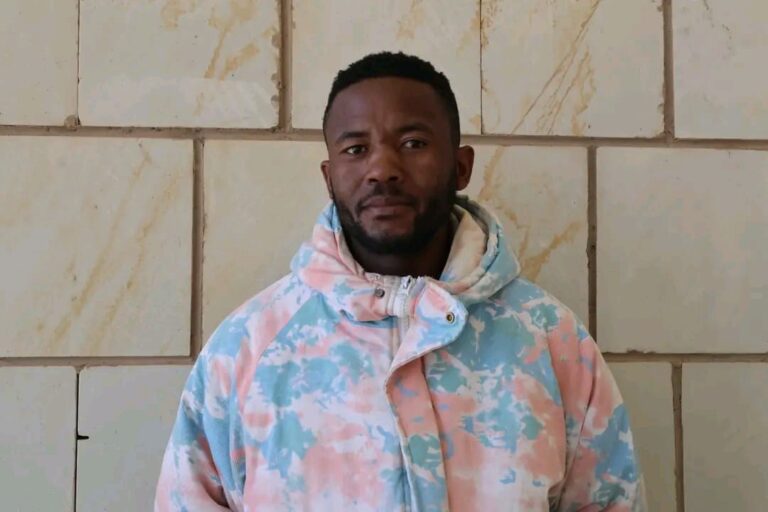
A 30-year-old former Assistant Human Resource Officer attached to the Leribe District Education Office has appeared in court on charges of bribery, corruption, fraud and extortion.

The Directorate on Corruption and Economic Offences alleges that Tšireletso Lekoetje of Ha Raliee abused his access to confidential teacher recruitment documents during the 2024 exercise to solicit money from job applicants.

“Investigators say Lekoetje allegedly received a total of M9,500 from different candidates in exchange for manipulating recruitment outcomes.”

Prosecutors allege that candidates who performed well in interviews were threatened with losing their positions unless they paid. One candidate ranked third is said to have paid M6,000, after which Lekoetje allegedly altered official records to move the candidate to first place.

Allegations of teacher recruitment corruption in Leribe

The DCEO says Lekoetje tampered with Schedule 17, an official document used in teacher appointments. Original pages with legitimate rankings were allegedly removed and replaced with falsified versions that were later submitted to the Teaching Service Commission.

The altered records led to appointments at Thokoa Primary School and St Phillips Primary School that prosecutors claim were obtained through fraud.

Bail refused and ongoing investigation

Lekoetje was granted bail of M2,000 cash deposit plus M20,000 surety but failed to meet the conditions and remains in custody. He was also ordered not to interfere with witnesses or obstruct the investigation.

The case has revived older allegations of officials demanding large sums for teaching posts. Investigators say more victims or witnesses may still come forward as the matter proceeds through the courts.

Independent business & current affairs journalism · Lesotho Subscribe — M85/month
| Independent business & current affairs journalism · Lesotho