

Advocate Brigadier General Mantšo Sello told the National Dialogue Leadership Forum and Accountability Summit that corruption has become a national illness, as the DCEO points to expanded offices, more than 50 new officers and a M74 million budget.
MASERU. The Director General of the Directorate on Corruption and Economic Offences (DCEO), Advocate Brigadier General Mantšo Sello, has vowed that the institution will keep rooting out corruption, declaring that the fight against graft remains central to restoring public trust and improving the lives of Basotho.
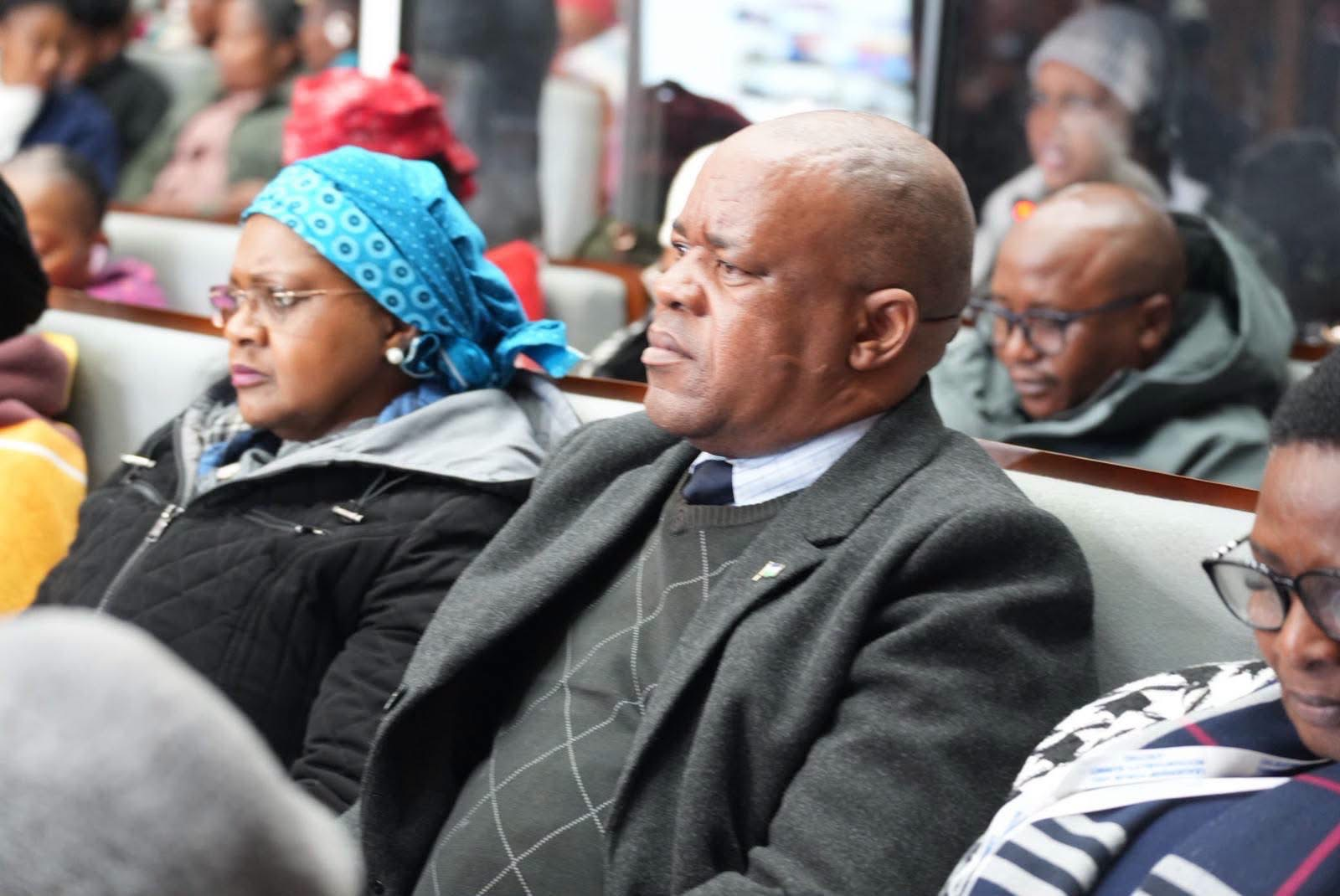
Adv. Sello made the remarks during the final day of the National Dialogue Leadership Forum and Accountability Summit, where leaders from government institutions, civil society organisations, the legal fraternity, faith-based organisations and members of the public gathered to reflect on accountability, integrity and good governance in Lesotho.
Presenting the DCEO’s report on corruption, the Director General painted a sobering picture of the impact corruption continues to have on the country. He said corruption has become a national illness that affects every sector of society, depriving citizens of essential services and slowing economic development.
He stressed that corruption is not a victimless crime, as it weakens public institutions, erodes confidence in government and diverts resources meant to improve the lives of ordinary Basotho.
“The nation is suffering because of corruption.”
Advocate Brigadier General Mantšo Sello
“The nation is suffering because of corruption,” Adv. Sello told delegates, adding that the DCEO remains determined to confront the challenge through prevention, education, investigation and prosecution.
He listed several milestones achieved by the anti-corruption body in recent years, noting that the institution has significantly expanded its footprint across the country. DCEO offices have now been established in the northern and southern regions, making services more accessible to communities outside Maseru and allowing investigators to respond more efficiently to corruption-related complaints.
According to Adv. Sello, the institution has also strengthened its human resource capacity by recruiting more than 50 officers. He attributed these developments to increased financial support from government after the DCEO’s budget rose to M74 million (about US$4.5 million) during the 2023/2024 financial year.
The additional funding, he said, has enabled the organisation to improve operations, recruit skilled personnel and expand public outreach initiatives.
The Director General also emphasised the importance of involving young people in the fight against corruption. He said the DCEO has built a strong working relationship with youth groups following an anti-corruption campaign held last year, during which young people pledged to become ambassadors for integrity within their communities.
He noted that empowering the youth is critical because they represent the country’s future leadership. By instilling values of honesty, transparency and accountability at an early stage, he said Lesotho stands a better chance of building a society that rejects corruption.
In addition to community engagement, Adv. Sello revealed that the DCEO is embracing modern technology to strengthen investigations and improve the detection of corruption-related offences. He said technological innovation is becoming an essential tool in combating increasingly sophisticated financial crimes.
Providing an overview of the institution’s performance, Adv. Sello reported that four corruption cases were successfully finalised during the 2024/2025 financial year. He added that although five other cases were withdrawn, investigations into those matters had been completed before they were discontinued through legal processes.
Beyond investigations, the DCEO continues to focus on preventing corruption before it occurs. Adv. Sello explained that the institution operates through specialised departments responsible for public education and prevention, investigations, prosecution support, asset recovery and the report centre. He said these units work together to ensure a comprehensive approach to combating corruption.
Part of the DCEO’s preventive strategy includes working closely with government ministries to establish Systems Integrity Committees. These committees are tasked with identifying weaknesses within public institutions and implementing measures to reduce opportunities for corruption before they arise.
The Director General’s presentation sparked robust engagement from participants attending the summit. Among those who contributed to the discussion was MISA Lesotho Chairperson, Khotsofalang Koloi, who emphasised that the media remains one of the country’s strongest allies in exposing corruption and promoting accountability. He urged the DCEO to strengthen its relationship with journalists rather than undermine institutions that play a critical watchdog role.
Koloi said a free and independent media helps uncover wrongdoing, informs the public and promotes transparency, making it an indispensable partner in the national fight against corruption. He encouraged the DCEO to build cooperation with media practitioners to ensure corruption cases receive responsible and accurate public coverage.
The discussions also turned to the role played by the Office of the Ombudsman in strengthening public accountability. Representing the Ombudsman’s Office, Advocate ‘Maretšepile Motanyane said the institution has also expanded its services beyond Maseru.
Offices have now been established in the northern and southern regions, with plans underway to extend services to additional parts of the country. The expansion, she explained, is intended to improve access to justice by bringing the Ombudsman’s services closer to communities.
Throughout the summit, speakers repeatedly stressed that defeating corruption requires a collective national effort. Government institutions, law enforcement agencies, civil society organisations, religious bodies, the private sector, the media and ordinary citizens all have a role to play in promoting transparency and accountability.
As the Accountability Summit concluded, delegates agreed that while institutions such as the DCEO and the Ombudsman’s Office continue to strengthen their capacity, the fight against corruption cannot succeed without active public participation. They called on Basotho to report corrupt practices, reject unethical behaviour and support institutions mandated to protect public resources.
For the DCEO, the message was unequivocal: the war against corruption is far from over. With expanded offices, increased staffing, improved resources, stronger partnerships with young people and the adoption of modern technology, the institution says it is better positioned than ever to pursue its mandate of safeguarding integrity and ensuring that corruption has no place in Lesotho’s future.