


MASERU-New details have emerged in the high-profile 2014 bombings trial, after a forensic expert told the court that police officers made it difficult for civilian forensic teams to properly investigate the scenes of two deadly explosions. The testimony, delivered this week before the High Court, has raised fresh questions about how the investigations were handled at the time.
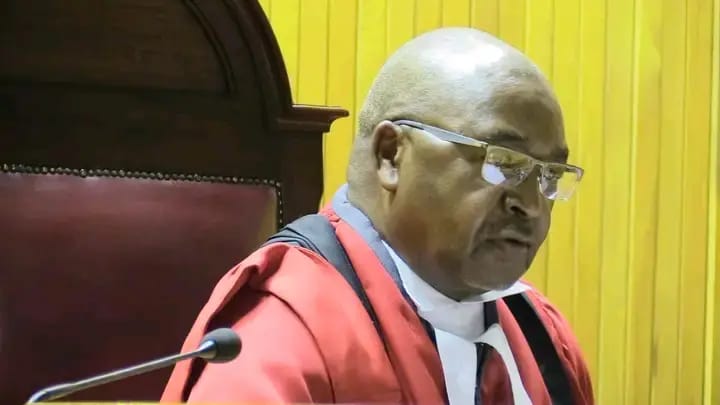
Mofo Setloboko, who in 2014 served as a Senior Lab Technologist in the Forensic Laboratory under the Lesotho Mounted Police Service (LMPS), took the stand as the 27thstate witness in the case against former Lesotho Defence Force (LDF) Commander Lieutenant General Tlali Kamoli and four army members. The five face charges relating to bomb attacks at the home of Liabiloe Ramoholi (also known as Maesiah Thabane) at Moshoeshoe II and at the home of former Police Commissioner Khothatso Tšooana at Ha Abia.
The explosions, which rocked the nation more than a decade ago, remain among the most politically charged incidents in Lesotho’s recent history. This week’s testimony shed new light on what happened behind the scenes as investigators tried to piece together the events of January 2014.
“They did not want us there”, Witness describes tension at crime scenes
Setloboko told the court that when he and his civilian forensic team arrived at Moshoeshoe II and Ha Abia on January 27, 2014, they immediately felt unwelcome. Instead of cooperation, he said they were met with resistance from police officers already at the scene. According to him, the police made it clear they did not want the civilian forensic specialists involved.
He described the working environment as hostile and said they were constantly pressured and restricted from performing their duties freely. “There was no cooperation at all. The police did not want the civilian team at the crime scenes,” he told the court. “We were victimised and forced to work under pressure, and some items were hidden from us.”
The court heard that the strained relationship between the investigative teams created gaps in what should have been a coordinated and professional examination of the crime scenes.
During his testimony, Setloboko was shown a photograph of an unexploded bomb that police officers said had been found at Ha Abia. To the court’s surprise, he stated he had never seen the device, even though he was one of the forensic experts assigned to the investigation. He explained that if the device had indeed been found at the scene, and if the civilian team had been given access to it, he would have included it in his official findings.
“I did not see that unexploded bomb,” he said. “If it was on the scene and we were given the chance to examine it, I would have documented it in my report.”
His statement suggested that important evidence may have been withheld from the civilian forensic team, raising concerns about how the police handled key materials in the investigation.
Setloboko explained to the court that his team collected several metal pieces from both crime scenes. These fragments appeared to have come from explosive devices and contained visible burn marks. The items were taken to the forensic laboratory for testing. After conducting examinations, he discovered that the fragments contained a plasticizer, a chemical compound commonly used to increase the power of an explosive.
He explained that when added to an explosive mixture, a plasticizer ensures maximum heat and pressure, resulting in a stronger and more destructive blast.
His findings, he said, were consistent with the type of explosions reported at the two homes. The results showed that the devices were not simple makeshift bombs but rather powerful, carefully assembled explosives.
With Setloboko’s testimony completed, the court adjourned the case to Monday next week, when the trial will resume. The state is expected to call more witnesses as it continues to build its case against Kamoli and the four soldiers. The 2014 bombings case has been one of the longest-running and most significant trials in Lesotho, involving senior security figures and allegations of politically motivated attacks.