

Media practitioners across Lesotho have been called to place the dignity and safety of survivors at the centre of every gender-based violence story they publish, as new training underscores the media’s power to break silence and shift community attitudes.
Journalists and news reporters in Lesotho have been urged to report cases of gender-based violence (GBV) in a way that is ethical, accurate, and respectful to survivors.
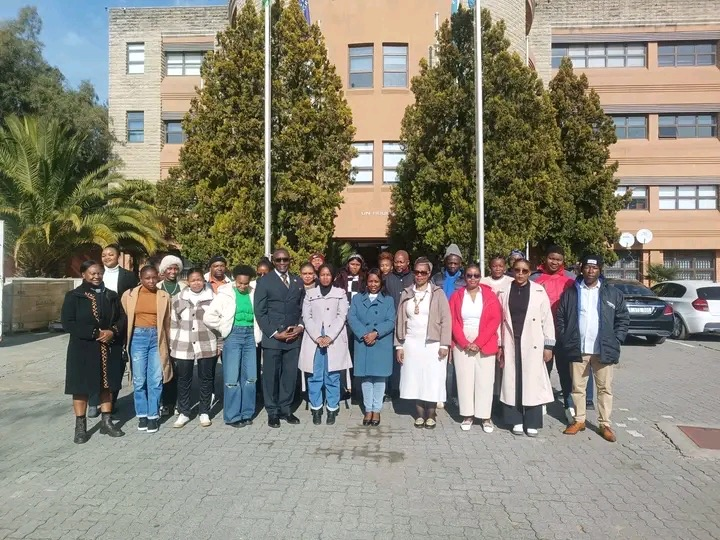
The call was made on Wednesday during a one-day training workshop for media practitioners. The workshop was organised by the United Nations Population Fund (UNFPA) and the UN Sexual and Reproductive Health Agency to build the skills of journalists when covering GBV stories.
Speaking at the event, UNFPA Representative John Kennedy Mosoti said the training was meant to help journalists report on GBV in a survivor-centred way, putting the safety, dignity, and rights of survivors first in every story.
Mosoti explained that many survivors of GBV still suffer in silence. Instead of reporting cases to the police or support centres, most choose to confide only in close friends, family members, or neighbours.
He said the media can play a pivotal role in breaking this silence. By reporting responsibly, journalists can raise public awareness about GBV, encourage more survivors to seek help, and help reduce the stigma that stops people from speaking out.
“Through clear and responsible reporting, the media can educate people, change harmful attitudes, and promote better behaviour towards GBV issues.”
‘Mapuleng Secheche, the Acting Director General at the Ministry of Gender, Youth and Social Development, also addressed the participants. She acknowledged that the fight against GBV in Lesotho faces challenges, including a lack of sufficient funding. However, she stressed that the media remains a powerful tool for sharing information with the public.
According to Secheche, journalists have the ability to influence communities in a positive way. Through clear and responsible reporting, the media can educate people, change harmful attitudes, and promote better behaviour towards GBV issues.
Senior Inspector Mojabeng Mokotjomela from the Lesotho Mounted Police Service (LMPS) gave an update on the situation in the country. She said Maseru district continues to record the highest number of reported GBV cases. Meanwhile, Mokhotlong and Mafeteng districts have the highest number of murder cases linked to GBV.
She said the most common types of GBV reported to the police are sexual abuse, physical abuse, and emotional abuse.
Inspector Mokotjomela urged journalists to be careful when reporting on these cases. She asked them to protect the identities of survivors and avoid publishing names, photographs, or other details that could put survivors at risk or make their situation worse.
One of the journalists at the workshop, Majara Molupe, appealed to government and other partners to give journalists better access to information. He said having accurate and up-to-date data would help reporters produce stronger stories and give the public a clearer picture of how serious the GBV problem is in Lesotho.
Recent statistics show that about 87 per cent of women and girls in Lesotho have experienced some form of gender-based violence in their lifetime.
At the end of the workshop, participants agreed that tackling GBV requires teamwork. The media, government departments, and development partners must work together to fight GBV and support survivors across the country.