


South Africa · Human Rights
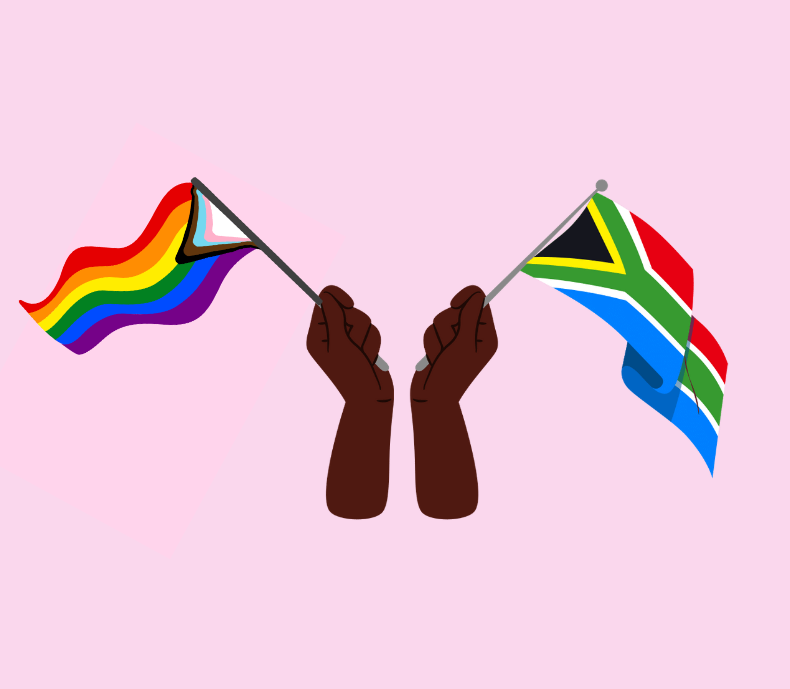
A new national survey finds that South Africans have grown more accepting of LGBTI people over the past decade. The same survey finds they have grown more hostile to immigrants over the same period. The two trends are linked.
Staff Reporter
South Africa has become measurably more accepting of lesbian, gay, bisexual, transgender and intersex people over the past decade. It has also become more hostile to immigrants over the same period. A new nationally representative survey, released in Johannesburg on Friday night, finds those two trends are correlated — and flags the connection as a concern for advocates and policymakers.
The report, titled Admission Reserved, was commissioned by the Other Foundation and conducted by the Human Sciences Research Council (HSRC). It is the first nationally representative survey to provide a disaggregated estimate of South Africa’s LGBTI population, and builds on Progressive Prudes, a landmark public opinion survey published by the Other Foundation and the HSRC in 2015.
The report was launched at the Other Foundation’s offices in Parkwood, Johannesburg, on 26 June 2026, a date that falls on the 20th anniversary of marriage equality for LGBTI people in South Africa, and 30 years after the adoption of South Africa’s Constitution, which was the first in the world to explicitly prohibit discrimination on the grounds of sexual orientation.
The anti-immigrant link
The report reveals a correlation between anti-LGBTI and anti-immigrant attitudes. People who hold more hostile views towards LGBTI people are more likely to hold hostile views towards immigrants, and vice versa. The report does not establish the direction of causation, but the co-movement of the two trends across the decade is one of its most pointed findings.
While acceptance of LGBTI people has generally increased, hostile attitudes towards immigrants intensified in the same period. The report identifies this as an area requiring attention from civil society and policymakers working on both sets of issues.
“The door to equality and freedom has opened, but admission is still too often reserved.”— Admission Reserved report, The Other Foundation & HSRC, 2026
What the numbers show
The proportion of South Africans who say same-sex sexual activity is “always wrong” has fallen from 66% in 2015 to 52% today. Support for marriage equality has risen from 37% to 45% over the same period. Some 46% of respondents say their views towards LGBTI people have become more accepting in the last five years.
On equal rights, 60% of South Africans now believe gay and lesbian people deserve the same rights as all other citizens, up from 51% a decade ago. Some 57% say the same about bisexual and transgender people. On intersex rights specifically, 68% agree that intersex people deserve equal rights.
Family acceptance figures show roughly half of South Africans would accept a gay (49%), lesbian (51%), transgender (50%), or bisexual (46%) family member. Acceptance of an intersex family member is higher, at 64%. Around half also say LGBTI people should be included in their culture and traditions.
Population estimate
For the first time, the survey provides a reliable national estimate of the LGBTI population. It finds that 5.3% of South Africa’s adult population is LGBTI, representing approximately 2.39 million people. Within that figure, 2.5% of South Africans identify as gay, lesbian, or bisexual; 1.0% as transgender or non-binary; and 2.7% as intersex.
The report finds no significant racial group differences in levels of acceptance or rejection of LGBTI people.
Five attitude clusters
The survey maps South African public opinion into five clusters. Committed Champions, who strongly support LGBTI inclusion across all areas of life, make up 9% of the population. They are most likely to be women, urban residents, tertiary-educated, and those with lower levels of religiosity.
Evolving Allies, who broadly support equal rights but are less certain on more specific issues such as same-sex parenting or transgender rights, are the largest group at 32%. They tend to be younger and are more likely to be women.
In-Betweeners hold mixed or uncertain views, shaped by religion and social media conversations. They make up 29% of the population and are the most diverse group by gender, age, and education. The report identifies this group as the most likely to shift towards acceptance through familiarity and personal contact with LGBTI people.
Principled Conservatives, at 22% of the population, show low levels of acceptance around same-sex relationships and family inclusion but may still support basic equal rights in principle. They are more likely to be male, older, and from rural or non-metro areas.
Uncompromising Hardliners represent 7% of the population and consistently reject LGBTI inclusion across all areas of life. Some 51% of this group has had no real-life contact with an LGBTI person. Their views are least likely to shift through persuasion, but the report notes they may soften through direct personal experience.
Public advocacy gap
Despite broadly rising acceptance, public advocacy for LGBTI people remains limited. Only 17% of South Africans say they have spoken in support of or defended a gay, lesbian, or bisexual person in public. The figure is lower still for transgender people, at 9%. A further 27% say they have not done so but may in future; 30% say the same regarding transgender people.
Some 39% of South Africans report having at least one LGBTI friend or family member.
Key indicators: 2015 vs 2026
| Indicator | 2015 | 2026 |
|---|---|---|
| Same-sex activity “always wrong” | 66% | 52% |
| Support marriage equality | 37% | 45% |
| Gay & lesbian people deserve equal rights | 51% | 60% |
| Would accept a lesbian family member | — | 51% |
| Views more accepting in past 5 years | — | 46% |
Source: Admission Reserved, The Other Foundation & HSRC, 2026. The 2015 baseline is drawn from Progressive Prudes, the Other Foundation & HSRC.