


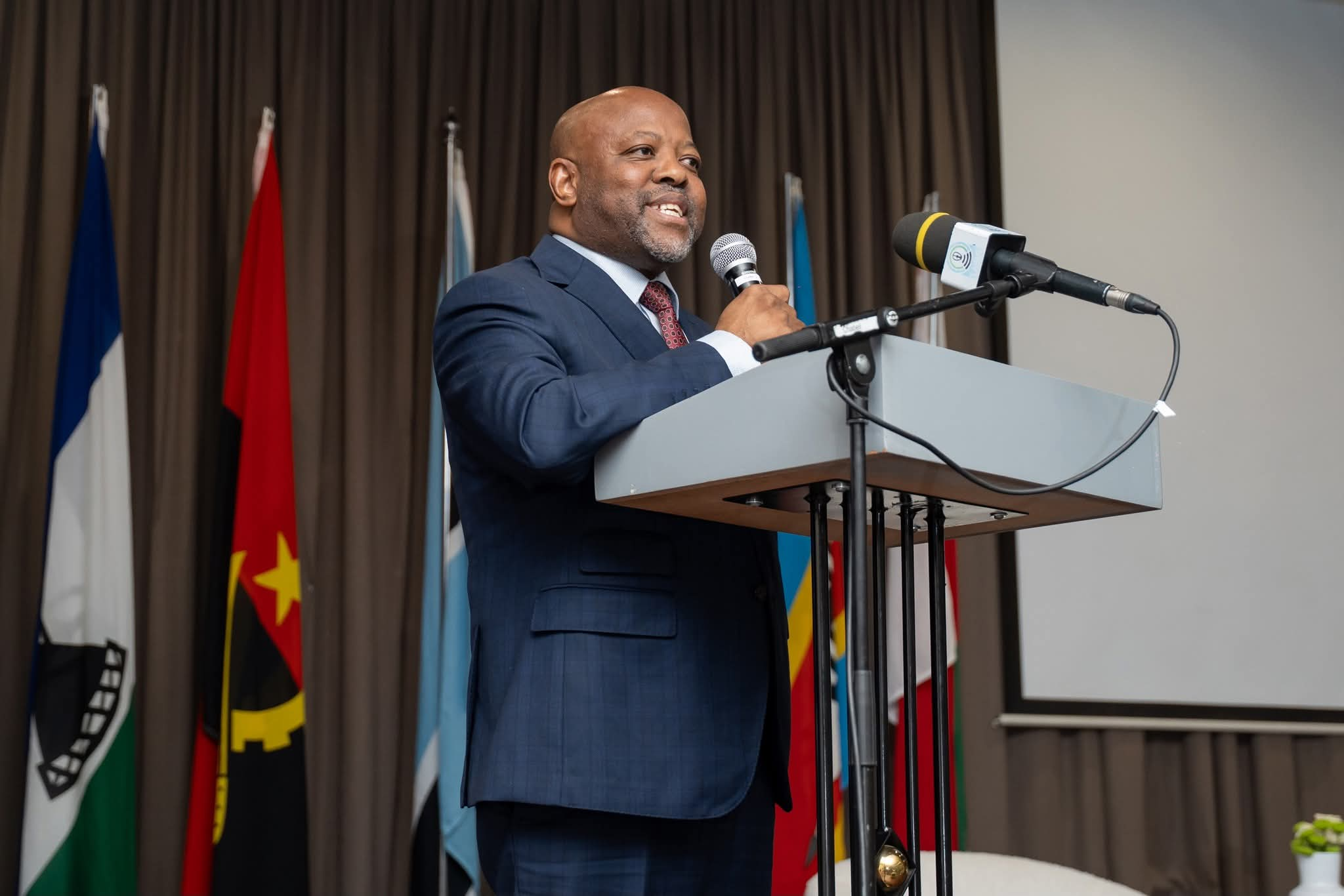
The 11th SADC Multi-Stakeholder Water Dialogue held in Maseru this week focused on the critical role of water security in transforming Southern Africa’s economic development corridors.
Themed “Water Security, Innovation and Nexus Action: Watering and Enabling Regional Economic Development Corridors for Transformation in SADC”, the biennial event served as a vital platform for exchanging ideas, brainstorming pressing issues and shaping regional programmes to support integration, industrialisation and poverty reduction.
It aligned key regional and continental frameworks, including SADC Vision 2050, the Regional Indicative Strategic Development Plan (2020-2030), the SADC Regional Industrialisation Strategy and Roadmap (2015–2063) and the African Union’s Agenda 2063.
It also emphasised the exploration of how the water sector, under the Water, Energy, Food and Ecosystems (WEFE) Nexus framework, can effectively contribute to the newly endorsed regional initiative of smart regional economic corridors.

Mohlomi Moleko, Minister of Natural Resources, speaking at the event, emphasised the critical role of water in regional integration, economic development and industrial transformation within the SADC.
He said water is highlighted as essential to every link in the regional value chain, from agriculture and energy to trade and industrial processing, emphasising that without water, there can be no inclusive growth or sustainable industrial transformation.
Moleko appealed that the SADC region’s approach to economic corridor development must prioritise water at the heart of planning and investment to ensure that the corridors serve as lifelines of resilience, providing equitable access to resources.
He highlighted the Lesotho Highlands Water Project and the Lesotho Botswana Water Transfer Project as demonstrations that value collaboration in managing shared resources for mutual benefit.
The SADC Secretariat Director of Infrastructure, Mapolao Mokoena, said they view economic corridor development as crucial for realising regional integration and development; therefore, the initiative seeks to align sectoral visions and strategies, co-design sustainable solutions, and promote impactful regional trade with seamless movement of goods, services and people.
Among many things, she higlighted challenges that remain outstanding in the water and energy sector, saying despite efforts, regional water access still stands at 63 percent and sanitation at 37 percent, falling short of the 80 percent target by 2030.
She encouraged adaptation of strategies to support regional progress in the water sector, adding that by recognising the limitations of working in isolation, the dialogue emphasises the pursuit of integrated arrangements and mainstreaming of cross-cutting sectors.
The GWPSA Interim Executive Secretary, Andrew Takawira, also added a heavy voice to the dialogue, emphasising the need to move beyond conversation and towards concrete action in integrating water management into regional development strategies.

Takawira told participants at the dialogue that Southern African economies are currently facing increasing pressure from climate variability, water scarcity and growing demands on food and energy systems.
At the same time, the region is pursuing ambitious goals for industrialisation, agricultural transformation and energy transition, thereby placing the core challenge of the dialogue as a need to reconcile these pressures and ambitions in a way that will ensure resilience, prosperity and inclusion.
According to Takawira, without reliable and resilient water systems, development corridors cannot function as engines of transformation. He threw the question of how water security can enable the transformation of Southern Africa’s economic development corridors to the participants.
Member states participating in the dialogue acknowledged challenges, including climate variability, water scarcity and the fact that investments in corridors often fail to adequately integrate water management.
The two-day-long dialogue focused on three key areas:
1. Repositioning the Water-Energy-Food-Ecosystems (WEFE) Nexus: Integrating these elements into corridor planning to maximise synergies and manage trade-offs.
2. Unpacking the Role of River Basin Organisations (RBOs) and Transfrontier Conservation Areas (TFCAs): Strengthening the links between these institutions and corridor planning and governance to ensure development corridors are ecologically and socially sustainable.
3. Promoting Water-Smart and Climate-Resilient Investments: Showcasing innovative solutions and mobilising financing through blended approaches involving public budgets, public-private partnerships, climate funds and private capital.
The need to ensure that corridor-led investments systematically integrate water security, making them resilient to climate risks and able to deliver sustained competitiveness, was another issue that was highly emphasised, including strengthening the links between transboundary institutions and development corridors, recognising these institutions as central actors in planning and implementation.
At the end of the day, one thing was agreed upon: to leave Lesotho with a commitment to turn dialogue into delivery- to translate dialogue into tangible action.
In Takawira’s words, “Water is not a backdrop to development. It is the enabler. If we succeed in making water central to corridor-led investments, and if we connect our transboundary institutions to these engines of growth, then we will not only safeguard our future but also accelerate the transformation of Southern Africa and contribute to Africa’s continental integration.”