Mohahlaula Airlines
Wednesday, July 22, 2026
Home Blog Page 55

Defiance of Court Order as DPP Motinyane Denied Access to Office

0

Director of Public Prosecutions (DPP) Advocate Hlalefang Motinyane returned to work today after a bruising legal battle that culminated in a landmark Constitutional Court ruling. But her victory was quickly overshadowed by a disturbing development: the lock to her office had been tampered with, leaving her unable to gain access, this is according to sources close to the matter.

The unsettling incident comes less than 24 hours after the Constitutional Court ruled that Prime Minister Sam Matekane’s suspension of Advocate Motinyane was unconstitutional. The tampering raised questions about whether resistance still lingers within state institutions to comply with the judgment.

Court Rebuffs Prime Minister

On Thursday, the High Court sitting as the Constitutional Court delivered a judgment that struck at the heart of executive overreach. The bench ruled that the Prime Minister had no authority to suspend the DPP. By invoking allegations of misconduct without following the procedure set out in Section 141(7) of the Constitution, Matekane had acted outside the law.

The court went further, describing the cascading events that followed—her being locked out of her office, stripped of her security detail, and threatened with eviction from her residence—as consequences of an unlawful act. They were declared null and void.

In its final order, the court reinstated Advocate Motinyane with immediate effect, issuing a sharp reminder that constitutional limits are binding even on the highest office.

Law Society Reacts

Speaking to the Lesotho Tribune, Law Society President Advocate Lintle Tuke said his organisation would look into today’s incident.

“We’ll investigate and have all the facts to determine whether the Law Society has any role to play,” he noted.

It was the Law Society itself that mounted the constitutional challenge after the suspension was imposed on 24 June. Their legal victory now sets a precedent on the independence of prosecutorial authority in Lesotho.

Silence from Government

Lesotho Tribune attempted to reach Justice Minister Richard Ramoeletsi for comment, but his phone went unanswered. The Ministry has not issued any statement regarding the tampering of Advocate Motinyane’s office or on how the ruling will be implemented in practice.

A Serious Political Blow

The ruling represents one of the most serious judicial reversals for Prime Minister Matekane since assuming office. What began as a move to discipline the DPP has now been struck down as unconstitutional, exposing the government to accusations of undermining the rule of law.

Lesotho Tribune reached out to Advocate Motinyane but our questions remain unanswered at the time of publication of this article.

When Transparency Becomes a Punishable Offense

0

Deputy Commissioner of Police (DCP) Paseka Mokete has been issued a show-cause letter, accused of tarnishing the reputation of the Lesotho Mounted Police Service (LMPS). His offense? Answering a question honestly to the Lesotho Tribune. According to thepost, Mokete admitted he was not privy to the details of a Memorandum of Understanding (MOU) signed between the police and investment firm Mergence, despite being listed as a witness. For this candour, he now faces the threat of suspension.

At first glance, this appears to be an internal disciplinary matter. But step back, and it becomes a textbook case of what ESG frameworks describe as governance failure. It demonstrates how institutions corrode when image is valued above integrity, when secrecy is prized above accountability, and when transparency itself becomes a punishable offense.

The Governance Pillar of ESG

ESG is not only a corporate tool; it is increasingly a measure of how public institutions perform under the pressure of accountability. The “G”; governance  demands transparency, ethical leadership, and responsiveness to stakeholders. In the case of the police, the stakeholders are not shareholders but the public whose taxes fund the service and whose rights depend on its credibility.

By penalising Mokete for admitting his lack of knowledge, the LMPS leadership has inverted this principle. Instead of encouraging honesty, it punishes it. Instead of promoting accountability, it signals that silence is safer than truth. And instead of aligning with ESG standards that attract trust and investment, it undermines them.

Secrecy as Institutional Culture

This episode exposes a broader pathology: secrecy has become institutionalised in Lesotho’s governance structures. The police commissioner’s fury at Mokete was not about operational failure. It was about optics — the fear that a senior officer admitting ignorance would embarrass the institution.

But embarrassment is not a crime. What corrodes institutions is the attempt to airbrush reality. ESG thinking is clear on this: resilience comes not from suppressing flaws, but from confronting them. Companies that bury bad data eventually lose investor confidence. Governments that punish truth-telling officials lose legitimacy.

In Lesotho, however, the reflex is to shoot the messenger. It is the official who speaks plainly — not the architect of questionable deals — who ends up defending themselves in disciplinary hearings.

Link to Pension Fund Governance

This case cannot be divorced from the wider scandals swirling around Lesotho’s public funds. The MOU with Mergence, which sparked Lesotho Tribune’s questions, is itself part of a larger story of opaque financial arrangements and conflicts of interest in the pension industry. At the centre of this are unresolved questions about governance: Who benefits? Who approves? Who scrutinises?

The Central Bank of Lesotho has faced criticism for its failure to enforce proper oversight. Pension funds have allowed themselves to be captured by conflicted service providers. And time and again, public officials tasked with asking questions are either silenced, sidelined, or punished. Mokete’s show-cause letter is not an isolated event; it is a symptom of systemic resistance to transparency.

The ESG Lens on Policing

Globally, police services are not immune from ESG scrutiny. Social responsibility includes how law enforcement treats dissent, how it manages public trust, and how it uses power. Governance, in turn, covers the internal accountability structures that prevent abuse and ensure credibility.

Lesotho’s police service has often found itself in headlines for the wrong reasons: excessive use of force, politicised operations, and weak internal accountability. Adding to that list the punishment of a senior officer for speaking to the press only deepens concerns that governance is treated as a nuisance rather than a necessity.

When ESG analysts look at countries for investment risk, these institutional signals matter. Weak governance in one part of the state bleeds into perceptions of the entire investment climate. If the police punish transparency, what faith can investors have in regulatory agencies, procurement processes, or state-owned enterprises?

The Risk of Normalising Retaliation

The governance failure here is not just institutional but cultural. Every show-cause letter like Mokete’s sends a message down the ranks: loyalty to leadership trumps loyalty to truth. Over time, this corrodes morale, entrenches fear, and breeds compliance rather than courage.

It also normalises retaliation. Today it is a police officer being silenced for answering a journalist. Tomorrow it could be a procurement officer questioning a tender, or a regulator probing a financial deal. Once the culture of punishing openness is entrenched, it spreads across institutions.

And ESG investors notice. Socially responsible funds, development financiers, and international partners increasingly demand proof that countries respect governance standards. Where there is retaliation against transparency, funding dries up, and reputational damage lingers.

Why This Matters Beyond Policing

The Mokete affair resonates beyond the police barracks. It touches on a national dilemma: Lesotho struggles with the basic building blocks of governance. Institutions too often protect themselves rather than the public, shield elites rather than serve citizens, and enforce silence rather than encourage disclosure.

This is not merely a police story. It is the same story told through the collapse of trust in pension fund governance, through opaque deals in mining and energy, and through politicised decision-making in agriculture. The names and faces change, but the mechanics are the same.

The Lesson for ESG in Lesotho

ESG is not just a checklist. It is a lens that reveals whether institutions can survive the shocks of scrutiny, crisis, and change. In Lesotho’s case, the lens keeps catching the same flaw: governance is brittle because it is allergic to transparency.

DCP Mokete’s fate will tell us whether the LMPS is willing to embrace governance principles or whether it will double down on its culture of opacity. If he is punished, the message will be clear: honesty has no place in the institution. If the case is dropped, it may mark a small but important step toward aligning police culture with the governance standards that Lesotho desperately needs.

Closing Warning

A show-cause letter may look like a small administrative act. But in the ESG framework, it is a flashing red light. It warns that governance is being inverted, that truth is being criminalised, and that institutions are mistaking image management for accountability.

The real danger is not the embarrassment of one honest comment. The real danger is the institutional culture that punishes candour and rewards silence. In ESG terms, that is not just poor governance, it is the beginning of collapse.

Tieho Delivers Pride and Rhythm in Mohuli

0

Tieho’s latest single Mohuli is a confident step forward in Lesotho’s contemporary music scene. Built on Afrobeat rhythms but rooted in Basotho expression, the song strikes a balance between global polish and local authenticity.

The production is sharp. Percussion carries the pulse with energy while synth layers add a modern sheen. Nothing overwhelms the mix. Instead, the arrangement leaves space for Tieho’s vocals, which sit at the center with clarity and conviction. His tone is textured, not overly refined, giving the track a human presence that listeners can connect with.

Lyrically, Mohuli draws on themes of pride and identity. It is both celebration and testimony. Tieho’s delivery is not boastful, but it affirms selfhood and community. The chorus in particular has a sticky quality. It repeats in the mind long after the track has ended, a mark of a well-crafted hook.

What the song achieves is a sound that works in two spaces. It is radio-friendly and accessible, yet it also feels at home in dance venues. It invites movement, but it also communicates a message that resonates with listeners who care to hear beyond the beat.

If there is a critique, it is that the track plays within familiar lines. Tieho could take more risks by experimenting with bridges, unexpected shifts, or moments of silence. That might elevate future work to another level. But within its frame, Mohuli delivers fully on its promise.

For Lesotho’s growing music industry, Tieho’s song shows that quality production and strong writing can place local artists firmly on the continental stage. Mohuli is proof that Basotho musicians are not only participating in today’s Afrobeat wave but adding their own imprint.

Pirates Humiliate Lioli in 7-0 Aggregate Champions League Defeat

0

Lioli FC’s continental campaign ended in brutal fashion as they were swept aside by Orlando Pirates in the CAF Champions League preliminary round. The South African giants sealed a 7-0 aggregate win, exposing once again the gulf that separates Lesotho’s champions from the elite of African football.

After a 3-0 defeat in Bloemfontein (Read Maseru), Lioli travelled to Soweto needing a miracle. Instead, they were dealt another heavy loss, this time 4-0, against a Pirates side that dictated the game from start to finish. The contest was lopsided from the opening whistle, and the final score only confirmed what was clear on the pitch.

Tshepang Moremi, the winger in irresistible form, tormented Lioli’s defence. He struck just before halftime with a free kick that caught goalkeeper William Huni off guard. Minutes after the restart, he doubled his tally with a powerful strike from distance that extinguished any faint hopes Lioli might have had. Moremi’s brace adds to a sparkling season in which he has already scored five goals and assisted twice across competitions, further underlining his growing reputation after his decisive performance in the MTN8 final earlier this month.

Pirates added further punishment through substitute Yanela Mbuthuma, who netted twice in the space of two minutes late in the second half. Those goals closed a night where the Buccaneers’ speed, discipline, and ruthless execution left Lioli helpless.

The result pushes Pirates into the next round, where they will meet either Saint-Eloi Lupopo of DR Congo or Sudanese side Al-Merreikh, with a coveted group-stage spot at stake.

For Lioli, the elimination is a sobering reminder of the unforgiving demands of continental football. Dominance at home in the Vodacom Premier League has not translated into competitiveness abroad. The two matches laid bare the gap in preparation, tactical awareness, and technical sharpness. Pirates’ superiority was undeniable, and Lioli could only endure the lesson.

This exit should serve as more than a statistic. It highlights the urgent need for serious investment in Lesotho’s football structures. Without improved infrastructure, youth development, and exposure to higher levels of competition, Basotho clubs will continue to struggle against Africa’s powerhouses. The gulf is wide, and Lioli’s defeat is a painful reminder of just how much work remains to be done.

Farming as the Country’s Hidden Wealth

0

Lesotho’s strength has always been in its soil. Beneath the mountain slopes and valley fields lies a quiet wealth waiting to be tapped. Every day more Basotho are rediscovering this truth, turning to farming not just as survival but as a business, a career, and a way to shape the country’s economic future.

Across the lowlands, farmers are experimenting with modern irrigation, from drip systems that save water to sprinklers that stretch across hectares. In Mokema, in Thaba-Tseka, and in Butha-Buthe, stories are emerging of cabbage fields, leafy greens, herbs, and potatoes growing not only for the village market but for supermarkets and even export. These are not isolated successes. They are signals that farming can be professional, data-driven, and competitive.

Lesotho imports more food than it should. Yet when farmers organise, plan, and invest, the results are striking. A single hectare of potatoes under irrigation can yield enough to supply a small district. A few tunnels of herbs can connect a farmer to export markets. And with the right cold storage, packaging, and logistics, what is grown in the valleys can find its way to shelves in Maseru, Bloemfontein, and beyond.

The opportunity is clear: agriculture is not a relic of the past but a cornerstone of the future. It can create jobs for youth, stabilize prices for households, and even reduce the country’s trade deficit. With climate shifts, farming will not be easy, but with technology and organisation, it can be resilient.

What is needed now is partnership. Farmers bringing the skill, government providing infrastructure, and the private sector opening markets. Together, they can turn small plots into an engine of national growth.

Lesotho’s hidden wealth is not in mines or dams alone. It is in the quiet rows of crops, the drip lines across a field, the greenhouses standing against the wind. Farming, done right, is not charity. It is enterprise. And it is waiting to carry the country forward.

The Timeless Mechanics of Manipulation

0

Manipulation is never new. It only changes its costume. Yesterday it wore robes of religion, today it parades in the language of policy and reform. The method, however, is constant: flood the public with absurdities until exhaustion sets in, then retreat to a half-truth and present it as salvation.

The first step is always disorientation. Promise what cannot be delivered. Announce subsidies that will end hunger, budgets that will balance themselves, reforms that will be painless. The absurdity is not an accident; it is a weapon. It creates confusion, blurs judgment, and leaves people desperate for relief.

Then comes the retreat. A smaller promise, modest and almost believable, is offered. Citizens grasp it eagerly. Compared to the storm of nonsense, it feels like truth. In that moment, they do not notice that the promise is still empty. They are just grateful it is not as grotesque as yesterday’s lie.

This cycle is as old as power itself. Plato accused the sophists of dazzling with contradictions, then slipping in falsehoods disguised as reason. Hannah Arendt warned that totalitarian systems overwhelm with wild claims before selling small lies as tolerable compromises. Orwell showed that once language itself is corrupted, people mistake crumbs of clarity for a feast of truth.

Our tragedy is that we fall for it again and again. We sigh in relief at the lesser falsehood. We comfort ourselves with moderation, forgetting that moderation built on a lie is still a lie. That sigh of relief is the manipulator’s victory. It is the moment when belief is bought, cheaply, like silence on the market.

The mechanics are timeless because we, the audience, have not learned to resist them. We measure lies against lies, instead of demanding truth. And as long as we settle for crumbs, we will always be sold belief at a discount.

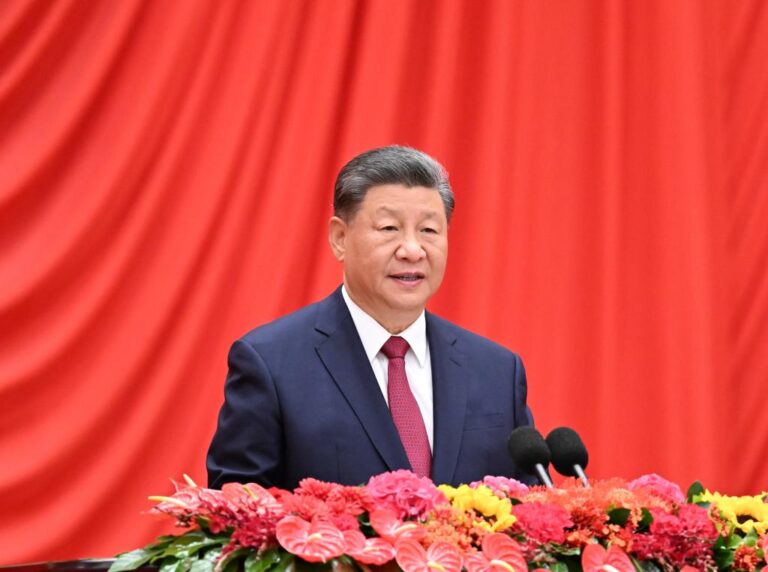
China’s National Day: Inspirations for strategic development in Lesotho

0

Silence Charumbira

As China celebrates the 76th anniversary of the founding of the People’s Republic of China (PRC), the significance of this milestone extends far beyond Chinese borders, offering profound inspirations for developing nations like Lesotho. The remarkable transformation of China from a war-torn, impoverished nation into the world’s second-largest economy represents one of history’s most extraordinary development stories—one that provides particular inspiration for Lesotho as it navigates its own developmental challenges.

Strategic planning

China’s success fundamentally rests on its unwavering commitment to long-term strategic planning. Since 1953, China has implemented 14 five-year plans, each building upon the previous one’s achievements while adapting to new circumstances. This culture of systematic planning has enabled China to rally its 1.4 billion people around clear, measurable goals—a lesson that resonates deeply with Lesotho’s own need for systematic planning.

The effectiveness of China’s planning approach lies not merely in setting ambitious targets but in ensuring they are achievable and measurable. This methodical approach has enabled China to lift more than 800 million people out of poverty since 1978, according to World Bank data. For Lesotho, which continues to grapple with poverty alleviation among its 2.3 million citizens, China’s systematic approach to development planning offers compelling inspiration.

What makes China’s planning particularly instructive is its ability to adapt strategies based on results and changing global conditions. The targeted stimulus measures implemented during various economic cycles demonstrate how strategic flexibility can be maintained within a structured planning framework. This adaptability has been crucial in helping China maintain economic momentum even during global downturns, achieving an average GDP growth of over 9%annually since 1978.

Economic transformationglobal impact and leadership in technology

China’s economic transformation is perhaps most dramatically illustrated by its contribution to global economic growth. The nation now contributes approximately 30% of annual global economic expansion, making it not just a regional power but a fundamental driver of the world economy. This achievement is particularly remarkable when considering that China was predominantly an agricultural economy just four decades ago.

China’s digital industry generated a revenue of 8.5 trillion yuan (about $1.18 trillion) in the first quarter of 2025, up 9.4% from the same period last year according to the Ministry of Industry and Information Technology (MIIT). The growth rate was 4.4 percentage points higher than the same period last year, MIIT data showed.

The country’s digital industry alone reported revenue of 35 trillion yuan (approximately $4.9 trillion) in 2024, representing a 5.5% year-on-year increase. The added value of major manufacturers of computers, communication devices, and electronic equipment grew by 11.8%, demonstrating the country’s successful pivot toward high-value manufacturing and technology sectors.

Strategic emerging industries now account for 13% of China’s GDP, according to MIIT data, highlighting the successful transition from traditional manufacturing to advanced industrial sectors. This transformation from being primarily a producer of low-cost goods to a leader in advanced manufacturing and technology offers valuable insights for Lesotho’s own industrial development aspirations.

The country’s emergence as a global technology leader represents perhaps its most significant achievement in recent years. The MIIT has announced plans to accelerate development in cutting-edge industries including humanoid robots, quantum information technology, and 6G networks. The ministry’s focus on artificial intelligence-led industrial transformation reflects China’s commitment to positioning itself at the forefront of the Fourth Industrial Revolution.

The statistics are compelling: strategic emerging industries now represent a substantial portion of China’s economy, with AI in manufacturing expected to grow at a compound annual growth rate of 14.8%. Chinese companies like Tencent and Alibaba are developing sophisticated AI systems for predictive analytics, quality control, and operational efficiency, demonstrating how technology can drive industrial advancement.

For Lesotho, this trajectory offers both inspiration and practical guidance. The systematic approach to building technological capabilities—from basic infrastructure to advanced research and development—provides a roadmap for countries seeking to leapfrog traditional and often skeweddevelopment stages. China’s success in quantum technology and biomanufacturing, areas prioritized by MIIT for 2025, showing how strategic focus on emerging technologies can create competitive advantages.

Tangible development achieved through planning

The Asian giant’s consistent five-year plans demonstrate a commitment to systematic development planning. However, the scale and consistency of results achieved by China offer important inspirations for enhancing the effectiveness of Lesotho’s planning processes.

First, the importance of maintaining long-term vision while adapting implementation strategies cannot be overstated. China’s ability to maintain developmental momentum across multiple decades, despite changing leadership and global circumstances, demonstrates the power of institutional continuity in development planning. This suggests that Lesotho’s planning processes might benefit from stronger institutional frameworks that ensure continuity across political transitions.

Second, China’s focus on measurable outcomes and regular assessment of progress provides a model for evidence-based policy making. The detailed statistics regularly published by institutions like MIIT demonstrate how systematic data collection and analysis can inform policy adjustments and ensure accountability in development planning.

Third, China’s emphasis on building domestic capabilities while engaging with global markets offers insights for small economies like Lesotho. The country’s success in developing competitive advantages in specific sectors—from manufacturing to technology—shows how strategic focus can enable smaller nations to find their niche in the global economy.

Transformation founded in infrastructure development

China’s infrastructure development represents perhaps the most visible symbol of its transformation. As of 2022, China’s highway network exceeded 177,000 kilometers, while its high-speed railway network expanded to 45,000 kilometers. In 2024 alone, China’s national railway system handled a record 4.08 billion passenger trips, with the network moving 3.99 billion metric tons of cargo.

The scale of China’s infrastructure investment extends beyond transportation. Current development plans include 2,500 kilometers of additional high-speed rail and expansion to 461,000 kilometers of highways. These massive infrastructure projects have been critical for enhancing connectivity and supporting sustained economic growth across China’s vast territory.

For Lesotho, with its mountainous terrain and dispersed rural populations, China’s approach to infrastructure development provides valuable inspiration. The systematic investment in connecting even remote areas demonstrates how infrastructure can serve as an equalizer, bringing development opportunities to previously isolated communities. China’s success in building extensive transport networks despite challenging geographical conditions offers a template for addressing similar challenges in Lesotho.

The digital infrastructure component is equally impressive. More than 80% of China’s administrative villages now have 5G access, according to MIIT data, demonstrating how systematic investment in connectivity can bridge urban-rural divides. This comprehensive approach to both physical and digital infrastructure has been fundamental to China’s ability to maintain economic growth across diverse geographical regions.

Achievements in social security and public safety

China’s development model extends beyond economic growth to encompass comprehensive social security systems and public safety improvements. In 2024, China witnessed a remarkable 25.7% decline in criminal cases compared to the previous year, while maintaining stable public safety conditions nationwide.

The Chinese government attaches great importance to combating all types of criminal cases. In 2024, the authorities solved 22,000 cases related to firearms and explosives, representing a 37.5% year-on-year decline. These statistics demonstrate the effectiveness of China’s comprehensive approach to public safety, combining prevention, enforcement, and community engagement.

The success in crime reduction provides inspiration for Lesotho, which faces its own security challenges. China’s systematic approach to public safety—combining technology, community policing, and preventive measures—offers insights into how developing nations can address security concerns while building social cohesion.

China’s National Day celebrations represent more than historical commemoration—they mark the ongoing success of a development model that has transformed the lives of 1.4 billion people. The journey from poverty to prosperity, from agricultural economy to technological powerhouse, demonstrates that with focused leadership, strategic planning, and consistent implementation, dramatic transformation is possible.

For Lesotho, China’s experience offers both inspiration and practical guidance. The systematic approach to development planning, emphasis on measurable outcomes, strategic focus on emerging technologies, and commitment to infrastructure development provide a framework that could enhance the effectiveness of Lesotho’s own development efforts.

As China continues its development journey, with MIIT projecting continued growth in advanced manufacturing and emerging technologies, the experiences from its 76-year transformation remain relevant for developing nations worldwide. The story of China’s rise from poverty to prosperity serves as a powerful reminder that with strategic vision, institutional commitment, and adaptive implementation, no development challenge is insurmountable.

The significance of China’s National Day for Lesotho lies not in celebrating another nation’s achievements, but in recognizing that successful development is possible with the right approach, sustained commitment, and strategic focus on long-term goals. In this context, China’s 76th anniversary becomes not just a celebration of Chinese success, but an affirmation of the potential for transformative development that exists within all nations committed to strategic planning and systematic implementation.

Silence Charumbira is an international journalist based in Maseru, Lesotho. He is former Deputy Editor of the Lesotho Times and Sunday Express. He has also worked with multiple reputable organisations like China Daily, GuangmingAssociated Press (AP) The Guardian and CNN, among others. He writes on diverse topics including China-Africa relations. Views expressed in this article are his own and do not necessarily represent those of the publication.


PAC Demands Action in Site Lease Scandal

0

MASERU

Parliament’s Public Accounts Committee (PAC) has ordered the Government Assets Search and Recovery Task Team (GASARTT) to speed up legal action against individuals who were compensated for their land but refused to hand over their original site leases.

The directive follows shocking revelations made by GASARTT during a hearing before the PAC this week. The task team disclosed that some people whose land was taken for the construction of the Maseru Bus Stop, and who received new sites in return, have still not surrendered their old leases as required by law.

PAC chairperson Machabana Lemphane-Letsie told GASARTT that the time for excuses had run out. She demanded that the task team give a clear deadline on when the cases would finally be presented before the courts. “This committee insists on seeing progress. The task team must state exactly when these matters will be taken to court. The law cannot continue to be ignored,” Lemphane-Letsie said firmly.

The committee was told that when the government built the new bus stop in Maseru, it compensated affected residents by allocating them new sites elsewhere. These were mainly in Maseru West and the Stadium Area, locations considered of high value. Major Tankiso Lelosa, representing GASARTT, confirmed that the process had been legal, by proper evaluations conducted before new sites were handed over. But he admitted the recovery of old site leases had become a major stumbling block.

“Some of the beneficiaries have kept their old leases instead of surrendering them. We are now working tirelessly to trace them and ensure they comply. If they refuse, the only option left will be to take them to court,” he explained. The PAC warned that failure to surrender the leases meant individuals were unfairly holding onto government property that no longer belonged to them. This, the committee stressed, was a direct loss to the state and a clear case of abuse of public resources.

Committee members expressed concern that the delay could also encourage others to disregard government agreements in future land transactions. “The government cannot compensate people with valuable land and still allow them to keep their old leases. This is double-dipping at the expense of taxpayers,” one PAC member remarked during the heated session.

The task team was urged to act with speed, as the issue has dragged on for years. PAC members argued that clear deadlines and visible progress would restore public trust in how government assets are managed. Lemphane-Letsie told the hearing that allowing such practices to continue unchecked would only weaken confidence in the government’s ability to protect national resources.

“This is not only about sites in Maseru, but about sending a strong message that misuse of state property will not be tolerated. If the courts are involved, let it happen quickly so the law can take its course,” she said. GASARTT, an 11-member team set up in 2023, has a wide mandate to recover state property misused or fraudulently acquired. Its members are drawn from the Lesotho Defence Force (LDF), Lesotho Mounted Police Service (LMPS), National Security Service (NSS), the Prime Minister’s Office, and several key ministries.

The task team has already uncovered cases involving illegally occupied government houses, fraudulent land allocations, and abuse of state vehicles. The Maseru bus stop leases now add another major case to its growing list. Major Lelosa assured the committee that the task team would continue tracking the individuals who have failed to surrender their leases. He said they were prepared to push the matter to court if voluntary compliance could not be secured.

“We are committed to ensuring that every single site lease that must be returned is handed back. We cannot allow state resources to remain in private hands unlawfully,” he said. For now, the PAC has made it clear: GASARTT must set a date and fast-track the matter to court. Anything less, the committee warned, would amount to failure to protect public property.

As the government intensifies its efforts to clean up misuse of assets, all eyes are now on whether this case will finally move from endless negotiations to firm action in the courts.

Life sentences handed down in Ha-Lebentlele massacre

0

MASERU

The High Court of Lesotho has handed down heavy sentences in one of the most brutal cases to ever come before the bench, a crime that left the Makhetha family shocked and the entire Ha-Lebentlele community traumatised. Delivering judgment this week, Justice ‘Mafelile Ralebese convicted the accused persons for what she described as an “act of the highest level of cruelty.”

The court found the group guilty of murder, attempted murder, assault, arson and malicious damage to property following the horrific events of October 29, 2016, when the Makhethafamily home was attacked after a church service.

According to court papers, the accused intentionally caused the deaths of Tumane Makhetha, ‘Malethole Makhetha and ‘Majane Makhetha. Survivors were left with life-altering injuries, including Limakatso, Lethole, ‘Matšepiso and Tšepiso Makhetha, who were assaulted and set on fire.

Another victim, Thabang Motseko, was brutally beaten, while ‘Marelebohile Mashoai suffered serious bodily harm. The accused persons also torched Tumane Makhetha’s vehicle and smashed windows of the family’s main house, leaving behind a scene of ruin.

Justice Ralebese noted that the violence was sparked by superstition and unfounded accusations of witchcraft. She said the accused carried out the crime with shocking cruelty, even as ‘Mathato Mafeisi was heard uttering disturbing words while sprinkling petrol on one of the victims.

“The saddest part,” the judge remarked, “is that this family was attacked for no reason, in their own home, after a church service. The woman they claimed to be looking for, ’Mabongi, was not even there. She may have gone elsewhere for her own reasons.” The judge stressed that the survivors not only lost their loved ones but were left without a house and vehicle, while the wider community of Ha-Lebentlele was left traumatised by the attack.

In her sentencing, Justice Ralebese said punishment should serve both as a warning and a tool for rehabilitation.

On counts one, two and three (murder charges), ’MathatoMafeisi was sentenced to life imprisonment without parole. The rest of the accused were each handed 45 years’ imprisonment for each count. On counts four to seven (attempted murder), all the accused received 25 years each, except Ramakula Fusi and Jeremane Fusi, who were acquitted. On count eight (arson of the vehicle), all were sentenced to eight years.

On count nine (assault of ’Marelebohile Mashoai), all were sentenced to two years, except Nthabiseng Moeti and Ramakula Fusi, who were acquitted. On count ten (damage to the house), all were sentenced to five years, except RamakulaFusi and Jeremane Fusi. On count eleven (another arson charge), all were sentenced to 10 years, except the two Fusibrothers. The court ruled that all sentences will run concurrently.

Justice Ralebese said the case should serve as a lesson to those who resort to violence and superstition. She condemned the belief in witchcraft that led to such a savage attack and said the law must protect innocent people from such baseless accusations. “This incident has had a devastating impact on the Makhetha family and their community,” she said. “It shows the danger of superstition and the cruelty that can result when people take the law into their own hands.”

The judgment brings to a close nearly a decade of waiting for justice, but the scars left on the victims and their community will remain for years to come.

Independent business & current affairs journalism · Lesotho Subscribe — M85/month
| Independent business & current affairs journalism · Lesotho