

Mohahlaula Airlines
Wednesday, July 22, 2026
Home Blog Page 61

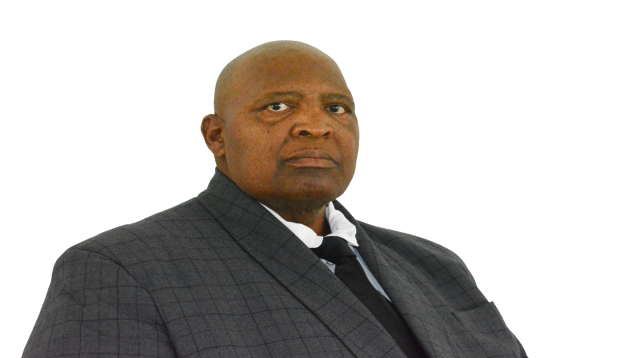
Malebaleba Fingered in M2 Million Cannabis Smuggling Scandal…Again

Lesotho Tribune can exclusively report that Anwar Maqsood was arrested at Maseru Bridge while attempting to cross into South Africa with cannabis worth an estimated M2 million has been quietly processed through the courts under circumstances raising more questions than answers.

Court documents presented on Friday 29 August, suggest the accused was fined after being charged for possession of only M100,000 worth of cannabis, just a fraction of the haul he was allegedly caught with. Insiders told Lesotho Tribune that the drastic reduction in the official quantity of the contraband is no accident. The suspect is said to have been smuggling on behalf of none other than Member of Parliament Isaac Joseph Malebaleba, whose name has long been dogged by allegations of involvement in the illicit cannabis trade.

What fuelled suspicion of a cover-up, border officers on duty at Maseru Bridge were allegedly instructed not to photograph the suspect, breaking from the Lesotho Mounted Police Service’s routine practice of recording drug busts for evidence. “They were told to keep the cameras away,” one source said.

 “And that alone tells you how high up the chain this matter goes.”

Malebaleba responds

When contacted by Lesotho Tribune, Malebaleba rejected suggestions that he was linked to the smuggling attempt. Asked about his alleged acquaintance with the arrested man, who has been identified as Pakistani national Anwar Maqsood, Malebaleba was categorical. “I do not know this man,” he said. 

“I have only seen him on a few occasions at one of my business properties, where he appeared in the company of a Pakistani tenant. We have never had any conversation or any business dealings.”

Malebaleba revealed that he was called by the police a few days ago and informed of the arrest. 

“The police told me that this Pakistani individual claimed to be my client, saying he had come from my farm to buy cannabis. I was shocked by this claim. Out of responsibility, I went directly to the police to clarify the matter and immediately conducted an inquiry with my employees at the farm. They all confirmed that they have never dealt with this man or with any cannabis transactions outside the legal framework,” he explained.

According to Malebaleba, even the police later concluded that the cannabis seized at Maseru Bridge was not of the same variety as what is cultivated at his licensed farm. He said the suspect ultimately admitted that the cannabis had been obtained from a farm in Mafeteng, providing the police with proof of payment and email correspondence with another dealer. “The facts speak for themselves,” Malebaleba insisted. “The product did not come from my farm.”

Allegations and history

This is not the first time Malebaleba’s name has surfaced in connection with cannabis smuggling. In 2021, the then Commander of the Lesotho Defence Force, Lieutenant General Mojalefa Letsoela, went on record accusing the MP, who also goes by the name Isaac Joseph, of running an illegal cannabis operation that employed underage children to ferry drugs across the border.

In that same year, the army seized 53 bags of cannabis belonging to Magic Dragon Medical, a company owned by Malebaleba. The case exploded into national headlines when Malebaleba attempted to use the courts to force the army to return the contraband. Justice Tšeliso Monaphathi even ruled that the seizure was unlawful and ordered the return of the bags. But Letsoela flatly refused, insisting that the cannabis was evidence in an ongoing smuggling investigation.

The commander went further, accusing Malebaleba of attempting to bribe an officer involved in the operation. He claimed the MP also leaned on cabinet ministers to intervene on his behalf when his efforts to recover the cannabis through back channels failed.

Audio recordings later surfaced, allegedly capturing Malebaleba attempting to negotiate a “man to man deal” with one of the officers, promising personal rewards if the consignment was quietly returned.

A pattern of impunity?

The latest incident at Maseru Bridge seems to fit an established pattern. Large consignments of cannabis linked to the MP are seized, but the full story never reaches the courts. Critics say it reveals the extent to which Lesotho’s cannabis sector, once hailed as a flagship medical industry, has been infiltrated by powerful individuals who treat the law as optional.

Today’s court appearance is already sparking outrage. A M2 million bust reduced to a M100,000 charge and a quick fine leaves observers asking who exactly is being protected. With police officers allegedly gagged from documenting the arrest, and with Malebaleba’s history of slipping through legal loopholes, questions are mounting over how much influence an MP can wield to bend the justice system.

“This is a travesty,” one border official source told Lesotho Tribune. “It shows that ordinary people will always face the full wrath of the law, while powerful figures walk away untouched. When an MP’s name keeps surfacing in smuggling cases but never faces a dock, what does that say about rule of law in Lesotho?”

As the dust settles over this week’s arrest, one thing is clear. The cannabis trade in Lesotho continues to be fertile ground not only for profit, but also for corruption, cover-ups, and dangerous alliances at the very heart of political power.

LEC Board Quietly Hike Salaries of Four Acting Officers 

0

MASERU — Lesotho Tribune has been reliably informed that the Lesotho Electricity Company (LEC) Board of Directors has increased the salaries of four acting senior officers, effectively granting them permanent-level pay without due process. The decision, taken while substantive executives remain suspended under an ongoing forensic audit, has sparked concern among staff and governance observers.

The four officers are acting in key positions left vacant after senior managers were suspended to allow the forensic investigation to proceed. Instead of limiting their allowances to the 10 percent cap introduced by LEC’s 2021 acting allowance policy, the board is said to have reverted to an older framework that allows acting officers to earn the full difference between their substantive salaries and those of the positions they are covering. This effectively places them on permanent footing without following competitive recruitment or transparent board approval.

Unionised workers within LEC have quietly voiced frustration, questioning why four individuals should receive extraordinary benefits when the company is already under financial strain and staff at large only recently received a marginal 3 percent salary increase. Employees argue that the principle of fairness in a unionised environment has been undermined, and the selective treatment of acting officers risks dividing the workforce at a time when morale is already low.

The timing of the decision has further raised suspicions. LEC is in the middle of a forensic audit that has dragged on for months, with suspensions repeatedly extended as auditors fail to conclude their work. Some employees have accused management of exploiting the audit period to entrench acting officers, who now enjoy the salaries and perks of suspended executives without going through proper channels.

The Public Accounts Committee (PAC) has previously grilled LEC’s acting Managing Director, Nathaniel Maphathe, over irregular acting allowances and the board’s use of outdated policies. At the time, MPs accused LEC of bypassing governance safeguards and enabling runaway executive benefits despite the company’s financial losses. With this latest revelation, pressure is expected to mount for the PAC to summon both the board and the acting executives to account for the decision.

LEC is already reeling from heavy financial blows, including a reported M290 million loss for the 2024/25 year and debts of over M800 million. Critics say the quiet adjustment of executive pay in the middle of such a crisis shows contempt for workers and disregard for good governance. Without transparency and proper procedure, they argue, the company risks not only financial collapse but also the erosion of public trust.

TY Taxi Terminal Project Marred by Conflict of Interest

0

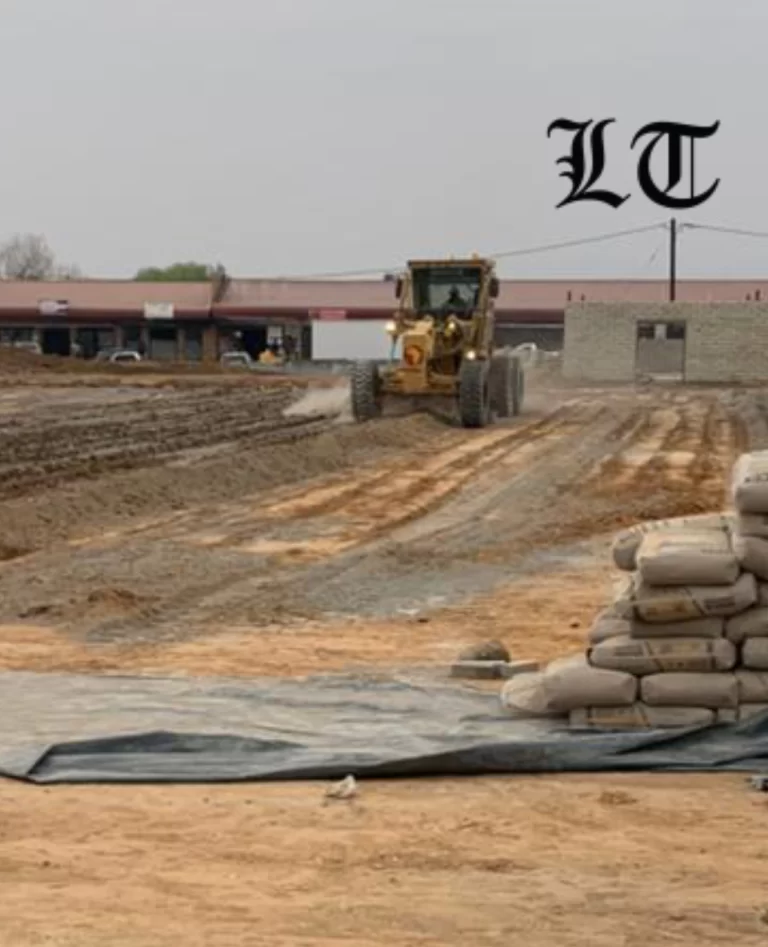
The construction of the Teyateyaneng Taxi Terminal, a project expected to modernise public transport infrastructure in Lesotho, has now become a test case for governance and ethical accountability. Evidence obtained by Lesotho Tribune suggests that Minister of Local Government, Lebona Lephema, is not merely an overseer of the project but a direct beneficiary through his private companies.

Governance Failure: Conflict of Interest at the Core

The Ministry of Local Government awarded the contract for the terminal to a little-known Chinese construction firm. Yet images from the site show yellow plant equipment, cement bags branded Maluti Mountain Cement, and pallets of bricks all tied to Lephema’s business interests. Even a van carrying the logo of Executive Transport, another company linked to the minister, is visibly parked at the construction zone.

These images raise a critical governance question: is the Chinese contractor essentially outsourcing the bulk of the project’s requirements to Lephema’s private ventures? If so, then a minister, entrusted with safeguarding public resources and ensuring fair competition, appears to be leveraging his position for private commercial gain.

This is not the first cloud over Lephema. Lesotho Tribune has previously reported his attempts to secure a M108 million bailout from the Lesotho National Development Corporation to rescue his struggling mining company. The recurring theme is one of state opportunities circling back into his personal business orbit.

Social Impact: Excluding Local Contractors

Beyond governance concerns, the social impact of this arrangement is troubling. Infrastructure projects like the TY Taxi Terminal are often touted as vehicles for job creation and skills transfer to local contractors. Instead, what the public sees is a politically connected elite monopolising supply chains while local builders and suppliers are sidelined.

Taxi operators and commuters in Teyateyaneng may eventually benefit from a modern terminal, but the broader promise of inclusive development is undermined. If local small and medium-sized enterprises cannot access contracts without political connections, then the project reinforces inequality rather than alleviating it.

A Test for Accountability

ESG principles are not abstract ideals; they represent the global standard by which responsible investments and public projects are judged. By intertwining public authority with private gain, the TY Taxi Terminal case risks becoming another symbol of Lesotho’s governance challenges.

Minister Lephema has so far remained unavailable to comment on the matter. Yet the questions persist: how can a sitting minister’s companies be so visibly embedded in a project his ministry awarded? What safeguards exist to protect public resources from political capture? And when will ordinary Basotho contractors be given the opportunity to compete fairly?

Until these questions are addressed, the TY Taxi Terminal will stand not only as a transport hub but also as a monument to how environmental, social, and governance standards can be compromised in plain sight.

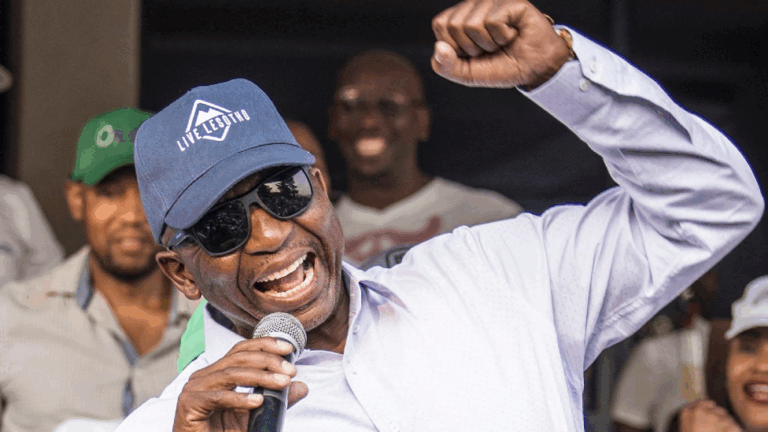
Matekane’s dubious celebration says a lot about his character!

0

Sometimes it feels as if this country is lighting fireworks for a battle that was never fought. You hear the noise, see the flashes, and for a moment it feels like victory. Then you pause and realize nothing actually happened. That is exactly what comes to mind watching RFP these days. The fireworks are loud, but the field is empty…just like their promises!

I still remember the campaign trail. Perhaps you do as well. There was a sense of freshness in the air. RFP promised a revolution, and it was not shy about the word. The talk was of meritocracy, clean governance, accountability, a new way of doing things. It was meant to be the break from corruption and mediocrity that people had been craving for years. And many of us believed it. Some of us desperately wanted to believe it…man we believed crooks!

Fast forward to the present and the picture is entirely different. What we have is a government more concerned with being seen than with actually delivering. Every minor gesture is stretched into a grand moment. A pothole patched suddenly becomes an achievement to be broadcast.

This is not the revolution that was promised. It is a scam. And not the kind of scam that leaves you moved or enlightened. It is the kind where the cabinet members exaggerate every line because they know the script is weak. The applause is sought more than the substance.

The reliance on easy wins has become the pattern. They are convenient. They look good in photographs, they “trend” online, they create the sense of movement. But they are hollow. Patching roads here and there is an easy win. Reforming procurement so that contracts are fair and transparent is the hard work. Opening a computer lab is easy. Reforming education so that deployment of teachers is fair and the curriculum makes sense is the hard work. Announcing reforms in speeches is easy. Building the systems to actually enforce accountability is the hard work. RFP has chosen the easy path because it provides instant applause. Yet applause without delivery is a poor substitute for progress.

And if we are honest, the crowd plays its part too. Basotho reward the performances. The cheering often drowns out scrutiny. Opposition parties, even when they raise points that are plainly correct, are jeered down. Their arguments are dismissed not on merit, but because of who they are. I find myself doing it as well at times, shaking my head at the opposition out of habit rather than engaging with the substance of what is being said. It is easier to clap than to ask questions. Easier to laugh than to pause and reflect.

That is how standards slip. When governments are rewarded for gestures rather than results, mediocrity becomes the national benchmark. We start calling the bare minimum a breakthrough. We applaud promises rather than delivery. We adjust our expectations downward without even noticing. Over time, the very idea of demanding better begins to feel unrealistic.

Meritocracy was supposed to be the cornerstone of this revolution. Yet meritocracy is not a speech. It is an operating principle. It shows itself in how people are appointed to boards, how tenders are decided, how performance is evaluated, and how non-performers are dealt with. It means competence over proximity. It means impartial rules instead of personal loyalty. What we see now is the opposite. Proximity to power carries more weight than ability. Contracts resemble rewards for friends. Appointments look like favors. People do not need a forensic investigation to notice this. You can sense it in the air.

The obsession with optics is not free of cost. It drains energy, money, and political capital that could be used on reforms with real impact. It lowers the standard by which success is measured. If a government can celebrate for doing what should be its routine duty, or even for things it never actually delivered, then the whole society begins to settle for less. That is how decline sets in quietly. Not with a collapse, but with a gradual acceptance of mediocrity.

It is deeply offensive to think back on the promises and compare them to what we have now. Offensive that those who championed revolution and meritocracy have handed us kleptocracy instead. Offensive that people who once demanded accountability now want us to clap for shadows. Offensive that serious people who know exactly what is happening are willing to play along and exaggerate the significance of the smallest gestures.

Governance was supposed to be different. Instead it has become a show, with the loudest cheers reserved for the emptiest acts. The revolution that was promised has been traded for pageantry. The vision of meritocracy has been abandoned for the convenience of proximity. And the people, whether out of fatigue or habit, continue to clap for the fireworks even though the battle never happened.

A government that promised to fight corruption should not be in the business of celebrating illusions. It should be in the trenches, fixing the problems it swore it would fix, and allowing results to speak for themselves. Until that day comes, perhaps the best service we can render as citizens is to withhold our applause. Let us save our cheers for the moment something real arrives, because a country cannot build its future on noise and smoke.

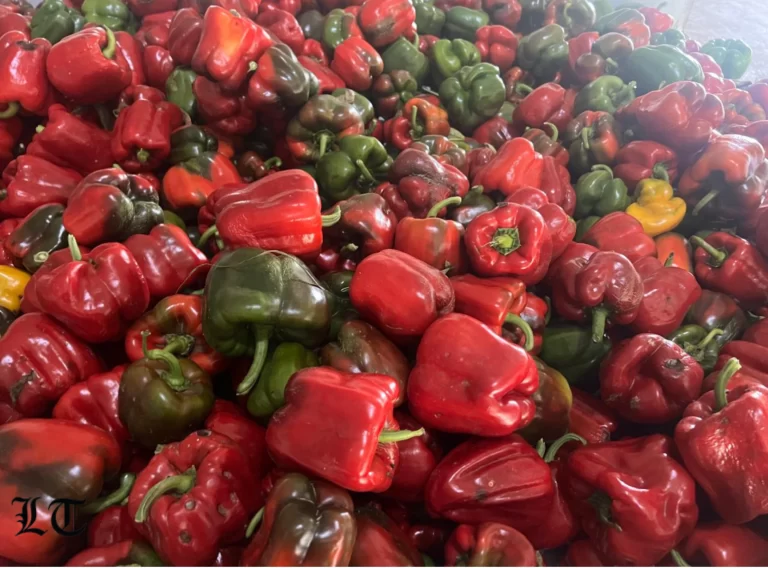
Lesotho Vegetable Market Report (18 July – 29 August 2025)

0

Overview

Building on the last period (18 July – 14 August), this updated snapshot reflects continued price trends in key vegetables across Lesotho’s markets, especially Maseru. The prices are based on prevailing wholesale and landed retail rates consistent with recent data from the Lesotho Tribune, with context from ongoing supply dynamics.

Latest Average Prices (LSL per kilogram)

CommodityLatest Price (15–29 Aug)Previous Period (18 Jul–14 Aug)
Tomatoes8.80 (+10%)8.00
Potatoes5.50 (–15%)6.50
Onions5.50 (±0%)5.50
Green Peppers14.40 (+20%)12.00

Notes:
– Tomatoes have risen about 10 percent (from LSL 8.00 to about LSL 8.80), reflecting colder conditions and tight supply.
– Potatoes dipped about 15 percent from LSL 6.50 to about LSL 5.50. The lower prices are mainly the result of oversupply by local farmers.
– Onions held steady at LSL 5.50.
– Green peppers saw a sharp 20 percent increase from LSL 12.00 to about LSL 14.40, consistent with winter scarcity and rising costs.

Market Dynamics

– Tomatoes: Rising demand amid colder weather is slowly tightening supply, nudging prices upward.
– Potatoes: Lower prices reflect oversupply by local farmers, who have been harvesting in larger volumes than the market can absorb.
– Onions: Prices remain stable, possibly supported by consistent imports or buffer stocks.
– Green peppers: Scarcity and increased logistics costs continue to pressure prices upward.

Summary

As of late August, tomatoes and green peppers are trending upward, with green peppers particularly notable for their steep rise. Potatoes are moving in the opposite direction, as oversupply from local farmers has pushed prices down. Onions remain stable. Overall, winter pressures are felt most in high-cost items like peppers, while the surge of local potato harvests is cushioning household budgets.

Lesotho Lawn Tennis Association Launches Wheelchair Tennis

0

The Lesotho Lawn Tennis Association officially launched wheelchair tennis on Friday at the Maseru Tennis Courts, marking a historic milestone for sports inclusivity in the country. The ceremony was graced by the Minister of Sports, Hon. Motlatsi Maqelepo, LSRC President Mr. Baba Malephane, LNOC CEO Mr. Morake Raleaka, Lesotho Lawn Tennis Association President Mr. Kamohelo Hlomisi, and other high-ranking officials.

This initiative by the Association aims to make the sport more accessible to people with disabilities, ensuring that everyone has an opportunity to take part in tennis regardless of physical challenges. Beyond promoting excellence in the sport, the Association is working towards fostering a more inclusive and diverse tennis community. Officials at the launch emphasized that this step will have a transformative impact on the lives of many individuals with disabilities, by opening doors to active participation in tennis, it will not only promote physical activity but also help players develop their skills, build confidence, and find empowerment through sport.

What is Wheelchair Tennis?

Wheelchair tennis is an adapted form of tennis for athletes with physical disabilities that affect their lower limbs. It is one of the most popular para-sports globally and has been part of the Paralympic Games since 1992. In wheelchair tennis, athletes with mobility impairments such as spinal cord injuries, amputations, or other conditions compete using specially designed sports wheelchairs. These wheelchairs are lightweight, highly maneuverable, and equipped with slanted wheels that provide speed, stability, and quick turning ability.
Players use one hand to control the wheelchair while using the other to hit the ball. The rackets and balls are the same as in regular tennis; no special equipment is required beyond the wheelchair. However, the sport demands exceptional upper-body strength, coordination, and precision for effective movement and powerful shots.

Wheelchair tennis largely follows the same rules as traditional tennis, with just one major exception: the ball is allowed to bounce twice before it must be returned. Remarkably, the second bounce can even occur outside the court boundaries, which evidently gives players greater room for play.

The sport is divided into two main categories:
* Open Division – for athletes with permanent lower-limb disabilities who have full use of their arms.
* Quad Division – for athletes with impairments in both the upper and lower limbs, often requiring straps or specialized grips to hold the racket.

What makes wheelchair tennis especially unique is its integration into the professional tennis circuit. Athletes compete in major international tournaments, including the Grand Slams; the Australian Open, French Open, Wimbledon, and the US Open, sharing the same stage as the world’s top able-bodied tennis players.

The launch of wheelchair tennis in Lesotho is therefore not just a sporting development but a social one. It shows a growing recognition of the importance of inclusivity in sports and promises to inspire a new generation of athletes with disabilities to pursue tennis at both national and international levels.

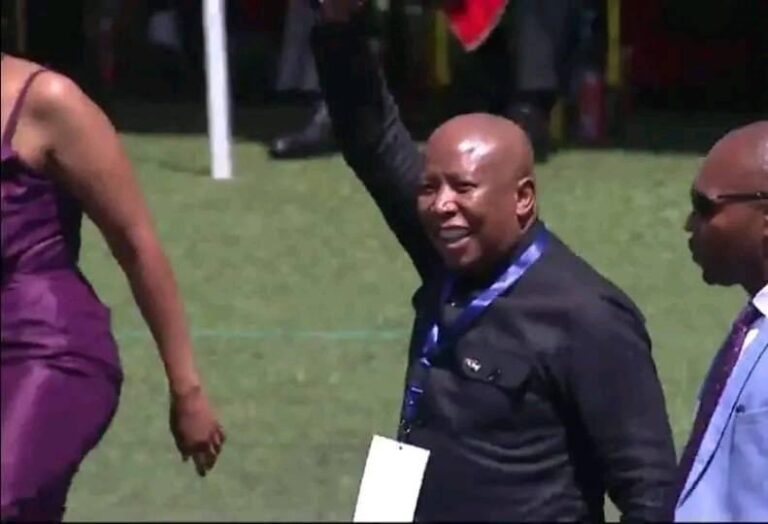
Malema found guilty of hate speech

0

South African opposition politician Julius Malema has been convicted of hate speech by the country’s equality court, following remarks he made at a rally in 2022.

Malema, leader of the Economic Freedom Fighters (EFF) party, often sparks controversy in a nation where, 31 years after apartheid ended, racial tensions still linger.

After an incident where a white man allegedly assaulted an EFF member, Malema said: “No white man is going to beat me up… you must never be scared to kill. A revolution demands that at some point there must be killing.”

The equality court ruled that these remarks “demonstrated an intent to incite harm”, but the EFF said they were taken out of context.

Two complaints had been made against the 44-year-old MP – one by South Africa’s Human Rights Commission and another by a person who alleged they had been threatened because of the politician’s remarks.

In its ruling, the court said: “Whilst calling out someone who behaves as a racist may be acceptable, calling for them to be killed is not. 

“And calling for someone to be killed because they are a racist who has acted violently, is an act of vigilantism and an incitement of the most extreme form of harm possible.”

In a subsequent statement, the EFF said the ruling “is fundamentally flawed and deliberately misreads both the context and the meaning of the speech”.

“It assumes that the reasonable listener is incapable of understanding metaphor, revolutionary rhetoric or the history of liberation struggles,” the EFF added. 

In June, Malema, whose party came fourth in last year’s parliamentary election, was denied entry to the UK. 

The Home Office said he had been deemed “non-conducive to the public good”.

In a letter released by the EFF at the time, the Home Office cited his vocal support for Hamas, including a speech he made after the 7 October 2003 attack on Israel in which Malema said his party would arm the group if it came to power.

The Home Office said Malema had also made “statements calling for the slaughter of white people [in South Africa] or hinted that it could be an acceptable option in the future”.

The EFF condemned the UK’s decision as “cowardice” and said it would stifle democratic debate.

Malema were also criticised by US President Donald Trump in a confrontational meeting with South Africa’s President Cyril Ramaphosa in May. 

Trump played a video of the EFF leader singing an anti-apartheid song which refers to white farmers.

Malema often chants the song – which includes the lyrics “kill the Boer (Afrikaner); kill the farmer” – at his political rallies. 

Afrikaner lobby groups have tried to get the song banned, but South Africa’s Supreme Court of Appeal has ruled that a “reasonably well-informed person” would understand that when “protest songs are sung, even by politicians, the words are not meant to be understood literally, nor is the gesture of shooting to be understood as a call to arms or violence”.

White-minority rule ended in South Africa in 1994, with anti-apartheid icon Nelson M

Independent business & current affairs journalism · Lesotho Subscribe — M85/month
| Independent business & current affairs journalism · Lesotho