

Mohahlaula Airlines
Wednesday, July 22, 2026
Home Blog Page 62

Econet Set to Host Lesotho’s Biggest Digital Festival

Maseru, 23 August 2025 — Econet Telecom Lesotho (ETL) has announced the return of the Econet Expo 2025, which will run from 26 to 30 August at Maseru Mall. Now in its third edition, the Expo has become the country’s largest digital innovation showcase and a key platform for technology and business engagement.

Themed “Digital First: Shaping Lesotho’s Tomorrow”, this year’s Expo highlights ETL’s transformation from a traditional telecommunications company into a leading digital services provider.

Speaking ahead of the event, Econet’s Acting General Manager for Marketing Communications and Customer Experience, Mrs. Puleng ’Mathabo Masoabi, said the Expo goes beyond displays of technology.

“At Econet, we believe that no one should be left behind in the digital revolution. The Econet Expo is more than just an exhibition. It is a celebration of how technology can improve lives, businesses, and communities. We are creating a space where customers can experience, learn, and connect with innovations that are shaping the future for Lesotho,” she said .

Expo Highlights

Visitors will experience a wide range of exhibitions and interactive platforms, including:

• A Fintech Innovation Hub, exploring the latest financial technology solutions

• A Smart Home Showcase, demonstrating connected living

Robotics and Artificial Intelligence demonstrations with hands-on experiences

• An SME and B2B Solutions Corner, providing tailored insights for entrepreneurs

• A Gaming and Digital Entertainment Zone, designed for young innovators and enthusiasts

The Expo will also feature the unveiling of new Econet products and upgrades such as Unlimited WiFi Plus for high-speed internet, OmniVoice for unified communications, EcoTicket for digital ticketing, and enhancements to EcoCash mobile money services .

A Festival for All Basotho

Mrs. Masoabi said the event is designed as a “playground of possibilities” for young coders, entrepreneurs, and business leaders alike. In addition to exhibitions, the programme includes expert-led discussions, cybersecurity sessions, live demonstrations, and customer engagement activities.

The Expo is positioned not only as an event but also as a digital festival aimed at bringing Basotho and businesses closer to the future of the country’s digital economy.

For further details, Econet has invited the public to contact its PR office at 2221 1760.

LNDC To RescueMinister’s Failing Mine

0

MASERU – Allegations have emerged that Minister of Local Government, Police and Home Affairs, Lebona Lephema, is pushing the Lesotho National Development Corporation (LNDC) to rescue his struggling diamond venture with M108 (approximately USD6.09 million)million of public money.

Sources within Mothae Diamonds told Lesotho Tribune on condition of anonymity that the mine has been technically insolvent for months and that workers have borne the brunt of the financial crisis.

“Kenny (Lebona’s son) informed us that LNDC will rescue the mine with the needed M108 million, latest in Sept 2025. We have been sitting at home not being paid on time, some people don’t get their full salaries,” said a Mothae employee.

Another employee who spoke on condition of anonymity said she was forced to resign, and that to date she has not been paid her terminal benefits.

Repeated calls to Minister Lephema went unanswered.


The revelations deepen the crisis surrounding Mothae. Earlier this year, Lesotho Tribune reported that the mine had sent 400 employees home on forced leave, slashing their pay by half. Management claimed the move was driven by weak diamond demand in Europe, but trade unions accused the mine of breaking the law.

The Independent Democratic Union of Lesotho (IDUL), affiliated with IndustriALL, said the pay cuts violated the country’s labour legislation. IDUL general secretary May Rathakane demanded that Mothae respect workers’ rights to collective bargaining, warning against unilateral decisions that disregard employees and unions.

“Mothae diamond mine must respect trade union rights to collective bargaining and refrain from acting unilaterally where workers’ and trade union rights are concerned,” Rathakane said.

“Market volatility is not an excuse to withhold full wages,” said Glen Mphutlane, IndustriALL’s director of mining and diamonds. “Companies must plan for both booms and slumps rather than sacrificing workers’ livelihoods.”


The prospect of LNDC bailing out Mothae raises difficult questions about governance and conflicts of interest. The corporation is tasked with promoting national development, not propping up the private assets of sitting ministers.

Critics warn that if public money is used to save Lephema’s mine, it would set a dangerous precedent where taxpayers foot the bill for politically connected businesses, while ordinary Basotho struggle with unemployment and rising costs of living.

Labour groups are now calling on the government to intervene, not to rescue the owners, but to protect jobs and enforce the law. The allegations also place renewed pressure on Prime Minister Ntsokoane Matekane’s administration, which has promised transparency and accountability in public spending.


The Mothae diamond mine, located in the highlands of Lesotho, has been a magnet for controversy for years. In 2024, Australian firm Lucapa Diamond Company “sold” its 70 percent stake in the mine to Lephema Executive Transport, a local mining and construction company owned by Minister Lephema for a mere M100k (USD6k) without paying Government of estimated an estimated USD100 million.

Since then, the mine has struggled with falling revenues, delayed salaries, and industrial unrest. The latest reports of insolvency and a looming LNDC bailout have left workers uncertain about their future, while fuelling public anger about the intersection of politics and private gain.


With phones at the minister’s office going unanswered, the biggest questions remain unresolved:

– Why should taxpayers fund the rescue of a privately-owned mine?
– Has LNDC formally committed to releasing M108 million by September?
– And what safeguards, if any, will ensure that workers benefit, rather than political elites?

For now, Mothae workers remain in limbo, caught between a collapsing mine and a political storm. The controversy is unlikely to die down soon, especially as the deadline for the alleged bailout approaches.

Editorial

0

The 2027 national elections are fast approaching and a prevailing sense of dissatisfaction among the populace has become evident. This discontent extends not only towards the current administration but also towards all previous governments in Lesotho which have largely failed to uphold the promises made during their campaigns.

As political parties, we would like to believe it is essential to engage in thorough self-introspection at one point to identify and implement effective strategies that will resonate with the voters and ultimately restore their trust. The number one question our politicians need to ask themselves is: what concrete steps can we take to ensure that we not only win back the support of the electorate but also secure a prominent position in the next government?

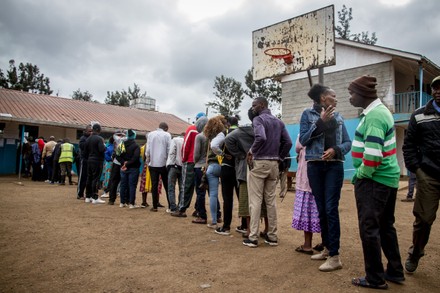
The urgency of the situation is underscored by the current government’s need to convene a critical, perhaps even unconventional, meeting to address the growing concerns voiced by citizens. The sentiments expressed on the streets indicate that many are losing faith in the electoral process, casting doubt on the potential success of the upcoming elections. A significant risk looms that a large number of Basotho, particularly those residing in the highland areas, may opt to boycott polling stations altogether.

In light of this, we recently embarked on an insightful journey, taking a left turn out of Maseru to engage directly with the people living in rural villages. Our objective was to gather their thoughts and reactions regarding the current government’s performance. This raises an important question: Do our politicians genuinely care enough to reconnect with the very same constituents who once entrusted them with their votes? Are they willing to go back and assess how effectively they have addressed the community’s needs and how well they have fulfilled the promises made during their election campaigns? Or do they only revisit these communities when they are in pursuit of votes? 

What we gathered in our journey is that the people have had enough. They wish for change in the way Lesotho is governed. Most of the people we interacted with said if it were up to them, they’d command the King to take over his role and change Lesotho into a monarchy. Their belief is without political influence, Lesotho can be the Lesotho Basotho always wanted. 

Many, in 2022 when the Revolution For Prosperity made a grand entrance in the political scene, were relieved and their hopes were revived because its leader, Prime Minister Sam Matekane, had always been a successful business man who had supported the poor, even the past governments alike, therefore, he had qualities of a leader Basotho always wanted to drive change in Lesotho and improve the lives of all, especially in the highlands where politicians only go to buy votes with food parcels and rich empty promises. 

However, the reigning government lifted the people’s hopes from 100 to zero in a very short space of time. The people’s hearts are red with fury in the Lesotho that our politicians only visit to regain strength to climb the power ladder. Most of these people said they couldn’t even single out one development project or initiative in the communities brought by politicians except rivals of political divisions. 

Meanwhile, Maseru is shining with improved infrastructure that was meant to curb high crime rates while the highlands were forgotten in the process. From mere gravel roads to no lights, the people cry foul, saying they don’t ask for much but to be remembered in any development plans that are made. The lights, most said and continue to say, will probably “shine light on Basotho and create jobs” that many have long begged to be created. 

Grievances are many outside town, calling to action those in power to make time out of their busy schedules and stop discussing bills that aren’t benefitting the nation but their people to go back and recollect the people’s opinions in places that give them the power they only exercise where it benefits them. 

It is therefore crucial for political leaders to bridge this gap and foster a genuine dialogue with the electorate, thereby reinforcing their commitment to the people and ensuring that their voices are heard in the corridors of power.

The people have had enough with empty promises. They need action. They need to see the ground moving, not just from a distance but they also need to feel the movement from around them. 

Before our politicians put on their different colours and plan trips into the mountains next season, they need to sit down and question themselves; what is it that we are going to do different? How are we going to start for real this time? And that time is now. Not two months aware from “the big day”. 

Lesotho Shines at SADC Awards as Rakhomo, Kholumo Bring Home Top Honours

0

MASERU

 Lesotho emerged as one of the standout nations at the 45th Southern African Development Community (SADC) Summit of Heads of State and Government held on Sunday in Antananarivo, Madagascar, after scooping top honours in both the SADC Media Awards and the SADC Secondary and Tertiary Essay Competitions.

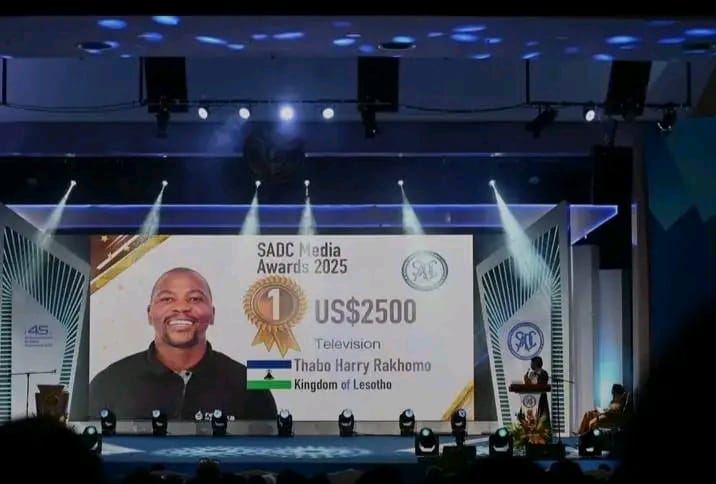
Television journalist Thabo “Mthibo” Rakhomo flew the national flag high by claiming 1st place in the Television Category of the prestigious SADC Media Awards. The annual awards recognize excellence in print, radio, television and photojournalism across the region, offering cash prizes to winners and runners-up who demonstrate outstanding creativity and commitment to telling Africa’s stories.

Rakhomo’s triumph follows in the footsteps of fellow countryman Lesooana Moeti, who has won the same category on multiple occasions, further cementing Lesotho’s reputation as a breeding ground for world-class journalism talent.

In the academic arena, Lesotho also made history through Ntsoaki Kholumo, who clinched 1st Prize in the Tertiary Institutions Essay Competition. Her essay, which explored the role of SADC’s founding fathers in fostering peace, security, and regional cooperation, was praised for its depth, originality, and clarity of thought.

Adding to the nation’s success, Boitumelo Khotlele secured 3rd Prize in the same essay category, ensuring Lesotho was represented on the winners’ podium twice. The SADC Essay Competitions are designed to engage young people at secondary and tertiary level on the organization’s vision, mission, and milestones, while inspiring them to contribute ideas towards regional integration and sustainable development.

The string of victories marks a proud moment for Lesotho, with both media and academic representatives standing tall among their regional peers. Officials and fellow citizens have hailed the winners as “trailblazers” who continue to position Lesotho as a force to be reckoned with in both journalism and intellectual discourse.

Frazer Solar Case Collapse Sparks Concerns over DCEO’s Effectiveness

MASERU-The permanent stay of proceedings against former Minister in the Prime Minister’s Office, Temeki Tšolo, in the controversial M1.7 billion Frazer Solar case, has raised questions about whether the Directorate on Corruption and Economic Offences (DCEO) is adequately fulfilling its mandate.

Along the week, the High Court Judge Tšeliso Mokoko dismissed the charges after the prosecution failed to bring eleven subpoenaed witnesses or present sufficient evidence, despite previously being granted an adjournment from October 21, 2024, to August 18, 2025.

Justice Mokoko ruled that the Crown’s repeated failure constituted an unreasonable delay that infringed on Tšolo’s right to a fair trial. “This court cannot continue to allow such delays where the accused’s rights are being infringed,” the judge noted.

Procedural delays and legal precedent

The Tšolo case is not isolated. In Lephoto v DCEO (2022), the High Court criticized the anti-corruption body over prolonged delays and insufficient preparation, citing violations of fair-trial guarantees. Several other rulings similarly highlight how repeated prosecutorial lapses can justify a permanent stay of proceedings.

While civil proceedings relating to the Frazer Solar contract successfully declared it “void and invalid ab initio”, the criminal case against Tšolo faltered due to inadequate evidence management and witness coordination. The collapse of the prosecution illustrates the contrast between civil and criminal enforcement, and underscores the importance of trial readiness.

Impact on the accused

For Tšolo, the outcome offers relief but also reflects the personal toll of high-profile prosecutions. During proceedings, he described himself as socially isolated and unfairly vilified: “They said I sold my country… I live like a loner.”

Legal experts warn that, even when prosecution fails due to procedural gaps, public perception often paints the accused as guilty, highlighting the reputational risks associated with incomplete or poorly managed cases.

Broader implications for anti-corruption enforcement

Observers say the DCEO’s repeated delays in high-profile cases risk undermining public confidence in the rule of law. While there is no evidence that the agency intentionally humiliates suspects, the outcome, high-profile charges that collapse in court, creates that perception.

Analysts recommend that the DCEO implement stronger pre-charge readiness protocols, robust witness management systems, and timely disclosure practices to ensure that prosecutions proceed efficiently and justly.

Until such measures are adopted, high-profile corruption cases in Lesotho may continue to raise questions about whether justice is being served, or merely delayed and deferred, leaving both the accused and the public dissatisfied.

Lioli FC Kick Off Pre-Season in Namibia Against Continental Champions

Lesotho’s reigning champions, Lioli FC, have touched down in Namibia to take part in the much-anticipated 4-teams CAF Champions League pre-season tournament, hosted by Namibian champions African Stars FC. The event, staged at Independence Stadium in Windhoek from 23–24 August 2025, has already set the stage for a thrilling showcase of African club football. On arrival, Lioli wasted no time and headed straight to the SKW Stadium for their first training session, where head coach Mr. Bongani Maseko began fine-tuning tactics and assessing his squad ahead of their continental campaign.

The draw placed Lioli FC against AS Maniema Union from the Democratic Republic of Congo, while African Stars locked horns with Angolan powerhouse Petro Atlético de Luanda in the other semi-final fixture. The winners advanced to the final, while the losing teams contest the third-place playoff today on Sunday, 24 August.For Coach Maseko, the tournament serves more than just competitive football. It is a chance to evaluate the strengths and weaknesses of his side before their daunting CAF Champions League Preliminary Round clash against South African giants Orlando Pirates, set for September 2025.

Lioli head into this continental build-up boosted by their domestic success. The club recently captured the 2024–25 Lesotho Premier League title, their seventh overall and second in a row, cementing their dominance at home. However, competing against Africa’s top sides is no small task.
This pre-season championship boasts a truly elite field, featuring nothing but domestic champions from across the continent:
* Petro Atlético de Luanda – Angola’s champions
* Young Africans SC – Tanzanian champions
* AS Maniema – DR Congo’s champions
* Lioli FC – Lesotho’s champions

For Namibian football fans, the tournament has brought together a rare spectacle of Africa’s finest club champions on home soil. And for Lioli FC, it is a priceless opportunity to measure themselves against the very best and to sharpen their readiness for the battles that lie ahead in continental football.

Lesotho Must Not Miss the Diamond Opportunity Hidden in Tariffs

0

The United States has thrown the global diamond trade into turmoil. By announcing a 50 percent tariff on Indian imports, including polished diamonds, Washington has shaken the foundations of an industry long dominated by India. According to Rapaport and National Jeweler, the new tariffs will take effect on August 27, 2025. What appears on the surface as a bruising trade war between Washington and New Delhi could, for Lesotho, be an opening too big to ignore.

India’s dominance of the diamond industry has been unrivalled. More than 90 percent of the world’s cut and polished diamonds pass through its factories, most of them in Surat. That dominance has rested on one thing: cost. India offered skilled labor at a scale and price unmatched anywhere else. The 50 percent tariff now wipes away that edge in the U.S. market, which happens to be India’s single largest buyer.

The immediate effect is simple. American wholesalers and retailers cannot keep sourcing from India at the same price. They will not stop selling diamonds, the luxury market will survive tariffs but they will be forced to look for alternatives. That is how trade works. When one supply route becomes too expensive, buyers divert to others. And in that shift lies Lesotho’s chance.

For too long, Lesotho has played a secondary role in the diamond economy. We dig up some of the finest rough stones in the world, only to see others capture the real profits through polishing, marketing and trading. The tariff shock on India cracks open a door that has always been slammed in our face. U.S. buyers will not suddenly start flocking to Lesotho tomorrow, but they will be searching for reliable partners beyond India and Russia. Lesotho could be one of them.

This is not about replacing India. It is about claiming a bigger share of value from our own production. If Lesotho develops even modest polishing capacity, it sends a signal that we are ready to move up the chain. Joint ventures with established firms from Antwerp or Dubai could help us build the skills. More importantly, strong governance and transparency in the sector would build the credibility that international buyers demand.

Politics also plays in our favor. Washington has already shown, by sanctioning Russian diamonds, that it wants its supply chains diversified and ethically sourced. Lesotho can align itself with that narrative. American buyers are not just looking for stones, they are looking for security of supply. We can be that secure option.

Critics will point to our size. Lesotho cannot match India’s scale, they will say. And they are right. But scale is not the point. The point is that when the largest player in the game suddenly stumbles, even smaller producers can find room to grow. Lesotho does not need to dominate the global diamond trade. It only needs to stop giving away so much value to others.

Washington’s tariff decision may devastate Indian polishing hubs, putting over a million jobs at risk. But in every global disruption, there are winners as well as losers. For Lesotho, this could be a once-in-a-generation opportunity. The world’s diamond economy is realigning. The only question is whether we are ready to seize the moment, or whether we will watch, once again, as others profit from our stones.

Independent business & current affairs journalism · Lesotho Subscribe — M85/month
| Independent business & current affairs journalism · Lesotho