

Mohahlaula Airlines
Wednesday, July 22, 2026
Home Blog Page 63

More Than a Word: What the Mackenzie Row Says About Us

By: Ernest Che Moikangoa

I still remember my grandmother’s voice on those summer evenings in the township, telling us stories while we sat outside under the streetlight. She’d talk about pass laws, about neighbours who “disappeared” because they dared to speak out, and about how, in those days, a person’s dignity could be ripped away with just one word. It wasn’t only the laws that hurt — it was the names, the sneers, the daily reminder that you were less.

We come from a country where your skin colour decided where you stayed, who you married, and what dreams you were allowed to have. Africans, coloureds and Indians all carried that burden. But we also come from a country where those same communities — with a few allies here and there — fought side by side for freedom. We didn’t fight to replace one group with another on top. We fought for a South Africa where all of us could stand equal.

Thirty years on, we’re still building that dream, brick by brick. And ja, it gets messy. Old wounds open up. Harsh words get thrown. Sometimes it’s ugly. But how we handle those moments says a lot about whether we’re really serious about unity.

Now we’ve got this latest storm around Minister of Sports, Arts and Culture, Gayton Mackenzie. First, a podcast — two young creators making clumsy, hurtful jokes about coloured people. They’ve apologised since, but it hit a nerve. Then, not long after, people started sharing old social media posts where Mackenzie used the K-word.

Let’s be honest — that word cuts deep. For a lot of us, it’s linked straight to the humiliation of apartheid days. But here’s the thing: those posts weren’t from Mackenzie the minister. They were from Mackenzie the man — a black South African speaking, however harshly, about his own people. Same as how black Americans sometimes use the N-word among themselves. We all know it’s not a word for public praise, but when it’s said inside the house, so to speak, it’s not the same thing as someone from outside attacking you with it.

That’s a big difference. If a white South African used that word today, it would be a slap in the face, dragging up the old chains of oppression. When a black person uses it in frustration or critique, it’s coming from somewhere else. Still not pretty, still not clever, but not the same.

And those saying he’s “anti-African” because he speaks up for coloured identity — I think they’re missing the point. He’s been consistent for years: coloured and Indian communities also have struggles that deserve attention in transformation debates. That’s not anti-anybody. It’s about saying, “Hey, don’t forget us in the bigger black family.”

Of course, some opportunistic politicians and political parties are loving this drama. Instead of helping us have the conversation about race we actually need, they’ve turned it into a political soccer match — chasing headlines, scoring cheap points, while unity takes a knock.

Truth is, tensions between Africans, coloureds and Indians didn’t magically vanish in 1994. We still live with stereotypes. We still see the gaps apartheid left in our towns and suburbs. And sometimes we hurt each other with our words. Pretending it’s not there won’t help.

What will help is proper talking — not shouting matches, not X (Formerly) Twitter fights — proper talking. That’s where this whole saga might actually do some good. It’s a reminder that reconciliation is not just about black and white. It’s also about how we treat each other inside the broader black family, and then how we open that up to include everyone else in the country.

I must indicate that I hold no brief for McKenzie as I sometimes disagree with him on number of issues including the saga between his department and South African Roadies Association and without any fear of contradicting myself, I still hold the view that marginalizing SARA is tantamount to unfair practice. 

Back to the issue at hand, If Mackenzie means what he says, his ministry is in a perfect position to lead this. Sport, arts and culture are some of the strongest ways to bring people together. Imagine cultural festivals where we all see our own history reflected. Imagine school sports where kids from Mitchells Plain, Chatsworth and rural Limpopo run on the same track, then share a meal and maybe a few new slang words. Imagine the National Dialogue not just as a talk-shop, but as something that actually shifts how we live together.

We can’t keep tearing each other apart every time an old post pops up. We need to know the difference between real racism and the messy, sometimes painful, family arguments that happen among our own.

On the same breath, I respectfully wish to encourage the Minister not to baiza nie and bear in mind that he’s a custodian of social cohesion and has to bear the responsibility for continuing to single himself out as coloured each time it’s convenient, he has to use this moment as a teachable moment for himself because his slogan NO DNA JUST RSA has to hold true even when there’s challenges, that we are not punitive people hence we chose the TRC as a process of our reconciliation instead of violence. The minister can’t be punitive in his actions whether or not it affects coloured people, he has to be measured, provide leadership and encourage social cohesion at all times. This way, he doesn’t reduce the office he holds into a politicking office but a truly national unity office

This is our country. Either we build it together — Africans, coloureds, Indians, whites — or we let the opportunists break it apart for their own selfish gain. The choice, as always, is ours.

Ernest Che Moikangoa is a member of the ANC, a Chartarist-social activist and writes in his personal capacity. 
Lesotho Vegetable Market Update (18 Jul – 14 Aug 2025)

0

Vegetable prices in Lesotho have shifted notably over the past month, reflecting movements in South African wholesale markets, where most of the Kingdom’s fresh produce is sourced. This report tracks key commodities from 18 July to 14 August 2025, estimating landed retail prices in Lesotho based on prevailing wholesale benchmarks and typical cost structures.

The price trends mirror mid-winter supply and demand patterns: tomatoes dropped sharply in late July before stabilising; potatoes remained under pressure from high supply; green peppers showed firmness on tight quality supply; while onions, cabbage, and carrots moved within narrow bands.

Commodity18 Jul SA Wholesale (R/kg)14 Aug SA Wholesale (R/kg)18 Jul Lesotho Retail incl VAT (M/kg)14 Aug Lesotho Retail incl VAT (M/kg)% Change
Tomatoes8.007.7514.4814.02-3.20
Potatoes6.506.0011.7811.06-6.10
Onions5.505.3010.019.64-3.70
Green Peppers12.0012.5020.2121.044.10
Cabbage4.704.808.638.822.20
Carrots5.205.109.559.37-1.90

Estimates are calculated using a landed cost model incorporating transport, handling, levies, packaging, overhead, and markup assumptions typical for Lesotho retailers. Actual retail prices may vary by vendor, location, and supply chain arrangements.

Outlook

With winter conditions persisting into late August, tomato and potato prices are likely to remain soft unless supply tightens or demand rebounds. Green peppers and leafy vegetables could hold firm if volumes stay constrained. Retailers should monitor wholesale markets closely to adjust pricing strategies

Who Builds, Who Benefits? The Case for Local Content in Construction

0

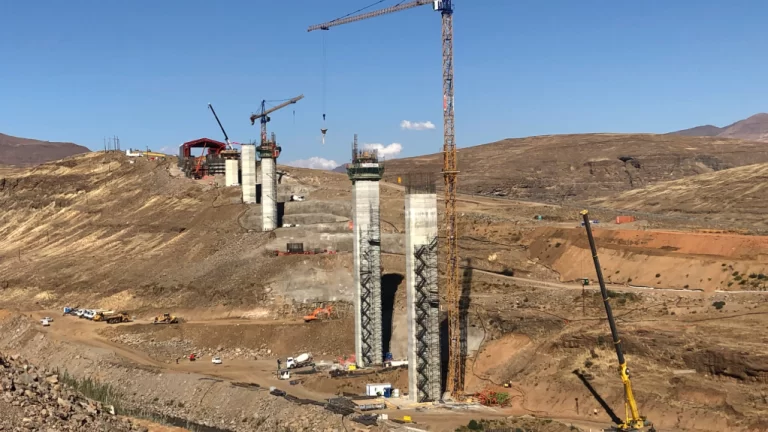
Lesotho’s second phase of the Lesotho Highlands Water Project (LHDA Phase II) is the largest infrastructure undertaking in the country’s history. The project is expected to boost water security for South Africa while generating royalties for Lesotho. Yet, a closer look at the contracts awarded reveals a familiar pattern: Chinese state-owned enterprises and other foreign firms dominate the construction space, leaving local contractors with limited opportunities.

This reality raises an important question. Are mega-projects like LHDA Phase II truly empowering Lesotho’s construction sector, or are they reinforcing dependency on foreign expertise and capital?

Social Impact: Jobs and Skills Transfer

Under the ESG social lens, major projects should create tangible benefits for local communities. This means more than just temporary jobs. It requires structured skills transfer and capacity building for Basotho workers and professionals.

In LHDA Phase II, foreign firms do employ Basotho workers, especially for unskilled and semi-skilled labour. However, the most lucrative roles remain concentrated among expatriate engineers, project managers, and specialists. This limits the development of local expertise and reduces the potential for Basotho professionals to gain high-value experience.

Local subcontracting opportunities are also scarce. Many foreign contractors prefer to bring in their own suppliers rather than integrate local companies into the value chain. As a result, local participation is often peripheral rather than central to the project.

Without deliberate policies and enforcement, these projects risk becoming short-term job providers instead of engines for long-term industrial growth.

Governance: Procurement and Local Content

From a governance perspective, ESG requires transparent and fair procurement processes. Lesotho’s public procurement rules demand competitive bidding, but critics argue that criteria often favour large foreign firms with extensive international portfolios and deep financial resources.

The absence of clear local content requirements for major projects undermines domestic industry growth. Without minimum quotas for local contractors, materials, and services, foreign firms have little incentive to engage local players beyond compliance on paper.

Contract award processes are also not always fully transparent. While legal frameworks exist, the lack of published bid evaluations fuels perceptions of bias. In some cases, foreign contractors are accused of partnering with local firms only in name, with real control and profits remaining offshore.

Economic Leakage

Economic leakage occurs when most of the money spent on a project flows out of the country rather than circulating locally. In the context of LHDA Phase II, leakage happens when foreign firms import both skilled labour and construction materials.

This deprives local suppliers of revenue and limits the multiplier effect that major public projects should have on the domestic economy. Over time, such patterns entrench dependency on foreign expertise and weaken the competitiveness of Lesotho’s own construction sector.

Recommendations for Change

To align LHDA Phase II and other large projects with ESG principles, several reforms are necessary: Independent ESG Audits – Monitor contractor performance against local content and ESG commitments.

Conclusion: Building for Shared Prosperity

Foreign contractors bring valuable expertise and financing. However, without strong governance measures, the benefits to Lesotho’s construction sector will remain limited.

The case for local content is not about excluding foreign partners. It is about ensuring that infrastructure investment strengthens domestic capabilities. A fair balance between foreign expertise and local participation is essential if projects like LHDA Phase II are to deliver sustainable development for Lesotho.

Around the world

0

Business Round-Up: Markets, Trade Shocks, and Industry Shifts

Southern Africa’s business landscape saw significant developments this week, spanning retail exits, healthcare innovation, trade disputes, corporate shake-ups, and green transitions. These moves signal both challenges and opportunities for businesses operating in the region.

Shoprite Pulls Out of Ghana and Malawi

South Africa’s largest grocery retailer, Shoprite Holdings, announced plans to exit Ghana and Malawi. The move comes as the company refocuses on its domestic market amid currency volatility, high inflation, and rising operational costs in some African territories. Despite an anticipated 8.9% rise in group sales, Shoprite’s share price dipped 2.6% following the news. Analysts say this decision highlights the need for regional retailers to balance expansion ambitions with profitability concerns.

Novo Nordisk Debuts Wegovy in South Africa

Danish pharmaceutical giant Novo Nordisk has launched its weight-loss drug Wegovy in South Africa, its first African market for the obesity treatment. The drug enters a space dominated by Eli Lilly’s Mounjaro, tapping into South Africa’s high rates of obesity and diabetes. The entry could spur further competition and innovation in the region’s healthcare sector, while also raising questions about accessibility and affordability.

Wine Industry Faces 30% U.S. Tariff

South African wine producers are bracing for heavy losses after the U.S. imposed a 30% tariff on their exports, significantly higher than tariffs faced by European rivals. The wine sector, which employs over 270,000 people, is heavily reliant on exports to the U.S. Government officials are exploring relief measures, but industry insiders warn the long-term impact could force some producers out of business.

Bain & Co Shuts Local Consulting Arm

Bain & Co is winding down its South African consulting operations in the wake of a corruption scandal tied to the state capture era. The company is under a 10-year ban from public sector contracts and will shift focus to its services hub, retaining some jobs but closing its direct consulting presence. The move underscores the reputational and operational risks multinational firms face in politically sensitive environments.

Toyota to Enter South Africa’s EV Market

Toyota announced plans to launch three fully electric vehicle models in South Africa by early 2026, marking a significant expansion into the local EV market. While European brands have led the segment so far, Toyota’s entry could accelerate adoption…if infrastructure and tariff barriers can be addressed.

Court Blocks TotalEnergies’ Offshore Oil Project

In a major environmental ruling, a South African court has overturned an environmental permit granted to TotalEnergies and Shell for offshore oil drilling between Cape Town and Cape Agulhas. Judges cited inadequate environmental assessment and insufficient consideration of socio-economic and climate risks. The decision reflects growing judicial scrutiny of fossil fuel projects in the region.

South Africa Launches National Dialogue

President Cyril Ramaphosa has convened a two-day “national dialogue” in Pretoria to address pressing socio-economic issues, including poverty, inequality, and unemployment, currently above 30%. While the initiative aims to build consensus across sectors, critics have questioned the R700 million ($40 million) price tag and whether it will yield tangible outcomes.

Our Takeaway:

The week’s developments show Southern Africa navigating a volatile mix of global market pressures, domestic policy shifts, and evolving consumer demands. For businesses, the message is clear; adaptability, regional focus, and a strong ESG (environmental, social, and governance) strategy are becoming non-negotiable for survival and growth.

We are turning 4!

0

Four Years of Impactful Journalism

As the Lesotho Tribune marks its fourth anniversary, it is worth reflecting on the meaningful ways this news outlet has shaped public discourse, especially in a media environment where press freedom is often under pressure.

1. Unwavering Investigative Reporting

In early 2024, the Lesotho Tribune published a pivotal eight-part investigative series exposing how Mergence Investment Managers and Cadient Partners allegedly monopolized influence over the Public Officers Defined Contribution Fund. These reports triggered a legal battle when Mergence sought to gag further articles. The High Court ultimately dismissed the application, allowing the reporting to continue. This was a strong example of fearless journalism and a reminder of the Tribune’s role in holding powerful actors to account.

Read Amnesty International’s coverage

2. Defending Press Freedom Amid Intimidation

In April 2024, the newsroom of the Tribune became the target of harassment. Threatening notes were left on journalists’ desks warning them to “stay away from pension fund issues.” Amnesty International condemned these acts of intimidation, noting that such tactics are designed to silence critical reporting. This incident showed the Tribune’s commitment to reporting even when faced with direct threats.

Read Amnesty International’s statement

3. Data Journalism and Analytical Perspective

The Tribune has built a reputation for its dedication to data journalism, prioritizing reporting driven by evidence rather than opinion. The publication has consistently examined policy and economic trends in a way that deepens public understanding. This approach has positioned the Tribune as a leader in analytical reporting in Lesotho.

Visit Lesotho Tribune’s data-focused stories

Why It Matters

Courageous Accountability: The Tribune’s reporting on the pension fund scandal highlights its watchdog role in society.

Defense of Press Freedom: Resisting intimidation and continuing to publish shows resilience and commitment to truth.

Analytical Depth: The use of data-driven journalism sets a higher standard for the media industry in Lesotho.

Looking Ahead

As the Lesotho Tribune celebrates four years of journalism, the challenges remain and so do the opportunities. The publication has the potential to expand its influence by fostering media literacy, amplifying marginalized voices, and using data insights to encourage reform. Its record so far suggests it will continue to be a critical player in Lesotho’s democratic landscape.

Phafane Makes History

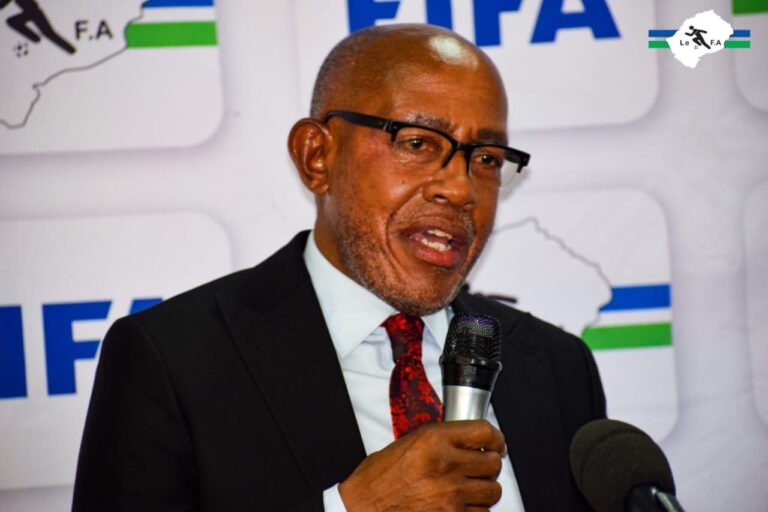
The President of the Lesotho Football Association (LeFA), Advocate Salemane Phafane, is set to make history as one of the longest-serving football association presidents in Africa. First elected in 2004 after the tragic death of then-president Thabo Makakole, Phafane has now served five consecutive terms, most recently re-elected at LeFA’s sixth Congress in November 2024.

If he completes his current mandate, Phafane will surpass Malawi’s Walter Nyamilandu, who held office for 19 years before being voted out in 2023. Both leaders began in 2004, but while Nyamilandu celebrated two Africa Cup of Nations qualifications (2010 and 2021) with Malawi, Lesotho is yet to reach a major continental or global tournament under Phafane’s leadership.

The Role of a Football Association President

Globally, football federation presidents play a crucial role in shaping the game’s future. For LeFA, Phafane’s responsibilities include:

Governance & Strategy: Steering LeFA’s long-term vision through initiatives like the 2023–2026 Strategic Plan, aligned with CAF and FIFA standards.

Administration & Compliance: Safeguarding transparency and accountability, with Phafane himself serving on FIFA’s Governance, Audit, and Compliance Committee.

Representation & Advocacy: Acting as Lesotho’s football voice at CAF, COSAFA, and FIFA levels.

Development & Infrastructure: Overseeing grassroots football, youth academies, and equipment distribution nationwide.

Fundraising & Partnerships: Negotiating with government, private sponsors, and international partners to sustain football leagues and national squads.

Challenges Facing Lesotho’s Football Under Phafane

Phafane’s two decades in charge have been marked by persistent hurdles that mirror Lesotho’s broader socio-economic struggles:

Economic Constraints: Limited sponsorship and a small professional player pool restrict football’s growth.

Infrastructure Gaps: With unapproved stadiums forcing national teams to play “home” games abroad, FIFA funding has even been suspended at times.

Government Neglect: Phafane has frequently criticised the Ministry of Sports for failing to finance LikuenaMehalalitoe, and youth teams, calling it “an embarrassment.”

Political Exploitation: He has condemned politicians for using football during election campaigns, only to abandon it afterward.

Coaching Standards: Clubs allegedly rely on borrowed licences, leaving unqualified coaches in charge of players.

No U-23 National Team: Attempts to form an Olympic-qualifying squad have been stalled by lack of support from the National Olympic Committee.

Achievements and Milestones

Despite these setbacks, Phafane’s leadership has also delivered progress:

Global Recognition: From the FIFA Disciplinary Committee to the Governance, Audit & Compliance Committee, Phafane’s international roles have raised Lesotho’s profile.

Youth Development: Launch of LeFA’s first football academy at Sacred Heart High School, enrolling 33 Under-13 boys for combined academic and sporting growth.

Regional Progress: Likuena reached the COSAFA Cup final in 2023, and the women’s U-17 side repeated the feat in 2024.

Grassroots Support: Through the LeFA Assistance Programme (LAP), over 4,000 footballs and kits were distributed in 2024/25.

Inclusivity: LeFA’s 2025 national kits included full sets for women’s teams at no extra cost.

Academy Success: In April 2025, Phafane personally visited the national academy in Maputsoe, reinforcing his commitment to blending education and sport.

Legacy and the Road Ahead

Advocate Salemane Phafane’s presidency illustrates the paradox of Lesotho football: strong governance, grassroots empowerment, and international representation, yet no breakthrough on the continental stage.

As he edges closer to becoming Africa’s longest-serving football association president, his legacy will depend on whether the structures he has built—youth academies, governance systems, and grassroots programmes—can eventually lift Lesotho to the Africa Cup of Nations or even the FIFA World Cup.

Mofosi continues to uplift the farming spirit in the Basotho

0

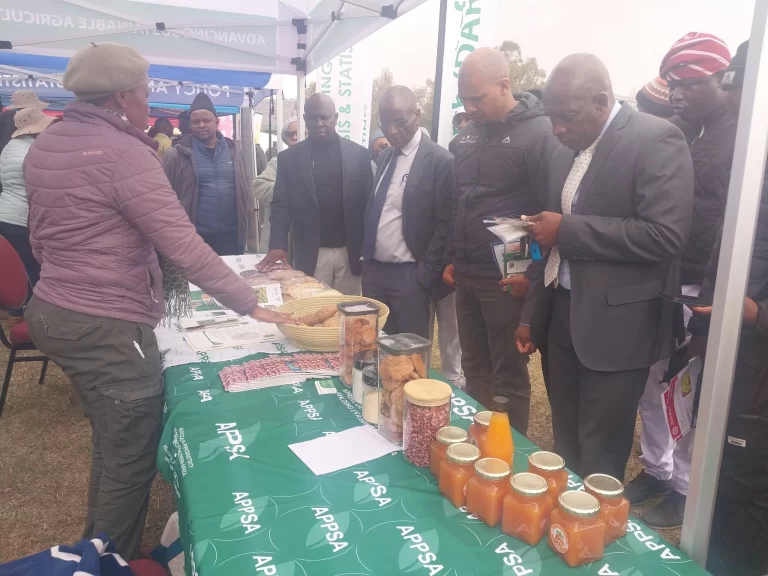
The Ministry of Agriculture, Food Security and Nutrition ran an Agricultural Trade Fair in Maseru this week. 

The Minister responsible for Agriculture, Thabo Mofosi, said the fair would serve as a crucial forum for key players in the agricultural field to come together and discover chances for expansion and development in the industry. 

“The event exhibits the nation’s agricultural expertise and dedication to safeguarding food security while also underscoring the obstacles that the industry faces, “Mofosi said, adding that the fair is expected to assist alliance, creativity and partnerships among farmers, industry experts and policymakers, ultimately contributing to the pioneering of the agricultural sector. 

With its target on tackling major hurdles, Mofosi said the event was set to play an important role in shaping the future of agriculture in Lesotho.

The fair considered critical concerns facing the industry, including climate change, unstable global markets and dynamic consumer demands. 

This year’s fair theme, “Strengthening Market Systems and Value Chain Linkages for Inclusive Agricultural Growth”, displayed the Ministry’s core strategies. 

Mofosi said their target areas cover investing in research and progress, boosting eco-friendly agriculture technologies, improving finance and market access, and strengthening value chains.

“This fair intends to push diverse market systems, in the long run, contributing to a more sustainable and resilient agriculture sector,” Mofosi emphasised.

The event spotlighted the important shift ongoing in the agricultural industry, driven by technological improvements and creative tactics. The government has restated its commitment to backing farmers through projects that amplify livelihoods, access to credit and markets and modern farming techniques. The focus will mainly include empowering women and youth in agriculture through skills training, mentorship and entrepreneurial support, nurturing alliances and knowledge sharing among a wide array of parties, including government agencies, research institutions, private sector companies and international organisations. 

Mofosi announced that “The event benefits as a critical stage for fuelling growth, innovation and diversity in the agricultural sector. By promoting modern farming practices and supporting essential stakeholders, the government aims to upgrade the sector’s efficiency and durability.”

He concluded by saying the fair aspires to drive evolution in food security and renewable agriculture by promoting creativity and a resilient, diverse and sustainable agricultural system.

“By celebrating the industry’s potential and encouraging stakeholder engagement, the function seeks to enable the way for a flourishing and food-secure future.”

ETL Revives the Hope of 439 Students

Maseru 

Econet Telecom Lesotho (ETL) and Higherlife Foundation have injected M1 248 840 into the Ministry of Education and Training (MOET) to meet 439 students halfway with examination and school fees. This generous handover was gifted to the ministry on Tuesday. 

After the revised tariffs on Lesotho exports by the Trump administration and USAID funds withdrawals, 439 students who were sponsored by Mothers to Mothers suffered the consequences, being left helpless and hopeless. 

These students, it was announced, are enrolled in 167 schools countrywide and were faced with the devastating possibility of not being able to sit for exams as a result of being behind with their fees. 

To ensure the students’ right to education was not violated, the ministry took an initiative to seek help on the students’ behalf from Econet and its partners. 

The Chief Executive Officer of Econet, Dennis Plaatjies, expressed his view on education, saying they at Econet believe in the saying that the right to education is one of the basic human rights, saying every child should be able to go to school. 

“This payment to the Examination Council of Lesotho (ECoL) is a declaration of our belief in the potential of each of these learners. It is also a commitment to access equity and dignity in education. It is an act of hope that we have for these learners,” Plaatjies said.

He emphasised that the payment coincides with the plans that ETL and Higherlife had already set in place to give back to the community, noting that Higherlife Foundation is soon to unveil 10 new recipients of the Moshoeshoe I scholarship, forming part of the fourth cohort and tallying the number to 40 since its 2022 inception.

“In the past financial year, ETL, through Higherlife Foundation, has invested over M8 million towards education corporate social investment initiatives. This is because we firmly believe that when we empower learners, we empower the nation,”  Plaatjies said.

He emphasised the company’s gratitude to Basotho for continuously supporting ETL, stating that in every purchase of the company’s products and services, a certain portion goes into the Higherlife Foundation to enable the possibility of initiatives of the same nature to take place. 

Ntoi Rapapa, the Minister of Education and Training, expressed his pride in the synergy between government ministries and privately owned companies in helping Basotho in all development aspects. 

“ETL did not help only MOET and the Ministry of Youth and Social Development, but it has also brought hope to the lives of the vulnerable and marginalised individuals. It is touching to restore someone’s hope. Initiatives pushed by private sectors go a long way in helping students reach their dreams as I am one of the people who would not be where I am in life if it was not of helps like this one,” Rapapa echoed, further requesting ECoL staff to help students who come short of paying their fees rather than opting for expulsion. 

He said when a student fails to sit for their exams, the failure is a chain reaction that could have repercussions hitting them, their families and generations to follow, hence they need to receive all the help they can get

Independent business & current affairs journalism · Lesotho Subscribe — M85/month
| Independent business & current affairs journalism · Lesotho