



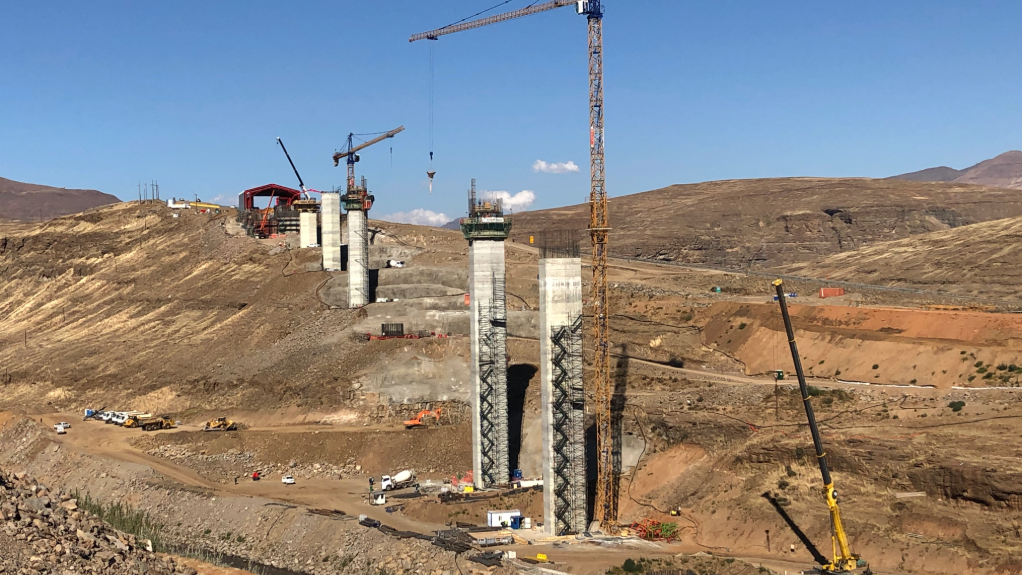
Lesotho’s second phase of the Lesotho Highlands Water Project (LHDA Phase II) is the largest infrastructure undertaking in the country’s history. The project is expected to boost water security for South Africa while generating royalties for Lesotho. Yet, a closer look at the contracts awarded reveals a familiar pattern: Chinese state-owned enterprises and other foreign firms dominate the construction space, leaving local contractors with limited opportunities.
This reality raises an important question. Are mega-projects like LHDA Phase II truly empowering Lesotho’s construction sector, or are they reinforcing dependency on foreign expertise and capital?
Social Impact: Jobs and Skills Transfer
Under the ESG social lens, major projects should create tangible benefits for local communities. This means more than just temporary jobs. It requires structured skills transfer and capacity building for Basotho workers and professionals.
In LHDA Phase II, foreign firms do employ Basotho workers, especially for unskilled and semi-skilled labour. However, the most lucrative roles remain concentrated among expatriate engineers, project managers, and specialists. This limits the development of local expertise and reduces the potential for Basotho professionals to gain high-value experience.
Local subcontracting opportunities are also scarce. Many foreign contractors prefer to bring in their own suppliers rather than integrate local companies into the value chain. As a result, local participation is often peripheral rather than central to the project.
Without deliberate policies and enforcement, these projects risk becoming short-term job providers instead of engines for long-term industrial growth.
Governance: Procurement and Local Content
From a governance perspective, ESG requires transparent and fair procurement processes. Lesotho’s public procurement rules demand competitive bidding, but critics argue that criteria often favour large foreign firms with extensive international portfolios and deep financial resources.
The absence of clear local content requirements for major projects undermines domestic industry growth. Without minimum quotas for local contractors, materials, and services, foreign firms have little incentive to engage local players beyond compliance on paper.
Contract award processes are also not always fully transparent. While legal frameworks exist, the lack of published bid evaluations fuels perceptions of bias. In some cases, foreign contractors are accused of partnering with local firms only in name, with real control and profits remaining offshore.
Economic Leakage
Economic leakage occurs when most of the money spent on a project flows out of the country rather than circulating locally. In the context of LHDA Phase II, leakage happens when foreign firms import both skilled labour and construction materials.
This deprives local suppliers of revenue and limits the multiplier effect that major public projects should have on the domestic economy. Over time, such patterns entrench dependency on foreign expertise and weaken the competitiveness of Lesotho’s own construction sector.
Recommendations for Change
To align LHDA Phase II and other large projects with ESG principles, several reforms are necessary: Independent ESG Audits – Monitor contractor performance against local content and ESG commitments.
Conclusion: Building for Shared Prosperity
Foreign contractors bring valuable expertise and financing. However, without strong governance measures, the benefits to Lesotho’s construction sector will remain limited.
The case for local content is not about excluding foreign partners. It is about ensuring that infrastructure investment strengthens domestic capabilities. A fair balance between foreign expertise and local participation is essential if projects like LHDA Phase II are to deliver sustainable development for Lesotho.