


By Hlalele ‘Neko
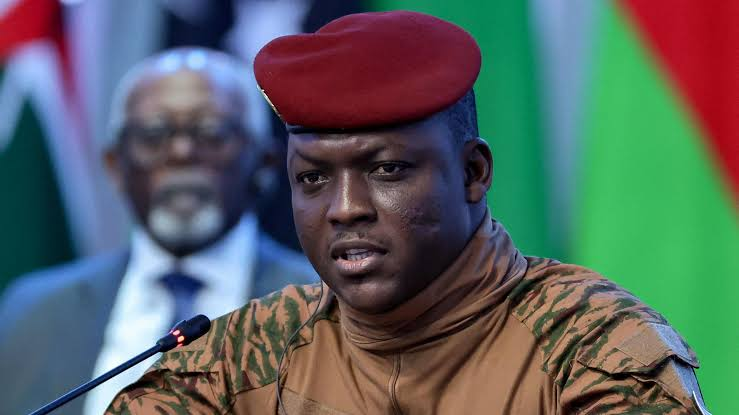
Captain Ibrahim Traoré, Burkina Faso’s young military leader, has captured the imagination of many across Africa. To his supporters, he is the embodiment of defiance against neocolonial influence, a man unafraid to challenge France and the West, and a leader promising to reclaim his country’s dignity. Images of him in fatigues, speaking with conviction, have become symbols of “African liberation” in certain corners of the continent.
But history urges caution.
Across Africa’s post-independence history, charismatic military rulers have often arrived as saviors, only to morph into authoritarians. From Ghana’s Jerry Rawlings to Uganda’s Yoweri Museveni, the pattern is familiar: the young, idealistic soldier who promises renewal and an end to corruption eventually consolidates power, weakens institutions, and overstays.
Traoré is only 36. His rise to power in 2022 was sudden, propelled by the deep frustrations of a nation ravaged by jihadist violence, political instability, and public disillusionment with civilian leadership. That very context, the yearning for a strong hand, makes it easy to overlook the dangers of investing too much hope in one man.
Traoré was not elected. He seized power through a coup, toppling another military ruler who himself had overthrown an elected president. While coups are sometimes romanticized as “resets,” they fundamentally bypass the people’s will. Without a democratic mandate, any claim to legitimacy rests on performance and on whether he will eventually return the country to civilian rule.
So far, the roadmap to elections remains vague. Coups in Africa rarely end with a swift handover to civilians, more often military governments delay transitions under the pretext of security or reform. In Burkina Faso’s case, the worsening security situation provides a ready-made excuse for extended military rule.
If Traoré is serious about national renewal, he must strengthen institutions, not personalize power. A nation cannot hinge its future on the charisma or decisiveness of a single figure. It must be grounded in the rule of law, checks and balances, and the ability to change leaders without bloodshed.
Traoré’s government has adopted a hardline, military-first approach to the insurgency, while also pivoting toward non-Western allies such as Russia. But the security crisis is deep and complex, rooted in governance failures, poverty, and ethnic tensions. There is little evidence yet that the insurgents are on the back foot.
Militarizing the state without parallel political and socio-economic reforms risks fueling the very instability Traoré seeks to end. An insurgency cannot be defeated purely by force. It requires legitimacy in the eyes of all citizens, including those in marginalized rural areas.
Part of Traoré’s appeal lies in the broader wave of military takeovers in West Africa, from Mali to Niger. These regimes speak the language of anti-imperialism, and in doing so, they tap into genuine public anger at the failures of both domestic elites and international partners.
Yet there is a difference between ending dependency and isolating oneself. Breaking with France may play well politically, but it does not automatically translate into good governance, economic growth, or improved security.
Admiration for Traoré’s boldness should not cloud sober judgment. Leaders must be assessed on delivery, not on symbolism alone. And when a country’s fate is concentrated in one man’s hands, the risk of disappointment and disaster is high.
Burkina Faso’s people deserve stability, prosperity, and freedom. Those outcomes depend less on the charisma of a revolutionary leader and more on building strong, accountable institutions that outlast him.
For those cheering from afar, hope is not a strategy, and history is not on the side of unchecked military power.