



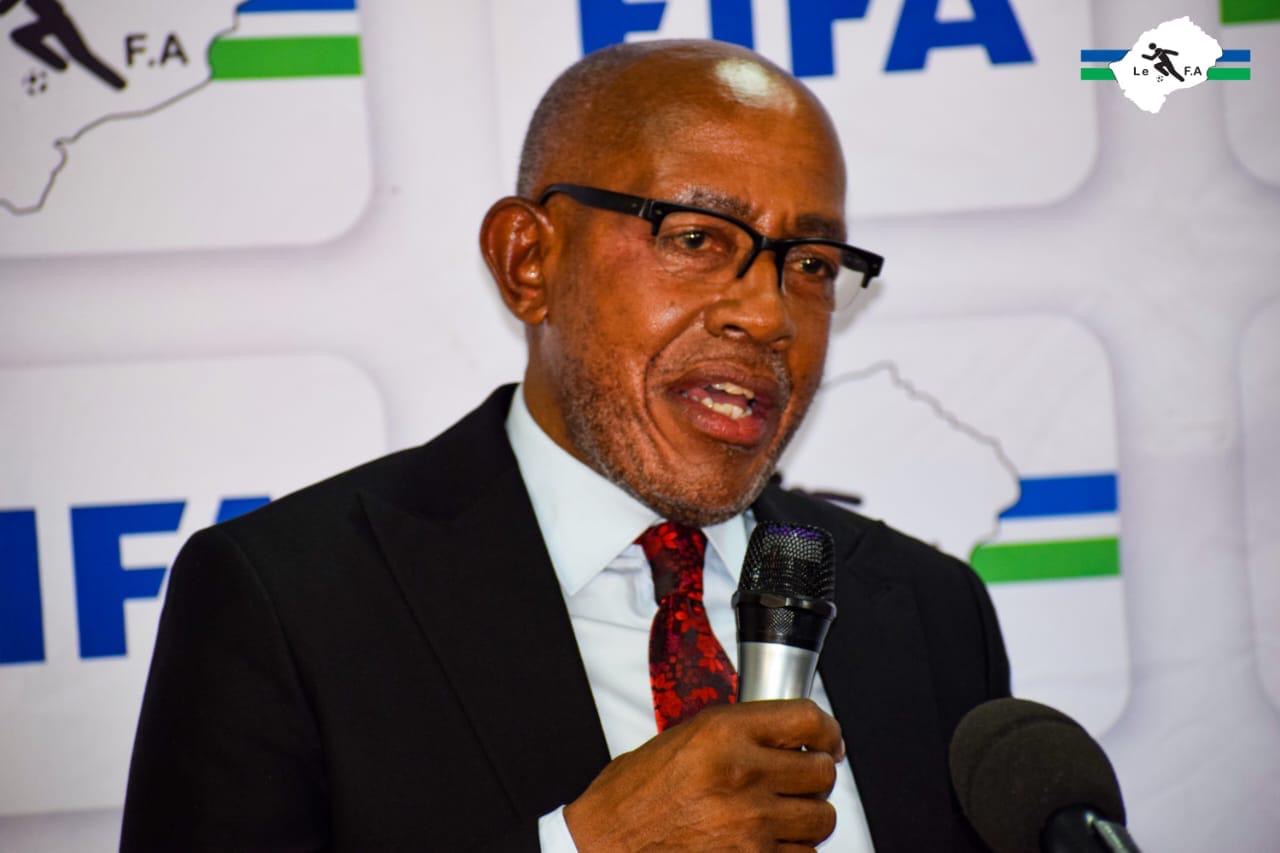
The President of the Lesotho Football Association (LeFA), Advocate Salemane Phafane, is set to make history as one of the longest-serving football association presidents in Africa. First elected in 2004 after the tragic death of then-president Thabo Makakole, Phafane has now served five consecutive terms, most recently re-elected at LeFA’s sixth Congress in November 2024.
If he completes his current mandate, Phafane will surpass Malawi’s Walter Nyamilandu, who held office for 19 years before being voted out in 2023. Both leaders began in 2004, but while Nyamilandu celebrated two Africa Cup of Nations qualifications (2010 and 2021) with Malawi, Lesotho is yet to reach a major continental or global tournament under Phafane’s leadership.
The Role of a Football Association President
Globally, football federation presidents play a crucial role in shaping the game’s future. For LeFA, Phafane’s responsibilities include:
• Governance & Strategy: Steering LeFA’s long-term vision through initiatives like the 2023–2026 Strategic Plan, aligned with CAF and FIFA standards.
• Administration & Compliance: Safeguarding transparency and accountability, with Phafane himself serving on FIFA’s Governance, Audit, and Compliance Committee.
• Representation & Advocacy: Acting as Lesotho’s football voice at CAF, COSAFA, and FIFA levels.
• Development & Infrastructure: Overseeing grassroots football, youth academies, and equipment distribution nationwide.
• Fundraising & Partnerships: Negotiating with government, private sponsors, and international partners to sustain football leagues and national squads.
Challenges Facing Lesotho’s Football Under Phafane
Phafane’s two decades in charge have been marked by persistent hurdles that mirror Lesotho’s broader socio-economic struggles:
• Economic Constraints: Limited sponsorship and a small professional player pool restrict football’s growth.
• Infrastructure Gaps: With unapproved stadiums forcing national teams to play “home” games abroad, FIFA funding has even been suspended at times.
• Government Neglect: Phafane has frequently criticised the Ministry of Sports for failing to finance Likuena, Mehalalitoe, and youth teams, calling it “an embarrassment.”
• Political Exploitation: He has condemned politicians for using football during election campaigns, only to abandon it afterward.
• Coaching Standards: Clubs allegedly rely on borrowed licences, leaving unqualified coaches in charge of players.
• No U-23 National Team: Attempts to form an Olympic-qualifying squad have been stalled by lack of support from the National Olympic Committee.
Achievements and Milestones
Despite these setbacks, Phafane’s leadership has also delivered progress:
• Global Recognition: From the FIFA Disciplinary Committee to the Governance, Audit & Compliance Committee, Phafane’s international roles have raised Lesotho’s profile.
• Youth Development: Launch of LeFA’s first football academy at Sacred Heart High School, enrolling 33 Under-13 boys for combined academic and sporting growth.
• Regional Progress: Likuena reached the COSAFA Cup final in 2023, and the women’s U-17 side repeated the feat in 2024.
• Grassroots Support: Through the LeFA Assistance Programme (LAP), over 4,000 footballs and kits were distributed in 2024/25.
• Inclusivity: LeFA’s 2025 national kits included full sets for women’s teams at no extra cost.
• Academy Success: In April 2025, Phafane personally visited the national academy in Maputsoe, reinforcing his commitment to blending education and sport.
Legacy and the Road Ahead
Advocate Salemane Phafane’s presidency illustrates the paradox of Lesotho football: strong governance, grassroots empowerment, and international representation, yet no breakthrough on the continental stage.
As he edges closer to becoming Africa’s longest-serving football association president, his legacy will depend on whether the structures he has built—youth academies, governance systems, and grassroots programmes—can eventually lift Lesotho to the Africa Cup of Nations or even the FIFA World Cup.