



The United States has thrown the global diamond trade into turmoil. By announcing a 50 percent tariff on Indian imports, including polished diamonds, Washington has shaken the foundations of an industry long dominated by India. According to Rapaport and National Jeweler, the new tariffs will take effect on August 27, 2025. What appears on the surface as a bruising trade war between Washington and New Delhi could, for Lesotho, be an opening too big to ignore.
India’s dominance of the diamond industry has been unrivalled. More than 90 percent of the world’s cut and polished diamonds pass through its factories, most of them in Surat. That dominance has rested on one thing: cost. India offered skilled labor at a scale and price unmatched anywhere else. The 50 percent tariff now wipes away that edge in the U.S. market, which happens to be India’s single largest buyer.
The immediate effect is simple. American wholesalers and retailers cannot keep sourcing from India at the same price. They will not stop selling diamonds, the luxury market will survive tariffs but they will be forced to look for alternatives. That is how trade works. When one supply route becomes too expensive, buyers divert to others. And in that shift lies Lesotho’s chance.
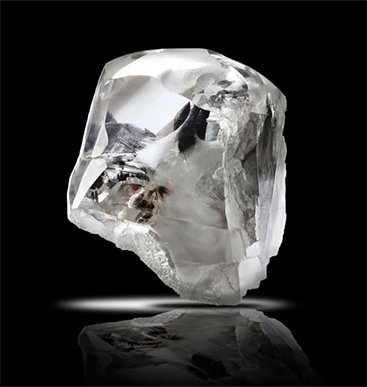
For too long, Lesotho has played a secondary role in the diamond economy. We dig up some of the finest rough stones in the world, only to see others capture the real profits through polishing, marketing and trading. The tariff shock on India cracks open a door that has always been slammed in our face. U.S. buyers will not suddenly start flocking to Lesotho tomorrow, but they will be searching for reliable partners beyond India and Russia. Lesotho could be one of them.
This is not about replacing India. It is about claiming a bigger share of value from our own production. If Lesotho develops even modest polishing capacity, it sends a signal that we are ready to move up the chain. Joint ventures with established firms from Antwerp or Dubai could help us build the skills. More importantly, strong governance and transparency in the sector would build the credibility that international buyers demand.
Politics also plays in our favor. Washington has already shown, by sanctioning Russian diamonds, that it wants its supply chains diversified and ethically sourced. Lesotho can align itself with that narrative. American buyers are not just looking for stones, they are looking for security of supply. We can be that secure option.
Critics will point to our size. Lesotho cannot match India’s scale, they will say. And they are right. But scale is not the point. The point is that when the largest player in the game suddenly stumbles, even smaller producers can find room to grow. Lesotho does not need to dominate the global diamond trade. It only needs to stop giving away so much value to others.
Washington’s tariff decision may devastate Indian polishing hubs, putting over a million jobs at risk. But in every global disruption, there are winners as well as losers. For Lesotho, this could be a once-in-a-generation opportunity. The world’s diamond economy is realigning. The only question is whether we are ready to seize the moment, or whether we will watch, once again, as others profit from our stones.