Mohahlaula Airlines
Wednesday, August 12, 2026
Home Blog Page 77

US Tariffs on South African Exports Pose Major Threat to Jobs and Economy

The announcement by U.S. President Donald Trump of a 30% tariff on South African goods and produce entering the United States from 1 August 2025 is deeply troubling. The economic consequences of this decision could be widespread and severe.

While not explicitly stated, this move may signal the effective end of South Africa’s participation in the African Growth and Opportunity Act (AGOA), which currently allows duty-free access for over 6,000 products, including automobiles, agricultural goods, and textiles.

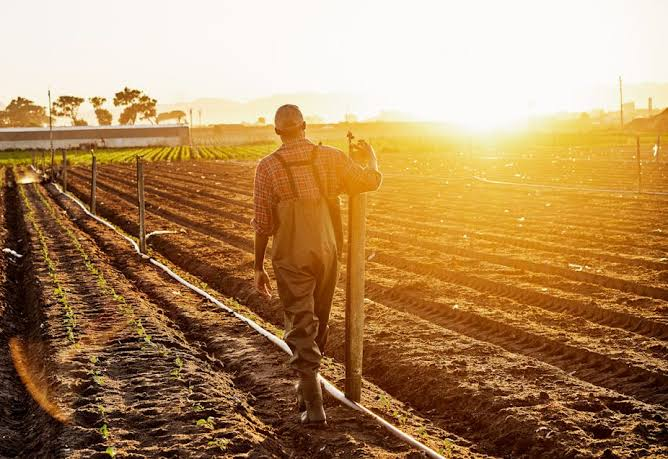
Thousands of South African exporters, across farming, manufacturing, mining, and other sectors are now facing profound uncertainty. The impact on jobs and livelihoods could be devastating, particularly in a country already burdened by one of the highest unemployment rates in the world. Billions of rands in export revenue are at stake.

Given the potential fallout, South Africa must now accelerate urgent economic reforms that strengthen resilience, protect jobs, and position the country more competitively in the global marketplace.

Among these critical reforms are:

• Removing regulatory and infrastructure barriers to private sector participation in electricity generation and transmission

• Concessioning ports to improve logistics efficiency and reduce turnaround times

• Expanding private participation in freight rail, supported by investment in infrastructure and stronger security measures

• Reviewing property legislation to reinforce investor confidence and protect private ownership

• Reforming empowerment policies to more effectively tackle poverty and inequality

• Strengthening local government performance to improve service delivery and ensure financial accountability

• Taking decisive steps to combat corruption, which continues to undermine public trust and development

The brief extension granted, from 9 July to 1 August offers a narrow but vital opportunity to engage constructively and seek clarity from the United States. It is essential that this window is used wisely, with a focus on diplomacy, reform, and long-term economic stability.

ETL launches advanced Wi-Fi with easy accessibility

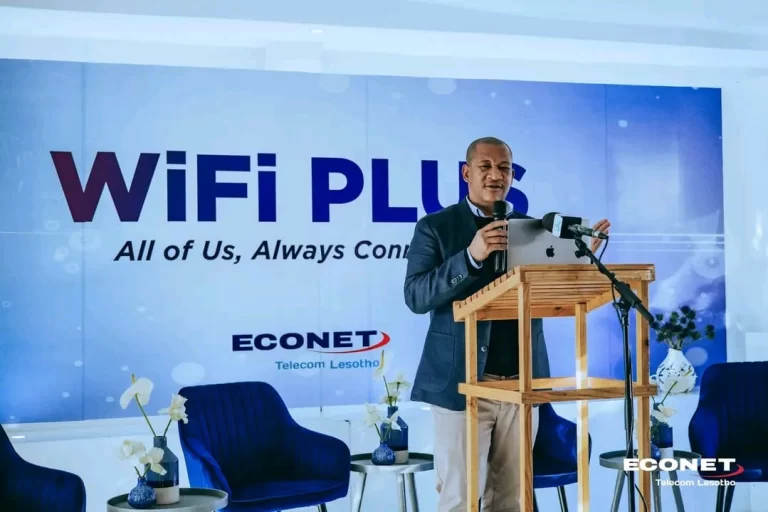
MASERU- Econet Telecom Lesotho (ETL) has launched a Fixed Mobile Convergence (FMC), known as Wi-Fi PLUS this week at Thabeng Hotel in Maseru along the week. Intended for both home and business, Wi-Fi PLUS guarantees quick, steadfast internet for all clients’ needs. From teleworking to streaming and video games, Wi-Fi Plus is an opening that connects all without any clash.

In his opening remarks at the launch, Chief Executive Officer of Econet Telecom Lesotho, Denis Plaatjies stated that the newly introduced product will allow users to stay connected in a faster and more appropriate way. He said that this innovative breakthrough represents more than just improvement, as it marks a turning point in Lesotho’s digital progress in general.

“Wi-Fi Plus permits us to reach even the most inaccessible communities, giving them access to the same quality of service enjoyed in urban areas. It also simplifies the customer experience by packaging voice, data, and SIM services into one convenient solution. By building on our existing fixed infrastructure, we are delivering consummate network reliability and efficiency. This is an essential moment in our journey to make digital access truly widespread,” Plaatjies remarked.

He showed that it is also an extension of the 4G internet connectivity that ETL is already having across the country especially in remote areas. Moreover, the Product Manager, Ntina Sehlooho said that Wi-Fi PLUS is a product with which ETL is targeting to allow its  users to stay connected with different channels not only at a fixed place as it will also enable mobile connectivity.

Econet General Manager Sales and Services, Lebohang Ramaisa, said they are progressing out committedpackages for both Residential and Small, Medium & Micro Enterprises (SMME) customers. Ramaisa said they offer a residential package which is perfect for families and shared households that can connect up to seven users, each receiving mobile data, On-Net call minutes, and a free SIM card – all under one flexible, shared account.

In addition, Ramaisa stated that the Business (SMME) Package is designed for small businesses to connect up to five employees, with each receiving 10GB of data and two hours of On-Net talk time monthly for up to 24 months. Well-suited with prepaid SIM cards, this package is designed for ease operation with enough resources.

“This launch is a true evidence to Econet’s commitment to inclusive digital access and innovation. By joining the connectivity gap, Econet is allowing families, entrepreneurs, and communities to flourish in a digitally connected Lesotho, “Ramaisa emphasised

NUL ERC SCIENTISTS TAKE CLEAN ELECTRICITY TO 185 HOMES IN THE MOUNTAINS! 

0

Let’s take a trip to the beautiful mountain villages of Motete in Butha-Buthe and in Thaba-Tseka. For a long time, these places had no electricity. People used candles for light, chopped firewood to cook, and walked long distances just to charge their phones. But that all changed when the National University of Lesotho (NUL) Energy Research Centre (ERC) showed up…with a plan. They were bringing in something called mini-grids, powered by the sun.

These mini-grids now light up over 110 homes in Motete and more than 75 in Linakaneng. That means families can cook, study, listen to the radio, and charge phones, all from clean energy.

“It cost us over M14 million to make it happen,” says Mr. Tšita Molapo, a physics lecturer at NUL and one of the people leading the project. “It wasn’t easy. These villages are very remote, and we were introducing high-tech systems in places that never had anything like this before.”

Luckily, NUL wasn’t working alone. The mini-grids were funded by Innovate UK, and NUL teamed up with Smart Villages from the UK, Gram Oorja from India, and MOSCET from Lesotho. You could say it was a worldwide team effort to help Lesotho’s mountains shine.

So how does the system actually work?

Well, it all starts with the sun. Big steel structures with solar panels are installed out in open areas where they can soak up all that beautiful sunshine. When sunlight hits the panels, something clever happens inside…tiny particles of light (called photons) knock around electrons inside the solar cells. This produces direct current (DC) electricity.

Now, DC electricity isn’t quite what most home appliances need. Before it reaches the houses, the electricity goes through something called an inverter, which turns it into alternating current (AC), the kind that lights your bulb and powers your fridge.

But what if no one is using the electricity during the day? No problem. The system includes batteries, which are like giant power banks. Any electricity that isn’t used right away is stored in these batteries for use at night, when people are home and using lights, charging phones, or watching TV.

Each village has a community committee that runs the system. Villagers don’t need fancy apps or bank cards. They just go to a local committee member with a laptop, buy electricity units for M5.00 per unit, and boom! The lights come on at home. No long queues, no complications.

“It’s something we never even dreamed about before NUL came knocking on our doors,” says Mr. Letšohla Mapentjane, one of the community leaders in Motete.

But just when things were about to get moving, guess what happened?

Covid-19 hit!

Everything stopped. Roads were closed. Moving equipment into the mountains? Forget it. For a while, people feared the project was gone for good.

But like we say in Sesotho, sesa-feleng se a hlola, everything comes to an end.

And sure enough, when Covid restrictions lifted, the project came back to life. The NUL team returned with their tools and technology, and in just a few months, homes began to glow at night. Radios played. Phones charged. Children studied under real lights for the first time.

“To say it was tough would be putting it lightly,” Mapentjane laughs. “None of us knew a thing about mini-grids when we started. But we were ready to learn. And with help from the NUL team and their international and local partners, we made it happen.”

Now here’s the really cool part. NUL scientists can monitor the whole system from their phones.

Each mini-grid has a smart little device called a data logger. It watches everything happening in the system, how much energy the panels are collecting, how full the batteries are and so on. All this info is sent through the internet to NUL scientists, who can check the system from their laptops or phones, whether they’re sitting at the university or travelling abroad.

They know, from miles away, when something ain’t going right. 

Most of the power use happens in the evening. That’s when people switch on their lights, charge phones, or run small appliances. During the day, the sun does its job, filling up the batteries and preparing the system for the busy night ahead, even while sharing some power to day users.

Both Motete and Linakaneng now take full ownership of their mini-grids. The villagers handle the money, check the systems, and even teach each other how to use power wisely.

And just like that, these mountain communities are no longer left behind. They’re part of a global energy shift, one where power doesn’t come from burning coal or diesel, but from the sun above and science on the ground.

“As the world moves toward clean energy,” says Mr. Molapo, “these villages are leading the way. And that’s something we’re proud to be part of.”


Dr. Moroke Grills Finance Officials Over M1.5 Billion Solar Project Irregularities

Maseru – Officials at the Ministry of Finance and Development Planning are reportedly being subjected to political pressure to approve major infrastructure projects that fail to meet regulatory standards and procedural requirements.

This troubling revelation was made on Wednesday before the Public Accounts Committee (PAC) by Mothobi Letooane, Director of Project Cycle Management within the ministry.

Letooane explained that the ministry’s role is to advise government departments on project planning and to mobilise funding. However, he revealed that political directives often override technical assessments and best practices.

He was responding to a question posed by PAC member Dr. Tšeliso Moroke, who queried how the ministry had approved and secured funding for Phase I of the Ramarothole Solar Power Plant without an Environmental Impact Assessment (EIA) from the Ministry of Energy.

The Ramarothole project was financed through a soft loan of M1.3 billion from the EXIM Bank of China, with the Government of Lesotho contributing an additional M220 million. The government’s contribution included M57 million allocated for land compensation, as well as funding for tax obligations and operating costs under the Lesotho Generation Company (LEGCO), a parastatal within the Ministry of Natural Resources.

The solar plant, located on a 220-hectare site in Ha-Ramarothole, Likhoele, Mafeteng, was officially launched in June 2023. However, it is now grappling with significant environmental challenges, including severe soil erosion that has compromised the perimeter fencing and solar panel foundations—issues that could have been mitigated with a prior EIA.

Letooane admitted that the government had fast-tracked the project to secure funding and begin implementation, opting to conduct the EIA after construction had already commenced.

“To be honest, the EIA for Phase I was not conducted before implementation, and this has led to the serious environmental issues we are now experiencing,” Letooane told the PAC. “We had advised that all requirements be met before appraisal, but we were under immense political pressure to greenlight the project.”

He further disclosed that the Ramarothole solar plant is not the only project affected by political interference. “This is not an isolated case. We’ve been pressured to appraise bridges and other infrastructure projects without proper design documentation or adherence to EIA protocols,” he said.

Letooane lamented that such interference compromises public service integrity and exposes the government to long-term financial and environmental risks. “As officials, we operate under orders. Unfortunately, we are caught in a system where decisions are made above us, undermining our mandate to enforce due process and safeguard public resources.”

Dr. Moroke expressed grave concern over Letooane’s testimony, warning that the Ministry of Finance and Development Planning appears to have developed a pattern of approving projects prematurely. “There is a list of projects that were approved without meeting necessary standards. These substandard outcomes end up costing the country more in the long run,” he said.

The PAC also noted that the Ministry of Energy has now requested an additional M26 million to repair damage to the Ramarothole facility—costs that could likely have been avoided.

When asked to identify those responsible for pressuring the ministry to bypass proper procedures, Letooane and his colleagues requested that such disclosures be made in camera, citing fear of political retaliation.

Disaster Declaration is “legally untenable, politically expedient, and constitutionally precarious.”

Maseru – Yesterday’s (8th July) government declaration labeling youth unemployment and job losses as a “State of Disaster” has sparked fierce debate, with Basotho questioning its constitutionality and intent. The declaration, made under Legal Notice No. 102 of 2025, invokes the Disaster Management Act of 1997, granting the executive sweeping powers for two years to address the crisis.

The Advocates for the Supremacy of the Constitution, Lesotho’s prominent legal watchdog, have issued a scathing critique of the move. In a statement released yesterday, the group argued that the declaration is “legally untenable, politically expedient, and constitutionally precarious.”

According to Section 2 of the Disaster Management Act, a “disaster” refers to sudden or progressive events like floods, fires, or major accidents, incidents requiring immediate humanitarian intervention. The group contends that youth unemployment, while a pressing issue, is a chronic, structural problem resulting from systemic failures in policy and governance, not an abrupt calamity warranting emergency measures.

“By this logic, inflation, poverty, or even potholes could next be declared ‘disasters,’” the statement reads. “This sets a dangerous precedent for the misuse of emergency powers.”

Critics allege that the government is exploiting the Disaster Management Act to bypass standard legislative and administrative procedures. The declaration centralizes authority in the executive branch, raising alarms about the erosion of parliamentary oversight and judicial checks in a democracy already grappling with fragile accountability mechanisms.

“The youth of Lesotho deserve more than symbolic gestures wrapped in legal exceptionalism,” the statement asserts. “Unemployment is not a disaster; it is a failure of governance.”

The Advocates propose alternative solutions, urging the government to amend the Disaster Management Act through transparent parliamentary processes to clarify what constitutes a “disaster”; develop a dedicated legal framework for addressing long-term socio-economic crises; and ensure constitutional safeguards to prevent executive overreach, including judicial oversight and time-bound emergency measures.

Lesotho Declares National State of Disaster Over Youth Unemployment Crisis

The Government of Lesotho has officially declared a National State of Disaster in response to the rising levels of youth unemployment and job losses that have been identified as a serious threat to the livelihoods of Basotho citizens. This declaration, published under Legal Notice No. 102 of 2025, was signed by Acting Prime Minister Justice Nthomeng Majara and gazetted on Monday, 7 July 2025.

According to Section 3 of the Disaster Management Act, 1997, the government cited the worsening socio-economic impacts of long-term unemployment among young people. The decision reflects growing concern over the country’s employment crisis, which continues to erode social stability and hinder economic growth in Lesotho.

The state of disaster will remain in effect for a period of two years, ending on 30 June 2027, unless otherwise amended or extended.

This urgent measure marks a pivotal moment in Lesotho’s efforts to confront its youth employment crisis, signaling a commitment to prioritize policies and interventions that tackle job creation, poverty alleviation, and sustainable economic development.

South Africa Hit as Trump’s Tariff Hammer Falls

South Africa is facing a significant trade setback in just three weeks.

Starting on 1 August, the United States will impose a 30% tariff on all goods imported from South Africa.

This move was confirmed by US President Donald Trump in a formal letter to President Cyril Ramaphosa.

The Trump administration argues that the tariff is justified because South Africa exports more to the US than it imports, citing this trade imbalance as grounds for the new duty.

The measure is part of Trump’s broader “reciprocal tariff” strategy, which many critics argue lacks sound economic logic.

With the deadline fast approaching, South African exporters are preparing for the consequences.

Mothae Diamond Mine Fires 400 Workers — Minister’s Controversial Deal Back in the Spotlight

Maseru, Lesotho – Mothae Diamond Mine has laid off 400 workers, reigniting public anger over its controversial 2024 sale to Minister Lebona Lephema, who currently serves as Minister of Local Government, Police and Home Affairs.

The mass retrenchment is the latest crisis for the mine, which was once seen as a national success story.

Controversial Sale of Mothae Diamond Mine

The Lesotho Tribune first reported in 2024 that Mothae was sold to Minister Lephema for only M100,000 (around USD 5,500). At the time, the mine’s parent company owed the Government of Lesotho more than M178 million (approximately USD 10 million) and had taken on inter-company loans exceeding M650 million.

The sale has raised serious concerns about conflict of interest, as Lephema was already a serving Cabinet Minister during the purchase.

Now, with hundreds of workers retrenched, questions about who benefits from the mine are once again in the spotlight.

Union Shut Out Following Retrenchments

In a letter dated 3 July 2025, Mothae Diamonds informed the Independent Democratic Union of Lesotho (IDUL) that it no longer qualifies as a bargaining partner. The reason? IDUL no longer represents over 50% of the workforce — largely due to the recent job cuts.

The company said IDUL will retain rights under the Labour Act of 2024, but many believe the layoffs were designed to weaken the union.

“They got rid of those who spoke up,” said a former employee. “Now they’re trying to control everything without us.”

Public Calls for Investigation Ignored

When the mine was sold, many Basotho were shocked. A national diamond resource, known for its potential to boost the economy, was transferred into private hands for a fraction of its value.

Opposition figures called out the deal immediately.

“There’s no way this deal was clean,” said Hon. Machesetsa Mofomobe, an opposition leader at the time. “It’s a textbook case of conflict of interest.”

Despite growing calls, the government never launched a formal investigation. With hundreds now unemployed, calls for a probe are growing louder.

National Asset, Private Profit

Mothae Diamond Mine, once hailed as a catalyst for job creation and economic growth, now appears to be a privately controlled operation with limited public benefit.

Neither Minister Lephema nor Mothae Diamonds have commented on the retrenchments. Attempts by the Lesotho Tribune to obtain a statement have gone unanswered.

This is a developing story.

Kamohelo Mofolo Cracks Top 130 in the World

Lesotho’s own Kamohelo Mofolo is fast becoming a name to watch in international road running. The 19-year-old has just been ranked 130th in the world for men’s road running by World Athletics, climbing nearly 90 places from his previous global standing.

Mofolo’s rise is no fluke. In 2025 alone, he has posted personal bests of 27:53 in the 10km and 1:00:52 in the half marathon—times that would earn respect even among seasoned elites. Earlier this year, he claimed victory at the Absa RUN YOUR CITY TSHWANE 10K, clocking 28:40 on the streets of the South African capital.

What makes Mofolo’s story even more remarkable is that much of his early training was self-directed. “It’s a God-given talent,” he told The Top Runner, explaining how he coached himself through tough races and training blocks without formal support. That grit and drive have since caught the eye of international coaches, including James McKirdy from the United States, who now helps guide his training.

Born on November 1, 2005, Mofolo is still in the early stages of what promises to be a long and successful career. His recent performances suggest he’s not just a rising star from Lesotho—he’s a serious competitor on the world stage.

“I want to compete overseas and represent my country with pride,” Mofolo said in an earlier interview. Judging by the numbers, he’s well on his way.

With his rapid progress, discipline, and determination, Kamohelo Mofolo is not just climbing the global rankings—he’s sprinting up them.

Independent business & current affairs journalism · Lesotho Subscribe — M85/month
| Independent business & current affairs journalism · Lesotho