

Mohahlaula Airlines
Wednesday, July 22, 2026
Home Blog Page 76

Floyd Shivambu’s explosive allegations: Corruption, drug use, and a new political party

0

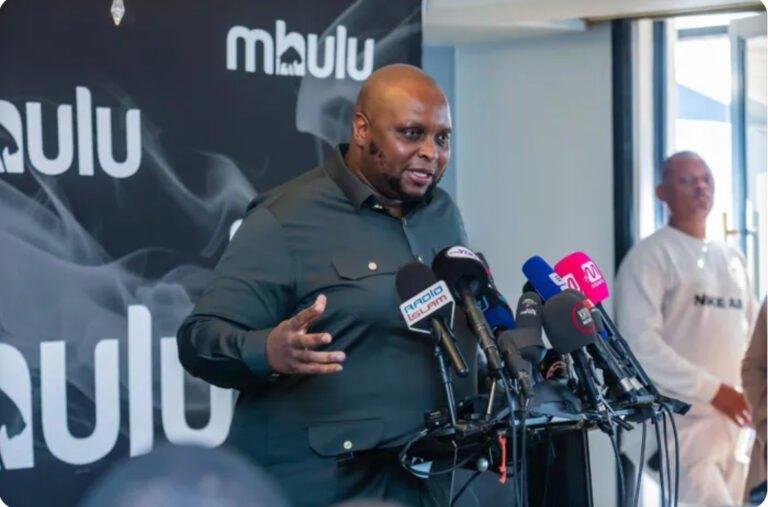
Former uMkhonto weSizwe (MK) Party secretary-general, Floyd Shivambu, dropped a few bombshells during his press briefing in Gauteng on Thursday, where he announced plans to launch a new political party. 

Among some wild claims, Shivambu alluded to some in leadership who were linked to corruption, others fighting among themselves, and even someone sniffing drugs. 

Speaking to reporters at the Mhulu Boutique Hotel on Thursday, Shivambu exposed allegations of fund embezzlement and political sabotage, signalling a significant shift in his political journey.

Shivambu further claimed that he was targeted for attempting to halt the alleged siphoning of approximately R7 million per month from the party’s coffers.

Zuma is surrounded by political scoundrels who exploit his kindness and gullibility,” Shivambu said.

“They fabricate fake intelligence reports to mislead him and justify their theft. This season, they’ve been withdrawing at least R7 million monthly from our coffers.”

He further alleged that these illicit activities were known internally and that party members had urged the perpetrators to cease their actions, fearing the party’s de-registration.

“We raised these issues internally because we want transparency and accountability. But instead of addressing the matter, I faced hostility when I intervened,” Shivambu added.

In a dramatic turn, Shivambu announced his intention to leave the MK Party and establish his political organisation.

“I am forming a new party — not funded by any individual but rooted in the collective will of South Africans,” he declared.

“Political parties should not be personal fiefdoms; they must represent enduring ideals beyond any single leader.”

He dismissed bizarre allegations circulating on social media about supernatural powers and conspiracies targeting Zuma as “absolute rubbish,” emphasising his commitment to rational politics and transparency.

In a candid and unfiltered tone, Shivambu also criticised certain party members for allegedly engaging in drug use and inappropriate behaviour, including tweeting late into the night.

While he did not specify names, these remarks highlighted the internal tensions and moral concerns he claims are plaguing the organisation.

Throughout his address, Shivambu vehemently denied any misuse of party funds during his tenure.

“I have never used party resources for personal travel or gain. All discussions around forming a new political entity are open and inclusive,” he insisted.

Shivambu took a swipe at his former party, the Economic Freedom Fighters (EFF), calling it a “cult” that lacks political integrity and ideology.

He said no self-respecting person would join it. “The EFF is a cult, I agree.”

Shivambu’s revelations come at a volatile time in South Africa’s political sphere, where allegations of corruption and factionalism have become commonplace.

The last straw was that he was not resigning from the MKP because it aligns with his political beliefs but he would open space for a new political party.

IOL has reached out to the MKP for comment.

IOL Politics
Israel funds Lesotho’s MP bid to get stolen land from RSA

0

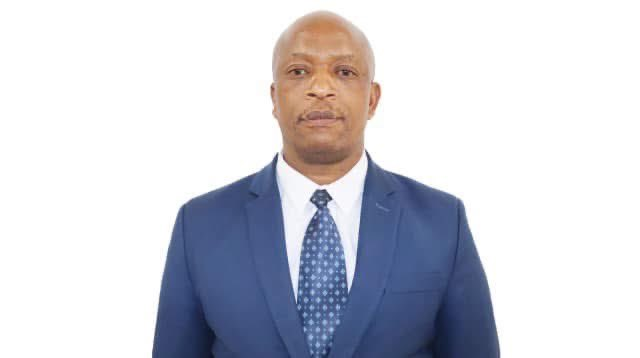
Dr Tsepo Lipholo, a Member of Parliament who became notorious for submitting an ambitious petition to reclaim territories that had been stolen from Lesotho is still pursuing his plans to win back the land.

Lipholo is an MP and founder of the Basotho Covenant Movement (BCM) whose party and election manifesto were founded on the push for the return of the land. The BCM had gained one parliamentary seat in the last elections.

In 2023, the MP then tabled a motion in parliament to reclaim back stolen territories to Lesotho. However, the majority of MPs in parliament were not sold by the motion.

When proposing this motion, he said “History has a record of what was taken from our people and people were killed in the process. It is time to correct that.”

Lipholo said while the issue of land dated back decades ago, he believed winning it back would help bring prosperity to the people of Lesotho.

South African officials had said the motion stood no chance of happening because it did not enjoy the support of the majority in the parliament of Lesotho.

In recent news, Lipholo took a trip to the United Nations Headquarters in New York to file a petition for the return of Lesotho’s land which includes the entire Free State, parts of the Eastern Cape and KZN midlands.

On this trip which was funded by Israel for unknown reasons, Lipholo met with the officials of the United Nations.

He also presented his efforts to win the land back before the office of the newly elected president of America, President Donald Trump.

It is unknown whether the government of Lesotho is in full support of getting back the land or not. But in an interview with a local radio station, Lipholo said he had heard that the government of Lesotho together with that of South Africa had ordered his arrest when he gets off at OR-Tambo.

The main question is why is the government so afraid to confront South Africa on the issue of stolen land? And why is Lipholo so adamant about fighting to win the land back despite the setbacks?

The 1964 Cairo Declaration of the Organisation of African Unity, present African Union, poses a challenge to Lipholo’s wishes to be fulfilled despite the effort he has put in the fight to win the land back.

In this treaty, African leaders had agreed to recognise the existing borders of their newly independent countries even when they were drawn up by colonial powers to avoid stirring up conflict across the continent.

The “stirring up conflict” had been the biggest fear of most parliamentarians since Lesotho is landlocked in South Africa and depends on it for sustainability and cross-border trading, the two things that are at the centre of the well-being of Lesotho and Basotho.

Before Lipholo’s motion, a civil group known as the Free Basotho Movement had written to Lesotho’s UK embassy requesting that the late Queen Elizabeth remove the frontier essentially making Lesotho a 10th province of South Africa. Efforts to fulfil the wishes of this movement are still ongoing.

Dr Lipholo was unreachable for comment until we went for print on Saturday Evening.

Human Trafficking and Exploitation: The Hidden Truth Behind Alabuga SEZ

0

Maseru—Human trafficking continues to plague many developing countries, and Lesotho is not immune to this global crisis. Recent investigations have uncovered the alarming exploitation of young African women at Russia’s Alabuga Special Economic Zone (SEZ), a key site in the country’s drone manufacturing industry. These revelations expose the harsh realities behind programs that falsely promise education and employment but instead force victims into modern-day slavery.

Alabuga SEZ operates several programs, including Alabuga Polytechnic, which offers joint work-education schemes primarily aimed at 15-16-year-old Russian male students, and Alabuga Start, a program that specifically targets young women from Africa and the Commonwealth of Independent States (CIS). However, the supposed training and work opportunities for these women are little more than a front for exploitative labor practices linked to Russia’s war in Ukraine.

Deceptive Recruitment Practices and Hidden Agendas

The recruitment process at Alabuga SEZ has been described as part of a wider pattern of Russian exploitation of vulnerable foreigners, luring them with promises of work or scholarships. The women, many of whom hail from Uganda, Kenya, and Nigeria, are enticed by vague job descriptions promoted on social media. These promotions ambiguously present Alabuga Start as either a scholarship or employment opportunity. Applicants are initially instructed to apply for student visas, only to be later redirected to obtain work visas—further clouding the true nature of their roles.

Once inside Alabuga SEZ, these women face grueling working conditions. Instead of the promised 4 to 6-hour shifts, many are forced to work 12 to 24 hours, with little or no pay, a reality that amounts to slavery. Worse still, the vast majority of them, estimated to be around 90%, find themselves working in drone production for the ongoing conflict in Ukraine, a far cry from the vague job categories of catering, production, service, and hospitality listed on the program’s website.

An undercover journalist who applied for a position at Alabuga was told she would be working in manufacturing, but her employers refused to specify what she would be making. Such secrecy is not uncommon, and it adds to the growing concern that these women are being deliberately misled into supporting war efforts under the pretense of civilian work.

Health Risks and Constant Surveillance

The working conditions at Alabuga SEZ are not only exploitative but also hazardous to health. The drone manufacturing process involves the use of toxic materials such as resin, which has been linked to severe allergic reactions and skin issues. Workers have reported symptoms such as intense itching and, in some cases, even the development of small holes in their cheeks due to prolonged exposure to these materials. Despite these risks, safety measures are virtually non-existent.

The surveillance and control of these women add another layer of oppression. Facial recognition software is used to monitor their movements within the dormitories, ensuring that they remain under constant watch. This level of control underscores the reality that these young women are effectively imprisoned, stripped of their basic human rights, and exploited for labor in dangerous conditions.

The Role of African Governments

A disturbing element of this issue is the potential complicity of some African governments, whether knowingly or unknowingly, in these recruitment efforts. Without full awareness of the dangers awaiting their citizens, these governments risk enabling practices that amount to human trafficking.

Makhala Joy Thekiso, Founder and Executive Director of the Makhala Thekiso Girls Foundation, expressed concern over the lack of awareness and education about human trafficking in countries like Lesotho. “Human rights apply to all people, but when it comes to human trafficking, the challenge is that there is a significant lack of education and awareness,” she said in an interview with the Lesotho Tribune Newspaper. “We need to do more to educate people about the risks of trafficking and how to verify the legitimacy of opportunities, especially when they involve traveling abroad.”

Thekiso emphasized the importance of strengthening border control laws to thoroughly question individuals about their destinations and verify the legitimacy of their travel plans before allowing them to leave the country. She called for local organizations to play a greater role in raising awareness through social media and youth advocacy groups.

A Call for Action

Thekiso also pointed out that secrecy surrounding these operations poses a significant problem. “If people could go to the Ministry of Foreign Affairs to ensure that the information they have is verified, it would be a big step forward in addressing this crisis,” she said. “Everyone has a role to play in overcoming this challenge.”

In conclusion, without urgent intervention and greater scrutiny, the trafficking and exploitation of young women, particularly those from vulnerable communities, will continue to thrive under the false promise of education and work. It is crucial for African governments and international bodies to take decisive action, shining a light on the atrocities occurring at places like Alabuga SEZ, and holding those responsible accountable.

Letšeng creates media platform for proper engagement

MASERU

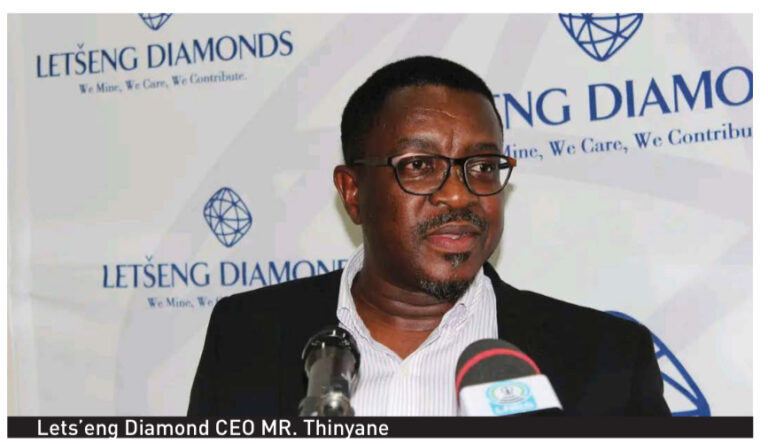
Letšeng Diamonds held a media engagement session at its premises in Maseru last Friday this year. Through its Chief Executive Officer, Motooane Thinyane, Letšeng said its purpose for the session is to formally build a formal platform over which it can engage with the media, and by extension, the general public. 

Thinyane said by the way of its importance within Lesotho’s economy and within Lesotho mining sector, Letšeng has and contributes to attract a lot of attention.  He said since its commercial establishment in 2004, Letšeng has grown from a small mining operation to what it is today.

Additionally Thinyane said Letšeng is 30% government owned and the 70% is owned by Gem Diamonds. He said all expenses or most expenses are incurred by Gem Diamonds as a major shareholder and has all the financial muscle to do. He stated that this does not make Lesotho’s benefits less but rather it is a fair share as there are royalties and lease fees that contribute to economy growth and community projects.

Thinyane said the question that should be addressed is why the Lesotho government would want an increase from the 30% it already has while there is so much risk. “Can we drive the capacity to build that element, can we reach that level to sustain the mine ourselves?”

He said Letšeng produces high quality diamonds even though the produce in small quantity and sell to Belgium. “We recently found the sixth large diamond that weighs 212.49 carat type lla white diamond.” He said most of the money received goes to revenue but if the sales are good part of the money is corporate in social responsibility and investment (CSRI).

Tšepo Hlojeng added that allocation of 1% of dividends or M500 000, 00 or whichever will be greater is used in annual budget to corporate in social responsibility and investment. He added that Letšeng offers internship programme to 8-15 students per annum and also establish an educational trust.

Statistics shows that Letšeng has employed 1239 Basotho since 2013 and the number has decreased to 1110 to 2024. Hlojeng indicated that these are semi-skilled and unskilled Basotho. The number of expatriates was 56 in 2013 and has decreased to 9 in 2024, and this shows that it is in few departments where the company has to find expects from other countries.

Hlojeng said Letšeng does not want to be seen as a mini-government but it does strategies and analysis for it to be able to help the community around the mine. He said there enterprises development as the mine cannot hire all community members. “There is a wool and mohair project from 2011 to 2014 and there is Butha-Buthe vegetable project from 2014 to 2016,” said Hlojeng.

In Conclusion Hlojeng said they are willing to share and engage media in all aspects and they are open to be held accountable on facts.

Michelle Tau Voted Sportswoman of the Year 2024

On May 2024, Michelle Tau was honored with the prestigiousSportswoman of the Year Award at the Regional Annual SportsAwards (RASA) held in Lusaka, Zambia, under the auspices of AUSCRegion 5. Competing in this esteemed category, she triumphed overZambia’s netball star Beauty Nakazwe and Botswana’s boxer LethaboModukanele, solidifying her place as a top athlete in Africa. Here is why she was voted Sportswoman of the Year

• Her Global Rankings and Achievements

In recent years, Michekle has earned multiple medals, including a silver medal from the 2019 All Africa Games held in Morocco, a silver medal at the 2020 European Club Championships, a Bronze medal at the African Championship 2021, a Gold medal at the 2022 European Clubs Championships, a Silver Medal at the 2023 European Clubs Championships, a Silver medal at the 2024 Olympic Games qualifications Africa.  Michelle Tau’s remarkable ascent in the world of Taekwondo is underscored by her impressive global ranking. As Africa’s top Taekwondo athlete, she holds the third position worldwide in the -46kg category, trailing only behind Korea’s Mi-Reu Kang and Croatia’s Lena Stojkovic. Her performance has also propelled her to the 26th spot in the Olympic Rankings, reflecting her consistent excellence and dedication to the sport.

• Her Dedication Beyond the Mat

Michelle Tau’s influence extends beyond her sporting achievements.She is a fervent advocate for women’s rights and empowerment,leveraging her platform to promote gender equality and combatgender-based violence. Her commitment to these causes underscoresher role as a champion not just in sports but in societal change,making her an inspirational figure for women and girls globally.

• Her Path to the Paris 2024 Olympic Games

A significant milestone in Tau’s journey came in February 2024 when she secured her place at the Paris 2024 Olympic Games. This was a dream come true for her as she worked tirelessly to secure that spot. This achievement was clinched at the African Qualifying Tournament in Dakar, Senegal. The support from the Lesotho National Olympic Committee (LNOC) was pivotal, providing full reimbursement for travel expenses, meals, and allowances for both Tau and her coach, allowing them to focus entirely on their performance. She has been training under renowned coach Hugo Tortosa

• Her Statistical Highlights

Rankings: 1st in Africa, 3rd in the world in the -46kg category, 26th in the Olympic Rankings.

Registered Fights: 45 registered fights, 21 wins

Hitpoints: 201 hitpoints distributed and 221 collected during fights. Won 0 golden points and lost 0 golden points

• Her Inspiration and Legacy

Tau’s journey is a testament to resilience, determination, and the power of unwavering national support. Following in the footsteps of her late father, a Taekwondo legend in Lesotho, she said through her training snd competing, she has always felt connected to him and this has driven her to perfom at her best. Now she has carved her own legacy, driven by passion and an unrelenting pursuit of excellence. Her story inspires not just athletes in Lesotho but around the world, encouraging them to dream big and strive for greatness.

Michelle Tau’s recent accolade as Sportswoman of the Year 2024 is a recognition of her exceptional talent, her advocacy for social change, and her embodiment of hope and resilience for Basotho. As she prepares for the Paris 2024 Olympic Games, her journey continues to inspire and uplift, symbolizing what can be achieved with dedication, support, and a vision for a better future.

TRC Challenges Gvt on Banning Famo Groups and Appointment of Compol

Maseru

The Transformation Resource Centre (TRC) has issued a detailed letter to the Prime Minister of Lesotho, raising critical concerns regarding the government’s recent initiatives in the fight against violent crime, the justifiable limitation of rights, and the procedure for appointing the Commissioner of Police.

Declaration of War Against Crime

The TRC commended the government’s declaration of war against violent crime, acknowledging that such an initiative was long overdue. The recent loss of life in several communities had catalyzed a public outcry and a forceful response from security agencies. However, the TRC warned that while crime prevention measures are essential, they must not undermine the Constitution or border on criminality. The TRC emphasized that security institutions must act within the legal framework to avoid infringing on citizens’ rights.

Criminal Conspiracy and Political Condonation

The TRC highlighted the infiltration of subversive organizations by criminals, noting that some political leaders and security sector authorities have acknowledged this issue. Despite this, the TRC argued that these organizations would not have been registered by the Registrar of Societies if they were indeed subversive. The TRC called for the Criminal Intelligence Division of the Police Service to share their findings with the Registrar General and the public. Evidence must be produced to link the organizations listed in Legal Notice 40 of 2024 to criminal activities, to avoid baseless human rights violation lawsuits and conspiracy theories.

The Elephant in the Room

The TRC pointed out the government’s reluctance to address the security agencies’ self-evaluation and the alleged protection of criminals by politicians. This reluctance raises questions about the government’s sincerity in the fight against crime. The TRC criticized the government’s interventions as lacking reliable intelligence and highlighted the severe resource scarcity and lack of commitment to strengthening the criminal investigation department. The TRC argued that the government’s approach turns law-abiding citizens into easy targets and victims of criminalization of constitutionally guaranteed freedoms. The use of the Internal Security Act of 1984, designed for an authoritarian regime, was particularly criticized as inappropriate for a democratic society.

Violation of Section 16 of the Constitution – Freedom of Association

The TRC argued that the Constitution allows for the limitation of rights if it is reasonable and demonstrably justified in a free and democratic society. The TRC explained the three components of the proportionality test: rational connection to the objective, minimal impairment of the right, and proportionality between the limitation’s effects and the objective. The TRC questioned whether the blanket criminalization of freedom of association, expression, and earning a livelihood by labeling Famo music groups as subversive was proportionate and necessary. The TRC concluded that the measure fails the proportionality test and is thus unconstitutional and oppressive.

Appointment Procedure of the Commissioner

The TRC stressed the importance of a transparent and accountable appointment process for the Commissioner of Police. The current process lacks transparency, potentially undermining public trust. The appointment should involve public scrutiny to ensure the individual is qualified and trusted. The TRC also urged the government to align the appointment process with the Police Service Act 1998 and relevant regulations. This alignment would legitimize the appointment without compromising the police service’s integrity.

Risk of Victimization of the Commissioner

The TRC warned that poor decision-making in senior appointments could turn candidates into scapegoats. A professional recruitment process, including advertisement, shortlisting, and interviews, was recommended. This process, already used for other significant positions like the NRA Chief Executive Officer and the Director of Elections, ensures legitimacy and public trust.

Conclusion

The TRC concluded by reminding the government of the risks associated with arbitrary decisions and the importance of adhering to democratic principles. The government was urged to ensure that measures taken to fight crime are reasonable and justifiable in a free and democratic society. The TRC emphasized that certain rights and freedoms have been unjustifiably criminalized and called for professional recruitment and appointment procedures for security service leaders.

In its final remarks, the TRC advised the Prime Minister to ensure his advice to the King is legally sound and based on comprehensive consideration of all relevant legal instruments, to prevent judicial reviews of the King’s decisions.

Ministry of Public Service and DCEO Launch Service Integrity Committee to Combat Corruption

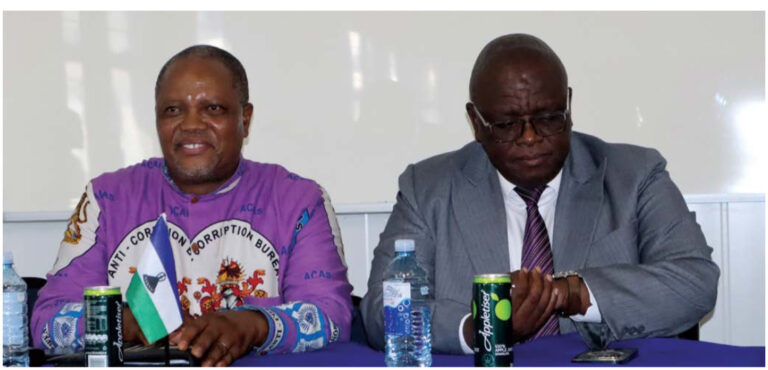
The Ministry of the Public Service, in collaboration with the Directorate on Corruption and Economic Offences (DCEO), launched the Service Integrity Committee (SIC) on May 29, 2024. This initiative aligns with DCEO’s mandate to combat corruption.

The SIC aims to establish internal self-monitoring mechanisms within institutions, both public and private, to enhance service delivery quality. In addition, the DCEO continues to develop Students’ Integrity Associations (SIAs) to instill anti-corruption values among students, with the broader goal of integrating anti-corruption education into the national curriculum from preschool to tertiary levels through collaboration with the National Curriculum Development Centre (NCDC).

For off-campus youth, DCEO is engaging various sectors, including business, sports, churches, and politics, to involve them in anti-corruption efforts. At the national level, DCEO employs the National Anti-corruption Strategy and Action Plan (NACSAP) framework as a multi-sectorial platform involving the public sector, Legislature, Judiciary, private sector, and Civil Society Groups.

Litelu Ramokhoro of DCEO highlighted the critical role of quality service delivery in fostering economic development and socio-political stability, areas where Lesotho has historically struggled. The recent Auditor General’s report, revealing unaccounted billions of Maloti, underscores the urgent need for such initiatives.

The SIC will work closely with DCEO for technical guidance and law enforcement support while reporting directly to the Ministry’s principal secretary. The committee, supported by the Chief Accounting Officer, is tasked with monitoring the Ministry’s performance and identifying potential corruption areas, recommending corrective measures.

Makhoabane Lelimo, Principal Secretary and Chief Accounting Officer of the Ministry of Public Service, stated that the SIC’s journey included extensive sensitization sessions and workshops conducted by DCEO, resulting in a ready-to-implement action plan. Hon. Minister of Public Service, Mr. Stephen Mputi, expressed enthusiasm for the positive changes anticipated from this initiative and committed to supporting SIC’s goals.

Lesotho’s Economic Advantage in the Wake of South Africa’s Coalition Government

0

For the first time since the dawn of democracy in South Africa, the African National Congress (ANC) will need to form a coalition to govern. This political shift marks a historic moment, not just for South Africa but also for its neighbors, including Lesotho. Lesotho stands to gain significantly if it strategically leverages the economic and political changes arising from South Africa’s coalition government.

Enhanced Diplomatic Engagement and Trade Opportunities

South Africa’s transition to a coalition government, while potentially leading to periods of political instability, opens doors for Lesotho to strengthen diplomatic ties and negotiate better trade deals. With the ANC’s reduced parliamentary influence, smaller parties and coalition partners might push for policies that could benefit regional trade. Lesotho, dependent on South Africa for a large part of its trade, can take advantage of this situation by advocating for more favorable trade terms and tariffs.

Increased Investment Prospects

Political uncertainty in South Africa might make investors wary, prompting them to look at neighboring countries with more stable environments. Lesotho can position itself as an attractive alternative for these investors by promoting a stable political climate and offering incentives for investment. This can lead to increased foreign direct investment, particularly in sectors such as manufacturing, agriculture, and tourism, which are crucial for Lesotho’s economic diversification.

Tourism and Cross-Border Economic Collaboration

South Africa’s political dynamics can have a positive spillover effect on Lesotho’s tourism sector. Political instability often leads tourists to seek safer destinations, and Lesotho can market itself as a serene and stable alternative. By improving tourism infrastructure and launching targeted marketing campaigns, Lesotho can attract a higher influx of tourists. Additionally, collaborative tourism packages with South African regions can enhance the appeal of both countries, promoting cross-border tourism.

Labor Market Adjustments and Skills Development

The coalition government’s policies might lead to shifts in South Africa’s labor market, affecting Basotho migrant workers. Lesotho should be prepared to absorb returning workers by creating job opportunities and focusing on skills development programs. This can enhance the domestic labor market and reduce reliance on South African employment, fostering a more self-sufficient economy.

Strategic Political Alliances and Regional Influence

As South Africa navigates its coalition governance, Lesotho can strengthen its regional influence through strategic political alliances. Active participation in Southern African Development Community (SADC) initiatives and other regional bodies can help shape policies that promote economic growth and stability. By positioning itself as a cooperative and proactive regional player, Lesotho can play a pivotal role in regional economic development.

Mitigating Risks of Government Instability

While coalition governments can lead to political instability, Lesotho can mitigate these risks by maintaining a stable and transparent government. Ensuring good governance, reducing corruption, and upholding the rule of law will not only attract investors but also build trust among international investors.

Independent business & current affairs journalism · Lesotho Subscribe — M85/month
| Independent business & current affairs journalism · Lesotho