

Mohahlaula Airlines
Wednesday, July 22, 2026
Home Blog Page 75

Lioli FC Dominate 2025 Vodacom Premier League Awards

Victory Hall, Maseru – 27 June 2025

The glitz and glamour of the Vodacom Premier League Awards returned in full force on Friday night, Lesotho’s most anticipated football honours ceremony. The event celebrated the brightest stars, rising talents, and key figures who shaped the 2024/2025 Premier League season. Leading the night in dominant fashion were Lioli Football Club, the reigning champions who have now claimed back-to-back league titles.

Lioli FC Lead the Way with Multiple Wins. the champions’ presence was felt in nearly every major category, with Lioli being nominated in all but three categories: Top Goal Scorer, Assistant Referee of the season, and Referee of the season. At the heart of their success stood midfield maestro Sihle Maso, who walked away with two major individual accolades: Player of the Season with a cash prize of M15,000, and Players’ Player of the Season with a cash prize of M12,000, a total cash prize of M27,000 

Maso’s performances throughout the campaign were nothing short of extraordinary. He set a record by scoring in eight consecutive matches, netting 10 goals in that stretch and finishing the season with 12 goals overall.

Lioli’s dominance wasn’t limited to the midfield. Their backline and goalkeeper also received deserved recognition: Goalkeeper of the Season went to William Huni, who outshone Matlama FC’s Leluma Mofoka and LMPS FC’s Nthebe Majoro, earning him M9,000.
On the other hand, Defender of the Season was awarded to Mphale Mphalaole, who triumphed over Mokhele Molise (LDF FC) and Mohlomi Makhetha (Lijabatho FC) also securing a cash prize of M9,000 Mphale was also nominated for Players’ Player of the Season, ultimately edged out by Maso.

While Lioli dominated, Matlama FC also left their mark. Midfielder of the Season was awarded to Charlie Hlalele whose journey from the South African Premier Division (Orlando Pirates, Polokwane City, Amazulu) to Lesotho has been a remarkable story. Hlalele, who joined the league a few years ago to create a legacy at home, bagged M9,000 for his standout performances. Young Player of the Season went to 18 year old goalkeeper Leluma Mofoka, a prodigy who has already cemented his spot as Matlama’s and the national team Likuena’s first-choice keeper. Mofoka, who was also notably a nominee for Goalkeeper of the Season, continues to show immense promise for the future.

Makara Ntaitsane, captain of the national team and forward for LCS FC, clinched the Golden Boot after a phenomenal season where he scored a total of 20 goals. He received M13,500 for finishing as Top Goal Scorer, and was also among the nominees for Player of the Season, underlining his influence and consistency at the top level.

Coach of the Season was awarded to Motheo Mohapi, who guided Lioli to yet another league title. It marks Mohapi’s second consecutive Coach of the Season win, earning him M12,000, However, in a surprising twist, Mohapi has since signed a two-year deal with rivals Bantu FC, signaling a massive coup for the Mafeteng giants. With a CAF A license and a proven record, Mohapi is regarded as one of Lesotho’s finest tacticians.

The awards night also acknowledged the contributions of the match officials: Referee of the Season went to Moeketsi Ntoa, who was also nominated last season, a testament to his consistent officiating and professionalism.
Assistant Referee of the Season was awarded to Tšepo Majara, whose sharp eye and decisions on the sidelines have not gone unnoticed.

The 2025 Vodacom Premier League Awards not only celebrated the champions and standout players but also highlighted the depth of talent and professionalism in Lesotho’s football landscape. With emerging stars like Leluma Mofoka, seasoned campaigners like Sihle Maso and Makara Ntaitsane, and elite coaches like Motheo Mohapi, the league continues to reach new heights.
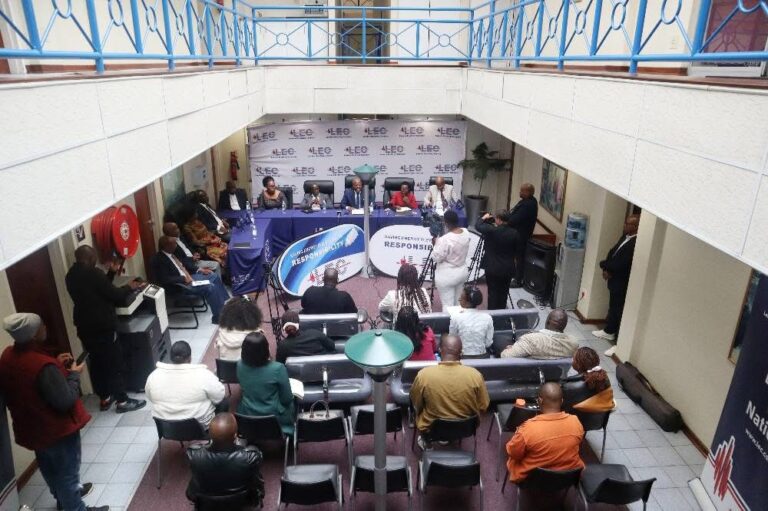

LEC Announces Staggered 3% Salary Adjustment 

MASERU – The Lesotho Electricity Corporation (LEC) has approved a 3% salary adjustment for all employees for the 2025/26 financial year, following a resolution by the Board of Directors.

In an internal memo dated 23rd June 2025, signed by Acting Managing Director Nathaniel Maphathe, staff were informed that the increase will be implemented using a staggered approachacross different salary grades. The move is intended to address existing pay disparities and ensure an equitable distribution of the adjustment.

“The approved 3% increase has been distributed amongst different grades using a staggered approach,” the memo stated. “This method was adopted temporarily to manage the prevailing gaps amongst salary grades and also to ensure a fair and equitable distribution of the adjustment rate.”

Employees seeking further clarification on how the adjustment applies to their specific grade have been advised to contact their supervisors or the Human Resources office.

Management extended gratitude to staff for their patience during the deliberation process.

This salary adjustment comes amid broader economic challenges in Lesotho, including rising living costs and stagnant wage growth in some sectors. While the increase falls below inflation expectations, LEC’s staggered approach aims to balance fiscal responsibility with employee welfare.

PAC Warns LEC Over Audit Obstruction

0

Maseru

The Lesotho Electricity Company (LEC) is once again at the centre of a deepening governance crisis after revelations of unlawful procurement worth over M13 million, and fresh warnings from the Public Accounts Committee (PAC) over suspected obstruction of an ongoing forensic audit.

This week, PAC Chairperson Hon. Machabana Lemphane-Letsie cautioned LEC management against sabotaging the forensic audit by withholding key documents and information. The audit was ordered after mounting concerns over financial mismanagement and alleged irregular interference in LEC’s operations.

“LEC must not sabotage the forensic audit by withholding critical information. This process is essential for uncovering the truth about how this utility has been managed,” Lemphane-Letsie said during this week’s proceedings.

Shocking Procurement Exposed During “Surprise” Inspection

The PAC’s frustration escalated after a surprise inspection of LEC storerooms, where members discovered 3,000 incompatible meters and keypads worth M6 million and nine transformers valued at over M7 million, all allegedly procured without following proper tender procedures.

The committee heard that the meters and keypads, purchased from Landis+Gyr on June 5, 2025, and the transformers, supplied by Power Link Holdings in May, are not compatible with LEC’s existing systems, and remain unused in storage.

LEC’s board commitment to transparency and accountability 

On May 06, LEC board of directors reaffirmed commitment to transparency and

accountability through Forensic Audit and Internal Investigation.

The statement read;

The Lesotho Electricity Company (LEC) wishes to inform the public and all stakeholders that the office of the Auditor General will lead the process of implementing forensic audit into the company. This follows the advice of the Board of Directors to have a credible audit in line with the principles of transparency, accountability, and sound corporate governance. 

On 7 March 2025, the Board of Directors of LEC passed a resolution to commission an independent forensic audit into the affairs of the Company. This decision followed growing concerns related to procurement processes, financial management, governance structures, and operational inefficiencies. The Boarc viewed this action as necessary and aligned its fiduciary duty to safeguard the integrity and sustainability of the Company. Lo facilitate an objective, independent, and transparent forensic audit process, the Board resolved to place the Managing Director and the entire executive management team on temporary suspension for a period of three (3) months, effective from 12 March 2025. I his temporary measure was adopted to ensure that the forensic process would be free of interference and would proceed with the full cooperation of all relevant stakeholders. 

In parallel, and in fulfilment of its own governance obligations, the Board is undertaking a complementary internal investigation. This internal process wil focus on strengthening internal accountability and is being managed within existing governance structures. The LEC Board of Directors assures all stakeholders, customers, employees, development partners, and the public that it remains firmly committed to the principles of transparency, clean governance, and institutional reform. Work in-progress will be shared periodically on both forensic audit and internal review initiatives.

How Vodacom, Econet and Starlink Stack Up in Lesotho’s Internet Battle

In a country where digital connectivity is becoming as essential as electricity and running water, the choice of internet provider matters more than ever. Lesotho’s three main internet options; Vodacom LesothoEconet Telecom Lesotho and the newcomer Starlink, offer sharply different experiences when it comes to coverage, speed and cost. Here’s how they compare.

Coverage: Who Reaches More People?

When it comes to physical reach, Vodacom and Econet dominate. Both offer mobile network coverage across Lesotho’s urban and rural areas using 4G and, in some spots, 3G technology. Their networks are strongest in Maseru and other urban centres, but performance drops off in the mountains and deep rural zones.

That’s where Starlink flips the script. Unlike cell towers, Starlink uses satellites, which means it provides internet access anywhere in Lesotho…even in areas where there’s no cell service at all. It’s an attractive option for rural schools [in theory], mines and remote clinics that have been “left behind” by traditional infrastructure.

Coverage Winner:

Starlink for remote access

Vodacom/Econet for mobile users in urban areas

Speed: Who’s Fastest Online?

In terms of raw internet speed, Starlink easily leads the pack. Its satellite system delivers download speeds ranging from 50 to 200* Mbps, with upload speeds up to 40 Mbps. That’s more than enough for HD streaming, video conferencing, or running an online business, even in a village.

Vodacom and Econet are no slouches either. On 4G connections, users can expect 10–35** Mbps download speeds, fine for browsing, social media and even YouTube. But their performance can vary depending on congestion, signal strength and network infrastructure.

One issue with Starlink, though, is latency. While Starlink’s 20–50ms latency is impressive for satellite internet, it’s still slightly higher than Vodacom and Econet’s typical 30–60ms on 4G networks, something gamers and real-time streamers may notice.

Speed Winner:

Starlink overall

Vodacom/Econet for mobile speed on the go

Cost: Who’s Easiest on the Wallet?

This is where things get interesting and where Starlink’s biggest downside lies [see our flash poll on X and Facebook]. Unlike Vodacom and Econet, which let users buy small data bundles starting from LSL 20*** for 1GB, Starlink charges a flat monthly fee of LSL 1,200. On top of that, users need to pay around LSL 7,000 for the Starlink kit, which includes the satellite dish and router.

In contrast, Vodacom and Econet offer flexible plans, including 10GB for about LSL 300 and unlimited for LSL 850–900. That’s much more affordable for casual users, students and anyone using internet on their phone.

So while Starlink offers unlimited high-speed access, it’s best suited to users who really need it, like small businesses, institutions, or households that rely on the internet heavily.

Cost Winner:

Vodacom & Econet for budget users

Starlink for high-data users willing to pay

So, Which Provider Should You Choose?

Need                                        Best Option

Reliable urban internet Vodacom or Econet

Remote location access              Starlink

High-speed and unlimited use Starlink

Budget-friendly mobile data Vodacom/Econet

In short, Vodacom and Econet are still the go-to options for most Basotho, especially those living in towns or using mobile data casually. They offer affordable packages, reliable performance and easy top-up options.

But if you’re in the mountains, run a business from a rural area, or need constant, unlimited access to fast internet, Starlink is worth the upfront cost.

The Bigger Picture

As Lesotho looks to bridge its digital divide, the competition between these providers could be a turning point. Vodacom and Econet need to invest more in rural infrastructure and expand fiber networks. Starlink, meanwhile, must find ways to make its service more affordable if it wants to move beyond niche adoption.

For now, it’s a question of priorities, cost, speed, or coverage. Each provider brings something different to the table. The real winner? That depends on what you need the internet for.

We will test out Starlink internet in July at our own cost and will provide a fair comparison.

*based on data from Botswana users

**author established 

***average price for weekly bundles on both Vodacom and Econet

————————————-

Published by Lesotho Tribune | 29 June 2025

Send tips or corrections to editor@lesothotribune.co.ls

Government Unveils Plans to Introduce Agricultural Insurance for Smallholder Farmers

The government has unveiled a new initiative aimed at strengthening Lesotho’s agriculture sector and protecting smallholder farmers from climate-related shocks through the introduction of weather index-based insurance.

This effort, aligned with the goals of the second phase of the Smallholder Agriculture Development Project (SADP II), is intended to promote food security, build resilience among rural communities, and offer farmers formal tools to manage risk in the face of increasing climate variability.

The initiative follows the launch of a comprehensive feasibility study, commissioned by the Ministry of Agriculture, Food Security and Nutrition in partnership with the World Food Programme (WFP). The study was presented this week at Avani Lesotho Hotel.

According to the findings, a significant number of farmers in the districts of Mafeteng, Maseru, and Berea are willing to pay for weather index insurance to protect their crops from climate risks such as droughts and floods. These regions have experienced worsening agricultural conditions in recent years, highlighting the urgent need for practical risk management tools.

Presenting the study, Dr Moipone Letsie-Ndlovu stressed the potential of agricultural insurance, especially weather index-based products, as a game-changer in managing the impacts of climate shocks. She said the scheme would help farmers absorb losses, recover quicker, and cope better with crop failures and erratic weather patterns.

Dr Letsie-Ndlovu explained that while insurance offers a valuable tool, successful implementation will require overcoming several challenges, including low awareness of insurance among farmers, infrastructure gaps, and weak institutional capacity to manage such schemes. She added that broader adaptation strategies—such as improved farming practices, infrastructure development, and digital literacy—must complement insurance to make it effective.

The study assessed the feasibility of rolling out insurance and electronic voucher systems in rural communities, with a special focus on inclusion, particularly for women and youth. It also analyzed funding models, potential partnerships, and the readiness of local institutions to scale and sustain the program.

Dr Letsie-Ndlovu emphasized that farmers must be fully informed and involved in the design of these insurance products to ensure they are tailored to the specific needs and conditions of different districts.

The findings reflect Lesotho’s commitment to transitioning from reactive disaster relief to proactive risk management. With support from international partners and an eye on long-term sustainability, the government is optimistic that weather-based insurance will become a key pillar of its strategy to protect farmers and boost food production.

As climate variability continues to threaten food systems across the country, the agricultural insurance initiative marks a promising step toward building more resilient farming communities and safeguarding rural livelihoods.

Insurance Is the Handmaiden of Commerce – And the Key to Growing Lesotho’s Farming

By Hlalele ‘Neko

There’s a saying: insurance is the handmaiden of commerce. It might sound old-fashioned, but it’s more relevant than ever, especially for a country like Lesotho, where farming is the backbone of rural life.

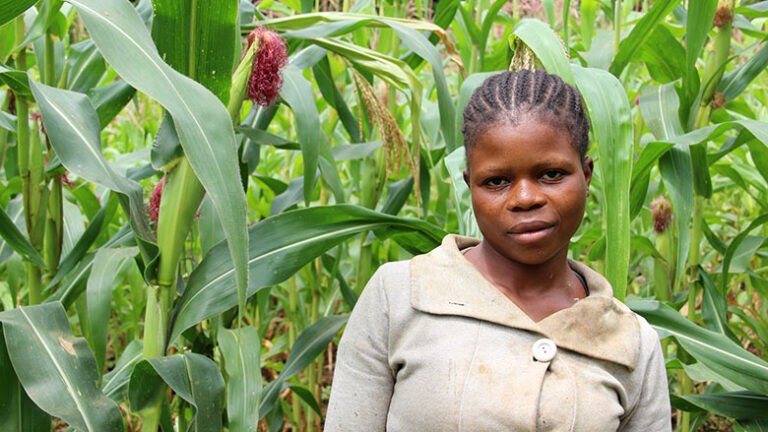
For many Basotho, farming is how they feed their families, send kids to school, and earn a bit of money. But each season, farmers are at the mercy of the weather. Droughts, floods, and unpredictable rain have made farming harder and riskier. When crops fail, there’s often no safety net.

That’s where index insurance comes in.

Put simply, index insurance pays farmers when something like drought or too much rain happens. It’s based on weather data, if the rain doesn’t fall like it should, farmers get a payout. There’s no need for someone to come and check the fields. It’s faster and more reliable than the old system, and it helps farmers get back on their feet quickly.

This kind of insurance could change farming in Lesotho. It doesn’t just help farmers bounce back after a bad season. It helps them plan ahead, take smart risks, and grow their businesses. With insurance, farmers are more likely to get loans, buy better seeds, and try new techniques. Banks feel safer lending when there’s something to protect against loss.

That means insurance isn’t just about avoiding disaster. It can actually help unlock commercial farming. It gives small farmers the tools to grow bigger, supply shops and markets, create jobs, and become part of bigger food chains. That’s how farming stops being hand-to-mouth and starts being a real business.

Recently, the government and the World Food Programme ran a study to see if index insurance could work in Lesotho. The results are promising. Farmers in Maseru, Berea, and Mafeteng said they’re open to the idea, if it’s fair, clear, and affordable.

Of course, there are challenges. Many farmers still don’t know how insurance works. Some don’t have access to mobile phones or the internet. And not every village has the weather stations needed to track rain or drought. But these are things we can fix, with time, support, and teamwork.

This is where government, insurance companies, and development partners need to come together. We need pilot projects, farmer education, good communication, and solid data systems. We don’t need to wait forever. We can start small and grow from there.

Lesotho can’t afford to keep doing things the old way. Climate change isn’t waiting. The economy isn’t waiting. And farmers shouldn’t have to wait for relief every time the rain lets them down.

Let’s treat insurance like the tool it is, not a luxury, but a basic part of building a stronger farming economy.

Insurance is the handmaiden of commerce. It’s time we made it work for Basotho farmers.

NUL Student is Building a Machine That Sees Inside Your Body! 

0

Khatlako Mareka, an Electronics Engineering student at the National University of Lesotho (NUL), is doing what many thought only big hospitals in rich countries could do—design a small machine to see inside the human body. His work? A low-cost Electrical Impedance Tomography (EIT) system that can make 3D images of what’s hidden under your skin!

“Forget the expensive CT scans or MRI machines,” Khatlako, the student supervised by Dr Naleli Matjelo, says with a grin. “What we’re building here at NUL can fit on a small space, costs less than your phone, and uses simple tools.” It works more like and X-ray machine bit it’s not. 

So what exactly is this EIT thing? 

Let’s take a short science adventure. 

Imagine you want to see inside an apple without cutting it open. How could you do that? Easy—you gently zap it with electricity and listen to how the signals change. Different parts of the apple—like its seeds, core, or skin—will affect the electricity in different ways. If you collect enough of these signals, you can figure out where the seeds are hiding—without slicing the fruit. 

That, our friends, is what Electrical Impedance Tomography does. Only instead of apples, Khatlako is aiming at bodies, muscles, lungs—even babies’ chests in hospitals. 

But here’s where it gets even cooler. 

Most EIT systems you’ll hear about are huge, power-hungry, expensive machines found in rich labs in Europe or America. Khatlako built his in a Lesotho lab—with an Arduino Uno, some MOSFETs, jumper wires, and tiny voltage sensors. 

And wait—it gets better. 

Usually, medical imaging needs big heavy equipment that stays in one place. But Khatlako’s design is portable. “I wanted something that can work in rural clinics where people can’t afford to rush to Maseru and worse, Bloemfontein for a CT scan,” he explains. “Something you can carry, power with a small battery, and use right there in the village.” 

And the secret to this magic? Simplicity. 

Instead of the 32 or 64 fancy electrodes used by fancy hospitals, Khatlako used just four simple electrodes, arranged in a circle inside a tank of salty water. He sends a tiny, safe electric current into the tank through one pair of electrodes. Then the other two electrodes listen carefully for how the current changes. That tells the system what’s inside the tank—maybe a plastic object simulating a tumour, or maybe just water. 

Next comes the brain of the machine—the little blue Arduino board, the kind you can buy for less than M200 at any electronics shop. It reads the tiny voltages from the electrodes and sends them to a computer. The computer runs clever maths equations (using a tool called EIDORS in MATLAB) to make a 3D image of what’s hiding in the tank. 

And the results? Surprisingly good! 

When the tank was empty, the system recorded steady, predictable voltages—what scientists call homogeneous data. But when Khatlako secretly dropped a resistive object (something that blocks electricity) into the tank, the numbers suddenly changed—what scientists call anomaly data. From this, his system could figure out where the object was, how big it was, and how much it resisted the flow of electricity. 

Even better, when Khatlako reconstructed these signals into an image, it showed up on screen like a simple 3D map—the empty parts gray, the strange object darker or black depending on its properties. “We could actually see the ‘tumour’ sitting inside the tank!” he smiles. 

But hold on—is this machine perfect? Not yet. 

Because it only uses four electrodes and direct current (DC), the images are still blurry—not as crisp as an expensive CT scan. “To get hospital-quality images,” Khatlako admits, “you’d need more electrodes, AC currents, and better shielding from noise.” But for a prototype built on a student budget? It’s astonishing.

And here’s the exciting part—this is just the beginning. 

With funding, this could be scaled up to 16 or even 32 electrodes. It could switch to safer and clearer alternating current. The images could get sharper, detailed enough to detect lung problems, brain injuries—even monitor newborn babies breathing in hospitals. 

In fact, this technology could save lives in Lesotho’s far-flung clinics, where big machines are too costly or impossible to maintain.

And there’s more. 

Khatlako’s system shows that Lesotho’s own young scientists can build world-class technology in local labs. “I hope this inspires other students,” he says. “If you can dream it, you can build it—even here.”

Standard Lesotho Bank Partners with XPORT to Open China Trade Gateway for Basotho Businesses

Maseru

Standard Lesotho Bank (SLB) has announced a strategic partnership with local trade advisory firm XPORT, signalling a concerted effort to integrate Basotho enterprises into global supply chains, with a particular focus on China’s vast manufacturing ecosystem.

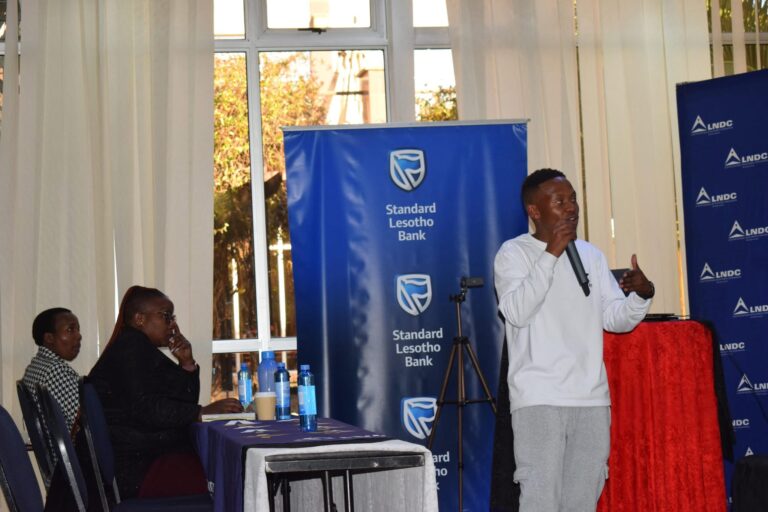
At the heart of this collaboration is the recently concluded China Sourcing & Global Trade Symposium, an initiative aimed at demystifying global procurement for local entrepreneurs and positioning them to source directly from Chinese manufacturers. Organised in partnership with XPORT, the symposium is designed to cut through the traditional barriers that hinder small businesses from participating meaningfully in international trade—chief among them high import costs and limited access to suppliers.

The initiative reflects a broader ambition by SLB to expand Lesotho’s economic horizons and cultivate a new generation of globally competitive business leaders. “We are not just connecting Basotho to markets—we are equipping them to compete and thrive,” said Manyathela Kheleli, Brand and Marketing Manager for Communications and Sponsorships at Standard Lesotho Bank. “By opening the door to direct sourcing from the world’s manufacturing powerhouse, we are helping businesses reduce costs, build resilience, and realise their full potential.”

The move is underpinned by Standard Lesotho Bank’s deep linkages within the Standard Bank Group, Africa’s largest banking group by assets, and its relationship with the Industrial and Commercial Bank of China (ICBC)—a major shareholder in Standard Bank and the world’s largest bank by total assets. This strategic positioning allows SLB to provide an integrated suite of China Trade Solutions, including tailored trade finance instruments that mitigate cross-border transaction risks and unlock working capital for importers.

In practical terms, these offerings enable Basotho businesses—many of which are traditionally underserved—to engage in international trade with the same sophistication as regional counterparts. From Letters of Credit and Supplier Finance to advisory services and procurement facilitation, SLB is positioning itself as a critical node in Lesotho’s trade infrastructure.

“Our role is to lead with purpose—to break down barriers and build bridges for Basotho entrepreneurs,” Kheleli noted. “With the right tools and support, there is no limit to what they can achieve. We turn possibility into opportunity for the businesses that power Lesotho’s economy.”

This effort comes at a time when Lesotho faces the dual challenge of diversifying its economy and fostering self-reliant enterprise development. In that context, the bank’s collaboration with XPORT represents more than a conventional sponsorship. It is a signal of intent—one aimed at structurally transforming how the private sector engages with global markets.

Standard Lesotho Bank’s positioning as an enabler of trade-led growth aligns with its broader mandate of inclusive finance and sustainable economic development. By anchoring local entrepreneurship in global trade flows, SLB hopes to spur job creation, innovation, and long-term economic resilience.

As the symposium concluded, the message was clear: the global market is no longer out of reach for Basotho businesses. With the right partners, tools, and ambition, Lesotho can move from the periphery of global trade to a more connected, competitive, and confident position.

Are We Overstating Business as The Answer to Youth Unemployment?

0

When Prime Minister Sam Matekane came into office, he made something very clear: the government is broke, and the job market is… well, not exactly booming. So, he turned to what felt like the only option left, youth entrepreneurship.

 “Start your own business,” he said. 

It’s a message we’ve all heard before. And sure, at first, it sounds empowering. Inspiring, even. Who wouldn’t want to build something of their own?

But the more you sit with it, the more that message starts to feel like a deflection.

This isn’t to say we don’t need more entrepreneurs. We absolutely do. Small businesses can drive innovation and create jobs. They can help diversify the economy. But here’s the uncomfortable part: most young people in Lesotho don’t really have the means to start a business…not one that stands a real chance anyway.

They might try. Many do. You’ll find them selling second-hand clothes, baking fat cakes, or driving illegal taxis (catch a ride) just to get by. That’s not entrepreneurship in the way the government imagines it. It’s survival. There’s a difference. And pretending there isn’t… that’s where things start to go wrong.

Because when “start your own business” becomes the default response to youth unemployment, it quietly shifts the blame. The message, whether intended or not, starts to sound like: If you’re still unemployed, it’s your fault. You didn’t hustle hard enough.

And that’s not just unfair, it’s lazy.

Let’s talk reality. Starting a business in Lesotho means dealing with red tape, poor infrastructure, and banks that don’t lend unless you already have money. There are no meaningful startup grants, no functioning incubators at scale, and no safety net for when things go wrong. And they often do.

Honestly, it feels like we’re being told to build boats while standing in the desert.

What’s frustrating is that the government could do more. It could invest in industries that absorb youth in large numbers: agriculture, ICT, renewable energy. It could create a national youth service program.

But instead, we’re stuck in this holding pattern where entrepreneurship is painted as both a moral virtue and an economic necessity. It’s almost romanticized. Meanwhile, the structures that would actually support young entrepreneurs: finance, training, markets, remain weak or completely missing.

We get it. There’s a certain appeal to the idea of young people creating their own opportunities. No need to rely on a sluggish public sector or a shrinking formal job market. But it’s a partial solution, not thesolution.

And maybe that’s the heart of it. We’ve turned a valid idea into a one-size-fits-all answer. And that’s dangerous. Because while we’re telling every unemployed graduate to start a business, we’re not doing the hard work of building an economy where jobs exist at all.

Look, we are not saying scrap the push for entrepreneurship. That would be short-sighted. Some young Basotho do have solid ideas and the drive to make them work. But they need more than pep talks. They need working infrastructure. Access to capital. A policy environment that doesn’t just favor the politically connected.

They need a government that shows up.

In the end, the question isn’t whether youth entrepreneurship is good. It is. The real question is: are we leaning on it too heavily because we’ve run out of ideas, or worse, the will to do more?

And if so, what does that say about the future we’re really offering young people in this country?

That’s a question we can’t afford to dodge anymore.

Cops Accused of Arming Famo Gangsters in Firearm Licence Fraud Scandal

MASERU — Four serving members of the Lesotho Mounted Police Service (LMPS) have been hauled before the courts for allegedly running a corrupt firearms licensing racket that helped famo gangstersillegally acquire guns.

The officers — Rantšo Makhakhe (48) of Qoaling Police Station, Reekelitsoe Motoena (32) from the Special Operations Unit (SOU), Mashalane Tsita (34) of Pitso Ground, and Pule Akhente (33) of Maseru Central Charge Office — appeared this week in the Maseru Magistrate’s Court, facing charges of fraud, abuse of office, and money laundering.

Presiding over the matter was Magistrate Nkhethoa Molapo, while Advocate Keketso Motikiappeared for the Crown.

According to police reports, the four officers allegedly manipulated the LMPS firearms licensing system, falsifying government documents to grant firearm licences to suspected gangsters — identified as Ramoloko Ntlapeli, Lehopotsejoang Mofundisi, Jeremane Motsoahae, and Lehlohonolo Khoabane — without conducting background checks.

Investigators say the officers were allegedly paid M10,000 per licence, with a further M150,000 cash “thank you” handed over once the firearms were secured. One of the weapons was reportedly sold for M70,000.

However, the scheme allegedly turned sour when Motoena, acting as middleman, pocketed most of the proceeds, giving each accomplice only M1,000 while using the rest to buy a Honda Fit, which has since been seized by police as suspected proceeds of crime.

Money Laundering Charge

Motoena faces an additional count of money laundering. The charge sheet alleges that on 14 December 2024, near F & I Holdings in Maseru, he knowingly used funds derived from illegal activity to purchase the Honda Fit (engine no. LI3A4452548, VIN GE61350750).

The Crown contends that the officers, acting in concert between June and December 2024“unlawfully and intentionally” created false Lesotho government documents — namely firearm approval forms — knowing they had no authority to do so.

Courtroom Pleas and Bail Conditions

During bail proceedings, defence attorneys made emotional appeals on behalf of the accused:

Adv Phosholi (for Makhakhe) cited his client’s role as a single father to three young children, the youngest being eight.

Adv Tlohang (for Motoena) pointed to his clean record, cooperation with police, and said he was preparing to bury a parent.

Adv Khumalo, appearing for Tsita and Akhente, argued that the officers had served the LMPS loyally and posed no flight risk.

While Adv Motiki did not oppose bail, she urged the court to impose financial conditions in light of the seriousness of the offences.

Magistrate Molapo granted bail of M1,000 per accused, with strict conditions:

• No contact with Crown witnesses;

• No interference with investigations;

• Mandatory attendance of all remands and trial proceedings.

The four are expected to reappear in court on 24 June 2025.

Independent business & current affairs journalism · Lesotho Subscribe — M85/month
| Independent business & current affairs journalism · Lesotho