Mohahlaula Airlines
Wednesday, July 22, 2026
Home Blog Page 74

Mahao’s nephew says his uncle was shot without warning

MASERU-The 37th witness in the murder trial of Maaparankoe Mahao, Mahao Leuta Mahao who is the deceased nephew has told the court this week that his uncle was shot without any warning on the 25th day of June 2015.

He indicated that gunshots were fired at a truck in which he was travelling in with his cousin Mabilikoe Leuta Mahao and the deceased. Mahao showed that this was after a white double cab had overtaken their truck, entered their lane and suddenly stopped in front of their truck, forcing his uncle to make a violent stop as he was driving the truck.

The witness gave evidence that three men came out of the other vehicle and turned their rifles on them. He said while he and his cousin raised their hands, the deceased kept both his hands on the steering wheel. He added that then another vehicle arrived and stopped on the side of the deceased and gunshots were fired with rapid succession.

Mahao informed the court that the deceased tried to crawl out of the truck while he and his cousin were already out. He indicated that the head of the deceased popped out of the truck, then he lost strength and became motionless. He stated that the deceased fell on the ground with his face down.

Advocate Kabelo Letuka, one of the defence lawyers in this trial, has told the court that an unfortunate event in which Maaparankoe lost his life was taken advantage of.He said this during cross-examination of Mahao’s nephew.

Adv. Letuka indicated that the prosecution has handled the case in an unfortunate manner. He added that some people took advantage of the incident in which a person lost his life. He pointed out that there is a differentcharge in the indictment which states that the accused contravened section 31 (1) of the Penal Code Act which relates to aggravated assault. He said it is alleged that they fired rifles inside a vehicle in which the witness was a passenger and resulted in him sustaining injuries on his face.

What happened in Kolonyama shouldn’t have happened

0

Hlalele ‘Neko

Eleven people are dead. They burned in a car crash in Kolonyama, Leribe. It’s hard to wrap your head around that—burned alive, on a public road, in a country with police stations and government departments and ministers.

Apparently, the crash involved three vehicles: a Sprinter minibus, a VW Polo, and a Corolla. The Sprinter was carrying young people headed to church in Maseru. That part sticks with me. They were going to church. Not that it makes the loss more tragic than any other, but still—something about the simplicity of that journey makes it hit harder.

Reports say nine people in the Sprinter burned to death. Two others from the Polo died on the spot. It happened at Ha Molipa, around 10 in the morning. A known black spot. Local people say it’s a place where accidents happen all the time.

So… if it’s so well-known, why does it keep happening?

The MP for the area, Lempe Mahlathini, said he’s been asking for speed humps. He even asked for pastors to come pray over the area. And I suppose that’s… I don’t know, kind? But is prayer really the answer when lives are being lost because of road design and poor enforcement?

I mean, think about it. What would’ve changed if speed humps had been installed two months ago? Would those eleven people still be alive? I can’t say for sure. No one can. But they’d have had a better chance, right?

And the response—this part gets under my skin. Witnesses say emergency services didn’t arrive in time. Firefighters? Nowhere. Ambulances? Delayed. The victims were just… left. People watched. I don’t blame the bystanders. What could they do? It’s the system that failed.

We don’t talk about fire response enough. It’s not something that comes up unless there’s a disaster. But this—this is exactly why it matters. There’s no reason people should die in a burning car because no one had a fire extinguisher. Or training. Or a working system to call for help.

And the scary part? This isn’t new. Lesotho’s emergency systems have been broken for years. Some towns don’t even have fire trucks. Others have trucks that work but no fuel. Or no staff. Or both. And if you live far from a district capital? You’re basically on your own.

There’s something else too, and maybe this is just me, but I’ve noticed we tend to move on quickly. It’ll trend on Facebook for a day. There’ll be calls for action. A press release, maybe. Then we’ll wait for the next crisis.

But shouldn’t this be the moment we stop doing that?

Speed humps won’t fix everything. Better signage, stronger policing, public awareness—all of it matters. But even those things won’t bring back the people who died.

So what do we do with that?

I guess I’m writing this because I don’t want to forget. And maybe you don’t either. Maybe next time you drive past that stretch of road, you’ll slow down. Not because it’s the law. But because you remember what happened.

And if you’re someone who works in government, or planning, or law enforcement, maybe you can do something about it.

Or maybe you won’t. That’s the part I’m still unsure about.

NUL STUDENT TURNS KITCHEN WASTE INTO A HEALTHY TEA! 

By NUL Innovation Hub

A Nutrition student at the National University of Lesotho (NUL), Retšepile Thekiso, says the peels of onion, lemon, and ginger—the parts we usually throw away—can be used for more than just compost! “These peels are packed with beneficial compounds. Instead of discarding them as waste, I used them to create a tea that help manage weight and improve health,” she said.

She calls her creation Morali Extract Tea, a natural, health-promoting herbal infusion made by drying and blending onion, lemon, and ginger—including their peels! 

Retšepile developed this idea to address two serious problems in Lesotho: the growing burden of obesity and lifestyle diseases such as diabetes, high blood pressure, and cancer—and the food waste crisis. 

“People are throwing away the most valuable parts of these ingredients,” she said. “The peels have powerful natural compounds that fight disease, boost metabolism, and help regulate weight—but most people don’t know this.” 

And so the idea of Morali Extract Tea was born. 

Here’s how it happens. 

First, Rets’epile carefully collects fresh onion, lemon, and ginger—including their peels. She washes them thoroughly to remove dirt and harmful residues. Then she dries them at 105°C to lock in the nutrients. After drying, she crushes them into a fine powder, ready to be brewed into tea. 

And this is not just ordinary tea. 

The peels contain bioactive compounds rarely found in such high concentration in the edible parts of these plants. 

Onion peels, for example, are rich in quercetin and kaempferol—substances that reduce inflammation, fight harmful free radicals in the body, improve blood sugar levels, and help burn fat. 

Lemon peels are packed with hesperidin and d-limonene. These help lower blood pressure, improve cholesterol, support the immune system, and may even reduce appetite. 

And ginger peels contain compounds called gingerols and shogaols—which are famous for fighting inflammation, improving digestion, and stimulating the body’s natural fat-burning process (thermogenesis). 

Retšepile said, “When you combine these ingredients, you get a tea that doesn’t just taste good—it supports your body’s metabolism, helps control weight, and reduces the risk of serious diseases like diabetes and high blood pressure. And you’re using parts of food that are usually wasted!” 

“It’s about the circular economy,” she said. “Instead of throwing away useful food parts, we give them a second life as a health product. This reduces waste and creates business opportunities.” 

And what about taste? 

Rets’epile said that early tasters of the tea liked its fresh, herbal aroma and mild, slightly spicy flavour. “The combination of lemon and ginger gives it a nice warmth,” she added. “And the onion taste is subtle—not overpowering.” 

But there are some challenges she overcame. 

For example, drying the peels must be done carefully to preserve the nutrients. If they are overheated, the valuable bioactive compounds could be destroyed. Retšepile worked hard to find the right drying temperature and time to keep the good stuff intact. 

Another challenge is ensuring a consistent taste and quality—because the strength of these natural ingredients can vary depending on where and when they are grown. 

Because this tea focuses on boosting metabolism rather than forcing quick weight loss, it avoids the risks of some commercial weight-loss products. Many slimming teas rely on laxatives or harsh stimulants. 

Morali Extract Tea gently supports the body’s natural processes—making weight management healthier and more sustainable.

Dr Lipholo Arrested for Demanding Return of Lesotho’s Stolen Land

Dr. Tšepo Lipholo, leader of the Basotho Covenant Movement (BCM) and Member of Parliament, is facing charges of incitement, provocation of peace, and contempt for allegedly making inflammatory remarks about Lesotho’s Royal Family. According to the Lesotho Mounted Police Service (LMPS), Dr. Lipholo is accused of disrespecting the monarchy on various public platforms.

He was arrested on Weds by heavily armed Lesotho Defense Force and Lesotho Mounted Police Service officers surrounded his home before making the arrest, confiscated computers and other equipment.

The charges come amid Dr. Lipholo’s controversial campaign to reclaim territories he asserts were historically part of Lesotho but are now within South Africa. Earlier this year, he submitted a petition to the United Nations seeking the return of the Free State province and parts of KwaZulu-Natal and the Eastern Cape . This move has drawn criticism from both Lesotho’s government and international observers, with some labeling his actions as “constitutional delinquency” .  

Further controversy surrounds allegations that Israeli-linked operatives are funding Dr. Lipholo’s land reclamation efforts. While these claims have not been independently verified, they have raised concerns about the role of Israel in Lesotho’s domestic affairs .  

In addition, a voice note circulating on social media purportedly features Dr. Lipholo encouraging young men to prepare for military training. The authenticity of the recording remains unconfirmed, but it has intensified scrutiny of his activities.

Dr. Lipholo’s wife, ’Mathapelo Lipholo, had earlier this year filed a High Court application seeking to prevent his arrest, arguing that he is being targeted for his political beliefs and advocacy. She has also requested protection from the United Nations Security Council, citing concerns for his safety .

200+ Inmates  to be released on parole 

MASERU-At least 240 inmates will be released on parole in celebration of King’s birthday.

This was publicized by the Minister of Information, Communications, Science, Technology and Innovation, Nthati Moorosi when unpacking Cabinet decisions on along the week. 

Moorosi said the decision was reached upon realization that it has been a while since inmates were released on pardon or parole.

She added that as part of the celebration, the King will present awards to some members of security agencies and civilians for outstanding service. In another issue, Moorosi said the Department of Home Affairs has extended working hours for issuance of identity cards, birth and death certificates.

“Offices open at 7:00 am during the week and at 08:00 am to 16: 00 pm on weekends only at offices based at Maseru Mall.” she said. In the meantime, Moorosi said the Cabinet has advised itself to inform the nation about issues it discussed weekly on Wednesday. 

This year’s King’s birthday will be celebrated in Berea on the 17th day of July.

Ex-inmates association has applauded the government for finally releasing 240 inmates on parole in celebration of King’s birthday. Crime Prevention, Rehabilitation and Reintegration of Ex- Offenders Association (CRROA) Executive Director, Nkalimeng Mothobi had stated that it has been years since mass of inmates were released in this manner, appealing to such inmates to live pleasantly with the public as their release indicates that they have been rehabilitated. 

“We also advise the public not to discriminate these ex-offenders while the association supports them and will ensure that they reunite with the public,” he specified.

Conflict of Interest Clouds LAM as Kondic Joins Air Botswana Board

0
  • In Mozambique, LAM demands exclusivity, but Kondic has accepted a position at Air Botswana. Is this a strategic mistake or a backroom deal? “It’s a blatant conflict of interest,” an aviation expert tells DW.

Another scandal is stirring the Mozambican airline: the new manager of LAM (Linhas Aéreas de Moçambique) has also taken on the role of chairman of the board of directors of Air Botswana airline, albeit in a non-executive position. In Mozambique, the case raises few doubts: it’s a serious conflict of interest.

LAM was forced – after the news was published by Air Botswana and widely commented on social media – to issue a statement in which, among other points, it stressed that Dane Kondic should work for the company on an “exclusive basis”.

One question arises: shouldn’t this point have been duly safeguarded in an employment contract with an experienced and reputable company?

Aviation expert Alves Gomes believes so and suspects that amateurism prevailed in this agreement. Gomes, who points out other strange aspects in this connection, also raises the possibility that Kondic already has one foot outside LAM.

DW Africa: Does this imbroglio at LAM involving Dane Kondic reveal a conflict of interests?

Alves Gomes (AG): It is clear that this is a conflict of interests.

In other words, a person cannot be working for one company in Maputo and another similar one in Botswana, unless the two companies have an alliance or partnership, which is not the case. So, it is a clear case of conflict of interest.

DW Africa: In its statement, LAM reaffirmed that Kondic must be with the company on an exclusive basis. Doesn’t it seem strange to you that such an important aspect as this was not taken into account by LAM?

AG: I find it very strange. This reminds me – although it is not the case – of a couple in which one of the spouses finds the other in bed with a lover.

In that case, there is still the possibility of reconciliation, but at a business level that is not possible. And I find it strange that, even after confirming the acceptance of Mr Kondic to the Board of Directors of Air Botswana, LAM is still trying to reconcile his exclusive role. This means that this had not been taken into account.

When you sign a contract, you need to define the conditions very clearly. The LAM statement indicates that this condition was not met.

DW Africa: So are we talking about some kind of amateurism or some unclear intention?

AG: I am more inclined to the first hypothesis: amateurism. I cannot see a businessman hiring a manager without clearly defining his conditions, and then that same manager feeling free to take on another position in another country, especially in a potentially competing company.

So there is something here that is not very well explained. On the one hand, it is very strange that Mr Kondic feels so free to take on a position in another country, while he had already taken on – or not – functions at LAM. This is what remains to be clarified: what his actual responsibility was to LAM.

DW Africa: Given that the Botswana company is a potential competitor of LAM, what would the issue of confidentiality be like, for example, with Kondic in important positions in both companies?

AG: It is clear that this is a huge conflict – it is antagonistic – even if Air Botswana, which is the case, were not a direct competitor of LAM. Air Botswana could only compete with LAM on flights to Johannesburg, where LAM also operates. This is not the case. But it does mean that Mr Kondic, even in a non-executive position at Air Botswana, has access to information from both sides, with which he can play and favour one side or the other. Therefore, there is a clear conflict of interests here.

From a business perspective, this is clearly unacceptable, at least within what I understand as a board member’s role. I’m not even considering being chairman of the board or managing director; just being a board member is enough to create a conflict of interest.

DW Africa: And whose responsibility would this conflict of interest be? Kondic’s or LAM’s?

AG: That’s what’s not clear. In other words, for Mr Kondic to have decided to take on this other portfolio in Botswana, it’s because he feels comfortable within what he agreed with LAM. Either he feels comfortable doing it, or there’s something wrong with it.

Either he feels comfortable doing so, or there is something that has not yet been explained – perhaps he has no contractual obligation to LAM.

In fact, one is left wondering, when reading the statement from the board – also non-executive – of LAM, that because the three directors of the companies are financing LAM’s recovery, none of them is an executive, they have taken the position of trying to renegotiate what Mr. Kondic’s role would be within LAM.

DW Africa: Given this imbroglio, do you think Kondic has already left LAM?

AG: I think so.

Source: Deutsche Welle

SOUTH KOREA RACES TO BEAT U.S. TARIFF CLOCK, YEARS OF TRADE AT STAKE

With a 90-day tariff pause set to expire, Seoul just hit the gas.

Trade Minister Yeo Han-koo landed in Washington aiming to slash brutal 25% U.S. tariffs on steel and autos.

His pitch?

A bold “mutually beneficial” pact that ties South Korea to Biden’s manufacturing push.

Washington wants more access to Korean markets, autos, digital. Seoul says it’ll play ball but won’t bend over.

Meanwhile, President Lee locks in a $23.3B rescue bill.

Debt relief at home, dealmaking abroad.

Time’s almost up.

Source: Anadolu Agency

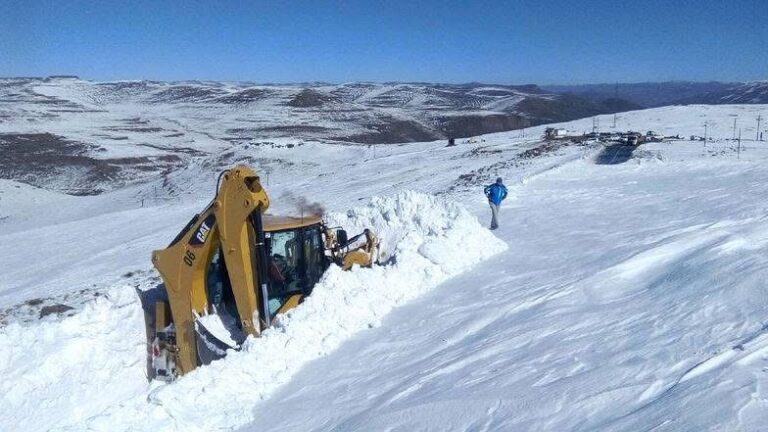
Lesotho turns into winter wonderland

As temperatures drop and snow blankets the highlands, Lesotho transforms into a breathtaking winter wonderland.

From the rugged peaks of Mokhotlong to the slopes of Afriski, the Mountain Kingdom offers scenes straight out of a postcard. The above captures the serene beauty and quiet magic of Lesotho in winter…where icy roads, frosted rooftops and snow-covered landscapes remind us why it’s called the Kingdom in the Sky.

Independent business & current affairs journalism · Lesotho Subscribe — M85/month
| Independent business & current affairs journalism · Lesotho