Mohahlaula Airlines
Tuesday, July 21, 2026
Home Blog Page 81

ANC Support Near 40% Weeks Before Election, Ipsos Poll Shows

0

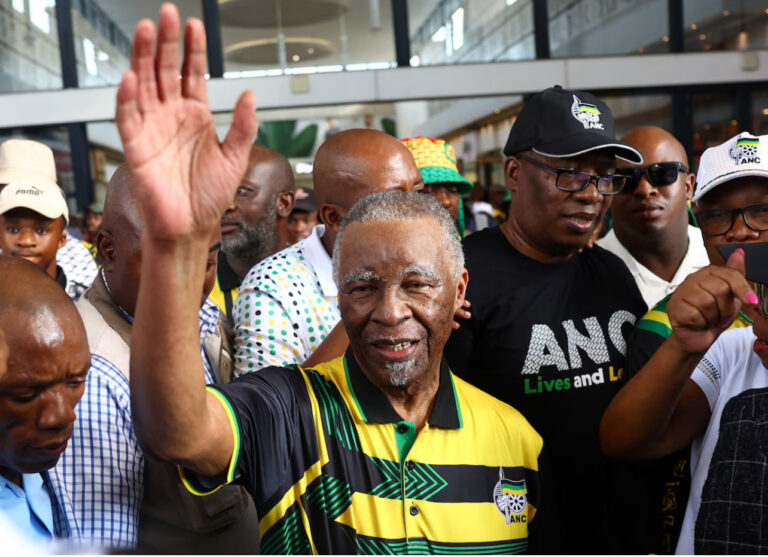
Support for South Africa’s governing African National Congress (ANC) has fallen to just over 40%, an Ipsos opinion poll showed, weeks before a general election that could usher in the biggest political change since the end of the apartheid era.

While the ANC is still on track to win the most votes on May 29, if it gets less than 50% support it would have to seek one or more coalition partners to govern the country, the first such alliance since the party swept to power under liberation hero Nelson Mandela 30 years ago.

“The uncertainty and apprehension surrounding the potential outcome and consequences of the 2024 elections echo the feelings experienced by the nation on 27 April 1994,” Ipsos said in a statement, referring to the first post-apartheid elections.

As well as voting for a new parliament, which will then choose the next president, South Africans will vote for provincial legislatures in next month’s election. President Cyril Ramaphosa is seeking a second term.

Ipsos estimated support for the ANC at 40.2%, down from 40.5% in a similar poll released in February and 43% in October.

Its findings were based on face-to-face interviews with 2,545 registered voters in all nine provinces in March and April and have a margin of error of 1.9% at a 95% confidence level.

Support for the ANC’s nearest rival, the Democratic Alliance (DA), was at 21.9% compared to 20.5% in February, the poll showed.

The ANC is still seeking to retain its parliamentary majorityand on the campaign trail, the party has sought to play up its achievements in the post-apartheid era. But polls show voter discontent is on the rise because of issues like unemployment, corruption, crime and poor services.

The ANC’s potential coalition partners include the economically liberal DA – which has not ruled out a deal with the ANC – and the far-left Marxist Economic Freedom Fighters (EFF).

Ipsos estimated support for the EFF at 11.5%, down from 19.6% in October after the formation of another party, the uMkhonto we Sizwe (MK), in December that has been endorsed by former President Jacob Zuma. MK’s support was at 8.4% in the Ipsos poll.

Another poll, conducted in February by Johannesburg-based think tank The Brenthurst Foundation and the SABI Strategy Group, estimated support for the ANC at 39%.

Adv. Sehapi Criticize Maize Meal Price Hike

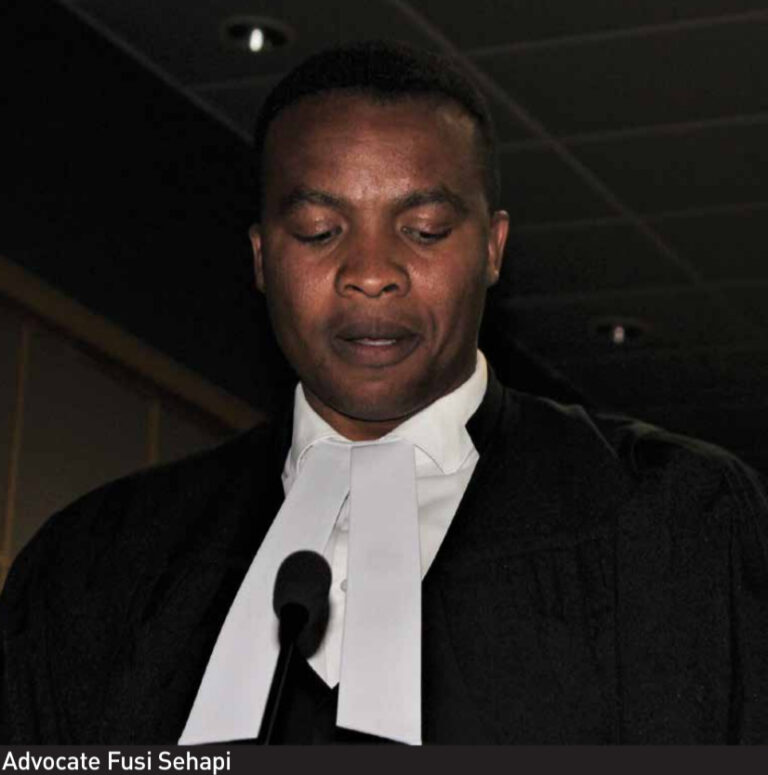
Maseru – Christian Advocates and Ambassadors have expressed discontent over Lesotho Flour Mills’ (LFM) decision to increase maize meal prices, effective from 6th May 2024. Advocate Fusi Sehapi, in a letter addressed to the Prime Minister of Lesotho, raised legal concerns regarding the price hike.

Sehapi’s letter questioned the legality of LFM’s decision, arguing that it violated democratic principles by not consulting the public or their representatives. He highlighted the legal maxim actus dei mini facit injuria, which states that an act of God does not cause harm, suggesting that LFM should not pass on the cost of late rainfall, which is beyond their control, to the public.

Additionally, Sehapi emphasized the constitutional right to food, which is interconnected with the right to life. He argued that any arbitrary increase in food prices threatens these fundamental rights.

The price increase by LFM was attributed to a 39% surge in raw white maize prices within two months, caused by adverse weather conditions. Despite hopes for stabilization following late-season rainfall, prices continued to rise, leading to the 15% increase in maize meal prices.

Sehapi’s letter urged the government to intervene and reconsider the price hike, warning of potential legal action in the High Court of Lesotho if the decision is not reversed.

———

Have your say.

Do you think this case has the potential to enrich legal jurisprudence in Lesotho by clarifying the legal principles surrounding public consultation in decision-making processes that affect the public?

Advocate Sehapi’s argument that LFM’s decision violated democratic principles by not consulting the public or their representatives raises important questions about the extent of public participation required in such matters.

Do you think if this case is heard and a ruling is made, it could provide clarity on the legal obligations of entities making decisions that impact the public, potentially setting a precedent for future cases involving similar issues of public consultation and decision-making?

Comment below and let us know what you. If you feel strongly about this issue and feel you could provide an alternative write to the editor at editor@lesothotribune.co.ls

Letšeng Finds Yet Another Big Stone

Gem Diamonds (LON: GEMD) has discovered another significant Type II white diamond at its productive Letšeng mine in Lesotho, just six days after its last find.

This 118.74-carat diamond marks the fifth gem over 100 carats recovered this year at the mine, according to the company.

Type IIa diamonds, which contain very little or no nitrogen atoms in their crystal structure, are highly valued and sought after. In contrast, boart diamonds are lower-quality stones used in powder form as an abrasive.

Letšeng mine, situated at an altitude of 3,100 meters (10,000 feet) above sea level, ranks among the world’s top ten diamond operations by revenue and is one of the highest diamond mines globally.

Diamond miners are currently facing challenges due to weak demand for diamond jewelry in the US and China, coupled with the increasing popularity of cheaper laboratory-grown diamonds.

The rise of man-made diamonds as a competitor to natural diamonds has been notable. In 2015, they were barely present in the market, but by last year, they accounted for more than 10% of the global diamond jewelry market, according to industry expert Paul Zimnisky.

Small to medium diamond mining companies, such as Canada’s Lucara (TSX: LUC), South Africa’s Petra (LON: PDL), and Gem Diamonds, have market values of around $100 million or less. This is significantly lower than the potential value of the large stones they aim to recover, which could be worth several times more.

Why Basotho Should Reflect on Their Role in Shaping Lesotho’s Material Conditions

0

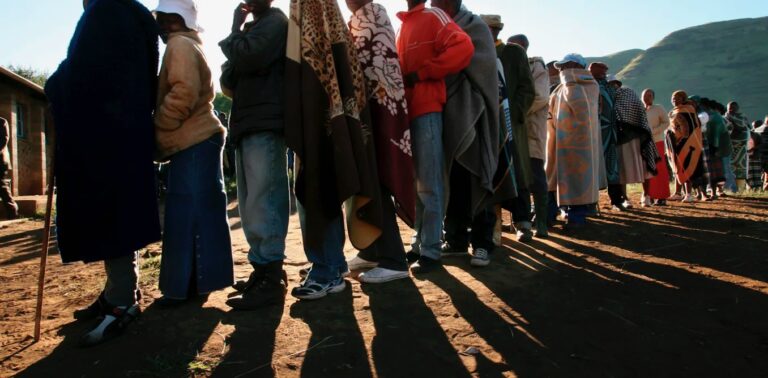
Basotho voters have played a crucial role in shaping Lesotho’s democratic journey since gaining independence in 1966. However, their voting patterns have often been marred by a consistent choice of weak candidates who lack the vision and understanding needed to build a prosperous nation. This trend has been evident in the repeated election of populist candidates, leading to a cycle of unfulfilled promises and stagnant development.

The first democratic election in 1965 set the stage for this pattern, with the Basotho National Party (BNP) winning a minority government amidst allegations of rigging by opposition parties. This contentious start to democracy foreshadowed future challenges, including the nullification of election results in 1970 by Prime Minister Chief Leabua Jonathan, marking the end of democratic rule until the 1990s.

Despite efforts to reintroduce civil and democratic rule in the early 1990s, including the establishment of the Independent Electoral Commission (IEC), the pattern of voting for weak candidates persisted. The 1993 elections, which saw a landslide victory for the Basutoland Congress Party (BCP), were marred by allegations of fraud by the opposition BNP. The BCP government’s subsequent struggles to maintain authority over the army and police highlighted the challenges of governance in Lesotho.

The split within the BCP in 1995 and the formation of the Lesotho Congress for Democracy (LCD) further exemplified the volatile nature of Basotho politics, with factionalism often overshadowing issues of national development. The failure of voters to demand accountability and competence from their leaders has resulted in a lack of progress and development, leaving Lesotho lagging behind its potential.

It is time for Basotho voters to break this cycle of voting for weak candidates and demand leaders who are capable of steering Lesotho towards prosperity. The upcoming elections provide an opportunity for voters to prioritize competence, integrity, and a clear vision for the future. Only then can Lesotho overcome its challenges and fulfill its potential as a prosperous and developed nation.

Discontentment Regarding the Estates and Inheritance Act, 2024

MASERU

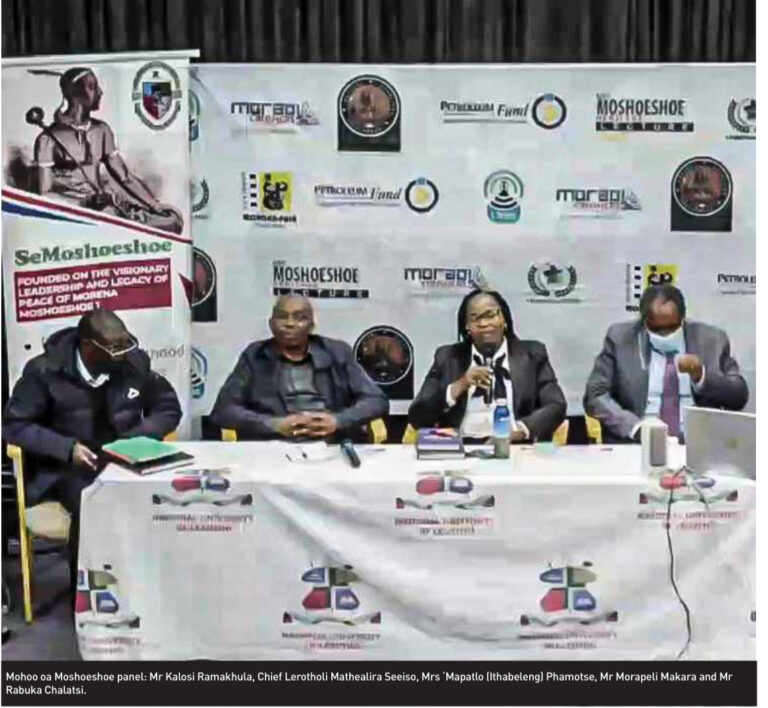
Mohoo oa Moshoeshoe held an online webinar on 2 May 2024 at the IEMS Studios to tackle the topic: Administration of Estates and Inheritance Act of 2024. Mohoo oa Moshoeshoe is a non-profit organization that is aimed at unlocking community knowledge in a new way.

The webinar was hosted by Mr Liphapang Monesa who gave a brief purpose of what was to be addressed as well as introduce the panel that was to converse about the Amendment of Melao ea Lerotholi. On the panel were the following members respectively: Mr Kalosi Ramakhula, Chief Lerotholi Mathealira Seeiso, Mrs ‘Mapatlo (Ithabeleng) Phamotse, Mr Morapeli Makara and Mr Rabuka Chalatsi. Their task in relation to their expertise was to breakdown and expand on what the Estates and Inheritance Act of 2024 is, what influenced it and what it means for Basotho at large?

Mr Ramakhula cut to the chase by expressing that he has rigorously learnt in depth about Lesotho. He said that Lesotho’s history indicates that it has been led with respect and discipline since it’s inception. He also made it clear that Melao ea Lerotholi do not necessarily mean they were made by him, but they are basic human principles instilled in every Mosotho. The laws are embedded in the hearts of Basotho from birth. He also added that any law implemented should have Basotho’s inputs.

Chief Lerotholi proceeded to say that when this Act was brought to the senate, it was brought in a forceful manner by Americans with promises that they will also provide funding. He further said that there were no consultations made i.e. to chiefs of different villages for protocols. He says only a concept was shared and it was not even thoroughly understood therefore it was not approved. This is also because the laws are written in English, and this means that meaning and context is deterred during translation.

Furthermore, Chief Lerotholi stated that Lesotho abides by the notion of dual legalism, and he strongly believes that this Act oppresses ‘Molao oa Sesotho’. Which raises the question, what is really being said about aa person’s inheritance after they die?

Mrs Phamotse shared that the foundation of a law is that it should be easily enforced- enforceability. She also reiterated what the Chief stated that this Act is written in a manner that is quite difficult to comprehend moreover, this law does not have proper guidance, instead it contravenes the foundation and systematic leadership of Basotho.

Mr Makara put in his two pennies worth by saying that the law is made for people, taking into consideration how the particular group of people lives hence the plight to preserve Basotho’s way of life and the laws influenced by that way of life. He noted that there is already an applicable law pertaining to issues of inheritance which is fully functional, and Basotho are satisfied with because it relates to their roots. According to Mr Makara, in the event that they are not satisfied, they are permitted to challenge it, not Americans.

Usually when a law is revisited and amended, it is because there is mischief regarding it but not in this instance. He added that he believes that there is a group of people who have their own interests that are shoving the Act down people’s throats. Mr Makara enforced the aspect of dual legalism. Most importantly, this Act stirred confusion as to whether the common law or customary law is being used to execute this Act.

Mr Rabuka initiated his statement by saying that the Estates and Inheritance Act of 2024 is a pure injustice to the law of Basotho. Any law should have the ability to preserve and protect a particular people according to their needs.

He said that this law will bring about dire cost implications for many (cases will be heard at the High Court despite there being other small courts which are closer to those in other districts). This will later result in the incitation of public violence because people will feel the need to speed up justice. This law is said to be an agent that cripples Basotho from exercising what they are used to, in the disguise of restoring order.

For the Act to be right, what should have happened? What was the ideal way to go about it? What are the recommendations that can be given, given the circumstances?

Mr Rabuka’s opinions were that since the law is already present, the wrong parts of it should be repealed and proper consultations should be conducted. Mr Makara contributed by saying that law is law and should be respected as such, if need be, complaints can be lodged, and the parliament should revisit the matter. Mrs Phamotse supplemented by saying a thorough explanation stating why the Act was rectified must be given and if the people still complain, it must be done away with or fixed.

Chief Lerotholi firmly stated that the law was not done accordingly therefore it must be repealed and he said that government must be charged! Mr. Ramakhula said since 1868, Moshoeshoe told the white man that he can rule over him, but he will personally oversee his people and that has always been the case. He appealed to those that approved the Act to rethink it and questioned whether an improper law should be accepted? He too charged to say the government must be held liable and sued.

It is quite evident that people do not fully comprehend what the Estates and Inheritance Act 2024 says and for those that do, it has been rubbished including its source. The conclusion of the matter was that the Act ought to be revoked. The panel was reported to be the first of many that probe and provide the platform for people to join in on conversation and share their opinions on various matters. More deliberations are said to be in the pipeline and people’s input will be appreciated including their difference in opinions.


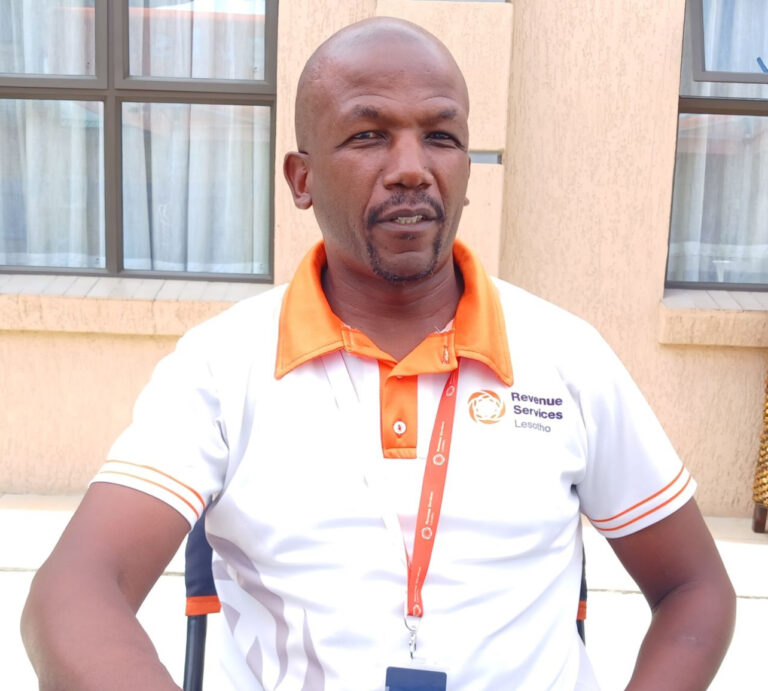
RSL Educates Taxpayers with Hands-On Tax Education Workshops

Maseru- The Revenue Services Lesotho (RSL) has undertaken a mission to empower taxpayers with the knowledge and tools needed to understand income tax filing in the digital age. With the income tax filing season in full swing, RSL has started a series of tax education workshops for businesses and individuals alike, starting on Tuesday morning, 30th April.

Commencing on 23rd April at the Blue Mountain Inn Hotel in Berea, the workshops have been tailored to cater to various sectors, ensuring that each taxpayer receives personalized guidance. RSL’s workshops cover sectors like retail, wholesale, commercial farming, and hospitality, leaving no sector untouched in their effort to support taxpayers.

One of the main goals of these workshops is to introduce taxpayers to the newly launched e-Taxation platform, named e-fling. This platform aims to change how taxpayers file their income tax returns, making the process more accessible and efficient. Additionally, taxpayers will learn how to use other online services offered by RSL, such as obtaining tax clearance certificates and filing VAT 11 forms.

RSL has also partnered with the Lesotho Institute of Accountants (LIA) to provide insights into basic record-keeping practices, ensuring taxpayers are well-prepared to create accurate and complete financial statements.

Discussing the initiative, RSL highlighted the importance of these workshops in empowering taxpayers to fulfill their tax obligations confidently and easily. They stated that their goal is not only to educate taxpayers but also to simplify the entire filing process.

In light of this, RSL invited media houses to nominate representatives to attend these valuable workshops. With the deadline for income tax filing approaching on 30th June 2024, there has never been a better time for taxpayers to equip themselves with the necessary knowledge and tools to understand the tax landscape effectively.

Madidilane Wants To Stay

Maseru – James Madidilane, whose contract with Bantu is set to expire this month, has expressed his desire to continue coaching the team into the next season. The South African coach made his feelings known after Bantu’s recent 2-1 loss to rivals Matlama in a crucial Vodacom Premier League match at Bambatha Tšita Sports Arena.

“I would like to stay. I don’t want to lie,” said Madidilane in a post-match interview. “But I believe that is in the hands of Bantu management.”

Madidilane also hinted at having offers in South Africa but expressed his intention to stay with Bantu if possible. He emphasized that the decision ultimately lies with the team’s management, as his contract expires in May.

This comes after Madidilane, who rejoined Bantu at the beginning of this year on a six-month deal, expressed his belief that he could achieve better results with a full season to implement his strategies. He previously led Bantu to two league titles in the 2016–17 and 2017–18 seasons.

Madidilane acknowledged that Bantu’s chances of clinching the 2023/24 league title were slim after the loss to Matlama, but he stressed that his team was not entirely out of the championship race. Bantu faces a critical challenge against Lioli in another significant league match this Saturday.

Despite the uncertainty, Madidilane expressed determination, stating, “We don’t know who will finish in second or third place. We will see, but one thing I can assure you is that we are going to strive to get nine points in our remaining matches.”

Bantu, currently in third place with 56 points, faces a tough battle to retain their title, with Matlama and Lioli jointly at the top of the league table with 61 points each.

Independent business & current affairs journalism · Lesotho Subscribe — M85/month
| Independent business & current affairs journalism · Lesotho