Mohahlaula Airlines
Wednesday, July 22, 2026
Home Blog Page 80

Lesotho’s Running Star Headed to Paris 2024 Olympics

Lesotho’s athletic prowess is once again in the spotlight as Mokulubete Makatisi secures her place at the Paris 2024 Olympic Games. The Lesotho National Olympic Committee proudly announced her selection, making her the third athlete from the country to receive a Universality Invitation to the prestigious event.

Makatisi’s journey to Paris has been marked by remarkable achievements and outstanding performances. Over the past year, she has set National Records in both the half-marathon and 10km events. Her talent and dedication were evident as she clinched two silver medals at the African Beach Games in Tunisia and finished 5th in the African Games in Accra, Ghana.

Notably, Makatisi was the sole female athlete from Lesotho to qualify and compete in the 2023 World Athletics Championships in Budapest, Hungary. Her recent triumphs include a victory at the Two Oceans half marathon and a commendable 9th-place finish at the Vienna City Marathon in Austria.

This invitation is a testament to Makatisi’s unwavering commitment to her sport and her country. Despite personal ambitions, she has always prioritized representing Lesotho on the international stage, delivering stellar performances and making her nation proud.

Universality invitations in athletics are reserved for National Olympic Committees that have not qualified a male or female athlete, making Makatisi’s selection a significant achievement for Lesotho.

Key Issues Impacting SADC Pension Funds

MASERU

On 10 May 2024, from 10:00am to 12:30pm, an intriguing symposium that was sponsored by Metropolitan Lesotho in collaboration with the National University of Lesotho and the National University of Limpopo took place in the form of a webinar. This virtual gathering was one of many that have been designed to address various issues pertaining to financial services and how they operate. The 7th discussion was themed: Pension Funds in the SADC region- Contemporary issues. Experts were invited to form part of the panel and to deliberate on these matters. On the panel was Professor Mtendeweka Mhango (moderator), Miss Dineo Makati-Mpho (Botswana representative), Mr. Naleen Jeram (South Africa representative) and Miss Relebohile Seshemane-Kalake (Lesotho representative).

The primary objective of the retirements funds from inception is to provide an individual with benefits upon retirement or in the unfortunate occurrence of death. Additively, Mr. Jeram contributed that of late, retirements can be accessed when members withdraw or when spouses divorce each other, and this is dependent on different countries’ legislations. He suggested that the prime purpose of a retirement fund has been watered down and maintained that regardless of this, such deductions may be allowed according to each country’s legislation.

In other countries, there are multiple instances in which the retirement fund can deduct, however, Lesotho is only confined to four (4) instances according to Section 33 of the Pension Funds Act which are:

  • Maintenance order for dependents
  • Housing loan by the pension fund
  • Housing loan guarantee by the employer
  • Compensation to employer for misconduct by employee (damages)

Should these instances be increased or decreased?

Miss Relebohile stated that careful consideration should be taken into the purpose of the fund when looking at deductions that should be permissible. She said that looking at the economy of Lesotho and its financial constraints, she could advocate that they be decreased for instance, having to compensate an employer as an employee for misconduct. She says that deductions should always be aligned to the pension fund. Miss Dineo spoke on the matter to say legislation has changed in Botswana regarding a retiree having to spend their pension money on rent or mortgage.

She stressed the importance of not losing sight of the purpose of not losing sight of pension which is preservation- for old age or for dependents in the event of death. In most cases, people look to the government in their old age and cannot work for themselves to assist them with money and the government chooses to provide that assistance as early as when they are still working hence the micromanagement of funds by the government.

Are reasons for restricting access of funds clear enough for members to understand?

Mr. Jeram said he believes that most if not all members do fully understand the reasons but as humans, they will always seek for a way out, in other words, they will always look for means to employ to access these funds. Empirically, he said he believes that it is just a minority that will challenge the system, but the majority understands. Miss Relebohile said that in the context of Lesotho, there is not enough education which explains why the funds cannot just be accessed at a given point in time except for the designated time. She added that there must be an in-depth understanding which is difficult to put across because of lack of interest in retirement fund matters. Another point she made was that financial circumstances tend to push people to resort to alternatives that may enable them to access those funds.

She also reiterated that education that showcases the complexities of accessing funds before time is also vital. According to Miss Dineo, the 2023 Court of Appeal states that in Botswana, you cannot access funds early. The law does not agree for unaccrued funds to be accessed. She says that relatively, people value and take pride in having a pension which makes them somewhat disciplined. She said the law required those that earn P 5000 per annum to purchase annuity, but this has since been increased to P 20 000 per annum. Due to appreciation of the legislation, those earning 20 000 p/a have not been recorded requesting for early access to funds but those caught in the transition (P 5000 p/a before the change was made) are the ones who make these requests.

When spouses divorce each other, a member cannot access benefits immediately in Botswana, but in South Africa this is permitted and it seems that many prefer it this way because in some cases, others stage a divorce only to access these funds then get back together afterwards. Mr. Jeram shared that all marriages apart from an ‘out of community’ contract allows pension sharing. The understanding is that pension is an asset, and it should be shared as such even though it is not accrued.

Which model of death benefits is mostly preferred, which assists social security?

Regarding death benefits, there are two models that can be used. The first one being that which is followed by South Africa which states that the decision about who the funds are administered to is left to the trustees of the fund, they are given the leverage to do as they see fit. The second one is used in Lesotho, Section 34 of the Pension Fund Act says, “a fund shall require a member to fill out a death benefit nomination form detailing the nominated beneficiaries in the event of the death of the member and on an annual basis, request the members to update the death benefit nomination form. Where a member fails to update the death benefit nomination form as required, the most recent benefit nomination form will be used the event of the death of a member.” Miss Relebohile added that the Act has its deficiencies, but it can be improved.

On the other hand, Botswana is on the fence in terms of these two models. Section 29 of the Retirement Funds Regulation, 2016 states the following,” (1) Subject to sub regulation, a fund shall require its members to complete beneficiary nomination forms on entry to the fund, when the member’s dependents change, or when the member changes his or her desired distribution amongst dependents. (2) The member shall identify, on the beneficiary nomination form, each dependent and any desired beneficiaries who are not dependents whom the member wishes to receive a proportion of any lump sum death benefit payable and shall state what proportion of any lump sum death benefit should be awarded to each dependent or beneficiary, and the member may give reasons as to why that particular distribution is his or her preferred distribution. (3) If the board is satisfied that there are no dependents other than those stated on the most beneficiary nomination form and that the member’s desired distribution amongst beneficiaries is reasonable, the board may accept the direction given by the beneficiary nomination form.” Both Lesotho and Botswana shared the same sentiments about people not filling in the beneficiary nomination form which becomes a challenge when the member is no more.

A question was posed as to gain clarity on what the law says about informal workers. How are people with irregular income catered for? Mr. Jarem responded saying that it is quite evident that there are other people who are not conversant with issues of pension and that currently, the South African legislation does not cater for them however, ways are being thought of, to bring them into the net.

In their closing remarks, Miss Dineo said that the interaction enabled each of them to gain insight and will assist in improvement from one jurisdiction to another. She compelled employers to participate more fervently, and they should take the lead. Overall, she said that employers are the ones who know their employees and that the fund only interacts with contributions. Miss Relebohile emphasized the importance of teaching about the founding principle and understanding the purpose of the retirement fund. She said that even when new ways are implemented, it is highly imperative to go back and refer to why the fund was initiated in the first place and to learn from other countries. Mr. Jeram’s final words were that the best way to bring about change is to check where the jurisdiction has gone right or wrong. He said that pension fund does not exist in a vacuum, and he advised that it should be mandatory to complete a beneficiary nomination form to avoid having issues at the end.

Lesotho Too Divided For Implementation of Reforms

0

The recent focus on constitutional reforms in Lesotho has sparked debates and discussions across the nation. While some, like Naka La Mohlomi, commend the government’s efforts in tabling the Tenth and Eleventh Amendment Bills, others, like the Transformation Resource Center (TRC), advocate for a more drastic approach—a new constitution.

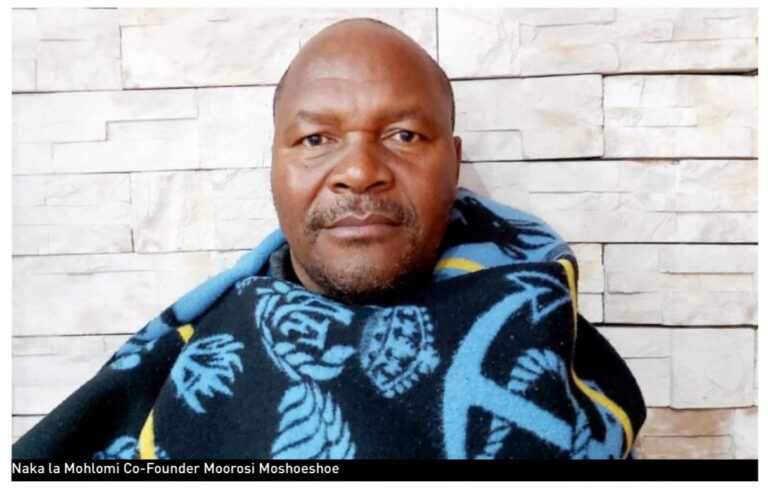
Naka La Mohlomi’s recent press conference highlighted the importance of the reform process and emphasized key pillars that should guide it, including national ownership, inclusivity, and transparency. The organization praised the government’s success in advancing the reform agenda, despite past failures in previous parliaments.

On the other hand, TRC has raised concerns about the government’s approach, accusing it of dismembering the original constitution through the proposed amendments. TRC argues that these changes go beyond mere amendments and fundamentally alter the constitution’s structure and values.

TRC’s call for a new constitution stems from a desire to safeguard the reform process from continuous litigation and political gamesmanship. The organization believes that the current amendments do not address the root causes of past challenges and may lead to further division and legal challenges in the future.

It is evident that Lesotho is at a crossroads. While some believe that incremental reforms are sufficient, others argue that a new constitution is necessary to address the deep-seated issues that plague the nation.

While constitutional reforms may offer immediate solutions, a new constitution could provide a fresh start and a chance to build a more inclusive and equitable society.

Botswana says it will protect its diamond interests as BHP Bids for Anglo American

0

Botswana, the world’s largest diamond producer, says it’s closely following BHP Billiton’s battle to buy Anglo American, which controls their diamond venture through De Beers.

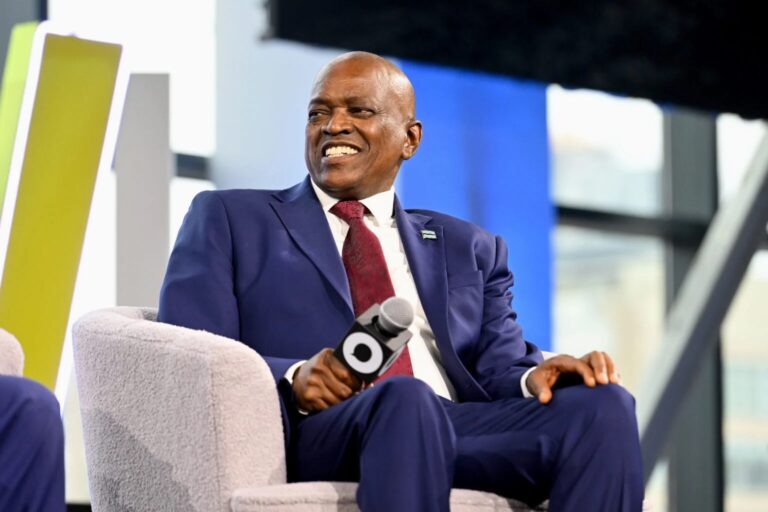
President Mokgweetsi Masisi told CNBC Africa at the U.S.-Africa Business Summit in Dallas, Texas that while no-one had approached Botswana about the matter, the government would defend its interests in De Beers, in which it owns 15 percent. De Beers and the Botswana government jointly co-own Debswana Diamond, the largest diamond producer in the world by value.

“The value of De Beers is fundamentally created by Botswana. Without Botswana De Beers doesn’t exist,” he said in an interview with Fifi Peters.

Australian company BHP Billiton, the world’s largest miner, has offered about $39 billion for London-based Anglo American’s copper mines, minus its Botswana and South African assets in Debswana, Kumba Iron Ore and Anglo American Platinum. Anglo has rejected the overture arguing it undervalues its initiatives to unlock value for shareholders.

Analysts say BHP might be mulling a second bid and could face competition from commodities producer Glencore. South African Mines Minister Gwede Mantashe, who has met with Anglo executives, has said he is watching developments.

“Well, we remain laser focused on the developments because we clearly are an interested party,” he said. “I also want to state for the record that the value of De Beers is fundamentally created by Botswana. Because without Botswana, De Beers doesn’t exist.”

BHP has proposed that Anglo sell its shares in units Anglo Platinum and Kumba Iron Ore as an option to exit the South African assets it does not want included in the deal. It hasn’t pronounced on De Beers.

Forget Reforms…Make New Constitution – TRC

0

Maseru- Transformation Resource Center (TRC) says that the government is tempering with original constitution design rendering mega constitutional amendments into complete division. This comes after the minister of Justice and Law, Mr. Richard Ramoeletsi tabled two sections of Omnibus Bills on 6 May 2024.

In a bid to “Safeguard the Constitutional Reforms from Continuous Litigation and Political Zero Sum Games,” the TRC organized a Symposium on November 30, 2023. This event aimed to steer constitutional reforms back on track, highlighting factors that could expose the process to repeated litigation due to flawed procedures intrinsic to democratic governance.

Despite this, TRC lambasted government of Lesotho for disregarding sound counsel on engaging in constitutionally legitimate reforms. “These missteps have led to numerous litigated cases and structural pushbacks. The Kingdom of Lesotho has faced scrutiny whenever it attempted reforms, with the process often ending up in legal challenges,” part of TRC statement said.

TRC, advocates for thorough constitutional reforms rather than incremental changes, issued a position on the 10th and 11th Amendment Bills to the Constitution. It argues that these bills, tabled in the National Assembly on 6 May 2024, are not true amendments but rather dismemberments of the constitution’s original design.

TRC is concerned that the amendments severally and as a whole constitute and amount to constitutional dismemberments that undermine the basic structure doctrine, basic features doctrine and the text of the constitution.

TRC further explained that the proposed constitution changes exceed the boundaries prescribed under section 85 of the constitution such that they do not just amend but dismember fundamentally the structure of the constitution.

“We find it appropriate to distinguish between primary constituent and secondary constituted amendment powers, alterations to the constitution that amount to dismemberment because they alter the basic structure and the basic features or even amount to constitutional replacement can only be done through the use of the constituent powers,” said TRC.

The proposed amendments, according to the TRC, exceed the boundaries prescribed by the constitution, fundamentally altering its structure. They exploit the rules of constitutional amendment, testing legal constraints to create a revised constitution under the guise of ordinary amendments.

TRC distinguishes between primary constituent and secondary constituted amendment powers, arguing that alterations amounting to dismemberment should only be done through constituent powers, not the powers contained within the constitution.

Regarding the National Reforms Authority (NRA), TRC clarified that it was never established as a Constituent Assembly or Constitutional Reform Commission. The NRA, established by the NRA Act No. 4 of 2019, was tasked with coordinating the implementation of reforms under seven thematic areas but lacked a mandate for constitutional revision.

There is also contention around the misrepresentation of the Court of Appeal’s judgment concerning the amendments. “The Minister of Law’s assertion that the Court ordered the Government to re-table the amendments is seen as a misrepresentation, potentially dragging the judiciary into political manoeuvring,” added TRC.

In terms of the act, the Authority had to implement reforms under seven (7) thematic areas: constitution, Parliamentary, Justice Sector, Security sector, Public sector, Economic and Media.

“There is a popular but highly misleading rhetoric that is favored by the Minister of Law that the Court of Appeal has ordered the Government to re-table the mega constitutional amendments in the National Assembly,” TRC stated.

Lesotho Tribune sought comment from government of Lesotho, but no comment was received until publishing of this article.

TRC argues that the proposed amendments fundamentally alter the constitution’s structure and values. It recommends that to effect these changes, including those not captured in the Omnibus Bill, a new constitution should be drafted.

————

Have your say.

The proposed amendments have sparked a debate over the integrity of Lesotho’s constitutional process, with calls for transparency, caution, and adherence to constitutional principles.

Do you agree with TRC’s position and why?

Write to us, editor@lesothotribune.co.ls

Naka La Mohlomi Happy With Reforms

Maseru- civil society organization held a press conference on Wednesday 8 May 2024, the focus of this conference was on two sections of the Omnibus Bill deposited in the parliament on Monday 6 May 2024 by the Minister of Justice and Law, Mr. Richard Ramoeletsi.

The two bills are Tenth Amendment to constitution bill, 2024 as well as the Eleventh Amendment to the constitution Bill, 2024 for the first reading. Mr. Moorosi Moshoeshoe from Naka La Mohlomi noted that they are making this press release for the second time this year regarding the Lesotho National Reforms.

“we focused our attention on advising our government against misleading advices, which caused previous Governments to fail to pass this legislate phase, today we appear here to congratulate his Excellency’s government when it succeeded in conscripting the reforms.”Moshoeshoe explained.

This two bills need simple majority support as well as which require two third majority support will be referred to the relevant committee according to standing orders. The bills are making the way for the Nation Reforms Agendas which is a document enclosing the views and interests of Basotho across which was directed by the National Reforms (NRA).

“The Bills carry significant implications for our society, and it is imperative that their contents and potential impact are thoroughly understood and scrutinized,” Moshoeshoe emphasized.

Moshoeshoe stated that at this stage, they would like to remind the parliamentarians of the main pillars that have been set up to guide the work of the Reforms from the beginning to completion, and it will be the basis for moving forward with the affairs of this country. They are the following,

. Facilitative Role of Government

. National Ownership by All Basotho

. Inclusivity and Participation

. Transparency and Accountability

.  National Dialogue and Consensus-Building.

Moreover, the main reason for the failure of the Reforms in the tenth Parliament is the parliamentarians think they are above the people who have sent them to parliament to solve their issues.

The Government of Lesotho wishes to leave no one behind in the National Reforms process, however it is more likely to face a difficult job to persuade the opposition parties represented in the National Assembly.

Mixup At Lerotholi Polytechnic

Maseru- First-year students at Lerotholi Polytechnic find themselves in a precarious position as they await sponsorship for their degree programs. What was meant to be a promising start to their academic journey has turned into a tale of uncertainty.

Students who were supposed to start their degree programmes are left stranded, some discovered they were enrolled in degree programs without prior notification. This discrepancy arose from using outdated prospectuses, which listed diploma programs instead of the degrees they were placed into.

The net effect of this is that these students are unable to secure sponsorship from National Manpower Development Secretariat (NMDS).

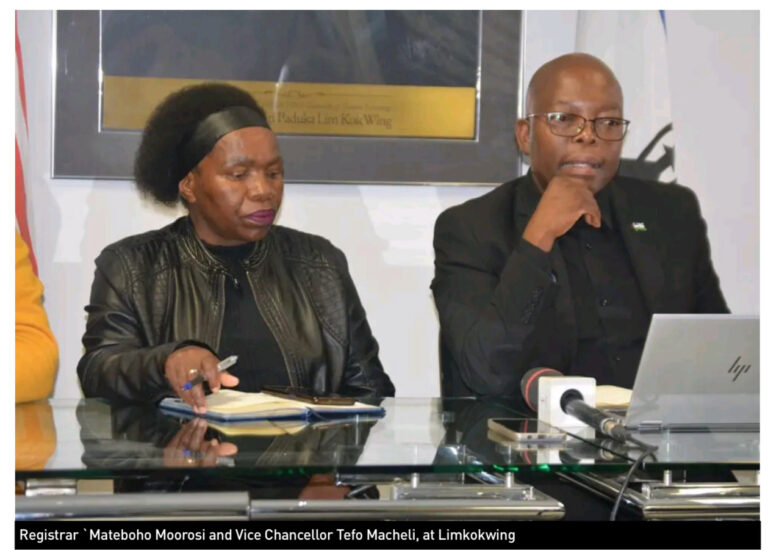
According to Registrar and Council board Secretary,Maleshoane Lepota – Mosakeng, the school submitted a proposal to the NMDS requesting sponsorship for the affected students, contingent upon including this year’s tuition fees. However, months have passed without a definitive response, leaving students and their families in distress.

The consequences of this delay are stark. Many students have been forced to drop out due to the financial strain, unable to afford the required materials and living expenses.

The lack of sponsorship has created a domino effect, jeopardizing the academic aspirations of those eager to pursue higher education.

While the Ministry of Finance works on resolving the sponsorship issue, students are left in limbo. Despite assurances from the school authorities, clarity on the matter remains elusive. Some students express frustration at the lack of transparency and support during this challenging time.

The dropped out students have been assured that they will be given priority consideration if they choose to re-enrol.

MOKHOSI TAKES A STAND AS WITNESS IN MAHAO CASE

0

MASERU

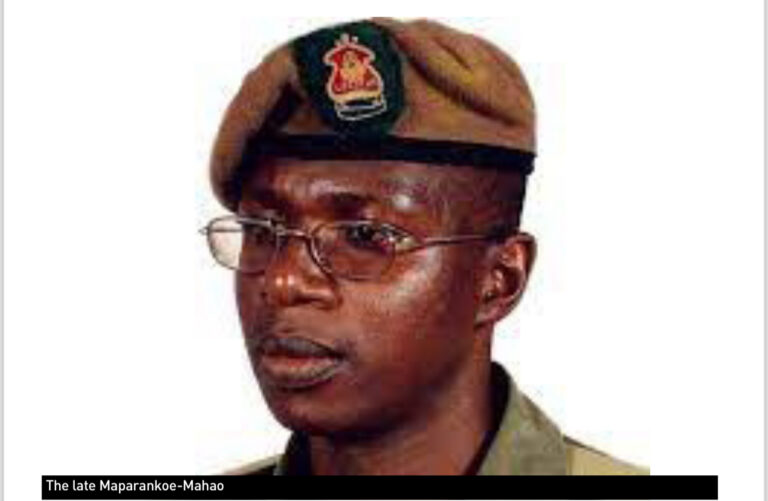
Labour and Employment Minister, Tšeliso Mokhosi took a stand to give his evidence in Maaparankoe Mahao murder trial.  Mokhosi said as the minister his duty was to see that the army receives funds food and other things they need.

“We worked well together with the late Lt Gen Khoantle Motšomotšo. I would receive weekly verbal reports from the late Lt Gen Motšomotšo about the army activities”, said Mokhosi.  He said even though he may not remember the dates well but Motšomotšo came to him and reported that there was mutiny in the army.

He said investigations were started and a month before Mahao’s death, former Lesotho Defence Force Commander Tlali Kamoli took over office. He stated that after the investigations were completed, a group of soldiers were arrested.

 “I cannot recall the dates well but I received a report that one of the soldiers who was going to be arrested was found in a car at his home. When he saw the Soldiers he ran into his house and locked himself inside”, said Mokhosi

He said he was told that the soldiers surrounded the house but the accused open the window and escaped and those soldiers let him go. Mokhosi said, “There was a day on which Kamoli called me and told me that soldiers went to arrest Mahao.  He told me that those soldiers met Mahao along the way and they tried to stop and arrest him but Mahao at one point pulled out his gun to cock it.”

Mokhosi said Kamoli told him that the soldiers then shot Mahao on the shoulder as to disable. He said the report stated that Mahao was taken to Hospital and was still alive when they arrived. He said Kamoli reported to him that Mahao was supported from the vehicle into the hospital but he was still alive.

Mokhosi said Kamoli called him after an hour telling him that Mahao had lost his life. He said he never knew there was going to be an arrest and never knew of the operational plan from Motšomotšo as that is the army duty and does not involve the minister.

The accused lawyer Attorney Qhalehang Letsika and Advocate Napo Mafaesa put to Mokhosi that he was convinced that there was mutiny in the army hence him signing certain documents to enable the establishment of the Court Marshal.

Mokhosi was asked if he was informed of the involvement of certain politicians in mutiny. “ I stopped those reports from on set , told them not to report about such, army issues should never be politicised,” said Mokhosi.

This case is before Judge Charles Hungwe. The crown Advocates are Advocate Rethabile Setlojoane and Advocate Lehlohonolo Phooko while the defence consists of Attorney Qhalehang Letsika, Advocate Letuka Molati, Advocate Silas Ratau, Advocate Napo Mafaesa and Advocate Kabelo Letuka.

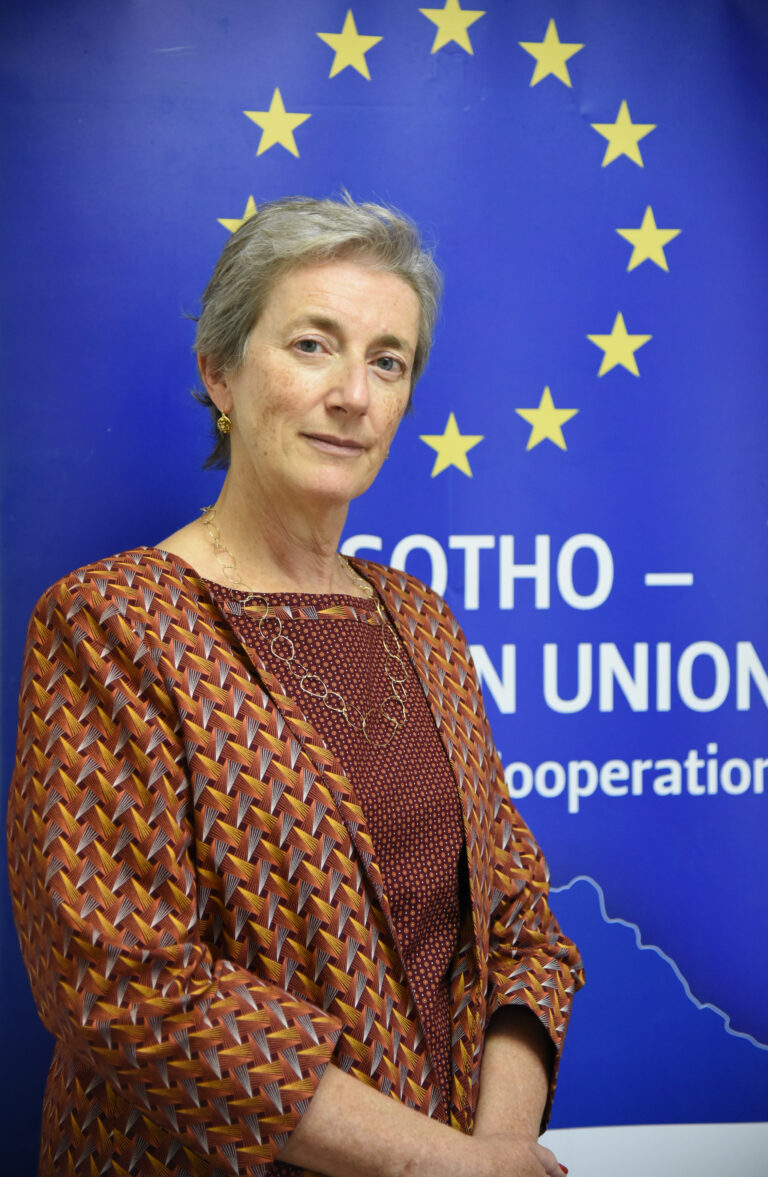
European Union in Lesotho Commemorates Europe Day

Today, 9th of May, the European Union celebrates Europe Day. It is a day to honour our unity, diversity and achievements. With the elections of the European Parliament coming up one month from now, it is important to remember where we come from.

74 years ago, in 1950, the historic ‘Schuman Declaration‘ steered Europe towards a path of peace, prosperity and political cooperation in a continent then ravaged by the aftermath of the Second World War.

The Declaration set out an idea for a new form of political cooperation in Europe, which would make war between Europe’s nations unthinkable.

74 years later, 27 countries form the European Union. Exactly twenty years ago, our European family grew bigger with ten countries joining at once: Cyprus, Czechia, Estonia, Hungary, Latvia, Lithuania, Malta, Poland, Slovakia and Slovenia. Bulgaria, Romania and Croatia’s accession a few years later has made our Union even stronger, a greater political, economic and cultural entity.

More countries aspire to join the EU – nine are current candidates – among them, Georgia, Moldova and Ukraine – and one, Kosovo, is a potential candidate.

The pace of change across the European Union over the past two decades has been remarkable. European integration brought us political, economic and social advancements. War ravaging Ukraine, the Middle East, and beyond show how peace and security can be fragile, and how much we shall invest to preserve and promote it. 

In Europe, we enjoy the freedom to live, study or work anywhere in the EU. 450 million Europeans enjoy freedom of movement across the Union. Citizens have now stronger rights and freedoms. Democracy and the rule of law have been reinforced, despite being tested at times. Opportunities for both people and business have grown.

The EU is the largest trade bloc in the world. It is the world’s biggest exporter of manufactured goods and services, and the biggest import market for over 100 countries. Free trade among its members was one of the EU’s founding principles and one that inspires EU action at global level.  

Because EU countries cooperate so closely, our food and our environment, meet some of the world’s highest standards. EU policies seeks to minimise risks to the climate, health and biodiversity and are inspired by the ‘One Health’ approach balancing the health of all living beings and the environment

Taken together, the EU and its Member States are the world’s leading provider of development assistance – helping millions of people worldwide and working collectively to promote good governance, fight hunger and preserve natural resources with governments in 150 partner countries, as well as with international organisations and civil society across the world.

In this context, the EU has launched the Global Gateway strategy to boost smart, clean and secure links in digital, energy and transport sectors and to strengthen health, education and research systems across the world.

This has the ambition to tackle the most pressing global challenges, from climate change and protecting the environment, to improving health security and boosting competitiveness and global supply chains. This investment package is particularly important for Africa, as it aims to mobilise up to €150 billion in investments between 2021 and 2027 for the African continent alone.

Collectively, the EU and its constituent countries are the world’s leading donor of humanitarian aid. Every year, the EU provides food, shelter, protection, healthcare and clean water to over 120 million victims of natural disasters and conflict in over 80 countries through humanitarian aid.

In the Southern Africa and Indian Ocean region, the EU provides humanitarian assistance – to victims of natural disasters as well as armed conflict and violence. EU humanitarian aid in Lesotho comes in the form of food assistance, education in emergencies, disaster preparedness and during the pandemic, distribution of Covid-19 vaccines and cash for food for vulnerable households.

An enduring partnership

A few months ago, in November 2023, the European Union and its Member States signed in Samoa a new Partnership Agreement with Member States of the Organisation of African, Caribbean and Pacific States.

In the words of the EU High Representative/Vice-President Josep Borrell “The Samoa agreement brings together more than half of the UN members, from four continents, around shared priorities and interests. We are definitely moving away from the old paradigms and instruments that linked the EU to most of those countries into win-win partnerships that are fit for the current world. At a moment in time where multilateralism is in danger, the fact so many countries can come together and agree on joining forces to face global challenges opens a door for optimism”.

27 EU Member States, 79 partner nations across three continents and around 2 billion people are covered by the Samoa agreement. It is based on six key priorities:

i) Human rights, democracy and governance; ii) Peace and security; iii) Human and social development; iv) Inclusive, sustainable economic growth and development; v) Environmental sustainability and climate change; and vi) Migration and mobility.

EU relations with the Kingdom of Lesotho are now underpinned by the Samoa agreement.  However, our mutual relations date back to the 1976’s Lomé Convention, the year when the EU Delegation in Maseru also opened its doors in the Mountain Kingdom. The European Union has been a strategic partner of Lesotho, supporting diverse programmes and initiatives covering areas such as water and sanitation, renewable energy, infrastructure, social protection, and governance.

This relationship has gradually expanded from development cooperation and humanitarian assistance to a multi-faceted partnership encompassing political dialogues, trade and investment, socio-economic cooperation, support to national reforms and governance, academic and cultural exchanges, notably via the Erasmus+ programme.

The EU Delegation is the sole representation of the Union based in Lesotho, but the programmes it implements are made possible thanks to the contributions of its Member States.

Each one of the 27 Member States contributes to the budget of the EU and is a reliable and committed partner of Lesotho.

The EU Delegation has continuous exchanges with democratic institutions in the country, as well as other key interlocutors at national and local level, including civil society and the private sector.

Our door is always open to listen and to dialogue.

This year is a very special year for Lesotho. The EU has joined the commemoration of the 200th anniversary since King Moshoeshoe I founded the Basotho nation in 1824 and honour the legacy of peace and unity inspired by the first monarch. The same principles are at the core of the European Union. “United in diversity” is the European Union’s motto. People in the European Union may have different cultures or languages but they stand by each other and work together in peace.

Today, we mark Europe Day within the broader Europe Month celebrations in Lesotho. Many initiatives will take place in this period.

Europe Month kick-started this week on the occasion of the celebration of the successful vaccination campaign against Human Papilloma Virus (HPV) carried out by the Ministry of Health with the support of GAVI – the global alliance for Vaccines and Immunisation – whose largest donor are the EU and its Member States.

Later in the month, we will have the honour to accompany His Majesty King Letsie III in a new event of the water and soil protection Government programme ReNOKA, cofounded by the EU and the German Government.

The traditional Lesotho-EU Partnership Dialogue will attract to Maseru Ambassadors and diplomats from EU member States representations based in South Africa to review the overall mutual relations. Europe Month will culminate early in June, with the Youth Dialogue and launch of the Youth Power Hub, a platform co-funded by the EU and developed by UNICEF and IOM to empower grassroots youth civil society groups’ participation in decision making.

Happy Europe Day to you all.

Independent business & current affairs journalism · Lesotho Subscribe — M85/month
| Independent business & current affairs journalism · Lesotho