Mohahlaula Airlines
Wednesday, July 22, 2026
Home Blog Page 79

Mokhosi lied to the Magistrate to save his life

0

MASERU

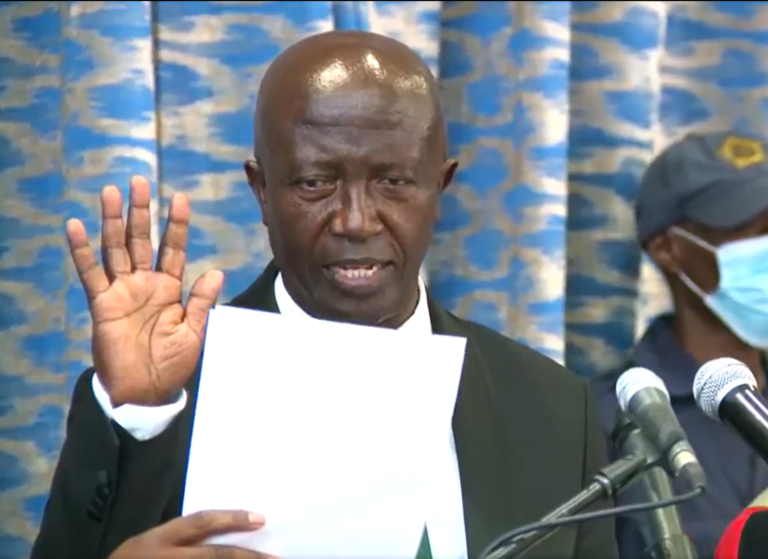
The current Minister of Labour and Employment, Tšeliso Mokhosi has confessed before the High Court that he lied before the magistrate in 2017 to save his life.

He made the confession during cross examination which was led by the Director of Public Prosecutions (DPP), Advocate Hlalefang Motinyane in a case in which four police officers are charged with murder of one, Police Constable Mokalekale Khetheng.

Mokhosi in his evidence in chief attested that after the police subjected him to torture during questionings, they took him to the magistrate court where he made a statement before the magistrate.

He showed that he was schooled by the police officers on what to say to the magistrate. Mokhosi said the police had threatened to carry on to torture him he did not act in accordance with their instructions.

In the course of cross examination he insisted that the contents of the statement are not true. He said he had to lie to save his life. He denied that what he made before the magistrate was an admission. He said it was a statement, not confession specifying that the confession is made voluntarily.

The prosecution pointed out that the witness should charge for lying to the magistrate. Mokhosi is the seventh and last defence witness to testify during the ongoing trial within a trial which is intended to establish admissibility of evidence presented by the prosecution against the accused.

The defence tested the testimony by one of the witnesses, inspector Rapelang Nkeane who indicated that the accused willingly showed them a place where they dumped the body of the deceased.

Thabo Tšukulu, Mothibeli Mofolo, Mabitle Matona and Haleokoe Taasoane are facing several charges including murder, fabrication and defeating the ends of justice. It is alleged that the deceased met his death in 2016 following his arrest by Hlotse Police.  The defence insist that the deceased went missing from the police when he was to meet his seniors.

At the start the accused were charged together with Mokhosi but his charges were later withdrawn. They were also charged together with former Commissioner of Police, Molahlehi Letsoepa. This case is before Justice Charles Hungwe.

Five Police Officers Nearly killed Mokhosi

MASERU

Tšeliso Mokhosi, the current Minister of Labour and Employment says he almost died at the hands of the most heartless five police officers in August 2017. Mokhosi was arrested in relation to the death of one Police Constable Mokalekale Khetheng.

Mokhosi said this when giving his testimony as a defense witness during a trial within a trial in a case in which four members of the Lesotho Mounted Police Services (LMPS) are charged with murder of Khetheng.

He stated that five police officers namely Lethoko, Nkeane, Mohoang, Lebajoa and Chabalala subjected him to the cruelest and inhumane treatment one can imagine while interrogating him. He indicated that he was assaulted and suffocated adding that he ended up soiling himself.

Mokhosi said he arrived at Maseru Police Head Quarters at around 08:30 in the morning with his lawyer Attorney Qhalehang Letsika. He said after his lawyer handed him over to the police, they told his lawyer to leave.

“After an hour or so after my lawyer had left, I was asked if I knew anything about Khetheng’s death then I told them I knew nothing. They then called one, Zele Mpheshia who cried when he saw me”, said Mokhosi. He said Mpheshia’s hands were swollen showing that he had been assaulted.

He said the police asked them if they knew each other and they said they did, the police then dismissed Mpheshia. Mokhosi said the police then told him that Mpheshia said he is implicated in Khetheng’s death.

“ I told them that he was not telling the truth, and the police said they are aware that I am not implicated in Khetheng’s death but what they want is for me to say that Mothetjoa Metsing was implicated in Khetheng’s death”, said Mokhosi

He said he told the police that he knew nothing about Metsing’s implication in Khetheng’s death. Mokhosi said at about 17:30 in the afternoon when almost every police officer had left the station and left with the five police officers, one of them who seemed to be the youngest, Lethoko said to him, ‘Mokhosi, someone’s child has died, we are not going to play with you’.

He said they then ordered him to take off all his clothing and lay on his stomach, bring his hands at the back and cuffed him, then bring his feet towards his hand for them to pass between his body and his cuffed hands.

“Because that was not an easy exercise to do, they all had to push my feet to pass between my body and hands. They then took a plastic bag, made it wet inside and asked me to allow them to put it around my face in such that I breathe inside it.” Mokhosi said he already knew that police suffocate people by doing so, so he pressed in head hard on the floor that they were not able to put the plastic on him.

“They took an iron rod that was already in the office, they put it between my neck and floor. Two of them held the bar on both sides while one stepped on my back and the two pulled the iron bar up. I felt that the iron bar was breaking my throat so I raised my head and they put the plastic”, said Mokhosi.

He said he tried to hold his breath and when the police realized they started kicking and walking over his body so he can breathe. “They continued kicking me like that until I felt there was nothing I could do. It is at that moment I realized I had to give in and it is at that time I soiled myself,” said Mokhosi.

Mokhosi said they removed the plastic and uncuffed him and ordered him to go the bathroom to clean himself. He said he went with one officer named, Chabalala and when he got to the bathroom, cleaning himself he realized that there was certain body fluid which he had excreted that is normally passed out by humans when they are about to die.

“I told the officer that had they not removed the plastic on time, I was going to die. I knew this because I had worked as a nurse assistance back in the mines in South Africa”, said Mokhosi.

Lesotho Nation Brand launched

MASERU

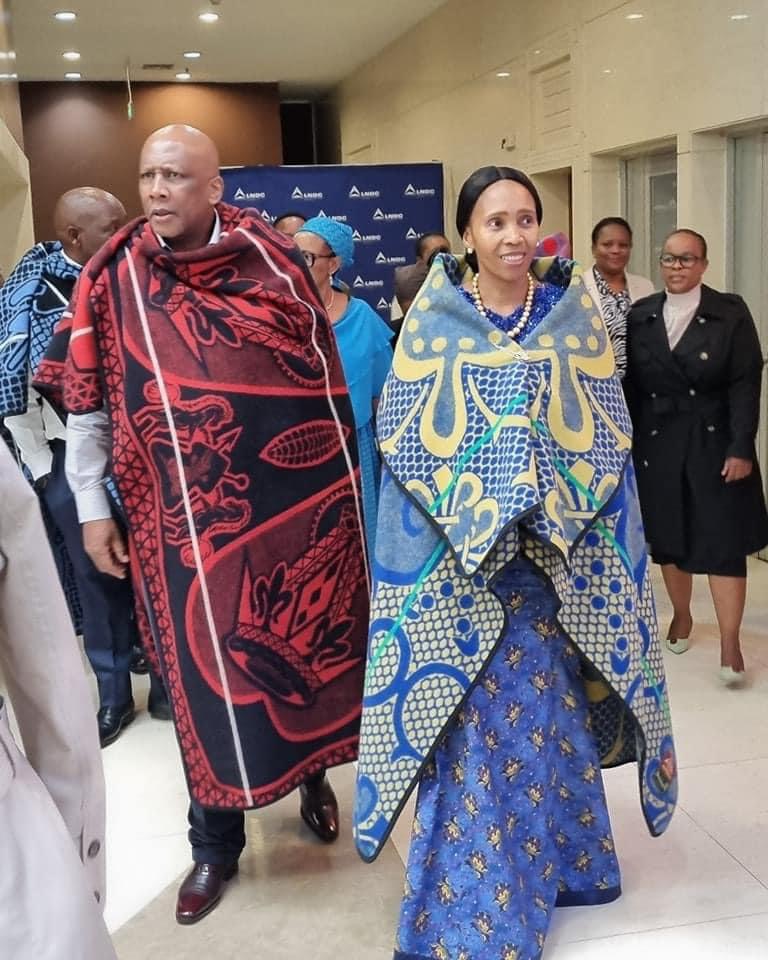
As one of the auspicious moments that the country has encountered, on 15 May 2024, Lesotho has the pleasure to partake in yet another joyous moment at the ‘Manthabiseng Convention Centre. The order of the day was to officially launch the Nation Brand- Elevate Lesotho.

Advocate Molise Ramaili who is the interim CEO at Lesotho National Development Corporation (LNDC) addressed the congregation where he gave the Nation Brand introduction. He expressed his joy and excitement to share a ‘monumental achievement’ that has been designed to redefine Lesotho’s identity on the global scale. The aim of the strategy is meant to attract investment, boost tourism, foster international trade and drive economic diversification. It is said to have been meticulously planned to be in par with the nation’s broader Nation Brand Strategy. Advocate Ramaili also stated that the framework has been endorsed by key stakeholders which include the Cabinet, the LNDC Board of Directors, the Nation Brand Advisory Council and a dedicated technical working group post scrupulous vetting.

Why is branding a nation so imperative? The Advocate shared five fundamental objectives that drive this course:

-to attract foreign investment and stimulate trade growth

– to enhance the reputation of our country’s brands

-to manage perceptions-both positive and negative

-to boost inbound tourism and tourism receipts

-to bolster our political influence on the global stage

A strong and compelling nation brand is required because it not only elevates our reputation, but it also plays a role in empowering citizens with a sense of pride and ownership. “The journey towards nation branding has been guided by a comprehensive analysis of internal and external factors- a journey that has unearthed valuable insights into Lesotho’s current position, its brand implications, and the necessary steps to chart our course forward,” said the Advocate. With the help of the pillars of investment, exports, tourism and the promotion of local products, Lesotho will be able to showcase its strengths and opportunities on the global stage thus highlighting the country’s investment potential, abundant natural resources, breathtaking landscapes, and vibrant culture. “As we stand on the cusp of this transformative journey, I invite each and every one of you to join us in the grand unveiling of Lesotho’s brand-new identity…” said Advocate Ramaili as he concluded his address.

Honorable Mokhethi Shelile was also in attendance who is the Minister of Trade, Industry and Business Development and he had this much to say in his keynote address. He explained that LNDC was mandated by the Ministry of Trade to develop and implement the framework. This mandate was drawn from the National Strategic Development Plan (NSDP) 2 and the Industrial Policy of 2015. The Corporation (LNDC) has been working on the Lesotho Country Brand Strategy and Management Framework since 2017. This is fueled by the desire to provide guidance and promote a culture of excellence that sells Lesotho’s image and products.

As per the Minister, “Branding has become a central tool in country competitiveness, where having a bad reputation or none at all seriously affects a country’s ability to compete.” Furthermore, the nation brand will render the following benefits to Lesotho:

• Increase Lesotho’s prospects of attracting Foreign Direct Investment (FDI), tourists, talent, skills, and world attention.

• Create an instrument of differentiation to have a sustainable competitive edge and economic advantage through development of a unique national identity and imagery that sets the country apart.

• Create an image on which to anchor and project Lesotho products to strategic target markets.

The idea behind nation branding is to enhance economic growth, setting the country apart politically, socially, economically, and culturally as well as appealing to the international stage.

Up next was the Right Hon. Prime Minister- Sam Matekane, who delivered a ‘Senyamo’ speech. He cut to the chase by calling everyone to rally behind a cause that is not just about us but one that embodies our identity, pride, and aspirations. He said that Lesotho is a nation on the rise, with untapped potential. He added that Lesotho’s prosperity is reliant on all Basotho standing together-shoulder to shoulder. “Our time is now, the world is watching”, exclaimed the Prime Minister. He said that we ought to stand for one common cause, which is the prosperity of Lesotho. Supporting the nation brand serves as a commitment to shaping the future of Basotho.

King Letsie was the last to speak and he gave a riveting speech on ‘The Essence of Nation Brand’. He said that it was an honor and privilege to speak on such a momentous occasion in the history of our beloved country. He said that he hopes that the journey will shape the future of the nation which symbolizes our collective aspirations and boundless potential. It also symbolizes our nation’s unity, resilience, courage and our determination and desire to work for peace, and prosperity and inclusive development. He made note of the main pillars: investment, trade, tourism, development of local products and patriotism and said that those will be the cornerstones upon which a brighter future can be built for future generations.

He invited Lesotho’s friends and partners in the international community to land a helping hand. He applauded LNDC and the Ministry of Trade for a job well done and concluded by making a daring supplication saying, “…let us remember that the journey ahead will not be without challenges, but with determination, perseverance and steadfast belief in our potential, there is no limit to what we can achieve…”

Bahale Arts Academy then gave a breathtaking and thought-provoking performance, where they challenged the beginning of this unknown journey but also encouraged that we embark on it with zeal. Thereafter, the festivities began which were encompassed with a public viewing and brand story experience.

A stupid person is the most dangerous type of person

0

n 1976, Professor Carlo M. Cipolla penned a remarkable essay that dissected what he considered the greatest existential threat to humanity: stupidity. Cipolla’s work, though concise, unpacked profound insights into human behavior, categorizing individuals into four distinct groups: Intelligent, Bandit, Helpless, and Stupid. Each category is defined by a win/lose concept, echoing elements of the prisoner’s dilemma, prompting readers to ponder deeply about their own placement within this framework.

The first law, a blunt assertion that everyone inevitably underestimates the number of stupid people in circulation, strikes a chord of uncomfortable truth. It serves as a stark reminder of our predisposition to overlook the prevalence of stupidity in our midst, often clouded by biased assumptions about intelligence based on superficial factors like occupation or education.

Cipolla’s second law introduces a chilling idea: the probability of a person being stupid is independent of any other characteristic. This suggests that stupidity is a constant variable across all demographics, defying attempts to predict or control its distribution. It’s a humbling realization that intelligence does not immunize one against moments of profound idiocy.

The golden law of stupidity, the third principle, defines a stupid person as one who causes losses to others without benefiting themselves. This law illuminates the plight of the defenseless, those who suffer at the hands of the stupid without recourse or recompense.

Cipolla’s fourth law delivers a sobering message: non-stupid people consistently underestimate the destructive power of stupidity. This warning highlights the danger posed by individuals whose actions are driven by irrationality and unpredictability, often leading to significant harm and chaos.

Finally, the fifth law declares a chilling truth: a stupid person is the most dangerous type of person, surpassing even the threat posed by a bandit. This assertion underscores the need for vigilance and proactive measures to counteract the detrimental effects of stupidity on society.

In essence, Cipolla’s essay serves as a poignant reflection on the complexities of human behavior and the enduring challenge of navigating a world where stupidity can be as prevalent as it is insidious. It’s a call to action for the non-stupid to remain vigilant, to compensate for the losses caused by the stupid, and to strive for a society where intelligence triumphs over idiocy.

BOTSWANA PRESIDENT LAUNCHES THUO LETLOTLO GUIDELINES

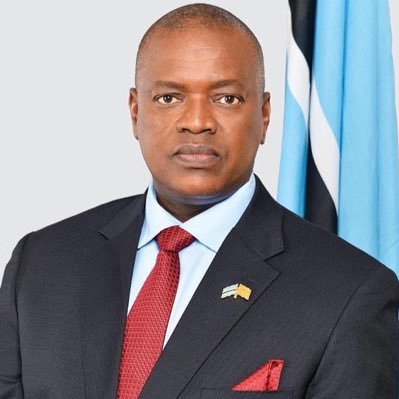
The importation of livestock and small-stock superior breeds is aimed at catalysing the recently launched, Thuo Letlotlo, President Dr Mokgweetsi Masisi has said.

Officiating at an occasion to receive beef cattle and dairy goats bought from Australia May 14, President Masisi said Thuo Letlotlo was a holistic output-based programme that was commercially-oriented to facilitate transformation and development of the livestock industry into an export-led sector.

President Masisi also used the occasion to launch the Thuo Letlotlo guidelines containing 29 packages.

“Allow me to take this moment to officially launch the Thuo Letlotlo Guidelines that will direct the implementation of the much anticipated programme,” he said.

President Masisi said he was pleased by the positive response and passion from the public after launching the Thuo Letlotlo programme in Serowe on April 25.

He said the guidelines contained a total of 29 packages which included amongst others livestock sub-sectors, game farming, waste management, privatisation of extension service, livestock digitisation, and enhancers to support each sub-sector.

The President implored members of the community to take advantage of Thuo Letlotlo, which was meant to improve production and productivity of the livestock sub-sector.

He said the importation of genetically superior livestock as well as semen embryos would go an extra mile in augmenting the Thuo Letlotlo programme so that it realises its broader objectives.

“My word of encouragement to all farmers and aspirants is for you to use these superior genetic resources, which are available to you at subsidised prices to advance your livestock enterprises,” he said. President Masisi said government’s goal of increasing national herd and improving its genetic merit could only be achieved if farmers breed with genetically superior animals and using the best management practices in their farms.

“These best management practices include keeping performance records, undertaking necessary vaccinations, identifying all our livestock for traceability purposes, keeping animals at optimal stocking rates and taking care of our rangeland resources,” said President Masisi. Ends

Mothae Mine Up For Sale

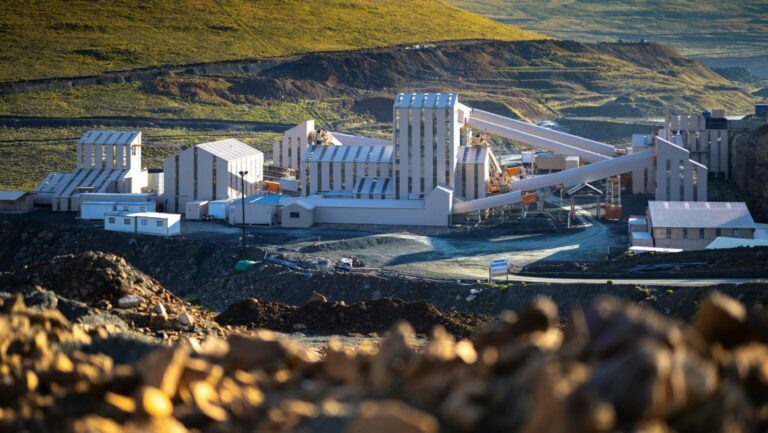
Lucapa is to sell its 70 per cent stake in the Mothae mine, in Lesotho – which produces some of the world’s highest value diamonds – to focus on its core assets in Africa and Australia.

The Australian miner has recovered over 150,000 carats since it started commercial production in 2019, bringing in more than $100m in revenue.

Lucapa’s board today (15 May) said it was “considering all options” for the divestment of its stake in Mothae.  It is discussing options with the Lesotho government, which owns the remaining 30 per cent.

Mothae produce large, high-value diamonds attracting the second highest dollar per carat prices in the world for kimberlite diamonds.

Lucapa also holds a 40 per cent stake in the Lulo alluvial mine, in Angola, and is involved in exploration projects in Angola, Australia and Botswana.

“On review, it is clear the company should streamline the portfolio to focus on our core assets in Africa and Australia,” said Lucapa chairman Stuart Brown.

“The company’s collaboration with the Lesotho government on the Mothae Diamond Mine has been rewarding and our management have worked exceptionally well to optimise the plant to recover large diamonds. We expect there will be significant interest from those within the diamond industry and on a wider scale.”

The mine has indicated resources of 180,000 carats and inferred resources of 960,000 carats, according to December 2023 figures provided by Lucapa, with a modelled per carat value of $606.

Lucapa says in its sales material that Mothae has recovered 13 +100ct diamonds (largest Type IIa gem 213cts), and 10 diamonds valued at over $1m.

It also has a value adding cutting and polishing offtake partnership with the Safdico  manufacturing and trading company.

Independent business & current affairs journalism · Lesotho Subscribe — M85/month
| Independent business & current affairs journalism · Lesotho