

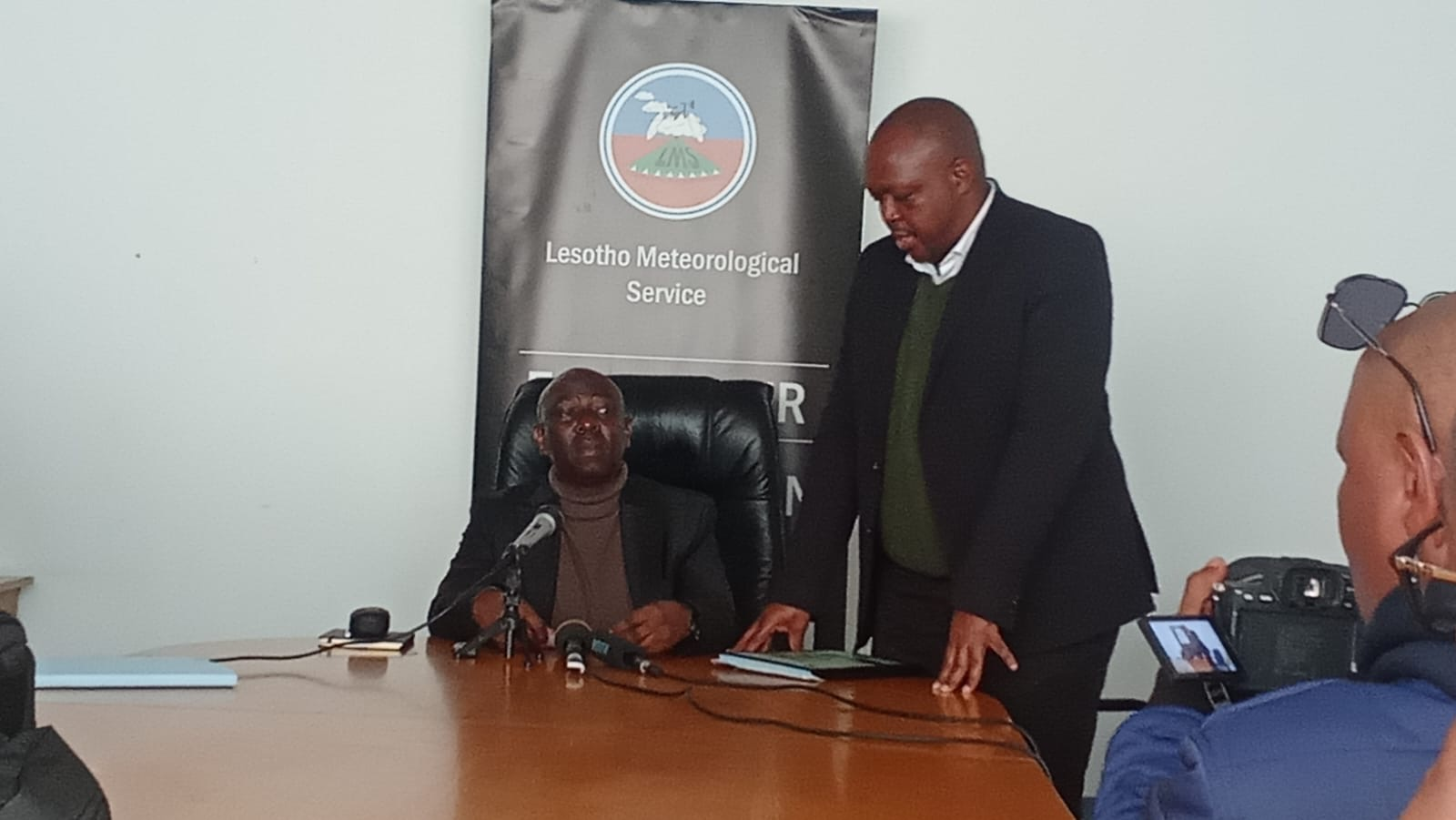
The environment minister told a Maseru briefing that El Niño raises the risk of a dry season but does not guarantee drought, and urged Basotho to plan ahead rather than panic.
BASOTHO have been urged not to panic over reports of El Niño, with the government saying the weather pattern does not automatically mean Lesotho will face drought in the coming rainy season.
The Minister of Environment and Forestry, Thabo Mofosi, made the remarks on Wednesday during a media briefing in Maseru. He said that while El Niño can increase the chances of less rain, it is not the only thing that decides Lesotho’s weather.
Mofosi said El Niño is a climate pattern that sometimes leads to below-normal rainfall in southern Africa, but that it does not work alone.
“An El Niño event should not be interpreted as a confirmation that drought will occur,” the minister said. “Weather in Lesotho is also affected by ocean temperatures in the Indian and Atlantic oceans, global wind patterns, and how strong or early an El Niño event is.”
He said current seasonal forecasts show only a possibility of below-average rainfall for the 2026/27 rainy season, not a definite drought.
El Niño and the drought record
The minister acknowledged that some strong El Niño years brought serious drought to Lesotho. He named the 1991/92 and 2015/16 seasons, which caused major problems for farmers and water supplies. But he said history also shows that not every El Niño year leads to drought. In 1987/88, 2006/07 and 2018/19, some parts of the country received normal or even above-normal rainfall despite El Niño conditions.
“This shows that El Niño increases risk, but it does not guarantee drought,” Mofosi said.
How the government is preparing
Mofosi said the government is already putting measures in place. Through the Ministry of Environment and Forestry and the Lesotho Meteorological Services [internal link: LMS seasonal outlook], officials will continue to monitor weather patterns and give the public regular updates.
Other plans include strengthening disaster risk management so communities can respond faster, promoting climate-smart agriculture to help farmers cope with dry conditions, improving water harvesting and conservation projects in villages and towns, and working with partners in food security and disaster response to support vulnerable households.
Advice to farmers
The minister encouraged farmers to start preparing now. He suggested planting drought-tolerant crops such as sorghum and beans, using conservation farming methods that keep moisture in the soil, and adopting efficient irrigation and greenhouse farming where possible.
He also warned people not to believe or share unverified weather information on social media. “Households, farmers, businesses and local authorities should rely on official updates from the Meteorological Services when making decisions,” he said.
“Let us prepare, but let us not assume the worst.”
Thabo Mofosi, Minister of Environment and Forestry
Lesotho is one of the countries most affected by climate change. Droughts and unpredictable rains often hurt crop production, reduce water in dams and rivers, and make life harder for families who depend on farming. Climate experts say early planning and adaptation matter more than ever as weather patterns become less predictable.
Mofosi said the government remains focused on protecting livelihoods and making sure communities are not caught off guard. “With the right information and the right actions, we can reduce the impact of any bad weather,” he said.