


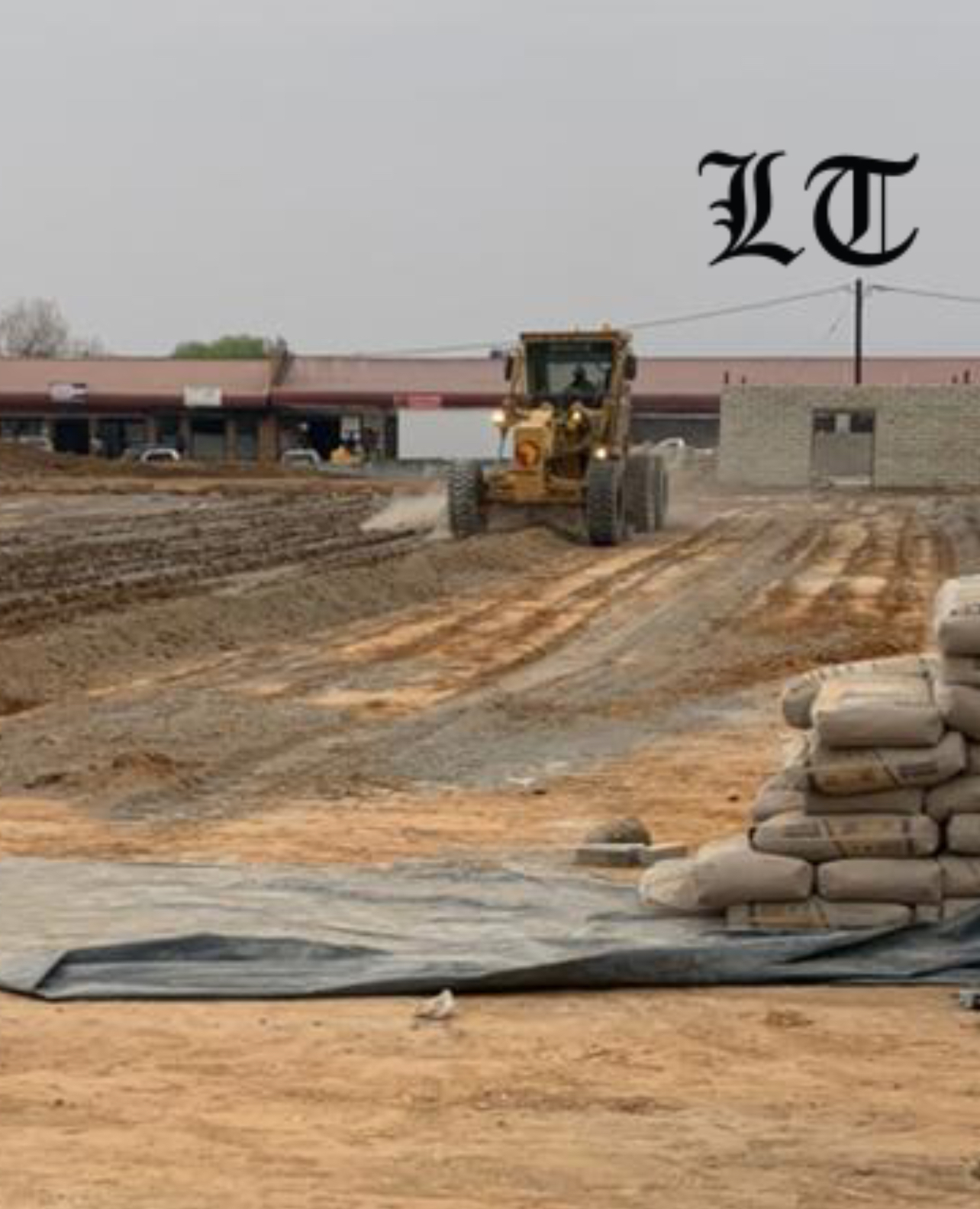
The construction of the Teyateyaneng Taxi Terminal, a project expected to modernise public transport infrastructure in Lesotho, has now become a test case for governance and ethical accountability. Evidence obtained by Lesotho Tribune suggests that Minister of Local Government, Lebona Lephema, is not merely an overseer of the project but a direct beneficiary through his private companies.
Governance Failure: Conflict of Interest at the Core
The Ministry of Local Government awarded the contract for the terminal to a little-known Chinese construction firm. Yet images from the site show yellow plant equipment, cement bags branded Maluti Mountain Cement, and pallets of bricks all tied to Lephema’s business interests. Even a van carrying the logo of Executive Transport, another company linked to the minister, is visibly parked at the construction zone.
These images raise a critical governance question: is the Chinese contractor essentially outsourcing the bulk of the project’s requirements to Lephema’s private ventures? If so, then a minister, entrusted with safeguarding public resources and ensuring fair competition, appears to be leveraging his position for private commercial gain.
This is not the first cloud over Lephema. Lesotho Tribune has previously reported his attempts to secure a M108 million bailout from the Lesotho National Development Corporation to rescue his struggling mining company. The recurring theme is one of state opportunities circling back into his personal business orbit.
Social Impact: Excluding Local Contractors
Beyond governance concerns, the social impact of this arrangement is troubling. Infrastructure projects like the TY Taxi Terminal are often touted as vehicles for job creation and skills transfer to local contractors. Instead, what the public sees is a politically connected elite monopolising supply chains while local builders and suppliers are sidelined.
Taxi operators and commuters in Teyateyaneng may eventually benefit from a modern terminal, but the broader promise of inclusive development is undermined. If local small and medium-sized enterprises cannot access contracts without political connections, then the project reinforces inequality rather than alleviating it.
A Test for Accountability
ESG principles are not abstract ideals; they represent the global standard by which responsible investments and public projects are judged. By intertwining public authority with private gain, the TY Taxi Terminal case risks becoming another symbol of Lesotho’s governance challenges.
Minister Lephema has so far remained unavailable to comment on the matter. Yet the questions persist: how can a sitting minister’s companies be so visibly embedded in a project his ministry awarded? What safeguards exist to protect public resources from political capture? And when will ordinary Basotho contractors be given the opportunity to compete fairly?
Until these questions are addressed, the TY Taxi Terminal will stand not only as a transport hub but also as a monument to how environmental, social, and governance standards can be compromised in plain sight.