


Five payments worth more than M13.1 million processed through the Central Bank of Lesotho cannot be explained. No invoices. No vouchers. No receipts. And, crucially, no trace of the money in the government’s own cash book.
Auditor General ‘Mathabo Makenete delivered one of the most damaging audit findings in recent memory to the Public Accounts Committee on Tuesday, revealing that five payment transactions totalling more than M13.1 million (approximately $800,000) were processed by the Central Bank of Lesotho between 27 May 2022 and 8 February 2023, yet no documentation exists to explain what the money was for, who authorised it, or where it went.
The transactions do not appear in the government’s cash book maintained by the Accountant General. Auditors could find no supporting invoices, payment vouchers or receipts. The result was an adverse audit opinion on the Government of Lesotho’s Consolidated Financial Statements for the 2023/24 financial year, the most serious finding an auditor can issue, signalling that the financial statements contain material misstatements and cannot be relied upon to accurately reflect the government’s financial position.
“The public deserves answers whenever large sums of money cannot be properly accounted for.”
PAC Chairperson ‘Machabana Lemphane-Letsie
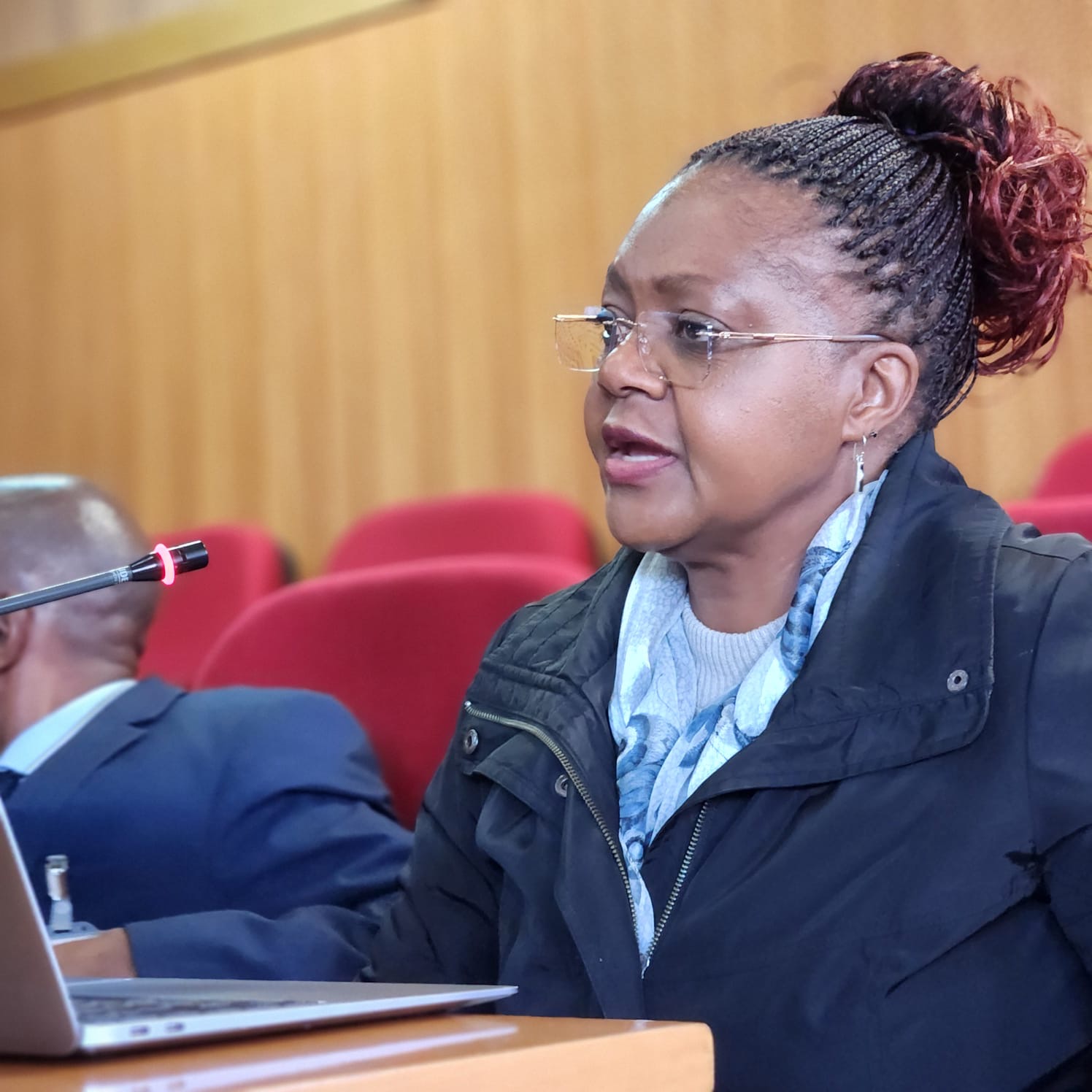
PAC Chairperson ‘Machabana Lemphane-Letsie demanded to know how such a significant amount of money could move through government financial systems without adequate documentation or explanation. She stopped short of drawing conclusions about what the transactions represent, but was explicit that the absence of records raises legitimate concerns about accountability and the possibility of financial misconduct.
What an adverse opinion means
An adverse audit opinion sits at the most serious end of the spectrum of audit findings. It means that, in the Auditor General’s professional judgment, the financial statements are not merely incomplete or qualified on a narrow point. They contain material misstatements that cause the statements as a whole to be unreliable. Makenete told the committee that the unexplained entries contributed to an understatement of government financial figures and exposed persistent weaknesses in financial reporting and reconciliation processes across key institutions.
Not the M6.1 billion, but a fresh mystery
The revelation immediately triggered comparisons with the controversial M6.1 billion reported missing from government accounts in 2021, a matter that generated widespread public debate and political controversy. Several PAC members suggested the two cases could be connected. Lemphane-Letsie dismissed the speculation directly, pointing out that the newly discovered transactions occurred between 2022 and 2023, well after the M6.1 billion issue first surfaced. The timing, she said, suggests this is an entirely separate matter requiring its own investigation.
That distinction matters. It means Lesotho’s public finances may harbour not one unresolved mystery but at least two, with the earlier saga still unresolved and a new one now added to the register.
Calls for a forensic audit
Lemphane-Letsie recommended that a comprehensive forensic audit be conducted at the Central Bank of Lesotho. A forensic audit goes beyond a standard financial review: it traces the movement of funds, examines supporting evidence, identifies possible irregularities, and determines whether laws or regulations may have been violated. She argued it is the only mechanism that could provide clear answers about the unexplained payments and restore public confidence in the integrity of the country’s financial systems.
She also raised a structural concern: because the Central Bank is wholly owned by the government, relying solely on internal reviews may not satisfy public demands for transparency. “The circumstances require an independent and thorough examination of the facts,” she said. She further questioned whether existing oversight mechanisms are adequate to detect and prevent irregular transactions in the first place, given that payments of this size could pass through the Central Bank without appearing in the Accountant General’s records.
A pattern the auditors keep finding
The M13.1 million does not emerge in isolation. For years, successive audit reports have flagged recurring weaknesses across government institutions: poor record-keeping, unsupported expenditures, delayed reconciliations, and inadequate internal controls. Financial experts have consistently warned that such weaknesses create the conditions for errors, wasteful spending and potential abuse of public resources.
Tuesday’s PAC sitting is expected to be followed by further scrutiny of the Auditor General’s full report, with attention shifting toward the Central Bank of Lesotho and the Ministry of Finance for answers about the origins and authorisation of the five transactions. As things stand, the M13.1 million remains unexplained, with no documents, no corresponding entries in government records and no public account of who approved the payments or what they were meant to achieve.
By Tholoana Lesenya | Lesotho Tribune