


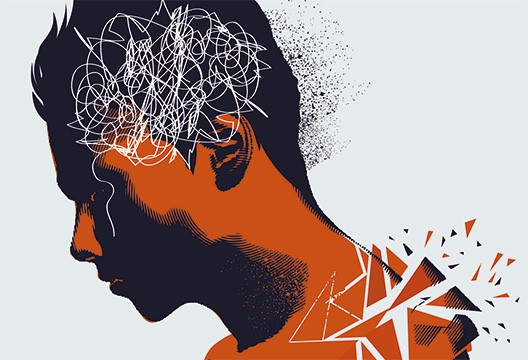
As Lesotho marks Men’s Mental Health Awareness Month this June, data show the kingdom carries the world’s highest suicide burden, yet fewer men seek help than in any comparable country. The silence is killing them.
Lesotho has, for several years, carried one of the heaviest suicide burdens of any country on earth. The most widely cited World Health Organisation figure places the national suicide rate at 87.5 per 100,000 people, a statistic that has attracted global scrutiny and considerable caution from health researchers who note the underlying data quality limitations. A more conservative 2021 estimate from the Global Burden of Disease Study, using revised WHO methodology, puts the age-standardised rate at 36.7 per 100,000 — still the highest in the world for that year.
The headline figure, however contested at the margins, conceals a starker truth about gender. Across the two decades of WHO data covering Lesotho from 2000 to 2019, male suicide rates have consistently run at roughly four times the female rate. In 2019, the male rate stood at 146.9 per 100,000, against 34.6 for women. At the peak year of 2014, when the overall rate reached 116.2 per 100,000, the male figure was 195.2 per 100,000. June is Men’s Mental Health Awareness Month globally, and those numbers give it particular weight in Maseru.
“In Lesotho, the suicide rate is 72 per 100,000 persons, but breaking it down between men and women it is 116 and 30, respectively.”
Southern Africa Litigation Centre, 2023
The silence of masculinity
Researchers and clinicians have long argued that the data do not simply reflect that more Basotho men die by suicide. They reflect that fewer Basotho men speak about distress before it becomes acute. A 2025 systematic review published in the American Journal of Men’s Health by University of Limpopo researchers Leshata Mokhwelepa and Gsakani Sumbane, drawing on 47 studies conducted between 2000 and 2024, found that conformity to traditional masculine norms was the single most consistent predictor of whether a man would seek mental health support. The fear of being perceived as weak, as less masculine, or as failing in the role of provider and protector repeatedly emerged as the dominant barrier across different cultural and national settings in southern Africa.
The Psychological Society of South Africa (PsySSA), in its June 2025 Men’s Mental Health Month commentary, noted that men remain significantly underrepresented in mental health service use across the region, constrained by dominant ideals of masculinity that equate vulnerability with weakness. “Men are generally raised with a heavy dose of masculine hype,” TNX Africa observed in an analysis published this year. “Society does not accommodate any semblance of vulnerability.”
In Lesotho, those norms carry particular force. The Southern Africa Litigation Centre has documented how the fear of vulnerability contributes to the kingdom’s elevated male suicide rate, with men often bottling up feelings and avoiding help when struggling. For those who are gender non-conforming, the pressures are compounded further: a study by researcher Alex Muller found that one in three transgender women (33%), one in six transgender men (16%), and three in five gender non-conforming people (60%) had attempted suicide in Lesotho.
A system under pressure
Those men who do seek help face a service system that is acutely under-resourced. Lesotho’s sole psychiatric hospital, Mohlomi Hospital, is the only dedicated inpatient facility for the entire country. According to the hospital’s public relations officer, Maholi Ramahlele, the building has severely deteriorated and urgently needs replacement, with ceilings on the verge of collapse. In April 2025, reporting by the Lesotho Times confirmed that the hospital is operating under dire conditions.
The staffing picture is equally stark. Each of Lesotho’s ten districts has only one psychiatric nurse, and the country currently relies on a single foreign psychiatrist. The Ministry of Health’s Mental Health Policy and Strategic Plan (2023-2027), launched toward the end of 2024, disclosed that nearly 431,000 citizens out of a population of about 2.2 million are affected by mental illnesses. The WHO reports that the global median of government health expenditure devoted to mental health is just 2.1%, and Lesotho has historically fallen below that threshold.
The pressure on Mohlomi has been intensified by an influx of young drug users admitted because they posed a danger to themselves or others, according to Ministry of Health Principal Secretary Maneo Ntene. She confirmed that plans were underway to construct both a new hospital and a rehabilitation centre, but that implementation of the strategic plan had been gradual. A 2025 situation assessment commissioned by the Ministry of Health identified the absence of a dedicated rehabilitation centre for substance misuse as one of the most urgent infrastructure gaps.
Structural drivers
Mental health advocates consistently point to a cluster of structural factors that make Lesotho’s male burden particularly acute. Unemployment, concentrated poverty, the ongoing HIV/AIDS crisis, and the social dislocation produced by decades of labour migration to South Africa’s mines have, researchers argue, produced a context in which many men experience a profound loss of purpose and social identity without any culturally sanctioned outlet for that distress.
The Global Burden of Disease Study recorded 746,000 deaths by suicide worldwide in 2021, with the WHO finding that 73% occurred in low- and middle-income countries. Suicide was identified as the third leading cause of death among people aged 15 to 29 globally. In southern Africa, the region’s pattern largely reflects global trends: six of the ten countries with the highest suicide rates globally are on the African continent, with Lesotho leading the list.
| Year | Male rate (per 100,000) | Female rate (per 100,000) | Total rate (per 100,000) |
|---|---|---|---|
| 2000 | 73.9 | 16.0 | 42.6 |
| 2005 | 82.7 | 17.2 | 46.7 |
| 2010 | 152.7 | 30.7 | 86.9 |
| 2014 (peak) | 195.2 | 46.3 | 116.2 |
| 2019 | 146.9 | 34.6 | 87.5 |
| 2021 (GBD revised) | n/a | n/a | 36.7 |
Source: World Health Organisation / Global Burden of Disease Study. GBD 2021 figure uses revised methodology; not directly comparable to earlier WHO estimates.
Breaking the silence
Health researchers and advocates argue that destigmatising help-seeking among men requires more than awareness campaigns. The 2025 University of Limpopo systematic review found that men’s willingness to seek help increased as their sense of connection and belonging within a social group strengthened. Community-based, peer-led models, radio programmes, and SMS-based counselling services have shown early promise in reaching isolated men in sub-Saharan Africa, particularly in Malawi, Uganda, and South Africa. Lesotho’s Partners in Health programme integrates mental health care into HIV/AIDS and tuberculosis treatment pathways, specifically to reach men who would not present to a psychiatric facility.
Help Lesotho, a non-profit organisation operating intensive community programmes, reported that in 2023 its long-term programmes had more than 2,000 participants, and that one-on-one psychosocial support conversations were held with more than 960 people. Participants reported increased confidence, a sense of belonging, and an expressed desire to encourage others. Those outcomes, modest in scale against the national burden, point toward what a properly resourced system might achieve.
For the country to move the dial, researchers are broadly agreed on what is needed: additional psychiatric professionals trained domestically, a dedicated rehabilitation centre, community-level mental health integration into primary care clinics, and sustained public messaging that reaches men before crisis point. The Ministry of Health’s 2023-2027 strategic plan lays out those priorities. The question of June 2026 is whether the resources will follow.
By Staff Reporter | Lesotho Tribune