

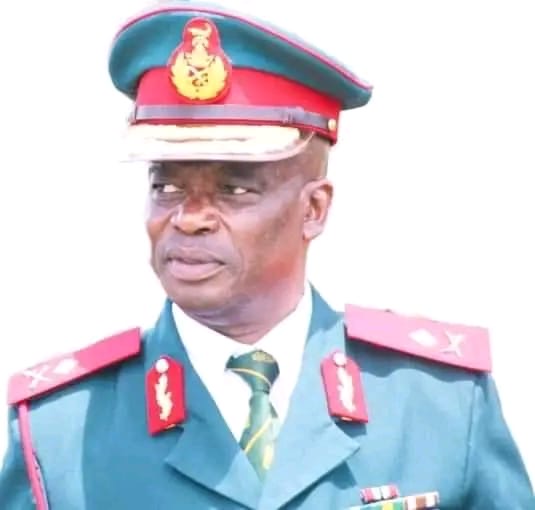
Retired intelligence officer Tumo Lekhooa told the High Court that former deputy army commander Matela Matobakele aligned himself with the All Basotho Convention and played a central role in the 2015 mutiny.
Retired Lieutenant Colonel Tumo Lekhooa has continued to make claims in the High Court murder trial of nine Lesotho Defence Force members. He alleged that retired Major General Matela Matobakele became part of the All Basotho Convention’s subversive groups. Matobakele played a central role in the events leading to the alleged 2015 mutiny, Lekhooa said.
Lekhooa previously served in the Military Intelligence Unit of the LDF. He later became Director General of the National Security Service. He testified as a defence witness before Justice Charles Hungwe.
Lekhooa Matobakele testimony on the mutiny network
Investigations by military intelligence after Matobakele’s disappearance from the army in 2014 showed that the former deputy army commander had aligned himself with the ABC. He had assumed the role of the party’s de facto Security and Intelligence Advisor, according to Lekhooa.
The intelligence suggested that Matobakele was no longer acting as a military officer. He had become actively involved in political activities. The military intelligence unit viewed this as a threat to the stability of the Lesotho Defence Force.
Lekhooa alleged that military investigations established that Matobakele worked closely with former Basotho National Party leader Chief Thesele ‘Maseribane. He described ‘Maseribane as the architect of the 2015 mutiny.
“They created cells within the LDF and established a network of collaborators whose responsibility was to influence soldiers to commit mutiny,” Lekhooa told the court.
The intelligence unit regarded the alleged network as a serious security threat that required immediate intervention.
Once the military launched an operation to suppress the planned mutiny, several individuals fled Lesotho. Matobakele was among them, Lekhooa claimed. While living in exile, Matobakele remained actively involved in coordinating communication between soldiers who had fled and leaders of the ABC, the witness said.
Lekhooa further claimed that Matobakele operated as a Foreign Intelligence Collaborator. He did not elaborate on the specific nature of those alleged activities.
Earlier evidence on State House meetings
Lekhooa told the court that after receiving information about a planned mutiny shortly after the February 2015 general elections, military intelligence launched investigations. These uncovered clandestine meetings held at the State House.
The meetings allegedly brought together the then outgoing Prime Minister and ABC leader Dr Motsoahae Thabane, former BNP leader Chief Thesele ‘Maseribane and then Reformed Congress of Lesotho leader Keketso Rantšo.
The political leaders were dissatisfied with the outcome of the national elections, Lekhooa said. They were allegedly involved in discussions relating to activities against the military establishment.
The witness has repeatedly maintained that military intelligence believed the alleged mutiny was politically motivated. It involved cooperation between political figures and certain members of the armed forces.
Lekhooa faces own charges in separate case
Lekhooa himself remains an accused person in separate criminal matters despite giving evidence in the current proceedings. He faces charges similar to those brought against the nine soldiers standing trial in the Mahao murder case. He has also been charged with treason arising from events allegedly committed in 2014.
His own criminal trials have not yet commenced. He fled Lesotho in 2017 before proceedings could begin. Following his return to the country in 2025, he was arrested and later granted bail pending trial.
During this week’s proceedings, the court also heard that the defence had cautioned Lekhooa to exercise restraint when mentioning the names of certain individuals while giving evidence.
The defence expressed concerns for witness safety. One earlier defence witness, the late Corporal Molise Molieleng, allegedly faced serious consequences after testifying before the court. Molieleng was arrested first by the police and later by the army. He was subsequently killed by unknown assailants.
The warning was made to encourage the witness to avoid unnecessarily exposing individuals whose safety could potentially be compromised through the proceedings.
The defence case has been underway since January 2026. The High Court had dismissed an application by the accused seeking to be discharged without being required to present evidence. Several witnesses have testified in support of the defence since then.
Among them are accused Captain Litekanyo Nyakane, Captain Haleeo Makara, who admitted before the court that he fired the shots that killed Mahao, Sergeant Lekhooa Moepi, the late Corporal Molise Molieleng and retired Major ‘Mamatela Hokinyana. Hokinyana served at Makoanyane Military Hospital in 2015. He was among the medical personnel who attended to Mahao after he sustained gunshot wounds before he was pronounced dead.
The accused, including former Lesotho Defence Force Commander Lieutenant General Tlali Kamoli, are charged with the murder of Lieutenant General Maaparankoe Mahao. He was fatally shot at Ha Lekete in Mokema on June 25, 2015. They also face additional charges of attempted murder, theft and malicious damage to property.
Throughout the trial, both the prosecution and the defence have presented sharply differing versions of the events that culminated in Mahao’s death.
The prosecution maintains that the accused unlawfully killed Mahao. The defence has sought to demonstrate that the military was responding to what it believed was a genuine mutiny within its ranks.
Lekhooa’s testimony has become a significant part of that defence narrative. He continues to provide the court with the military intelligence perspective on the political and security developments that unfolded before the fatal shooting.
The trial continues before Justice Charles Hungwe.