


Retired intelligence officer Tumo Lekhooa told the High Court that political leaders held clandestine meetings at the State House to mobilise soldiers after the disputed outcome of the February 2015 general elections.
Retired intelligence officer Tumo Lekhooa told the High Court that military intelligence concluded the alleged 2015 mutiny was planned through meetings held at the State House. According to his testimony, political leaders discussed ways of mobilising soldiers after the disputed outcome of the February 2015 general elections.
Lekhooa, a former Military Intelligence officer in the Lesotho Defence Force and former Director General of the National Security Service, made the claims while testifying as a defence witness in the ongoing murder trial of nine soldiers accused of killing former Army Commander Lieutenant General Maaparankoe Mahao.
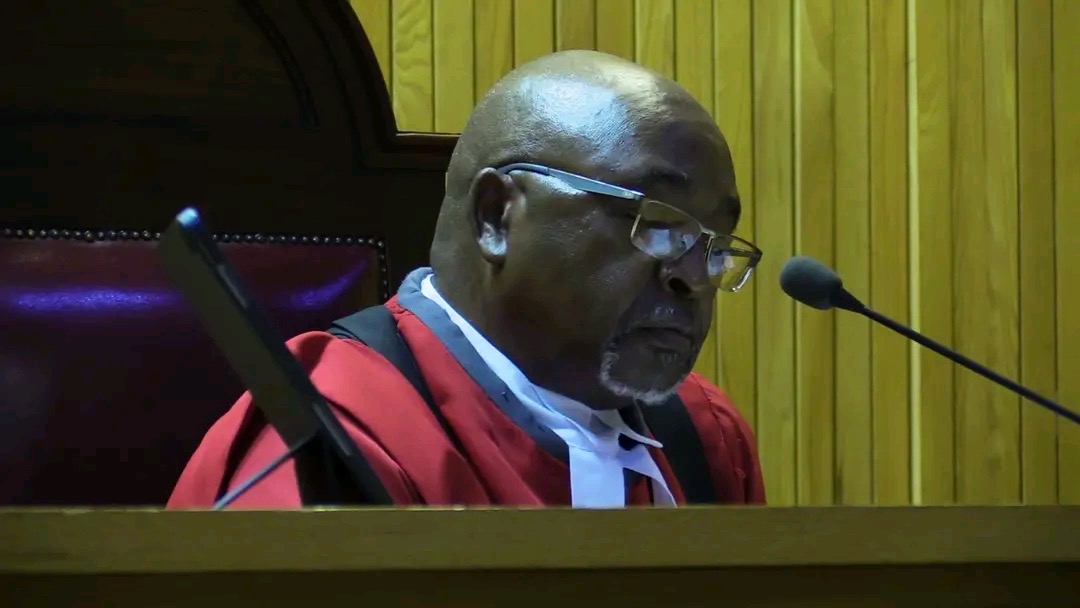
Appearing before Justice Charles Hungwe, the retired intelligence officer said the army began investigating after receiving information that a mutiny was being planned within the Lesotho Defence Force in 2015. He testified that intelligence operations uncovered what he described as clandestine meetings held at the State House involving senior political leaders who, according to the military’s findings, were dissatisfied with the outcome of the national elections.
State House meetings and the alleged mutiny plan
The witness named the then outgoing Prime Minister and leader of the All Basotho Convention, Dr Motsoahae Thabane, former Basotho National Party leader Chief Thesele ‘Maseribane and then Reformed Congress of Lesotho leader Keketso Rantšo as participants in those meetings.
According to Lekhooa, the discussions went beyond political dissatisfaction and allegedly focused on how to enlist members of the armed forces into a plan that would ultimately weaken the military establishment.
“It was in those meetings where the issue of mobilising soldiers came out,” Lekhooa told the court. “They targeted commanders of the elite units of the Lesotho Defence Force in order to dismantle the machinery that kept the government in power.”
The retired intelligence officer alleged that the objective of the operation was to weaken the command structure of the Lesotho Defence Force, thereby creating conditions that would allow the existing democratic order to be overthrown. He testified that the alleged plan sought to undermine Section 1(1) of the Constitution of Lesotho, which establishes the country’s constitutional democracy.
Military intelligence regarded the alleged plot as a direct threat to national security and believed it required an urgent response from the army.
Lekhooa said military intelligence regarded the alleged plot as a direct threat to national security and believed it required an urgent response from the army. His testimony forms part of the defence’s attempt to explain the circumstances that existed before the death of Lieutenant General Maaparankoe Mahao on June 25, 2015.
Internal and external dimensions of the alleged mutiny
During his evidence, Lekhooa also told the court that military intelligence concluded the alleged mutiny involved both local and international players. He said investigations revealed what he described as “internal actors” operating within Lesotho and an “external dimension” involving foreign states and supranational organisations.
Although he did not identify those countries or organisations in detail during this part of his testimony, he maintained that intelligence reports suggested the alleged mutiny extended beyond Lesotho’s borders.
The witness had earlier informed the court that former BNP leader Chief Thesele ‘Maseribane was identified by military intelligence as the coordinator of the alleged mutiny. He further testified in previous proceedings that former Police Commissioner Dr Khothatso Tšooana had allegedly pledged to provide weapons, ammunition and personnel to support the operation.
Lekhooa’s position as witness and accused
Those allegations form part of a wider narrative the defence has been presenting since it began calling witnesses in January this year. Lekhooa’s testimony has attracted considerable public attention because he is not only a witness but also an accused person in separate criminal proceedings.
The retired colonel is facing charges similar to those brought against the nine soldiers standing trial in the Mahao murder case. He is also charged with treason in connection with events that allegedly occurred in 2014.
His own trials have not yet commenced after he left Lesotho in 2017 before the criminal proceedings could begin. Following his return to the country in 2025, he was arrested and later granted bail pending trial.
During the proceedings, the defence also reminded Lekhooa to exercise caution when mentioning names of individuals while giving evidence. The warning, counsel explained, was prompted by concerns over the safety of witnesses.
The defence referred to the late Corporal Molise Molieleng, one of its earlier witnesses, who, according to submissions made before the court, was arrested by the police, later detained by the army and subsequently killed by unknown assailants after testifying in the case.
For that reason, Lekhooa was urged to avoid disclosing unnecessary names that could potentially place individuals at risk. The defence case has been underway since January 2026 after the High Court dismissed an application by the accused seeking to be discharged at the close of the prosecution’s case.
Since then, several witnesses have appeared before the court in support of the accused soldiers. Among those who have testified are Captain Litekanyo Nyakane, Captain Haleeo Makara, Sergeant Lekhooa Moepi, the late Corporal Molise Molieleng and retired Major ‘Mamatela Hokinyana.
Captain Makara admitted during his testimony that he fired the shots that killed Mahao but has maintained that his actions occurred within the context of a lawful military operation. Retired Major Hokinyana, who served at Makoanyane Military Hospital in 2015, also testified about the medical treatment provided to Mahao after he sustained gunshot wounds before he was pronounced dead.
The nine accused, including former Lesotho Defence Force Commander Lieutenant General Tlali Kamoli, are charged with the murder of Lieutenant General Maaparankoe Mahao, who was fatally shot at Ha Lekete in Mokema on June 25, 2015. They also face charges of attempted murder, theft and malicious damage to property.
The trial has become one of the longest-running and most closely followed criminal proceedings in Lesotho’s history because of its political, military and constitutional significance. As the defence continues presenting its evidence, Lekhooa’s testimony has provided the court with the military intelligence perspective on the events that preceded Mahao’s death.
Whether those allegations will ultimately withstand cross-examination and judicial scrutiny remains for the High Court to determine when all the evidence has been heard. The matter continues before Justice Charles Hungwe.
“`, Captain