


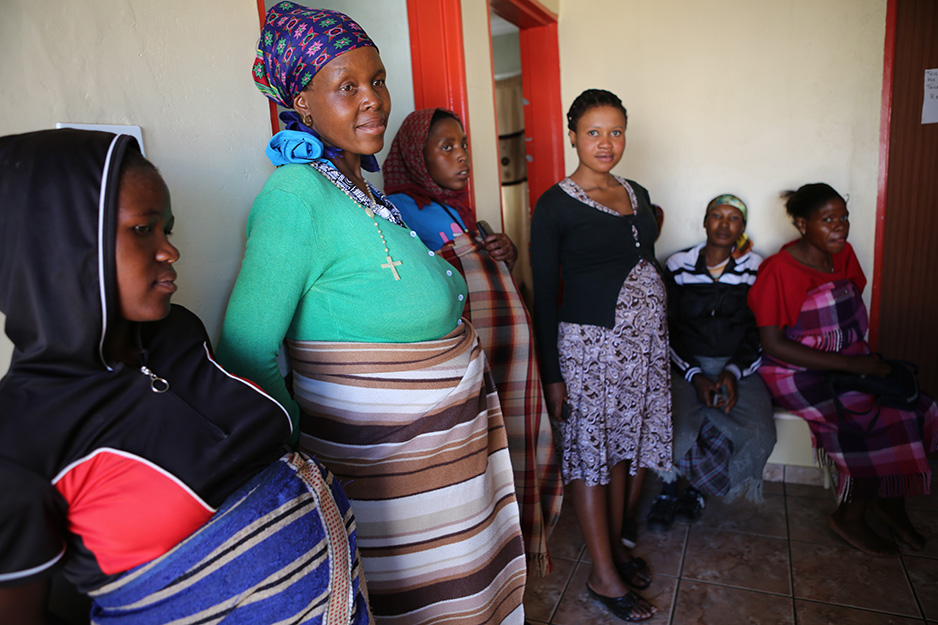
Did you know music has been used in child development and literacy to counter short concentration spans and improve memory and vocabulary? It has also been used in health campaigns to promote HIV/AIDS prevention messaging, encouraging community engagement and raising awareness.
This was revealed this Friday in Masrru during the Lesotho Alliance for Maternal Mental Health Launch.
‘Mateboho Refiloe Makote, founder of Love Maternity Lesotho, said the launch was a groundbreaking milestone for maternal health in Lesotho.
“And this is happening because the Community Health Interventions through Musical Engagement for Maternal Mental Health (CHIME) project joined hands,” Makote said.
CHIME is a four-year global research project that works towards improving the mental health and wellbeing of antenatal women in The Gambia, South Africa and Lesotho. It aims to generate evidence on how culturally embedded music-based interventions can be used to improve maternal mental health.
Dr Maama, Director Primary Health Care, speaking on behalf of the Ministry of Health, said mental health was a huge concern for Lesotho.
“We are facing high maternal mortality as well as neonatal mortality,” she said, adding that this has been a concern for the ministry, hence the launch of the project.
Dr Maama said before implementing the project, the ministry explored and dug more into Basotho indigenous practices, gathering evidence to make interventions evidence-based.
“Some of the things that we have been practising as Basotho, I think we’re just taking them for granted because we were saying, What can music do? So we are very grateful for this moment because as we address maternal health we are going to achieve good maternal health outcomes,” Dr Maamaasserted.
Dr Zulu, speaking on behalf of Dr Innocent Nwanjira, the World Health Organisation (WHO) representative for Lesotho, said many women experienced changes in their mental health during pregnancy and a year after birth, saying one in five women will experience mental health conditions during pregnancy and also one year after that birth.
“Pregnancy, birth, any parenthood may change and may be stressful because it causes change to the woman’s identity, physical health and economic situations,” Dr Zulu highlighted.
He stated that perinatal anxiety and depression in this period are also very common, affecting one in 10 women in high-income countries and one in five women in low and middle-income countries.
Dr Zulu said there were many gaps in the Lesotho health sector legal framework, policy, infrastructure, skilled workforce and the quality of service delivery, especially in the maternal mental health.
“However, he applauded the ministry for making strides in addressing the gaps through the development of the mental strategy, building of mental treatment units and all difficulties there are within hospitals and strategies to be implemented to change the course. Mental and child services are in a unique position to offer support for the women and their mental health,” he emphasised.
It was said that the CHIME project came at an opportune time and will surely be a game changer, calling the ministry and all partners to join hands to ensure the good mental health of mothers and their healthier lives and best development outcomes for children.
The project chapter in Lesotho aims to explore the role of traditional music in promoting maternal mental health since its strong traditions make it an ideal setting to explore the potential of music-based approaches to support maternal mental health.
It is funded by the National Institute for Health and Care Research (NIHR) Global Health Programme using UK international development funding from the UK government to support global health research.