



The SARS directive requiring temporary importation declarations for all SACU vehicles is not a modernisation measure. It is an act of unilateral overreach that contradicts the founding logic of regional integration and must be contested before it takes effect.
There is a certain administrative tidiness to the South African Revenue Service’s announcement that all foreign-registered motor vehicles, including those from SACU member states, must complete a temporary importation declaration when crossing into South Africa from 1 June 2026. SARS frames it as a modernisation measure, a correction of a long-standing operational gap now made feasible by new technology. The Travel Management System is ready. The Moabi app is available. The old excuse of logistical difficulty no longer holds. Time, the revenue authority implies, to bring SACU vehicles into line with everyone else.
This newspaper rejects that reasoning entirely.
The Southern African Customs Union is not a bureaucratic convenience. It is a foundational compact between five nations, built on the premise that economic integration requires the free movement not only of goods but of people and their means of transport. To impose a customs declaration requirement on the private vehicles of citizens travelling between member states is to treat integration as a slogan and a border post as a revenue gate. It is, in plain terms, the wrong direction.
To impose a customs declaration requirement on the private vehicles of SACU citizens is to treat integration as a slogan and a border post as a revenue gate.
Consider the practical reality for Lesotho. This country is entirely enclosed within South Africa. There is no overland route to any other nation that does not pass through South African territory. Every Mosotho who drives a vehicle, whether for work, medical care, commerce, or family, must cross into South Africa. The SARS directive does not inconvenience that person mildly. It inserts a formal customs process into what was, by design and by treaty spirit, a routine movement. The fact that SARS has built an app for this purpose does not make the requirement proportionate. It makes it more efficient at being wrong.
The legal grounding SARS cites, Section 15 of the Customs and Excise Act, is South African domestic legislation. The SACU Agreement of 2002, which governs relations between member states, establishes a common customs area and contemplates free movement of goods within it. SARS itself acknowledges, almost in passing, that the SACU Agreement does not exempt member states from South African domestic law on import controls. That framing is telling. SARS is choosing to lead with its domestic statute and to subordinate the regional compact. That is a legal reading the other four SACU governments should contest with urgency, not accept quietly.
SARS is choosing to lead with its domestic statute and to subordinate the regional compact. That is a legal reading the other four SACU governments should contest with urgency, not accept quietly.
Lesotho Tribune EditorialThe economic argument is equally troubling. Lesotho’s industrial base, its garment factories, its construction sector, its agricultural supply chains, depends on constant and low-friction movement of vehicles across the Maseru Bridge and the other shared crossings. Any additional declaration step, however digitised, introduces delay, compliance cost, and uncertainty. Small operators, the cross-border trader who drives a bakkie loaded with produce, the contractor who takes equipment into South Africa for a job, do not have customs agents on retainer. They will bear the cost of this requirement disproportionately, and many will simply be deterred. The growth in informal and small-scale cross-border trade that SACU is supposed to enable will be quietly strangled by a form.
One should also name the asymmetry plainly. This is a requirement imposed by the largest and most powerful SACU member on the citizens of the four smaller ones. South Africa does not face a reciprocal declaration requirement when its vehicles enter Lesotho. The burden flows in one direction only. Whatever the technical legal justification, the political signal sent to Maseru, Windhoek, Gaborone, and Mbabane is that South Africa will exercise its national legislative authority in ways that override the spirit of regional solidarity when it finds it convenient to do so.
The burden flows in one direction only. The political signal is that South Africa will exercise its authority in ways that override the spirit of regional solidarity.
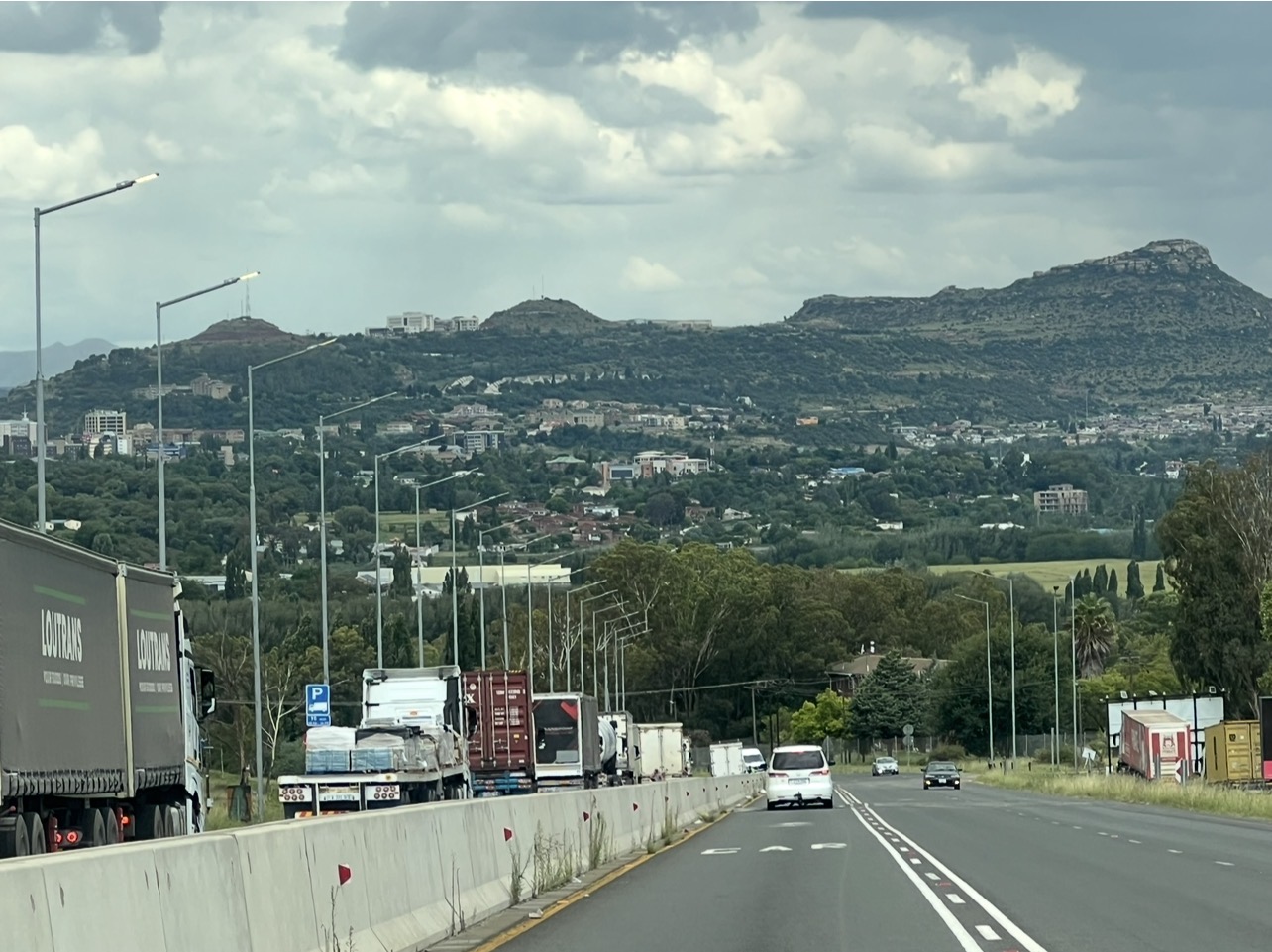
SARS argues that the TMS will reduce congestion and speed up border processing. This claim deserves scrutiny. Border congestion at Maseru Bridge, at Caledonspoort, at Ficksburg Bridge, is not caused by an absence of vehicle declarations. It is caused by infrastructure inadequate for the volume it handles, by staffing shortfalls, by manual secondary checks that technology has not replaced, and by the accumulated friction of years of underinvestment in shared border infrastructure. Adding a new mandatory pre-declaration step does not address any of those root causes. It adds a new layer of compliance onto a system that is already strained.
There is also the question of what this signals for the trajectory of SACU itself. The union has struggled for years to deepen integration beyond its customs revenue-sharing formula. The SARS directive, issued without any apparent consultation with SACU partner governments, is precisely the kind of unilateral action that erodes confidence in regional institutions. If South Africa can simply decide that the old exemption no longer suits it and enforce a domestic requirement on its partners’ citizens, the question that must be asked is what SACU membership actually guarantees.
This newspaper calls on the Government of Lesotho to raise a formal objection through the SACU Council of Ministers before 1 June. The objection should be grounded not in sentiment but in the text of the 2002 SACU Agreement and in the established principle that regional integration instruments take precedence over the domestic administrative preferences of individual member states. Lesotho should also seek the co-sponsorship of Botswana, Eswatini, and Namibia. A collective SACU response carries far greater legal and diplomatic weight than a bilateral complaint.
If South Africa wishes to modernise its customs systems, this newspaper has no objection. The TMS may well be a useful tool. But modernisation that imposes new burdens on the citizens of partner states, without consultation, without a clear basis in regional law, and without any mechanism for redress, is not modernisation. It is administrative overreach dressed in the language of efficiency.
They should not absorb it. And they should say so now.