



WASHINGTON’S SHIFT AND LESOTHO’S CONCERNS
In a sweeping foreign-policy move, U.S. President Donald Trump has directed the United States to withdraw from 66 international organisations, including key United Nations bodies and global governance frameworks that have shaped decades of post-war cooperation. The decision, formalised in a presidential memorandum on January 7, 2026, reflects a broader shift toward unilateralism and a reassertion of national sovereignty.
Among the most prominent international frameworks affected is the United Nations Framework Convention on Climate Change (UNFCCC) – the legal backbone of coordinated global climate action and the 2015 ParisAgreement – along with related climate, development, and scientific bodies. The U.S. has characterised its exits as necessary to protect domestic interests, citing that many of these organisations promote agendas it finds counter to U.S. priorities.
The move has provoked international concern, not least from officials in vulnerable regions who rely on these frameworks for technical support, disaster preparedness, and multilateral funding.
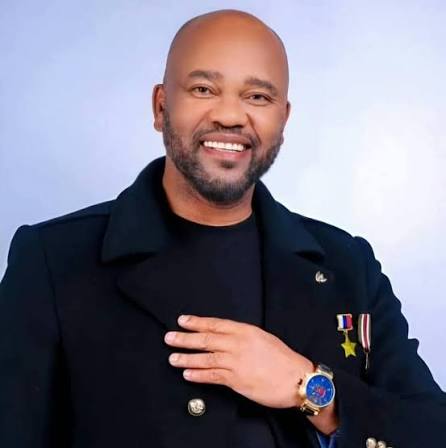
In Lesotho, the repercussions of these geopolitical shifts are already drawing political commentary. Hon. Machesetsa Mofomobe, leader of the Basotho National Party (BNP), spoke to Lesotho Tribune, pressing Prime Minister Sam Matekane to outline a comprehensive plan to mitigate the impact of anticipated closures or withdrawals of offices belonging to the affected organisations in Maseru.
“The cessation of U.S. aid in previous cycles,” Mofomobe noted, “demonstrated the fragility of relying on external support for essential income streams and socio-economic benefits. We must not wait until Basotho households and service delivery systems are under extreme duress before we act.” He warned that without mitigation and domestic investment strategies, many Basotho could face heightened economic pressures.
Mofomobe also referenced Lesotho’s national population census scheduled for later this year, cautioning that the withdrawal of support from bodies such as the United Nations Population Fund (UNFPA) threatens not only funding but the technical capacity to conduct accurate demographic assessments.
On climate change, Mofomobe offered a stark observation:
“When global mechanisms that support climate resilience dissolve, countries like ours – perched in fragile topographies with economies already stressed by drought, irregular rainfall patterns, and food insecurity – will be left without guidance or resources. Climate volatility is not a distant threat; it’s a present economic multiplier of hardship.”
GLOBAL RAMIFICATIONS AND LESOTHO’S POSITION
International analysts warn that the U.S. withdrawal from these 66 bodies – half of which are U.N. affiliated – threatens to erode decades of multilateral institutional architecture. Critics argue that such retreats weaken global cooperation on climate, health, gender equality, and economic development. Proponents within the Trump administration maintain the moves prioritise national sovereignty and fiscal restraint.
For Lesotho, which participates in regional development initiatives and depends on technical partnerships with international organisations, the challenge will be to redesign national frameworks of resilience and financing, in part through diversified partnerships beyond traditional bilateral supporters.
The 66 International Organisations From Which the United States Is Withdrawing
Non-United Nations Organisations (35):
1. 24/7 Carbon-Free Energy Compact
2. Colombo Plan Council
3. Commission for Environmental Cooperation
4. Education Cannot Wait
5. European Centre of Excellence for Countering Hybrid Threats
6. Forum of European National Highway Research Laboratories
7. Freedom Online Coalition
8. Global Community Engagement and Resilience Fund
9. Global Counterterrorism Forum
10. Global Forum on Cyber Expertise
11. Global Forum on Migration and Development
12. Inter-American Institute for Global Change Research
13. Intergovernmental Forum on Mining, Minerals, Metals, and Sustainable Development
14. Intergovernmental Panel on Climate Change
15. Intergovernmental Science-Policy Platform on Biodiversity and Ecosystem Services
16. International Centre for the Study of the Preservation and Restoration of Cultural Property
17. International Cotton Advisory Committee
18. International Development Law Organization
19. International Energy Forum
20. International Federation of Arts Councils and Culture Agencies
21. International Institute for Democracy and Electoral Assistance
22. International Institute for Justice and the Rule of Law
23. International Lead and Zinc Study Group
24. International Renewable Energy Agency
25. International Solar Alliance
26. International Tropical Timber Organization
27. International Union for Conservation of Nature
28. Pan American Institute of Geography and History
29. Partnership for Atlantic Cooperation
30. Regional Cooperation Agreement on Combatting Piracy and Armed Robbery against Ships in Asia
31. Regional Cooperation Council
32. Renewable Energy Policy Network for the 21st Century
33. Science and Technology Center in Ukraine
34. Secretariat of the Pacific Regional Environment Programme
35. Venice Commission of the Council of Europe
United Nations Organisations (31):
36. Department of Economic and Social Affairs
37. UN Economic and Social Council – Economic Commission for Africa
38. ECOSOC – Economic Commission for Latin America and the Caribbean
39. ECOSOC – Economic and Social Commission for Asia and the Pacific
40. ECOSOC – Economic and Social Commission for Western Asia
41. International Law Commission
42. International Residual Mechanism for Criminal Tribunals
43. International Trade Centre
44. Office of the Special Adviser on Africa
45. Office of the Special Representative of the Secretary-General for Children in Armed Conflict
46. Office of the Special Representative of the Secretary-General on Sexual Violence in Conflict
47. Office of the Special Representative of the Secretary-General on Violence Against Children
48. Peacebuilding Commission
49. Peacebuilding Fund
50. Permanent Forum on People of African Descent
51. UN Alliance of Civilizations
52. UN Collaborative Programme on Reducing Emissions from Deforestation and Forest Degradation in Developing Countries
53. UN Conference on Trade and Development
54. UN Democracy Fund
55. UN Energy
56. UN Entity for Gender Equality and the Empowerment of Women
57. UN Framework Convention on Climate Change
58. UN Human Settlements Programme
59. UN Institute for Training and Research
60. UN Oceans
61. UN Population Fund
62. UN Register of Conventional Arms