

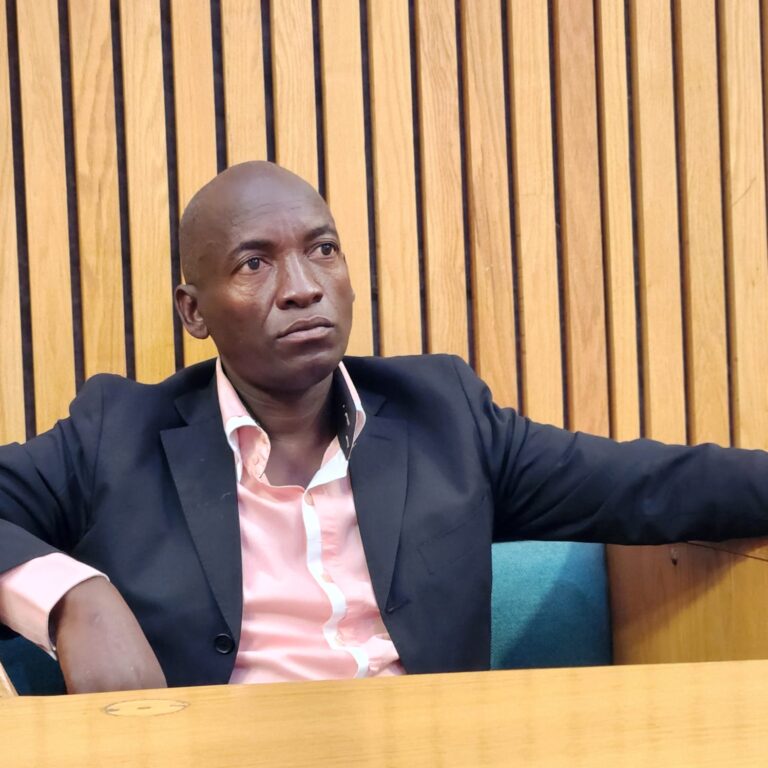
MASERU — The High Court has scheduled the continuation of cross-examination of state witness Sergeant Shaabe Thamae in the ongoing treason trial for 26 to 29 May 2026, after proceedings this week could not be concluded and the matter was postponed once more.
Thamae, whose testimony is central to the prosecution’s case, first took the stand in February 2025 before his cross-examination was halted when he fell ill. He returned briefly to the witness stand this week to continue giving evidence, but proceedings again could not be finalised, necessitating the fresh postponement.
The latest adjournment also follows a successful application by defence advocates Napo Mafaesa and Lepeli Molapo to defer the cross-examination of another state witness, Sergeant Kamoho Mahanetsa. The defence argued they required additional time to obtain an expert report deemed crucial to their case, and the court granted the request.
In his testimony, Thamae detailed events surrounding the alleged attacks of 29 and 30 August 2014 at the Police Headquarters in Maseru. He told the court that on the day in question he was on duty in the radio room alongside the late Sub-Inspector Mokheseng Ramahloko and Police Constable Mokete Litulo. He recounted how the situation rapidly escalated when armed members of the army allegedly stormed the premises, describing the moment Ramahloko was shot and sustained fatal injuries amid the chaos as officers attempted to respond to the unfolding attack.
Thamae also testified that he was later forced, under duress, to transport the body of the deceased to the mortuary. His account painted a picture of confusion and fear as police officers found themselves under siege during the operation.
The case has drawn significant public attention owing to the seniority of the individuals among the accused. Those standing trial include Lesotho Congress for Democracy leader and former Deputy Prime Minister Mothetjoa Metsing, Movement for Economic Change leader and current Minister of Health Selibe Mochoboroane, former Army Commander Lieutenant General Tlali Kamoli, and army members Litekanyo Nyakane, Motloheloa Ntsane and Leutsoa Motsieloa. All have pleaded not guilty.
The charges common to all accused include the murder of Sub-Inspector Ramahloko and the attempted murder of Letsekang Mothibeli, along with related alternative counts, as well as aggravated assault against Sergeant Mahanetsa, Lance Sergeant Thabiso Kopa, Lance Sergeant Thamae, Police Constable Litulo and Police Constable Mone. Specific charges of treason, the attempted murder of Police Constable Moeketsi and the assault of Sub-Inspector Joel are directed at Kamoli, Nyakane, Metsing and Mochoboroane. The prosecution contends that all offences were committed in furtherance of a shared common purpose, with the accused acting in concert with the late Tefo Hashatsi, Bulane Sechele, Tumo Lekhooa and others unknown to the state.
The defence team comprises Advocates Motiea Teele KC, Letuka Molati, Lepeli Molapo, Kabelo Letuka and Napo Mafaesa. The prosecution is led by Advocates Motene Rafoneke and Rethabile Setlojoane. The matter is presided over by Justice Maliepollo Makhetha.
When proceedings resume at the end of May, the cross-examination of Thamae is expected to be among the most consequential phases of the trial yet, as the defence seeks to challenge his account of the 2014 events while the prosecution works to reinforce its case.
Treason Trial Cross-Examination Pushed to May as Witness Returns Briefly to the Stand
Lesotho Validates New Voter Registration Strategy Ahead of 2027 Elections
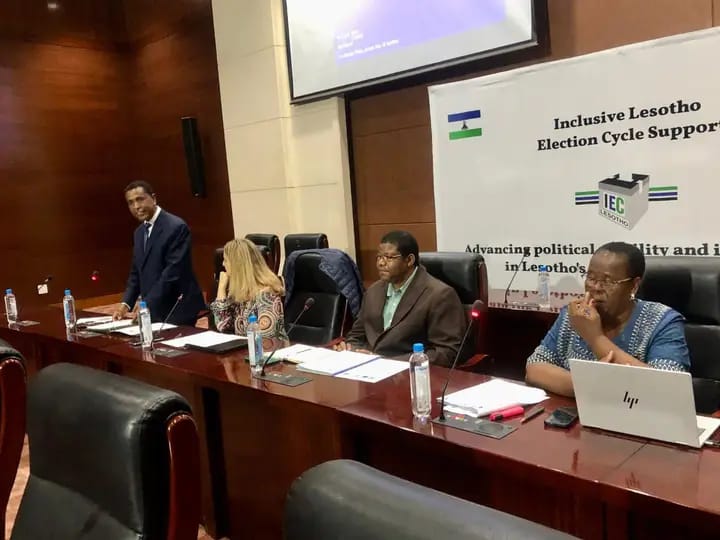
MASERU — The Independent Electoral Commission, in partnership with the United Nations Development Programme and the European Union, this week held a high-level validation meeting in Maseru to finalise a new national Voter Registration Strategy, marking a concrete step toward overhauling the country’s electoral systems ahead of the 2027/2028 general elections.
The meeting brought together stakeholders from government, civil society and international partners to formally endorse the strategy, which forms part of the Inclusive Lesotho Project, an M85 million initiative designed to modernise electoral processes and restore public confidence in the voter roll.
At the heart of the strategy is a plan to resolve long-standing problems with the existing voter roll, including the removal of deceased persons from the register and the integration of more accurate civil registry data. The strategy also charts a transition toward sustainable registration software and digital tools intended to give the IEC full ownership and security over voter data, reducing dependence on external systems.
The strategy places particular emphasis on lowering barriers for marginalised groups, with targeted outreach plans for youth, women and persons with disabilities. It also seeks to align Lesotho’s registration processes with the recommendations of the 2022 EU Election Observation Mission, which identified a range of electoral reforms the country was urged to implement before its next general election.
Officials framed the validation as a shift from planning to implementation, with attention now turning to how effectively the strategy is translated into practice in the period leading up to the election. The collaboration between the IEC, UNDP and EU is intended to signal a shared commitment to building a registration system in which every eligible citizen can participate with confidence.
Minister Mofosi requests M548 million for agricultural sector
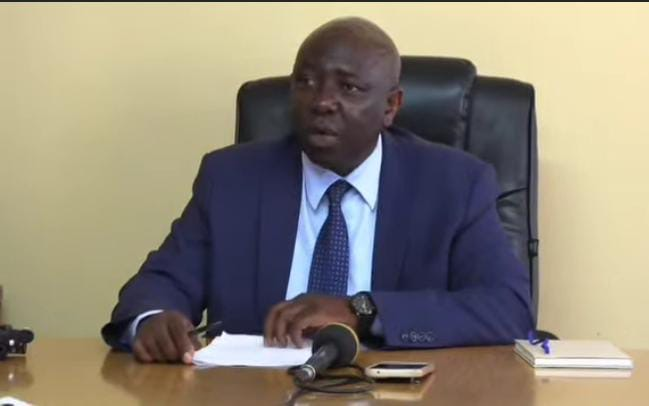
MASERU — Minister of Agriculture, Food Security and Nutrition Thabo Mofosi has appealed to the National Assembly for M548,935,673 to fund a sweeping set of initiatives aimed at transforming the country’s agricultural sector.
Presenting the ministry’s budget request to the National Assembly on Wednesday, Minister Mofosi outlined an ambitious agenda that includes boosting agricultural production, strengthening the wool and mohair value chain, enhancing food and nutrition security, and expanding market access for agricultural products. The ministry also intends to extend support to small and medium enterprises operating within the sector.
To achieve these goals, Mofosi detailed several key interventions. The ministry plans to transfer the sale of farming inputs to the private sector — a move expected to improve efficiency and widen farmer access to supplies. Infrastructure investment also features prominently in the plan, with new irrigation centres to be constructed in Leribe and Quthing, while existing facilities in Maseru will undergo rehabilitation.
The minister did not specify a timeline for the completion of these projects or indicate how the funds would be distributed across the various programmes.
Ministry of Finance, AfDB Launch Plan to Boost Lesotho’s Economy
MASERU
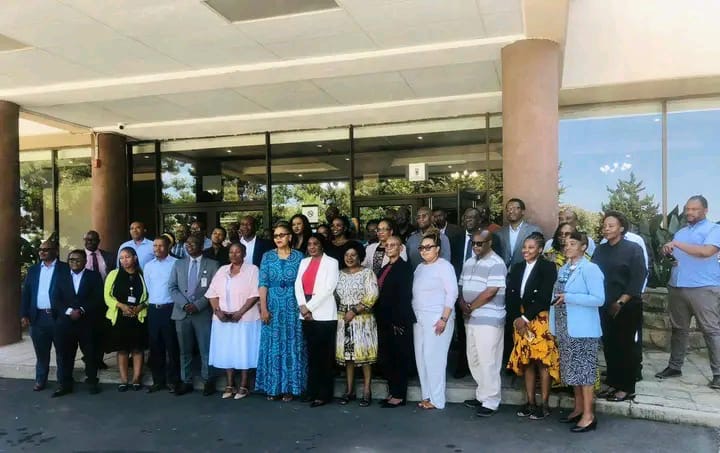
The Ministry of Finance and Development Planning, in partnership with the African Development Bank (AfDB), has implemented a new plan to support Lesotho’s economic growth. The Country Strategy Paper (CSP) outlines how the AfDB will provide technical and financial support to Lesotho from 2025 to 2030.
Mpotjoane, speaking at the event, said the CSP is a big opportunity for Lesotho to secure more support and grow its economy. He noted that the plan aligns with Lesotho’s own development goals, focusing on areas like ICT, water, energy and multi-sectoral projects.
Mpotjoane encouraged the private sector and other stakeholders to get involved and back the plan’s implementation. He spotlighted Lesotho’s rich resources, including diamonds and water, but stressed that these need to be used productively to benefit the country.
AfDB Deputy Director General, Moono Mupotola, said the bank has been working with Lesotho since 1973 and has provided 68 loans for projects in transport, water and agriculture. She announced that 49 million USD will be invested in projects related to ICT, water and energy during the CSP period.
Mupotola praised the CSP’s focus on sustainable infrastructure and improving public sector efficiency. She mentioned initiatives like the Lesotho Lowlands Water Supply, which has improved hygiene and sanitation for many Basotho people.
Central Bank of Lesotho Governor Dr Maluke Letete expressed concern about the impact of global geopolitical conflicts on Lesotho’s development efforts. He emphasised the need for solutions to these hurdles.
The CSP launch followed a workshop where participants reviewed progress, identified challenges and agreed on ways to improve project implementation.
In general, the CSP aims to unlock opportunities for Lesotho’s growth and development, with support from the AfDB and collaboration with local stakeholders.
South Africa imposes steep duties on steel imports to protect local industry
South Africa has moved decisively to shield its struggling steel sector, introducing steep anti-dumping duties on construction-grade structural steel imports. The new tariffs impose a 74.98% duty on Chinese steel and 20.32% on imports from Thailand, following a formal investigation confirming that these products were being sold into the local market at below fair value.
The probe, led by the International Trade Administration Commission (ITAC), found that imported structural steel was entering the Southern African Customs Union at artificially low prices, causing measurable harm to domestic producers.
The tariffs are not a minor policy adjustment. They are a response to what authorities describe as a severe market distortion. Imports from China and Thailand surged dramatically in recent years — in some cases rising nearly 19-fold — undercutting local producers by as much as 20%.
The timing is critical. South Africa’s steel industry was already under considerable strain before these tariffs were introduced. Weak domestic demand, high input costs, and infrastructure bottlenecks had combined with a flood of cheap imports to push the sector toward crisis. Imported steel now accounts for roughly 36% of domestic consumption, with China alone responsible for 73% of those imports.
The consequences have been tangible. Major producers, including ArcelorMittal South Africa, have been forced to scale back operations, with some facilities shutting down entirely as losses mounted.
The tariffs are, in effect, an attempt to buy time — to stabilise a sector central to construction and infrastructure development. But they also expose a deeper structural problem: South Africa’s steel industry is not only battling unfair foreign competition, it is also contending with internal weaknesses that tariffs alone cannot fix.
Whether protection will translate into genuine recovery, or simply delay an inevitable restructuring, remains the defining question for the sector.
Senior US counterterrorism official resigns to protest Iran war

“I cannot in good conscience support the ongoing war in Iran,” Joseph Kent, the director of the National Counterterrorism Center, said in his resignation letter to President Donald Trump.
Kent — a former member of the Green Beret special forces who served multiple combat tours — said “Iran posed no imminent threat to our nation, and it is clear that we started this war due to pressure from Israel and its powerful American lobby.”
Kent is the first senior US official to resign from the Trump administration to protest the war against Iran.
“Until June of 2025, you understood that the wars in the Middle East were a trap that robbed America of the precious lives of our patriots and depleted the wealth and prosperity of our nation,” Kent said in his letter to Trump.
“Early in this administration, high-ranking Israeli officials and influential members of the American media deployed a misinformation campaign that wholly undermined your America First platform and sowed pro-war sentiments to encourage a war with Iran,” he said.
“This echo chamber was used to deceive you into believing that Iran posed an imminent threat to the United States, and that should you strike now, there was a clear path to a swift victory,” he said.
“This was a lie and is the same tactic the Israelis used to draw us into the disastrous Iraq war that cost our nation the lives of thousands of our best men and women,” Kent said.
“I cannot support sending the next generation off to fight and die in a war that serves no benefit to the American people nor justifies the cost of American lives,” he added.
© 2026 AFP
M3.49 Billion Missing on Paper as Audit Tears Into State Accounts
MASERU — The most explosive number in Lesotho’s latest public audit is not a budget allocation, not a debt issue, and not even the admitted fraud case. It is a discrepancy. A staggering M3.49 billion gap sits between two parts of the same set of government financial statements.
The Auditor-General’s report on the Consolidated Financial Statements for the year ended 31 March 2023 delivers an adverse audit opinion, the most severe audit judgement possible. In simple terms, it means the financial statements do not fairly present the financial position of the Government of Lesotho.
The audit found that the Consolidated Statement of Cash Receipts and Payments shows that government had a cash balance of M5.71 billion at the end of the financial year. Yet Note 15 in the same financial statements reports a cash balance of only M2.22 billion. The difference between these figures is M3.49 billion.
This contradiction lies at the centre of the Auditor-General’s findings and is one of the key reasons the national accounts were judged unreliable.
“Because of the significance of the matters described… the financial statements do not present fairly the financial position of the Government.” — Auditor-General
The report also reveals inconsistencies in how changes in government cash were reported during the year. Note 15 indicates that cash fell by about M1.61 billion between March 2022 and March 2023. However, the Consolidated Statement of Cash Receipts and Payments reports a decline of only M597 million. The difference between those two figures amounts to roughly M1.01 billion.
The discrepancy suggests that even the basic question of how much government cash increased or decreased during the year cannot be clearly established from the financial statements themselves.
Key figures highlighted in the audit report are summarised below:
| Issue | Amount | Explanation |
| Cash balance discrepancy | M3.49 billion | Difference between M5.71 billion reported cash and M2.22 billion recorded in supporting notes |
| Difference in reported cash decrease | M1.01 billion | Cash decline reported differently in financial statements and notes |
| Problematic opening balance adjustments | M3.476 billion | Adjustments identified during reconciliation of historic balances |
| Overstated cashbook balances | M1.402 billion | Historic cashbook balances found to be overstated |
| IMF PRGF account balance | M973 million | Account later determined to belong to the Central Bank rather than government |
| Blocked Treasury Bills account | M575 million | Balance included in cashbook although transactions were not recorded in government books |
| Domestic debt payments outside IFMIS | M524 million | Debt transactions processed by the Central Bank outside the accounting system |
| Fraudulent payments not accounted for | M8 million | Fraudulent payments awaiting accounting treatment |
| Fraud detected in Consolidated Fund | Over M50 million | Fraud case uncovered during reconciliation of bank accounts |
| Funds recovered from South Africa | M18 million | Money recovered following fraud investigations |
The audit suggests that the billions appearing in discrepancies do not necessarily represent a single missing transaction but rather a pattern of unresolved reconciliation issues accumulated over several years.
Treasury itself acknowledges that a reconciliation exercise uncovered multiple large historic distortions affecting opening balances. These include overstated balances in the government cashbook, accounts later found not to belong to government, and debt payments processed outside the main accounting system.
“These differences compromise the integrity of the consolidated financial statements.” — Auditor-General’s report
The report also indicates that government maintained nearly 300 bank accounts across commercial banks, the central bank and mobile network operators. A large number of accounts can complicate reconciliation and make financial oversight more difficult.
Compounding the concerns, the Accountant General disclosed that more than M50 million was fraudulently taken from the Consolidated Fund during the financial year. Investigations resulted in multiple arrests and approximately M18 million has been recovered.
In addition to the cash discrepancies, the audit identified weaknesses in the reporting of public debt and loan guarantees. Certain liabilities lacked supporting evidence while foreign debt repayments were overstated by more than M131 million.
What an ‘Adverse Audit Opinion’ Means
An adverse audit opinion is the most serious conclusion an auditor can issue on financial statements.
It means the auditor believes the financial statements are materially incorrect and do not accurately reflect the organisation’s financial position.
For a national government, this implies that the reported figures on revenue, expenditure, cash balances or debt cannot be relied upon with confidence.
In practical terms, it signals that major accounting errors, unsupported balances or inconsistencies exist in the financial records.
Adverse opinions are rare and usually indicate deep structural problems in financial reporting and financial controls.
Minister’s Son Implicated in Alleged People-Smuggling Incident at Maseru Bridge

MASERU – A potential immigration scandal is brewing after information received by Lesotho Tribunesuggested that individuals linked to a cabinet minister’s family may have been involved in an incident in which foreign nationals allegedly entered Lesotho without proper travel documentation.
According to information reaching this publication, the incident is said to have occurred on the evening of 11 October 2025 at the Maseru Bridge Border Post, where a luxury vehicle bearing South African registration plates reportedly entered the country through a VIP access lane rather than the standard immigration channel.
The alleged entry route has raised serious questions because the VIP lane is not ordinarily used for routine entry into the country and is typically restricted.
Sources familiar with the matter claim the vehicle carried several occupants believed to be South African nationals, and that some of the individuals may not have been in possession of passports or other travel documents at the time of entry.
Under Lesotho’s immigration procedures, all travellers entering the country are required to present valid travel documentation and undergo inspection by immigration officials.
However, the information received by Lesotho Tribune suggests that when immigration officials attempted to conduct the necessary checks, pressure may have been applied to allow the vehicle to pass through without completing the normal immigration process.
The vehicle involved in the alleged incident is said to have been associated with individuals connected to businessman Kenny Lephema, the son of cabinet minister Lebona Lephema.
Lesotho Tribune has contacted Mr Lephema for comment regarding the allegations. He is yet to respond to a series of questions.
Police Role Raises Further Questions
The incident has also raised concerns about the possible involvement of members of the Lesotho Mounted Police Service (LMPS).
Sources claim that while immigration officials were attempting to enforce the required procedures, a police officer allegedly intervened and insisted that the vehicle be allowed to proceed.
If confirmed, such intervention could amount to interference with immigration enforcement at a national border point, an issue that governance experts say could undermine the integrity of border control systems.
The LMPS has been asked whether any officer stationed at the Maseru Bridge border post that evening intervened in immigration procedures.
Police spokesperson Superintendent Thabo Mohai said the Lesotho Mounted Police Service is not aware of any officer instructing immigration officials to allow individuals into the country without proper procedures.
Mohai said the information currently available to the police suggests that the incident may have involved a request to bypass a long queue at the border.
“What we know is that there was an incident where the queue was long and someone contacted the police requesting to be allowed to pass because of the queue,” Mohai said.
He stressed that the role of the police at border posts is primarily related to security and crime prevention, and officers are not authorised to interfere with immigration duties.
“Under no circumstances should police interfere with immigration procedures. Our role is security and crime prevention, although we work together with other agencies,” he said.
Mohai added that management reprimanded the officer involved the following day after the incident came to the attention of police leadership.
“The officer was reprimanded by management the following day. Police officers are not supposed to intervene in duties that fall outside police responsibilities,” Mohai said.
Immigration Procedures Under Scrutiny
The alleged incident has placed a spotlight on how immigration procedures are enforced at Lesotho’s busiest border crossing.
Border posts serve as the primary mechanism for ensuring that travellers entering the country comply with immigration laws and that proper records are maintained of cross-border movement.
Allowing individuals to enter without documentation, if proven, would represent a serious breach of border control regulations.
The Ministry of Home Affairs, which oversees immigration services, has been asked whether it is aware of the alleged incident and whether an internal investigation has been initiated. No response was provided.
Questions of Equality Before the Law
The allegations have also sparked broader questions about whether politically connected individuals may receive preferential treatment at border posts.
Ordinary travellers entering Lesotho are routinely required to present passports, undergo inspection, and have their movements formally recorded.
If it is confirmed that individuals were allowed to bypass those procedures due to personal connections or influence, the incident could raise serious concerns about unequal enforcement of immigration laws.
Investigation Continues
Lesotho Tribune will continue to monitor developments in the matter and publish additional information once responses are received from the parties involved.
Development Without Justice: What Manako Lethakha Reveals About Gender Equality in Lesotho

Today, the 10th of March 2026, marks exactly one year since judgment was delivered in ‘Manako Lethakha & Ors v The Lesotho Highlands Water Commission & Ors was read to the parties. The case arose from a constitutional challenge brought by three rural women affected by Phase II of the Lesotho Highlands Water Projectone of the largest infrastructure and development initiatives in Southern Africa. At its core, the litigation asked a deceptively simple constitutional question: whether a policy that appears neutral on paper can nonetheless produce discriminatory outcomes when applied within deeply unequal social realities.
The applicants asked the High Court to confront the lived consequences of development policy on women whose land, livelihoods, and social standing are shaped by long-standing customary and patriarchal structures. The court was therefore called upon to determine whether the LHWP Phase II Compensation Policy, particularly its reliance on the concept of the “head of household,” violated constitutional guarantees of equality and protection of property.
This anniversary arrives at a critical moment when the global community is itself reflecting on the unfinished struggle for gender justice. Just two days ago, on the 8th March, the world commemorated International Women’s Day under the theme “Rights. Justice. Action. For All Women and Girls.” The theme is not merely celebratory; it is a call to dismantle the barriers that continue to obstruct equal justice for women and girls. These barriers include discriminatory laws, weak or poorly implemented legal protections, and entrenched social norms that quietly but persistently erode women’s rights.
The global conversation continues this week as governments, civil society organisations, communities and institutions convene at the 70th Session of the Commission on the Status of Women (CSW70).Among the central questions before the international community is whether the world is prepared to move beyond rhetoric and ensure that women and girls enjoy genuine equality before the law, or allow injustice to persist with impunity. Put differently, the moment calls for reflection on whether legal systems are capable of deliveringjustice in practice rather than merely proclaiming it in principle.
It is precisely in this broader spirit that Lesotho must also pause and reflect. Anniversaries of landmark cases are not simply symbolic milestones. They provide an opportunity to examine what our courts have done, what they have failed to do, and what their decisions reveal about the trajectory of constitutional justice in the country. One year after Manako Lethakha, the question is not simply whether the court resolved a dispute about a compensation policy. The deeper question is what the judgment tells us about how our legal system understands
To appreciate the significance of the case, it is necessary to situate it within the broader structure of Lesotho’s legal system. Lesotho operates under a plural legal framework in which Roman-Dutch common law/ the received law inherited through colonial administration law operates alongside Basotho customary law.While this dual system reflects the country’s legal history and cultural traditions, it has also generated profound enduring tensions in the protection and realisation of women’s rights. Customary law, particularly as applied in matters relating to marriage, property, land allocation, and inheritance, has long been criticised for reinforcing patriarchal authority and the subordinate legal status of women. Women were historically treated as legal minors within marriage, excluded from meaningful control over property, and frequently dependent on male relatives for access to land and economic resources.
Recognising these structural inequalities, the early 2000s marked an important period of gender law reform in Lesotho. A series of legislative interventions sought to dismantle the legal disabilities historically imposed on women and align the country’s legal framework with constitutional guarantees of equality and international human rights commitments. Among the most transformative reforms was the Legal Capacity of Married Persons Act 2006, which abolished the marital power historically exercised by husbands over their wives in civil marriages. The Act grantsmarried women full legal capacity to enter contracts, administer property, and participate in legal proceedings without the consent of their husbands. In doing so, it dismantles a doctrine that had effectively rendered married women perpetual legal minors.
Subsequent reforms followed in related areas. The Land Act 2010introduced measures designed to strengthen women’s land rights by allowing women to hold and register land in their own names and encouraging joint titling within marriage. More recently, the adoption of the Counter Domestic Violence Act 2022 has sought to strengthen legal protection for survivors of domestic abuse, while the Administration of Estates and Inheritance Act 2024 has addressed discriminatory practices in succession and inheritance that historically disadvantaged widows and daughters. Parallel efforts to harmonise laws governing marriage, property, and inheritance have also sought to reduce the inconsistencies produced by the coexistence of statutory and customary legal systems.
At the constitutional level, further steps have been taken to strengthen women’s participation in public life. Recent constitutional reforms introducing affirmative action measures aim to address the persistent underrepresentation of women in decision-making institutions and promote greater gender balance in political leadership.
Taken together, these reforms demonstrate that Lesotho has not been indifferent to the demands of gender equality. Over the past two decades, the country has made notable efforts to align its legal framework with modern principles of equality and international human rights standards, including through the ratification of key regional and international instruments such as the Convention on the Elimination of All Forms of Discrimination against Women, the Protocol to the African Charter on Human and Peoples’ Rights on the Rights of Women in Africa, and the African Charter on Human and Peoples’ Rights.
However, the existence of progressive legislation does not automatically translate into substantive equality in practice. Making women’s rights real requires far more than the enactment of legal reforms. The translation of formal equality before the law into equal outcomes is neither automatic nor guaranteed. Even where gender-equal laws exist, their impact may be undermined by entrenched inequalities, discriminatory social norms, and harmful customary practices that continue to structure everyday life.
Moreover, patterns of economic development themselves can reproduce or deepen gender inequalities. Large-scale development initiatives, land allocation systems, and compensation frameworks often operate through institutional arrangements that assume male authority within households or communities. In such contexts, policies that appear neutral on paper may still produce outcomes that systematically disadvantage women. It was precisely within this intersection between legal reform, customary practice, and development policy that the dispute in Manako Lethakha emerged.
The case was brought before the Constitutional Division of the High Court by three women from Mokhotlong, a district directly affected by the implementation of Phase II of the Lesotho Highlands Water Project. The applicants challenged the legality of the LHWP Phase II Compensation Policy (2016), arguing that its design and implementation produced discriminatory consequences for married women.
The dispute centred on the policy’s requirement that compensation payments for affected land and assets be disbursed to the “head of household.” In practice, this designation frequently corresponded with the husband, even in circumstances where land was jointly owned or where both spouses had participated in the compensation process. The applicants argued that although they had co-signed compensation documentation relating to their land and property, they were ultimately excluded from accessing the compensation funds, which were paid directly to their husbands. As a result, they were deprived of meaningful control over compensation linked to property in which they had a legitimate legal interest.
On this basis, the applicants mounted a constitutional challenge against the policy. They argued that the designation of husbands as heads of households for purposes of compensation disbursement disproportionately affected married women and was inconsistent with statutory reforms such as the Legal Capacity of Married Persons Act 2006 and the Land Act 2010, both of which recognise the equal legal capacity and property rights of spouses. They further argued that the compensation framework exacerbated gender inequality by systematically privileging male authority within the household and marginalising women economically.
The applicants also contended that the policy violated the Constitution of Lesotho, particularly Section 18, which guarantees freedom from discrimination, and Section 17, which protects individuals from the arbitrary deprivation of property without adequate compensation.
The High Court ultimately dismissed the constitutional challenge. The majority concluded that the Compensation Policy was formally gender-neutral and therefore consistent with the Constitution and relevant statutes. In the court’s view, the applicants had failed to demonstrate that the policy itself discriminated against women or authorised the arbitrary seizure of property. Although the court acknowledged that difficulties might arise in the implementation of the policy, it held that such issues fell outside the scope of a constitutional challenge to the policy itself
A separate opinion reached the same outcome through a different reasoning, emphasising the principle of constitutional avoidance and suggesting that alternative remedies such as proceedings before the Land Court or civil claims, could address the applicants’ grievances.
However, the factual record reveals a more complex story than the one reflected in the judgment.
The applicants did not passively accept the compensation arrangements imposed upon them. On the contrary, the record demonstrates that some of the women raised concerns during the compensation process itself and requested alternative arrangements, including the possibility of receiving their share of the compensation separately.
One applicant explained that she had been estranged from her husband for several years and specifically raised the issue of separate compensation with officials administering the process. Despite this, the officials insisted that compensation would proceed through the husband’s account in accordance with the “head of household” arrangement. The applicant ultimately agreed to co-sign the documentation only after being assured that she would receive her share of the compensation.
In practice, however, the compensation was deposited directly into the husband’s account. While she was able to obtain a portion of the first payment after intervention from a family member, the subsequent compensation payments were never shared with her. The economic value associated with property in which she held a lawful interest was therefore effectively placed beyond her control.
These facts are significant because they contradict the suggestion that the applicants’ grievances arose merely from private marital disputes. The women did not discover after the fact that their husbands controlled the funds. Rather, they warned officials in advance about the risks associated with directing compensation exclusively to their husbands, particularly where marital relationships were already strained.
Despite these warnings, the compensation process proceeded in a manner that placed full financial control of the funds in the hands of the husbands. The difficulty with the reasoning adopted in ManakoLethakha is that it rests on a narrow conception of equality one that looks only at whether a rule is neutral in its wording, rather than whether it produces unequal outcomes in practice. By focusing almost exclusively on the formal neutrality of the Compensation Policy, the court effectively insulated the policy from meaningful constitutional scrutiny.
However, constitutional equality cannot be reduced to a purely textual inquiry. A rule may appear neutral while still reinforcing existing hierarchies. This is particularly true in contexts where policies operate within deeply gendered social structures, such as rural land ownership, household authority, and economic decision-making.
In such contexts, a policy that channels compensation through the “head of household” cannot be assessed in the abstract. The concept of the head of household is not socially neutral. In many rural communities in Lesotho, it continues to be understood through a patriarchal lens, where men are presumed to be the primary decision-makers and economic controllers within the family.
A policy that directs compensation through this structure inevitably interacts with those underlying norms.
From the perspective of substantive equality, public authorities administering compensation schemes cannot ignore the predictable consequences of their decisions within unequal social contexts. Where women explicitly express concern that directing compensation to a spouse may deprive them of their lawful share, a gender-sensitive administration of the policy would require safeguards ensuring that both spouses have meaningful access to compensation.
Instead, the approach adopted effectively transferred the economic value of jointly owned property into financial arrangements controlled exclusively by men.
The majority judgment nevertheless characterised the resulting harm as a private dispute between spouses, suggesting that the applicants’ difficulties arose because they were “married to delinquents” who misused the funds. Such reasoning overlooks a fundamental point: the state cannot design or administer compensation mechanisms that foreseeably expose women to economic exclusion, and then disclaim responsibility when that exclusion materialises.
Where a policy operates within entrenched patriarchal structures, formal neutrality alone is insufficient. Substantive equality requires courts to interrogate how institutional practices interact with existing social hierarchies and whether those practices inadvertently reinforce them. By failing to engage meaningfully with this reality, the judgment risks normalising a system in which women’s legally recognised property rights can be effectively neutralised through administrative practices that concentrate financial control in the hands of men.
What, then, should be taken from Manako Lethakha one year later?
The first lesson is that legal reform alone is not enough. Lesotho has made significant strides in reforming discriminatory laws and recognising women’s rights. However, the promise of those reforms will remain incomplete unless institutions ensure that equality is realised in practice. This is where the courts play a crucial role. Courts are not merely interpreters of statutory language; they are guardians of the Constitution’s transformative vision. When disputes reveal that administrative practices undermine the spirit of equality laws, courts must be willing to examine those practices critically.
International Women’s Day this year called for “Rights. Justice. Action.” The message embedded in that theme is clear: rights proclaimed on paper must translate into justice in practice.
One year after Manako Lethakha, Lesotho has an opportunity to reflect on what equality before the law truly requires. The Constitution promises equality to all Basotho. The challenge before our courts, policymakers, and development institutions is to ensure that this promise is not confined to statutes and judgments, butbecomes a reality that women from urban centres to the remote highlands of Mokhotlong can genuinely experience in their daily lives.