Mohahlaula Airlines
Wednesday, July 22, 2026
Home Blog Page 22

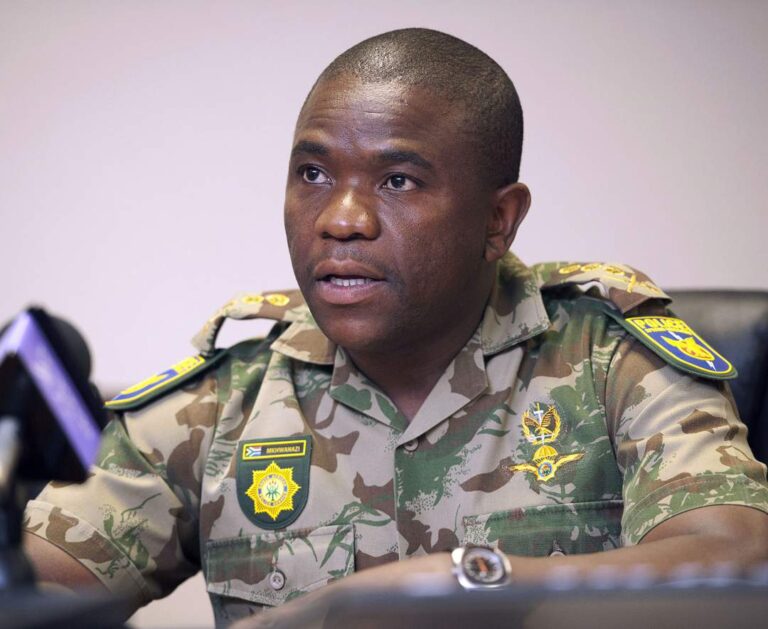
Ndlozi Draws Line, Backs Mkhwanazi After Malema Remarks

0

A sharp political divide has emerged around KwaZulu-Natal Police Commissioner Nhlanhla Mkhwanazi, after Economic Freedom Fighters (EFF) leader Julius Malema publicly dismissed the general’s claims, prompting a forceful response on X, from former EFF spokesperson Mbuyiseni Ndlozi.

Speaking at a voter registration campaign in Johannesburg on Saturday, Malema criticised Mkhwanazi and rejected allegations linking him to internal police disputes and broader corruption claims.

“He must never think he can blackmail or threaten anyone. We are not scared of policemen,” Malema said, urging supporters not to be “shaken by nonsense.”

Malema further accused Mkhwanazi of dragging the EFF into internal conflicts within the South African Police Service (SAPS), particularly disputes involving Crime Intelligence leadership.

“Mkhwanazi is fighting General Khan… let him fight Khan… and leave the EFF out of their nonsense,” he said.

The remarks come amid heightened national scrutiny following allegations by Mkhwanazi that organised crime networks have infiltrated senior levels of the police and political leadership. These claims are currently under examination through the Madlanga Commission, a judicial inquiry probing corruption and political interference in the criminal justice system.

Ndlozi said society must defend itself.

In a strongly worded X post, Ndlozi pushed back against Malema’s framing, portraying Mkhwanazi as a figure confronting systemic corruption rather than engaging in personal battles.

“Hands off Gen. Mkhwanazi! A society that doesn’t protect whistleblowers is doomed to become a mafia state,” Ndlozi wrote.

He warned that reducing the situation to a “personality fight” risks undermining what he described as a broader struggle against entrenched criminal networks within the state.

Ndlozi argued that narratives portraying the dispute as factional infighting within SAPS serve to “neutralise the correct momentum” against senior officials allegedly complicit in organised crime.

At the heart of the dispute are two competing interpretations. Malema’s position is that the issue is being personalised and politicised, with Mkhwanazi allegedly dragging political actors into internal police disputes. Ndlozi’s position is that the matter reflects a systemic crisis, where elements of the state are allegedly captured by organised criminal networks.

This tension reflects broader divisions in South Africa’s political landscape, where allegations of corruption within law enforcement are not new, but rarely aired so openly by senior officials.

Mkhwanazi has previously testified that elements within the justice system risk being compromised by criminal syndicates, triggering national debate and multiple investigations.

The clash has raised deeper questions about public confidence in institutions. If Mkhwanazi’s claims are accurate, they suggest serious institutional capture. If exaggerated or politicised, they risk further eroding trust in law enforcement.

Ndlozi framed the moment in stark terms, warning that failure to confront such allegations could lead to a mafia state ruled by men with guns.

RFP’s Maretlane Asks Parliament: What Happened to the M400 Million for Youth Businesses?

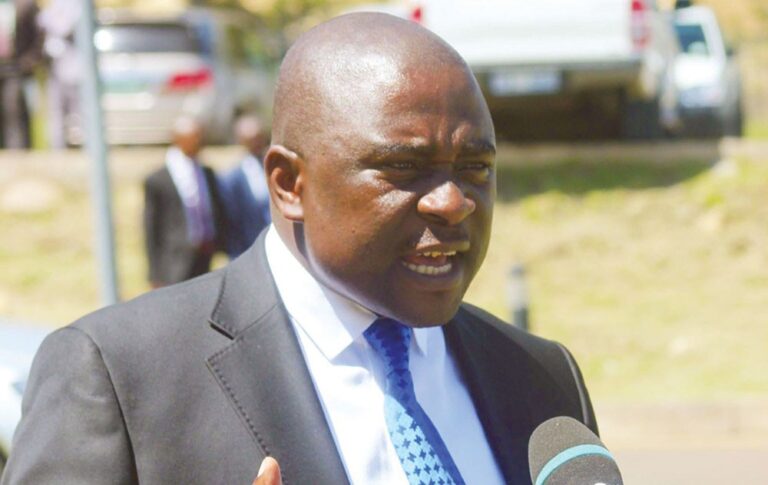
MASERU — Pressure is mounting on the government to account for a widely publicised M400 million facility said to be earmarked for youth businesses, after Revolution for Prosperity (RFP) Member of Parliament Thabo Maretlane demanded clarity on its whereabouts in Parliament.

Maretlane’s intervention has reignited a debate that Lesotho Tribune has previously examined in detail, raising fundamental questions about whether the fund, as presented to the public, ever truly existed.

Maretlane challenged the government to explain what has become of the M400 million, which had been communicated as a targeted intervention to unlock financing for young entrepreneurs.

A Fund That May Not Exist

Prior reporting by this publication paints a very different picture from the one initially presented to Basotho.

Investigations by Lesotho Tribune established that the so-called M400 million youth fund is not a standalone pool of capital accessible to young entrepreneurs. What exists instead is a partial credit guarantee scheme, a financial instrument that operates very differently from what was implied in public messaging.

Rather than the government directly disbursing funds to youth-owned businesses, the scheme works by guaranteeing a portion of loans issued by commercial banks, thereby reducing the risk borne by lenders. This distinction is critical. Under a credit guarantee model, beneficiaries must still qualify for a bank loan, submit a business plan, meet standard lending criteria, and repay the loan in full. The government, in essence, does not provide cash. It acts as a backstop in the event of default.

Repackaging Old Instruments?

Evidence suggests this mechanism is not new. Lesotho has operated versions of a Partial Credit Guarantee Fund for over a decade, aimed at addressing the persistent challenge of collateral requirements for small businesses. More recent iterations have been scaled up significantly, with government-backed guarantees reportedly reaching between M350 million and M400 million, channelled through financial institutions to support small and medium enterprises.

This raises a troubling possibility: that an existing financial instrument was rebranded or communicated in a way that suggested the creation of a new, dedicated youth fund, when in reality no such fund exists in the conventional sense.

Parliament Demands Clarity

Maretlane’s parliamentary question strikes at the heart of transparency and public accountability. If the M400 million was never a direct financing facility, several questions follow. Why was it presented as a fund specifically earmarked for youth businesses? How many young entrepreneurs have actually accessed financing through the scheme? What proportion of the guaranteed lending has reached youth-owned enterprises? And is the government deliberately conflating guarantees with actual disbursed funding?

These are not merely technical questions. They go to the core of how economic policy is communicated, and whether Basotho are being misled about the opportunities available to them.

The Illusion of Access

For many young Basotho, access to finance remains one of the most significant barriers to entrepreneurship. The announcement of a M400 million fund created a powerful perception: that capital was readily available, that youth empowerment was a genuine priority, and that government was shifting its support toward enterprise development.

But if access still depends on conventional bank lending requirements, the reality may be far more restrictive than the promise. Credit guarantee schemes, while useful, do not eliminate risk for borrowers. They redistribute part of the risk between banks and the state. For entrepreneurs without collateral, stable income or a credit history, the barrier to entry often remains unchanged.

A Question of Political Messaging

The controversy now unfolding reflects a broader problem in Lesotho’s policy environment: the gap between policy instruments and political messaging. Announcing a M400 million youth fund carries significant political weight. It signals ambition, commitment and responsiveness to youth unemployment. But if that announcement rests on a technical reinterpretation of an existing facility, it risks eroding public trust.

Maretlane’s intervention may therefore prove to be more than a routine parliamentary query. It could compel the government to clarify the true nature of the facility, provide data on beneficiaries, and reconcile its public statements with actual policy design.

The Bigger Picture

What is ultimately at stake is not just M400 million. It is the credibility of economic policy communication in Lesotho. When financial instruments are repackaged without clear explanation, the result is a cycle of inflated expectations, limited real access and growing public frustration.

For a country grappling with youth unemployment and sluggish private sector growth, the gap between promise and reality is not merely inconvenient. It is economically dangerous.

As Parliament awaits answers, one thing is clear: the question is no longer just where the money is. It is whether it was ever there in the first place.​​​​​​​​​

Nyakane and Hashatsi Were Furious When Told of Ramahloko Shooting, Court Hears

MASERU — The High Court this week heard that Captain Litekanyo Nyakane and the late Captain Tefo Hashatsi reacted with fury when informed that Sub-Inspector Mokheseng Ramahloko had been shot during the August 2014 attack on the Police Headquarters in Maseru, with the defence suggesting that both men had given explicit instructions against the use of violence.

The revelations emerged during ongoing cross-examination of Sergeant Shaabe Thamae, a state witness in the high-profile treason trial involving prominent political figures and senior military officers.

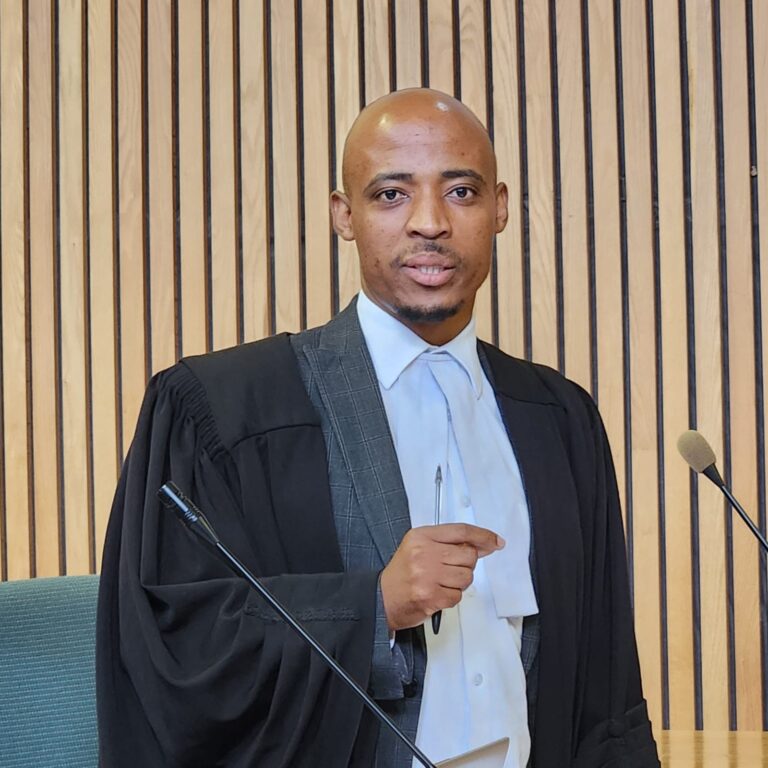
Through Advocate Kabelo Letuka, counsel for Nyakane, the court was told that Nyakane was present at the Police Headquarters when the attack unfolded. According to the defence version put to the witness, Nyakane became visibly furious upon learning that Ramahloko had been shot, questioning why lethal force had been used despite his earlier instructions that confrontation should be avoided. Letuka suggested to the witness that Nyakane had explicitly told members of the army not to engage in any violent confrontation, but that he was later informed by other soldiers that the deceased had been “fighting,” which allegedly led to him being shot.

The defence further indicated that Nyakane was shown a pistol at the scene, which he was told belonged to Ramahloko. Following the shooting, he is said to have instructed soldiers to remove the injured officer from the building so that he could be rushed to hospital.

The court also heard that Nyakane contacted Hashatsi by telephone to inform him of the shooting. Hashatsi, the defence submitted, reacted angrily and questioned how such an incident could have occurred when clear instructions had been issued. Shortly after the call, Hashatsi reportedly proceeded to the Police Headquarters accompanied by other army personnel, and upon observing that several police officers had sustained injuries, directed that they be transported to hospital for medical treatment.

Sergeant Thamae returned to the witness stand this week to conclude testimony that had been interrupted last year due to illness. His return follows a successful application by the defence to defer the cross-examination of another state witness, Sergeant Kamoho Mahanetsa. The application, brought by Advocates Napo Mafaesa and Lepeli Molapo, sought time to secure an expert report deemed necessary for the defence’s case. The court granted the request, allowing proceedings involving Thamae to continue in the interim.

In his evidence, Thamae recounted that on the day of the incident he had been on duty in the radio room at the Police Headquarters alongside Ramahloko and Police Constable Mokete Litulo. He provided a detailed account of the events leading up to the fatal shooting and the chaos that reportedly ensued during the attack.

The incident forms part of a broader case in which several high-ranking individuals stand accused of serious offences arising from the events of 29 and 30 August 2014. The accused include Lesotho Congress for Democracy leader and former Deputy Prime Minister Mothetjoa Metsing, Movement for Economic Change leader and current Minister of Health Selibe Mochoboroane, former army commander Lieutenant General Tlali Kamoli, and army members Litekanyo Nyakane, Motloheloa Ntsane and Leutsoa Motsieloa. All have pleaded not guilty.

They face charges including treason, murder, attempted murder, aggravated assault and acts risking injury or death. Among the charges common to all accused are the murder of Sub-Inspector Ramahloko and the attempted murder of Letsekang Mothibeli, along with alternative counts. Additional allegations of aggravated assault involve Sergeant Mahanetsa, Lance Sergeant Thabisa Kopa, Lance Sergeant Thamae, Police Constable Litulo and Police Constable Mone. Charges of treason and the attempted murder of Police Constable Moeketsi are directed specifically at Kamoli, Nyakane, Metsing and Mochoboroane, and include allegations of assault against Sub-Inspector Joel.

According to the charge sheet, the offences are alleged to have been committed in furtherance of a shared common purpose among the accused, acting in concert with the late Tefo Hashatsi, Bulane Sechele, Tumo Lekhooa and others unknown to the prosecution.

The defence team comprises Advocates Motiea Teele KC, Letuka Molati, Lepeli Molapo, Kabelo Letuka and Napo Mafaesa. The prosecution is led by Advocates Motene Rafoneke and Rethabile Setlojoane. Proceedings continue before Justice Maliepollo Makhetha, with further cross-examination expected as the case progresses.

Suspended director general allegedly travels to Kenya on official trip

MASERU — Fresh controversy has emerged within the Ministry of Local Government after it was revealed that a senior official on precautionary suspension has allegedly undertaken a government-sanctioned trip to Kenya.

The official, Mrs ‘Mating Mahooana, Director General of the Local Government Service, was formally placed on three months’ precautionary suspension pending disciplinary investigations into allegations including gross insubordination, abuse of authority, and irregular use of public resources.

Despite her suspension, well-placed government sources told Lesotho Tribune that Mahooana is currently outside the country on an official trip to Kenya — a development raising serious questions about adherence to public service rules and the integrity of the disciplinary process. The trip was allegedly sanctioned by Minister Lebona Lephema.

Suspension and allegations

The suspension letter, issued by Principal Secretary Dr Mpopo Tsoele, outlines a pattern of alleged misconduct central to public administration and financial governance.

Among the allegations are failure to attend a lawfully convened high-level ministry meeting; unauthorised travel within Lesotho using government resources; interference with official administrative processes; unauthorised foreign travel to Eswatini; attempting to authorise the reallocation of public funds without approval; and engaging in unauthorised recruitment and staff transfers.

The letter further states that under the Public Financial Management and Accountability Act, no public expenditure or official travel may occur without authorisation from the Chief Accounting Officer.

Contradictions at the centre

The terms of Mahooana’s suspension are unambiguous. She is prohibited from exercising any powers of her office, accessing government facilities or systems, or participating in official functions.

Her alleged involvement in an official overseas trip therefore raises a direct and pointed question: how does a suspended official undertake official travel?

If confirmed, the development would expose significant contradictions in government processes, particularly around the enforcement of disciplinary measures and control over public resources.

A test of governance

The situation places the ministry in a difficult position. It has invoked strict legal and administrative frameworks to justify the suspension, yet now faces allegations that those same frameworks are being selectively applied or quietly set aside.

The case touches on discipline within the public service, financial accountability, and respect for administrative hierarchy — concerns that go well beyond one individual.

For a government already under scrutiny over governance, the implications are hard to ignore.

Response awaited

Efforts to obtain comment from the Ministry and Minister Lephema were unsuccessful at the time of publication.

Whether this reflects an administrative oversight or points to deeper inconsistencies in how authority is exercised within government remains to be established.

Who Is Responsible? Medicine Shortages in Lesotho Reveal a Health System Divided

MASERU — The Ministry of Health has responded to concerns raised by members of the public over shortages of essential medicines in Thaba-Tseka, Qacha’s Nek and Maseru districts, maintaining that government facilities remain adequately stocked while challenges persist largely outside its direct control.

In its response, the Ministry acknowledged that shortages of essential medicines do exist, but insisted these are not occurring within its own government-run facilities. The situation, it said, varies from one health centre to another, particularly among facilities that fall outside direct government supply systems.

“The extent of this out of stock cannot be clearly indicated since it may vary from facility to facility and it is outside our jurisdiction,” the Ministry said.

A Two-Tier Supply System Under Scrutiny

At the centre of the issue is a two-category system used to distribute medicines across the country.

The first category, Category A, includes critical treatments such as TB and HIV medication as well as family planning drugs. These are supplied directly by the Ministry of Health to all accredited facilities, including government, non-government and private institutions. The Ministry insists that these life-saving medicines are being supplied without interruption.

The second category, Category B, operates differently. Under this arrangement, individual health service providers are responsible for purchasing their own supplies, and it is here that shortages are being reported.

The Ministry emphasised that government facilities have not recorded stock-outs under this arrangement, suggesting the shortages are concentrated among facilities that must procure their own medicines independently.

Budget Constraints Cited as Key Driver

An internal assessment by the Ministry points to financial limitations as a primary cause of the shortages.

“Some of those facilities do not purchase enough supplies due to budgetary constraints,” the Ministry noted.

Authorities ruled out supply chain disruptions, stating there are no significant challenges with distributors in making Category B commodities available. This places the burden squarely on individual facilities, raising serious questions about the sustainability of a system that depends on facility-level purchasing power.

Government Seeks Long-Term Solution

The Ministry says it is aware of the challenges and is working with partners to develop a lasting solution. Discussions are ongoing under a Memorandum of Understanding framework, aimed at ensuring medicines are consistently and equitably available across all health facilities.

Interim Measures Increase Pressure on Health Workers

In the meantime, the government has introduced interim measures to manage the situation. These include strengthening outreach services for patients with chronic conditions, where groups are organised and healthcare workers collect medication in bulk from nearby government facilities.

The Ministry acknowledged, however, that this approach places a heavy workload on hospital staff. Healthcare providers have also been advised to increase the quantities they order, particularly to accommodate patients moving from facilities experiencing stock-outs.

Patients Directed to Private Pharmacies

The Ministry confirmed that where critical medicines are unavailable, patients may be advised to seek alternatives from nearby facilities or purchase from private pharmacies. It described this as standard practice in cases where treatment cannot be interrupted, though it noted that providers should not direct patients to specific pharmacies.

Government Insists Its Facilities Are Stocked

Despite the concerns reported, the Ministry maintains that government health facilities are well stocked, supported by a tracking system used to monitor stock levels. It further stated that no formal complaints have been received regarding shortages of health commodities.

A System Under Pressure

While the government maintains that its core supply systems are functioning, the situation exposes structural imbalances within the health sector. A system that guarantees supply in some facilities while leaving others dependent on their own financial capacity risks creating uneven access to essential medicines across the country.

For patients in Thaba-Tseka, Qacha’s Nek and Maseru, the distinction may feel academic. What matters is whether medication is available when it is needed. And increasingly, the answer to that question appears to depend not on policy, but on where one seeks treatment.​​​​​​​​​​​​​​​​

CAF Strips Senegal of AFCON Title, Awards Morocco 3-0 Victory

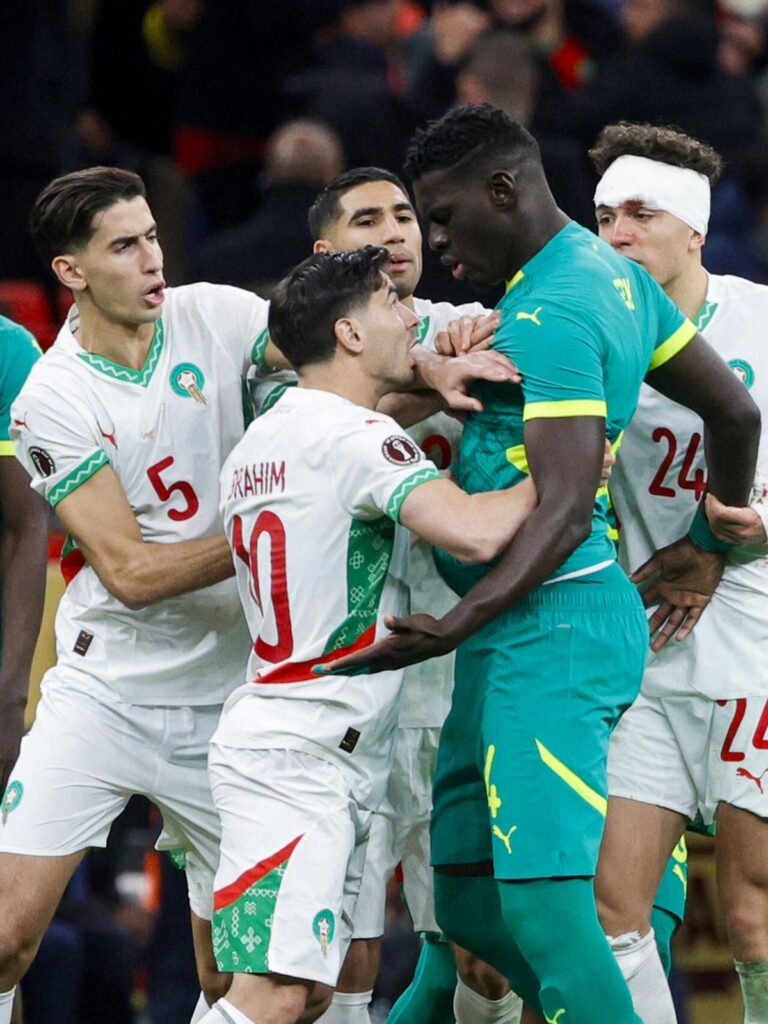
A shocking twist has risen in African football, the outcome of the Africa Cup of Nations 2026 (AFCON) final has been officially reversed 58 days after the match was played. What was initially celebrated as a triumphant victory for Senegal has now been rewritten, with Morocco declared the new continental champions following a disciplinary ruling by the Confederation of African Football Appeal Board.

The final, which ended in dramatic fashion, originally had Senegal secure a 1-0 victory over Morocco with a decisive extra-time goal, seemingly clinching their second AFCON title since 2021. However, the match was ruined by late controversy.

Towards stoppage time, a controversial penalty was awarded to the host nation, Morocco. The decision sparked outrage among Senegalese players, who protested by walking off the pitch for more than 10 minutes. Although Morocco failed to convert the penalty and Senegal went on to win the match, the incident triggered a formal review.

On the evening of Tuesday, March 17th, CAF’s Appeal Board delivered it’s verdict, citing clear violations of tournament regulations. According to Article 82 of AFCON rules and regulations, any team that refuses to continue playing or leaves the pitch without the referee’s authorization is deemed to have forfeited the match. Article 84 further states that such a breach results in a 3-0 loss.

Based on these provisions, Senegal was found guilty of abandoning the match. As a result, they have been stripped of the title and handed a 3-0 defeat, with Morocco officially recognized as the winners of AFCON 2026 almost 2 months after the conclusion of the tournament.

The fallout from the decision has been intense, with Senegal’s government strongly contesting against the ruling, aswell as raising concerns over possible corruption within CAF. The Senegal Football Association have called for an independent international investigation into the matter, signaling a deepening crisis beyond the pitch.

Senegal is preparing to escalate the case to the Court of Arbitration for Sport (CAS), the highest judicial authority in global sport, based in Switzerland. The process will involve formally lodging an appeal, assembling a legal panel, and identifying viable grounds to challenge CAF’s decision.

While Morocco now holds the title on record, the broader dispute appears far from resolved. With legal proceedings looming and allegations of corruption surfacing, the AFCON 2026 final may yet remain one of the most controversial chapters in African football history.

As the situation develops, will Senegal return the trophy and medals? or will they continue with their celebrations? But even beyond that, the ruling has also triggered widespread fallout in the betting world, with thousands of wagers suddenly thrown into dispute. Fans who had placed bets on Senegal’s original 1-0 victory now find themselves in limbo, as bookmakers scramble to determine whether payouts should stand or be reversed in light of CAF’s decision. These controversial events have raised questions about African football governance, fairness, and the integrity of the game overall.

Press Forward Communications Launches to Strengthen Corporate-Media Relations in Lesotho

0

Maseru, Lesotho: Wednesday, 25 February 2025 – Press Forward Communications, a public relations and media relations consultancy, has officially launched with a focused mandate to strengthen relationships between corporates and the media in Lesotho.

The firm was established in response to a persistent gap within the communications landscape, where engagement with media is often reactive or treated as secondary rather than strategic. Press Forward Communications seeks to reposition media relations as a central pillar of corporate reputation management and public engagement.

The founder, Thato Ramafu, brings professional experience from both the newsroom and corporate communications environments, having begun her career in media before moving into corporate PR role. This dual perspective informs the consultancy’s approach, which is grounded in an understanding of newsroom realities as well as organisational pressures.

“Media professionals play a critical role in shaping how organisations are perceived,” says Ramafu. “Sustainable public trust requires intentional, ethical and well-managed relationships between corporates and the media.”

Corporates may at times hesitate to deepen engagement with media due to concerns about scrutiny or perceptions of impropriety. In other instances, limited engagement stems from operational demands. Many organisations operate within tight internal deadlines and performance targets, leaving little capacity to build and maintain deliberate media relationships. Press Forward Communications addresses both dynamics by acting as a structured intermediary, ensuring engagement remains professional, transparent and mutually beneficial.

A key focus of the consultancy is improving the practical experience of media practitioners during corporate activities and field assignments. Drawing from first-hand experience, Ramafunotes that logistical gaps such as late return travel and limited support structures can place strain on journalists. The consultancy aims to introduce coordinated, ethical support systems that prioritise dignity, safety and professionalism without compromising editorial independence and safety.

In addition to media relations, Press Forward Communications recognises the increasing influence of digital creators within the public relations ecosystem. The consultancy will work to develop and position influencers as credible, strategically aligned brand partners. In the Lesotho context, where many influencers have significant reach but limited structured positioning, the firm intends to provide guidance on brand development, professional conduct and long-term value creation.

Press Forward Communications offers services including public relations strategy development, media relations management, media buying, media training, communications strategy design, influencer relations and project-based communications support for organisations requiring outsourced expertise. While its service offering is comprehensive, the consultancy’s primary focus remains the strengthening of media relations as the foundation of responsible and effective communication.

The firm also signals its intention to collaborate with corporates, development partners and independent practitioners to advance industry standards and contribute to national development. By prioritising ethical engagement and structured partnership, Press Forward Communications aims to elevate the practice of public relations in Lesotho and beyond.

Headquartered in Maseru and operates as a public relations and media relations consultancy committed to bridging institutional and media interests through strategic, balanced and principled communication.

For media enquiries, partnerships or further information, please contact:

Thato Ramafu on +266 5998 1038 0r at tayramafu@gmail.com

The Lesotho Legend and Van Cleef & Arpels’ Diamond Legacy

0

“There is no better way to represent the stars at night. There is no better way to match the darker colors of sapphires or black onyx. I cannot imagine that we create jewelry without diamonds,” says Van Cleef & Arpels President Nicolas Bos. There are a few companies bold enough to create a single collection of jewelry cut from one 910-carat stone. The Van Cleef & Arpels collection produced from the Lesotho Legend is a stunning testimony to both daring and unique craftsmanship.

Ahead, discover the fascinating backstory of this remarkable natural diamond—and the breathtaking collection it inspired.

The Lesotho Legend diamond, a singular D-color Type IIa rough diamond, represents the highest quality characteristics possible in a natural diamond. The stone weighs 910 carats and ranks among the largest gem-quality diamonds ever discovered, making the Lesotho Legend one of the most important diamond finds of the modern era.

The Lesotho Legend was purchased by Van Cleef & Arpels in 2018, and the Maison partnered with Taché, its long-time diamond dealer, and Diamcad, a leading Antwerp-based diamond cutter, to map out an ambitious cutting plan. The result was 67 diamonds cut from the single Lesotho Legend rough, each crafted to the Maison’s exacting standards while honoring the traditions of Van Cleef & Arpels design.

More here https://www.naturaldiamonds.com/historic-diamonds/lesotho-legend/#

Census Trust Crisis? Most Lesotho Tribune Poll Respondents Refuse to Participate

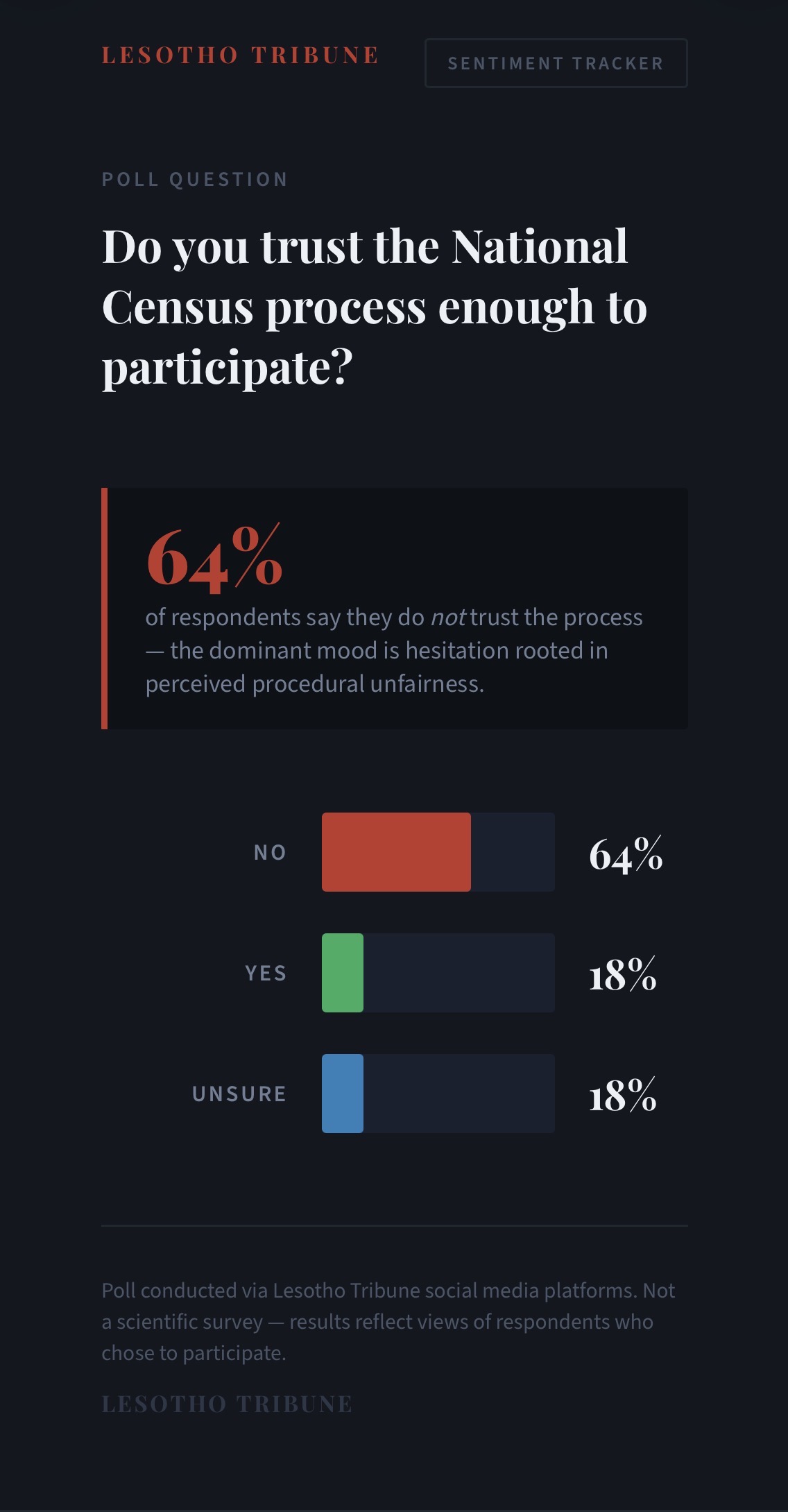
MASERU — A shadow of doubt is falling over Lesotho’s upcoming National Census. A sentiment poll conducted by the Lesotho Tribune has found that a clear majority of respondents do not trust the process enough to take part — a finding that, if it reflects broader public sentiment, could undermine one of the country’s most consequential statistical exercises in years.

The poll, run across the Tribune’s social media platforms, follows allegations that census enumerator recruitment may have been shaped by preferential selection before the official application window had even closed.

At its core, the controversy reduces to one question: Can Basotho trust a process designed to count them?

What the Numbers Show

Screenshot

The results offer a striking portrait of public disillusionment:

∙ 64% of respondents said they do not trust the census process

∙ 18% said they would participate regardless of their concerns

∙ 18% remain undecided, watching for a government response before making up their minds

The sample size is modest, but the pattern is hard to dismiss. The dominant mood is not merely skepticism — it is hesitation grounded in a sense that the process was compromised before it began.

Why a Census Matters More Than Most Realise

A national census is not a routine administrative exercise. Its results shape the country for the decade that follows. They determine:

∙ How public resources are distributed across districts

∙ Where constituency boundaries are drawn

∙ How social and economic policy is designed

∙ How Lesotho presents itself to international partners and development institutions

When trust erodes this early in the process — at the recruitment stage, before a single household has been visited — the integrity of everything downstream is called into question.

The Perception Problem

Whether the allegations of pre-selection are ever formally substantiated may, in practice, matter less than the fact that many Basotho already believe them.

In governance, perception has real consequences. The claim that enumerators may have been chosen through back channels rather than merit does not sit in isolation. It lands in a landscape already shaped by years of concerns about:

∙ Preferential treatment in public appointments

∙ The politicisation of institutions meant to serve all citizens

∙ The absence of credible, independent oversight mechanisms

Each new allegation reinforces the last. And with each reinforcement, the burden of proof on government grows heavier.

The Quiet Danger: Apathy Over Anger

The most alarming outcome of a trust deficit is not public outrage. Outrage, at least, is visible and can prompt a response.

The real risk is silence.

A census does not collapse dramatically. It degrades quietly — through households that give incomplete answers, communities that turn enumerators away, and citizens who simply are not home. A low-trust census produces low-quality data. And low-quality data produces flawed decisions that governments, communities, and development planners are then forced to live with for ten years.

That is the true cost of perception mismanaged.

What Authorities Must Do Now

Restoring confidence at this stage is possible, but it requires deliberate, visible action — not reassurances alone. Authorities should consider:

1. Publicly clarifying the enumerator recruitment process, with full timelines

2. Publishing selection criteria and, where possible, the names of those selected and how they qualified

Silence or defensive denial at this point will only harden the doubts already forming.

The Stakes Beyond the Count

This moment is about more than census data.

It is a test of whether Basotho believe that national processes are conducted fairly — and whether they still see value in participating in them. When citizens begin to treat participation as optional, the effects ripple outward. Governance weakens. Institutions lose legitimacy. The distance between the state and the people it is meant to serve grows wider.

A credible census will not fix all of that. But a discredited one will make it considerably worse.

Disclaimer:

The Lesotho Tribune sentiment poll was conducted via social media and is not a scientific survey. Results reflect the views of online respondents who chose to participate.

When the Census Becomes a Political Tool, Everyone Loses

0

A census is not a political event. It is a national reckoning with reality.

Every ten years or so, a country pauses to count itself. To ask who we are, where we live, how we are housed, how old we are, and how many of us there are. The answers to those questions shape everything that follows: how schools are built, how hospitals are funded, how roads are planned, how budgets are divided. A census is, in the most literal sense, the foundation upon which a government builds its understanding of its own people.

Which is precisely why reports that census field workers are being recruited along partisan lines should alarm every Mosotho, regardless of which party they support.

The Census Belongs to the Nation, Not the Party in Power

Let us be clear about what a census is and what it is not.

It is not a campaign. It is not a reward for loyalty. It is not an opportunity to plant supporters across the country under the cover of official employment. It is a technical exercise that demands impartiality, rigour and public trust above all else.

When field workers are selected on the basis of political affiliation rather than competence, the damage runs deeper than a few unqualified appointments. It corrupts the very process by which Lesotho understands itself.

A census worker with a political mandate, whether stated or implied, does not simply count people. They carry an agenda into the field. That agenda may influence who gets counted, how questions are asked, which communities receive thorough coverage and which are passed over. The resulting data may never reflect what actually exists on the ground.

And if the data is wrong, every decision built on top of it is wrong too.

Bad Data Has Real Consequences

This is not an abstract concern. It has direct, material consequences for ordinary Basotho.

Census data determines how government resources are allocated across districts. A community that is undercounted receives less. Less funding for clinics. Fewer teachers for schools. Inadequate infrastructure investment. The people who suffer are not politicians. They are the residents of those communities, many of whom may have no idea that their numbers were never accurately recorded.

Politicised census employment creates the conditions for exactly this kind of distortion. If workers are loyal first to a party and second to the process, the incentive to ensure accurate, complete coverage of all communities, including those that voted differently, is undermined before a single household is visited.

It Undermines the Independence of National Statistics

Beyond the data itself, partisan recruitment erodes something harder to rebuild: institutional credibility.

The Bureau of Statistics exists to produce numbers that everyone can trust. Government ministries, development partners, researchers, civil society organisations and international bodies all rely on national statistics to plan, to fund and to evaluate. That trust is not automatic. It is earned through consistent, transparent and politically independent work.

The moment a census becomes associated with partisan employment, that credibility is placed in doubt. And once doubt takes hold, it is extraordinarily difficult to dislodge. Future surveys, future censuses, future data releases will all carry the shadow of that compromised moment.

Lesotho cannot afford to be a country whose statistics are viewed with suspicion. In a development environment where donor funding, investment decisions and policy support depend on reliable data, the reputational cost of a politicised census extends far beyond our borders.

It Sets a Dangerous Precedent

There is also the question of what this normalises.

If partisan employment in the census is accepted without serious pushback, it signals that technical national institutions are available for political capture. That the party in power can extend its reach into processes that are supposed to sit above politics. That competence is secondary to loyalty when the state is hiring.

This precedent does not stay contained. It spreads. It weakens the civil service. It discourages qualified professionals who refuse to play political games. It rewards those who are willing to subordinate their professional responsibilities to partisan interests. Over time, it hollows out the capacity of the state to function independently of whoever happens to be in power.

A country that cannot conduct an impartial census has a deeper problem than bad data. It has a governance problem.

What Should Happen Instead

The standard for census employment should be straightforward: hire people who are capable of doing the job, train them properly, and hold them accountable to the process rather than to any political principal.

Field workers should be selected through transparent, merit-based criteria. Community knowledge and language skills are legitimate selection factors. Party membership is not. Civil society organisations, opposition parties and independent observers should be given meaningful oversight roles to monitor recruitment and deployment. The Bureau of Statistics must be empowered to make these decisions free from political interference, and seen to be making them.

These are not radical demands. They are the minimum conditions required for a census to mean anything.

A Country That Counts Itself Honestly

Ultimately, a census is an act of national honesty. It is a country looking at itself clearly and recording what it sees, without flattery and without distortion.

Lesotho faces real challenges: poverty, unemployment, migration, inequality and a public health burden that demands targeted, evidence-based responses. Meeting those challenges requires knowing precisely where they are most acute, who is most affected and what resources exist to address them.

None of that is possible if the census is compromised at the point of data collection.

The government must understand that a politicised census does not serve the party in power. It does not even serve the people who benefit from partisan appointments. It fails everyone, including those who engineered it, because governance built on false numbers eventually collides with a reality that data cannot hide.

Count the people. Count them all. Count them honestly.

That is not a political position. It is the only responsible one.

Independent business & current affairs journalism · Lesotho Subscribe — M85/month
| Independent business & current affairs journalism · Lesotho