

Mohahlaula Airlines
Wednesday, July 22, 2026
Home Blog Page 21

Lesotho Has the Loans. The Problem Is Spending Them

Banking & Finance · Government Debt Analysis · February 2026

Lesotho’s government has published its Annual Borrowing Plan for FY2026/27, a constitutionally mandated document that reveals both the scale of the state’s fiscal ambitions and the structural constraints that continue to define its borrowing options.

“`

For the first time under a constitutional requirement, the Ministry of Finance and Development Planning has laid out in public how it intends to borrow LSL4,638.8 million in the coming financial year. The document is not just a borrowing schedule. It is a window into the fiscal condition of the state, the risks it is managing, and the investments it is betting will define the next decade of national development.

The FY2026/27 Annual Borrowing Plan, published in February 2026, was prepared under the Tenth Amendment to the Constitution of Lesotho, which requires the Minister of Finance to present a borrowing plan alongside the annual budget for parliamentary approval. The plan is anchored in the 2026/27–2028/29 Medium Term Debt Strategy and provides the most granular public accounting of government borrowing in the country’s recent history.

What it reveals is a government that has made meaningful progress on debt reduction, but which remains heavily dependent on external concessional financing and faces real structural risks in its domestic debt operations, project implementation capacity, and exposure to South Africa’s economic performance.

LSL 4.6B Total planned borrowing FY2026/27
50% Debt-to-GDP ratio (down from 54.3%)
83.1% Share of total debt that is external
62% External disbursement underperformance rate

Debt Has Declined — But the Structure Remains Fragile

The headline improvement is genuine. Total government debt as at end January 2026 stood at LSL22,717.5 million, equivalent to 50 percent of GDP, down from LSL23,385.4 million and 54.3 percent of GDP at the end of FY2024/25. This represents a reduction of LSL667.2 million, or approximately 3 percent of the debt stock, achieved through a combination of repayments, currency parity gains on external debt, and fiscal restraint.

The external debt portfolio, which accounts for 83.1 percent of total debt, declined from LSL19,790.8 million to LSL18,875.3 million. Domestic debt moved in the opposite direction, rising modestly from LSL3,594.6 million to LSL3,842.2 million, as the government issued bonds to manage cash flow requirements and domestic arrears.

Debt composition — three-year comparison (LSL millions)
Indicator 2023/24 2024/25 2025/26 ABP
External debt 19,588.9 19,790.8 18,875.3
Domestic debt 4,008.2 3,594.6 3,842.2
Total debt 23,597.1 23,385.4 22,717.5
Total debt as % of GDP 59.5% 53.0% 50.0%
External debt as % of total 83.0% 83.8% 84.6%
Concessional external debt share 86.4% 88.4% 88.4%
Source: Ministry of Finance and Development Planning, ABP FY2026/27

A critical context for the debt reduction is that Lesotho has recently graduated from IDA low-income to low-middle-income status. While this reflects economic progress, it also means the country faces hardened borrowing terms from international financial markets — the concessional financing that has underpinned the debt portfolio’s relatively low cost becomes harder to access as income thresholds rise.

Analytical note · Cost structure of the debt portfolio

One of the most counterintuitive findings in the borrowing plan concerns relative borrowing costs. Despite domestic debt constituting less than 20 percent of the total portfolio, the government pays more in annual interest on domestic debt than on its far larger external debt stock. This reflects the high yield environment in the domestic bond market compared to the highly concessional rates (1.25 to 2 percent) available from multilateral creditors.

The implication is that every additional loti of domestic borrowing is materially more expensive than equivalent external concessional financing. The Medium Term Debt Strategy’s target of maintaining domestic debt between 15 and 20 percent of the total portfolio is not just a debt management preference — it is a cost imperative.

The Borrowing Plan: LSL4,638.8 Million in Two Streams

The FY2026/27 borrowing plan is structured around two distinct financing streams, each serving a different fiscal purpose.

Domestic borrowing of LSL1,500 million through bond auctions will finance the budget deficit of LSL1,386.1 million (3 percent of GDP) and include LSL992 million to clear outstanding domestic arrears. External borrowing of LSL3,138.8 million in disbursements from existing concessional loan commitments will finance infrastructure and social sector projects across government ministries.

Macroeconomic projections underpinning the plan (% of GDP)
Indicator 2024/25 Actual 2025/26 Proj. 2026/27 Budget 2027/28 Forecast
Nominal GDP (LSL millions) 44,134.8 45,297.5 46,178.3 47,224.9
Revenue & grants (% GDP) 62.8% 59.9% 64.1% 67.8%
Expenditure (% GDP) 53.3% 56.7% 69.4% 64.7%
Primary balance (% GDP) 11.4% 5.6% -3.4% 5.1%
Net lending / borrowing (% GDP) 9.4% 3.2% -5.3% 3.1%
Source: Ministry of Finance and Development Planning, ABP FY2026/27

The macroeconomic projections show a sharp deterioration in the primary balance in 2026/27, swinging from a surplus of 5.6 percent of GDP in 2025/26 to a deficit of 3.4 percent. This swing is driven largely by a significant projected increase in expenditure to 69.4 percent of GDP, up from 56.7 percent, reflecting the capital investment ambitions built into the budget. The projections anticipate a return to surplus in 2027/28, suggesting the deficit is structured as a deliberate investment-driven fiscal expansion rather than a structural deterioration.

The Problem with External Disbursements

The most operationally significant concern in the plan is the persistent underperformance of external loan disbursements. Against a budget target of LSL3,317.6 million for FY2025/26, actual disbursements reached only LSL2,040.6 million — a shortfall of approximately 62 percent in disbursement of committed funds.

“This underperformance continues to reflect implementation challenges surrounding capital projects due to lack of capacity in the local project implementation units.”

Ministry of Finance and Development Planning · ABP FY2026/27

The ministry acknowledges this as an improvement on the previous year’s 50 percent disbursement rate, but the improvement is marginal. Lesotho has secured significant concessional loan commitments from multilateral partners. The constraint is not access to finance — it is the institutional capacity to deploy it. Project implementation units across ministries lack the personnel, procurement expertise, and project management systems to draw down committed funds within the financial year.

The consequence is compounding: undisbursed funds carry commitment fees, committed capital sits idle while development needs go unmet, and the credibility of future borrowing requests to multilateral partners is quietly undermined by delivery failures.

External debt performance summary (LSL millions)
Indicator 2023/24 2024/25 2025/26 ABP
Disbursed outstanding debt 19,588.9 19,790.8 18,875.3
Disbursements received 1,438.0 2,074.0 1,109.0
Principal repaid 1,090.8 1,051.1 900.4
Interest paid 260.2 263.6 182.1
Total debt service 1,351.0 1,314.7 1,082.6
Source: Ministry of Finance and Development Planning, ABP FY2026/27

Domestic Bond Auctions: Performance and the 2026/27 Calendar

On the domestic side, the picture is more encouraging. Treasury bond auctions in FY2025/26 were oversubscribed, raising LSL513.6 million against a target of LSL500 million. The domestic investor base, comprising commercial banks, insurance companies, and other financial institutions, has demonstrated consistent appetite for government paper.

The government’s strategy is to issue exclusively long-term instruments, with a minimum tenor of seven years, to reduce refinancing risk. Treasury bills are no longer issued for fiscal purposes. Four auctions are planned for FY2026/27, targeting a total of LSL1,500 million.

Proposed domestic debt issuance calendar FY2026/27
17 June 2026 7-Year Bond LSL 500 million New issuance · Matures June 2033
16 Sep 2026 15-Year Bond LSL 150 million Re-opening · Matures Feb 2041
16 Dec 2026 7-Year Bond LSL 300 million Re-opening · Matures June 2033
17 Mar 2027 15-Year + 10-Year LSL 550 million Re-opening + new 10-year (matures Mar 2037)
Total domestic issuance target LSL 1,500 million

A notable innovation signalled in the plan is the government’s intention to issue a diaspora bond, designed to broaden the domestic investor base by accessing remittance flows and savings held by Basotho living abroad. The feasibility of this instrument will depend on the regulatory framework and the government’s ability to offer competitive terms to diaspora investors.

Concessional External Borrowing: Who Lesotho Borrows From and at What Cost

External loan contractions in 2026/27 will be restricted to concessional sources. The major creditors are the International Development Association (World Bank), the African Development Fund, IFAD, the OPEC Fund for International Development, and the Export-Import Bank of China. The terms are markedly favourable compared to commercial market rates.

Borrowing terms by creditor — FY2026/27 external loans
IDA (World Bank)
Maturity: 25 years
Grace: 5 years
Rate: 1.25%
Service: 0.75%
ADF
Maturity: 25 years
Grace: 5 years
Rate: 1.25%
Service: 0.75%
EXIM China
Maturity: 20 years
Grace: 5 years
Rate: 2.0%
Commitment: 0.5%
IFAD / OFID
Maturity: 20 years
Grace: 5 years
Rate: 2.0%
Commitment: 0.15%

Where the Money Goes: The Project Disbursement Budget

The LSL3,138.8 million in projected external disbursements for 2026/27 is allocated across 14 active projects spanning eight government ministries. The largest single allocation is to the natural resources sector, reflecting the scale of Lesotho’s water infrastructure commitments.

Project disbursements budget by ministry — FY2026/27 (LSL millions)
Project
Ministry
LSL (m)
Lesotho Lowlands Water Supply Scheme
Natural Resources
615.6
Lesotho Lowlands Water Development Project Phase III
Natural Resources
750.8
Ramarothole 70MW Solar Generation Project
Energy
199.3
SREP: Lesotho Renewable Energy & Energy Access Project
Energy
331.7
Smallholder Agriculture Development Project 2
Agriculture
221.7
Wool and Mohair Value Chain Competitiveness (WomCoP)
Agriculture
140.3
Lesotho Integrated Transport, Trade & Logistics (LITTLP)
Public Works
205.3
Lesotho Competitiveness and Financial Inclusion Project
Trade & Industry
149.2
Lesotho Public Sector Foundations for Service Delivery
Finance
116.5
Regeneration of Landscapes and Livelihoods (ROLL)
Environment
120.8
Lesotho Education Improvement Project
Education
126.2
Lesotho Nutrition and Health System Strengthening
Health
68.6
Pathways to Sustainable Livelihoods (PSLP)
Gender & Youth
62.3
ISPDEM — Debt & Expenditure Management Support
Finance
30.4
Total disbursements budget 3,138.8

The water sector alone accounts for LSL1,366.4 million, or 43.5 percent of the total disbursement budget. This reflects the continuing scale of Lesotho’s water infrastructure commitments, particularly the Lowlands Water Development Project Phase III, which at LSL750.8 million is the single largest project in the plan. Energy is the second-largest sector at LSL531 million, spanning the Ramarothole solar project and the SREP renewable energy initiative.

New Commitments: LSL292 Million to Be Signed in 2026/27

Beyond disbursements on existing loans, the government plans to sign a significant pipeline of new project agreements during 2026/27. The new commitments total approximately USD292 million in new loan commitments, spanning energy, education, agriculture, digital infrastructure, transport, and social development.

New projects to be signed FY2026/27 — by creditor
World Bank — IDA
Accelerating sustainable & clean energy access transformation
USD 50m
Multisectoral Nutrition Project
USD 15m
New Education Project (TVET & Skills focus)
USD 25m
TVET Acceleration Project
USD 30m
Pathways to Sustainable Development
USD 10m
African Development Fund
Digital-ICT Infrastructure
BUA 11m
Additional financing — Urban Distribution & Transport Rehabilitation
BUA 6m
Additional financing — Lowlands Water Development Phase III
USD 10m
ADF17 Multi-Country Allocation (MCA)
USD 36m
IFAD & OPEC
Additional financing — Wool and Mohair (WAMCOP)
USD 11m
Additional financing — Integrated Transport and Logistics
USD 40m
IFAD Multi-Country Allocation (MCA)
USD 22m
Export-Import Bank of China
Safe City Project
USD 30m
Ramarothole Solar Power Generation Phase II (15MW storage addition)
USD 58m

Two education projects from the World Bank targeting TVET and skills development, totalling USD55 million, represent the most significant new commitment in the social sector. The Ramarothole Solar Phase II project, which will expand the Mafeteng solar farm from 30MW to 80MW and add 15MW of battery storage, is the largest single new commitment at USD58 million. A Safe City project financed by EXIM Bank China at USD30 million will be implemented through the Lesotho Mounted Police Service.

Three large projects with funders not yet identified — a 132kV transmission line from Ha Mofoka to Qacha’s Nek (USD86 million), construction of the Tsoeneng landfill (USD70 million), and the Thaba-Tseka to Mokhotlong road upgrade (USD136 million) — represent a combined USD292 million pipeline that remains unfunded. Securing creditors for these projects will be a significant task for the ministry in the coming year.

Five Risks the Government Is Managing

Identified risks to the borrowing plan and mitigation measures
Auction under­performance
RiskUndersubscription in bond auctions could worsen domestic arrears if funding shortfalls emerge. Mitigation includes a planned diaspora bond, transparent issuance calendars, and a stabilisation fund as a contingency buffer.
Refinancing risk
RiskVariability in yield rates on rolling domestic debt creates uncertainty. The government is exploring a 20-year bond to extend beyond the current 15-year benchmark and smooth the redemption profile.
Exchange rate risk
RiskDepreciation of the loti against major currencies raises the local-currency cost of external debt service. The government is exploring hedging options for a portion of the external portfolio at current relatively favourable rates.
SOE contingent liabilities
RiskUnderreporting of state-owned enterprise debt creates off-balance-sheet fiscal risk, particularly in the utilities sector. New legislation establishes borrowing and guarantee ceilings with mandatory financial audits.
Macro deterioration
RiskLower-than-projected SACU revenues and spillovers from South Africa’s economic performance could weaken the fiscal position. The government will conduct regular assessments and retain the option of liability management operations to protect debt sustainability.

The Larger Picture: What the Plan Reveals About Lesotho’s Development Model

Read in full, the Annual Borrowing Plan is not merely a borrowing schedule. It is a document that reveals the shape of Lesotho’s development model and its current constraints.

The model is heavily dependent on external concessional finance, which is both rational given the cost differential over domestic borrowing, and structurally risky given Lesotho’s graduation to lower-middle-income status and the resulting tightening of concessional access over time. The domestic financial system, as the companion banking series in this publication has documented, is not yet capable of filling that gap.

The project disbursement underperformance — 62 percent of committed funds not drawn — points to a capacity problem that no amount of additional borrowing will resolve on its own. Infrastructure ministries, particularly those managing large water and energy projects, require investment in procurement systems, project management capability, and staffing to translate loan commitments into physical assets and services.

Tribune assessment

The publication of the Annual Borrowing Plan under constitutional mandate is itself a meaningful step toward fiscal transparency. A document of this detail, released publicly alongside the budget, enables the scrutiny that accountability requires. Parliament, civil society, and the press now have a baseline against which the government’s borrowing and disbursement performance can be tracked through the year.

The plan’s ambitions are clear. The constraints are equally clear. Closing the gap between committed finance and deployed capital will determine whether the infrastructure investments outlined here translate into the growth, employment, and service delivery that the underlying macroeconomic projections assume.

“`
Lesotho Tribune Banking & Finance · Government Debt Analysis

Senegal Refuses to Return Morocco’s AFCON Trophy 

AFCON 2026 Trophy Dispute | Lesotho Tribune
Sport

At a glance

  • Senegal beat Morocco 1–0 in extra time in the AFCON 2026 final
  • CAF’s Appeal Board overturned the result, awarding Morocco a 3–0 default win
  • Senegal refuses to return the trophy and does not recognise CAF’s ruling
  • CAS has confirmed receipt of Senegal’s appeal and will rule “as swiftly as possible”

The Africa Cup of Nations 2026 final has descended into an unprecedented standoff, with Senegal refusing to return the trophy and medals despite a ruling by the Confederation of African Football (CAF) that stripped them of the title and awarded it to Morocco. What was once a celebrated on-field triumph has since become a complex battle over authority and the symbolic weight of the continent’s most coveted football prize.

Senegal’s 1–0 extra-time victory over Morocco in the final initially appeared decisive. The Senegalese celebrated what would have been a second consecutive continental title, and what they hoped would reinforce their standing as Africa’s dominant side. The match was not without controversy, however. A late VAR decision awarding Morocco a penalty led to a temporary walk-off by Senegalese players in protest. Play resumed and the match was completed — but the incident would prove consequential, not in the result on the field, but in the ruling that followed.

Weeks after the final, CAF’s Appeal Board ruled that Senegal’s walk-off constituted a breach of tournament regulations, specifically provisions prohibiting teams from leaving the field without authorisation. On that basis, CAF overturned the original result, awarded Morocco a 3–0 default victory, and officially recognised Morocco as AFCON 2026 champions. From a regulatory standpoint, the decision is consistent with longstanding forfeiture rules — yet the timing and magnitude of overturning a completed final have made it one of the most contentious rulings in the competition’s history.

The trophy is not merely an object — it is a reflection of a victory they believe was legitimately earned.

Senegal responded with outright defiance. The Senegalese Football Federation and national team leadership have made clear that they do not recognise CAF’s decision and will not return the trophy. Their argument is that the match was completed in full under the referee’s authority, and that no immediate sanction or abandonment was declared during the game. Returning the trophy, in their view, would amount to accepting a decision they consider unjust. Holding onto it has become a form of protest — resistance not only to the ruling itself, but to what Senegal perceives as a flawed application of the rules. The Senegalese Football Association (FSF) posted on social media a schedule of events around last Saturday’s friendly in Paris, which included a trophy parade.

Morocco, on the other side, maintains that CAF’s decision is both valid and necessary. Their successful appeal was grounded in the argument that Senegal’s temporary walk-off was a clear violation of competition rules. For Moroccan stakeholders, the issue is not about disputing Senegal’s on-field performance, but about ensuring that no team benefits from conduct that breaches established regulations — and that any departure from that principle would undermine the integrity of the competition.

At the centre of the dispute is the trophy itself. CAF recognises Morocco as the official champion, yet Senegal retains physical possession of it and continues to assert its claim. Senegal has since escalated the matter to the Court of Arbitration for Sport (CAS), seeking to overturn CAF’s ruling and be reinstated as champions. CAS confirmed receipt of the appeal and said it would rule “as swiftly as possible.”

Until CAS delivers its verdict, Senegal shows no indication of returning the trophy, while Morocco remains the officially recognised champion under CAF’s determination. The final ruling from CAS will determine the official outcome — but the dispute between the two nations continues to cast a shadow over African football.

Capital Trapped in Amber: How Lesotho’s Financial System Became Profitable Without Becoming Useful

Two-Part Series · Part One Banking & Finance · Lesotho Tribune
Core Argument

Lesotho’s banks are stable and profitable, but the structure of lending remains too narrow, too liquid, and too risk-averse to meaningfully finance enterprise growth.

“`

There is a quiet contradiction at the heart of Lesotho’s financial system. On paper, the sector is sound, liquid, and profitable. In practice, it is failing to finance the very economy it is meant to serve.

That contradiction is now becoming impossible to ignore, and its consequences extend far beyond the balance sheets of four commercial banks in Maseru. For a country navigating the twin pressures of declining SACU revenues and persistent structural unemployment, a financial sector that does not intermediate between capital and productive enterprise is not a neutral inconvenience. It is an active drag on national development.

The architecture of lending, the culture of risk aversion, and the absence of long-term finance are not technical anomalies. They are the logical outcome of a system that was never truly designed for growth. Understanding why requires more than a reading of the Central Bank’s stability reports. It requires a reckoning with the structural incentives, colonial inheritances, and institutional gaps that have shaped Lesotho’s financial landscape and continue to define its limits.

Table 1 · Headline indicators framing the contradiction
Indicator Latest figure Why it matters
Commercial banks 4 Confirms how concentrated the sector is
Financial sector share of GDP 13.9% (end-2023) The sector has become economically significant
Formal financial inclusion 87% (2021) Up from 60% in 2011 — access has expanded sharply
Overall financial inclusion 91% (2021) Up from 81% in 2011 — inclusion gains are real
Maseru Securities Market listings 1 Shows how thin capital markets remain
Source: FSDS II 2025–2030; IMF 2025

A Stable System That Doesn’t Lend

Lesotho’s banking sector is small and highly concentrated. Just four commercial banks dominate the market, most of them subsidiaries of South African institutions, a legacy of the country’s deep economic integration with its larger neighbour. The IMF’s 2025 assessment describes the sector as shallow and highly concentrated, with lending primarily directed at salaried individuals through payroll-based personal loans.

Central Bank of Lesotho oversight has ensured stability, and by most regulatory metrics the system is functioning as intended: capital adequacy ratios remain above the regulatory minimum, stress tests show resilience, and the industry’s liquidity position remains strong.

But stability is not the same as usefulness.

Table 2 · Stability is not the problem
Prudential indicator What official reporting shows
Capital adequacy Above the 8% minimum requirement in 2023
Liquidity stress test No bank exhausted liquidity under major depositor-withdrawal scenarios
Solvency stress test No bank fell below minimum CAR under severe shocks
Source: Central Bank of Lesotho, 2023 Financial Stability Report
4 Commercial banks dominating the market
1 Equity listing on Maseru Securities Market
19% Private credit to GDP (end-2019, World Bank)

The credit profile of Lesotho’s banking system reads less like an engine of investment and more like a consumer finance operation with a banking licence. Payroll-backed loans, extended against the predictable income streams of civil servants and formal sector employees, dominate the lending portfolio. SME financing remains marginal. Agricultural lending is almost negligible, despite the sector’s role in rural livelihoods. Entrepreneurial risk — the kind that generates jobs and diversifies the economy — is largely avoided.

Banks extend credit where repayment is easiest to guarantee, not where capital is most needed.

The result is predictable. Growth stalls not because money is absent, but because it is misallocated. Capital circulates in safe, narrow channels, from payroll to consumer goods, from consumption to imports, without ever touching the productive base of the economy.

Liquidity Without Purpose

The central paradox
Banks have money Liquid-assets-to-total-assets ratio: 57.7% · Far above the 25% hurdle
Businesses get money Capital parked in South African instruments · Limited domestic deployment

One of the more striking features of Lesotho’s banking system is excess liquidity. Banks are sitting on cash. And yet that liquidity is not being deployed locally. A significant share of bank assets is effectively parked outside the domestic economy, often held in South African financial instruments. This is partly a function of the loti’s peg to the South African rand under the Common Monetary Area, which makes cross-border capital flows structurally easy. It is also a reflection of the limited domestic investment opportunities that banks consider creditworthy.

“Banks have money, businesses need money, and the two rarely meet.”

Lesotho Tribune · Banking & Finance

This is not purely a story of individual banks behaving badly. It is a structural problem. Lesotho’s financial architecture was never fully designed to intermediate between capital and productive enterprise. It was built around stability, compliance, and consumption lending — adequate for a system serving as a satellite economy, but inadequate for one attempting autonomous development. The IMF says plainly that the sector is characterised by excess liquidity, limited competition, and a narrow product offering.

Financial Inclusion Is Rising… But Superficially

Inclusion has expanded — but so has the gap between access and capital
Overall inclusion 91% Up from 81% in 2011
Formal inclusion 87% Up from 60% in 2011 — driven by mobile money
Banking access 39% Relatively unchanged of adult population
SME credit access Marginal No meaningful improvement reported

Inclusion is not the same as empowerment. A mobile wallet enables transactions. It does not solve the deeper structural problem: the lack of access to capital for business formation and investment.

More Basotho now hold formal or semi-formal financial accounts than at any point in the country’s history. But a subsistence farmer in Butha-Buthe can receive a digital payment from a relative in Johannesburg. She cannot get a working capital loan to expand her vegetable plot. A young entrepreneur in Maseru can pay suppliers via mobile transfer. She cannot access the growth financing she needs to hire staff or purchase equipment.

Financial inclusion, as currently configured, addresses the transactions layer of the economy. It leaves the investment layer almost entirely untouched. And it is in the investment layer — the financing of enterprise, the extension of credit to the productive economy — that Lesotho’s banking sector has most conspicuously failed.

Part Two examines what structural reform would actually require — and whether the political will exists to pursue it. To be continued
“`
Lesotho Tribune Banking & Finance · Part One of Two

Health Minister Alleges Foreign Pressure on MPs Over U.S. Agreement, Then Withdraws the Claim

0

Proceedings in the National Assembly took an unexpected turn on Friday when Minister of Health Selibe Mochoboroane alleged that unnamed foreign governments had lobbied Members of Parliament to vote against the proposed United States–Lesotho health agreement. The claim was withdrawn within minutes, on procedural instruction from the Deputy Speaker, but the disruption it caused lingered well beyond its retraction.

Mochoboroane made the allegation during formal debate on the contested deal, asserting that some MPs had come under pressure from outside governments opposed to the agreement. The chamber’s reaction was immediate. Questions about potential external interference in Lesotho’s legislative process surfaced before the minister had finished speaking.

Deputy Speaker Tsepang Mosena intervened, instructing Mochoboroane to withdraw the statement on procedural grounds. The minister complied without further elaboration, and the allegation was formally struck from the record.

Its effect on the room was not.

Regional Comparisons Add Complexity to the Debate

Earlier in his remarks, Mochoboroane disclosed that similar health agreements had been offered to other African countries, specifically Eswatini, Zimbabwe, and Zambia. According to the minister, none of those countries proceeded with the deals, citing additional conditions that accompanied them.

Those conditions, as described by Mochoboroane, included provisions granting access to mineral resources and arrangements for housing prisoners from United States correctional facilities on Lesotho soil.

Key disclosures from Friday’s sitting
  • Similar agreements were offered to Eswatini, Zimbabwe and Zambia; none proceeded.
  • Conditions attached to those offers reportedly included mineral resource access and prison housing arrangements.
  • It remains unclear whether the same conditions apply to the Lesotho agreement.
  • The minister’s allegation of foreign lobbying was withdrawn on procedural grounds and does not form part of the official record.

Whether the same or similar conditions are attached to the Lesotho agreement was not clarified during the sitting. The disclosure raises pointed questions about what terms Lesotho has accepted, which it has negotiated away, and on what basis comparisons to neighbouring countries’ decisions are being made.

Support from the Opposition Benches

Not all contributions to Friday’s debate were critical of the agreement. Machesetsa Mofomobe offered a markedly different assessment, describing the deal as a potential lifeline for a health system that he characterised as being in urgent need of external support.

“Health for Basotho is critical.”

Machesetsa Mofomobe, addressing the National Assembly

Mofomobe told the Assembly that the structure of the agreement gave him confidence that funds would be protected from misuse, and that the design of the project could help resolve long-standing inefficiencies in service delivery and resource management within the health sector. His remarks offered the debate a voice of qualified confidence, though they did not address the specific conditions Mochoboroane had raised.

A Debate With Broader Stakes

Friday’s sitting confirmed that discussion of the U.S.–Lesotho health agreement has moved well beyond the technical. What began as a policy question about health funding has become a contest over sovereignty, transparency, and the conditions under which Lesotho enters international partnerships.

The minister’s withdrawn allegation cannot stand formally in the parliamentary record. It nonetheless introduced a layer of suspicion into the chamber that subsequent sittings will have to contend with. Allegations of foreign interference in legislative proceedings, even when retracted, are not easily set aside.

The central questions before Parliament remain unanswered: what the agreement contains, whether conditions comparable to those described by the minister are attached, and whether Lesotho is approaching these negotiations from a position of strength or of necessity. Until those questions receive clear answers, the debate is unlikely to find resolution.

For now, Parliament has more questions than it does answers.

Lesotho Tribune Parliamentary Proceedings · March 2026

Fuel Security Fears RevealA Collapse in Public Trust

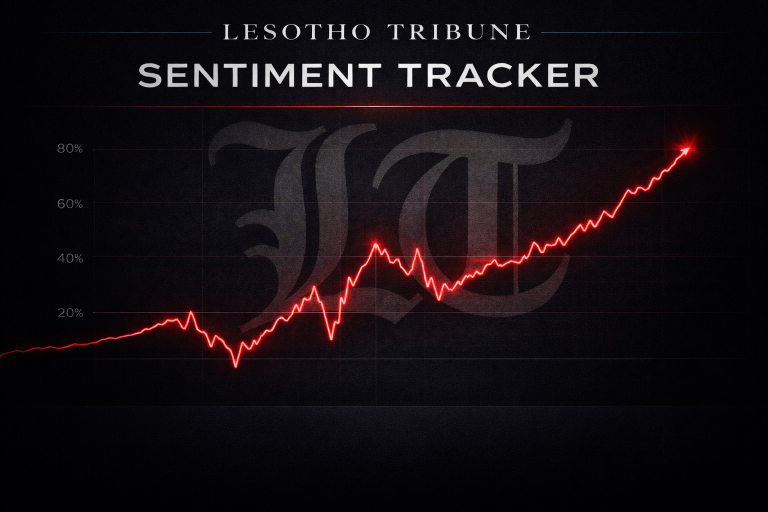
Fuel Security Sentiment — Lesotho Tribune

Lesotho Tribune — Sentiment Tracker

When asked whether the government could manage a global supply shock, nearly three quarters of Basotho said no. That verdict deserves careful attention.

There is something revealing about how people respond to hypothetical crises. Not the technicalities of geopolitics or the distant calculations of oil markets — but the simpler, more personal question beneath all of it: do you trust your government to protect you?

In the latest Lesotho Tribune Sentiment Tracker, Basotho were asked whether the government could ensure fuel security if a prolonged conflict involving the United States, Israel, and Iran were to disrupt global supply chains. The results are not just decisive. They are stark.

74%
Said no. That is not scepticism. That is a collapse of confidence.

A crisis that has not arrived — but already feels real

The scenario remains hypothetical. Tensions in the Middle East have raised concerns about disruptions to global oil flows, particularly through the Strait of Hormuz. For Lesotho, the risk is indirect but real: the country does not import fuel from the Gulf, but it depends entirely on South African supply chains whose pricing and stability are shaped by global shocks.

What the poll measures is not a technical assessment of those supply routes. It captures public intuition. And that intuition is blunt: if a shock comes, people do not expect the system to hold.

The confidence gap

Only 11 percent of respondents expressed full confidence in the government’s ability to manage such a crisis. Even when combined with the five percent who said “somewhat,” the total share willing to extend any degree of confidence reaches just 16 percent.

Confidence is not a soft variable. It is a stabiliser. And right now, it appears to be in short supply.

Lesotho Tribune — Sentiment Tracker

This gap matters in practical terms. In times of crisis, perception shapes behaviour. Businesses that expect shortages begin to stockpile. Transport operators that anticipate price spikes adjust fares in advance. Households that believe supply will tighten change consumption patterns before any shortage actually occurs. These responses can turn a manageable disruption into a self-fulfilling one.

Why the distrust has structural roots

It would be tempting to read this result as reflexive pessimism. But the sentiment reflects real and observable conditions. Lesotho faces a set of structural vulnerabilities that any honest accounting must acknowledge:

  • The country does not control its own fuel import infrastructure, relying entirely on South African logistics and pricing mechanisms.
  • Strategic fuel reserves — if they exist at the required scale — have not been communicated publicly in any meaningful way.
  • There is no visible contingency planning framework for prolonged supply disruptions, at least none accessible to the public.
  • Government communication on energy security has been largely absent, leaving citizens to form their own assessments.

In this environment, trust cannot be assumed. It must be built — through transparency, through communication, and through evidence of preparedness. Without these, assumptions fill the vacuum. And assumptions, as the poll demonstrates, are rarely generous.

The undecided ten percent

One in ten respondents said they were not sure. This group is easily overlooked, but it matters. It represents a segment of the population that has not yet formed a settled view — and that means they remain persuadable.

In a different information environment, with credible government communication about reserves, planning, and coordination with South Africa, this group could shift toward confidence. In the current vacuum, the more likely direction is toward deeper scepticism. Silence, from institutions, tends to push uncertainty toward doubt.

This poll is about more than fuel

Energy security is the lens. But what this poll actually measures is something broader: the public’s assessment of the state’s capacity to manage risk, coordinate a response, and communicate under pressure. Fuel is simply the vehicle through which that judgment is expressed.

The verdict, in this snapshot, is uncomfortable. And it arrives before any crisis has materialised — which, in some ways, makes it more significant. When confidence collapses in advance of an emergency, the emergency itself becomes harder to manage.

The question for government

This poll does not demand immediate answers to a scenario that may never fully develop. But it does raise a more fundamental question, one that no amount of technical contingency planning can substitute for:

What would it take for that 74 percent to change its mind?

Because until that question is seriously addressed, the real vulnerability may not lie in the Strait of Hormuz. It may lie in the far shorter distance between the state and the public it is supposed to serve.

Index Insurance: The Financial Tool That Could Transform Lesotho’s Farming Future

More than 70 percent of Lesotho’s population relies on agriculture for their livelihoods. Yet the sector remains one of the country’s most fragile. For smallholder farmers who make up the backbone of the rural economy, a single bad season can mean more than a failed harvest. It can mean the collapse of an entire household.

The question is no longer whether Lesotho’s farmers need protection from climate risk. The question is what kind of protection is both practical and affordable. Increasingly, the answer points to a relatively young but promising financial instrument: index insurance.

70%+ Of Lesotho’s population depends on agriculture
3 Districts assessed in the government feasibility study
15,000+ Farmers covered under Nepal’s comparable programme

What Is Index Insurance?

How it works

Traditional crop insurance sends an assessor to a farm after a loss event to verify damage and calculate a payout. This is slow, expensive, and ill-suited to remote rural areas where smallholder farmers often need funds immediately.

Index insurance works differently. Payouts are based on an agreed indicator, such as rainfall levels or average regional yields, rather than on a farm-by-farm inspection. If the index drops below a set threshold, signalling poor crop development conditions, a payout is issued automatically. There is no farm visit, no lengthy claims process, and no waiting months for a decision.

This makes index-based coverage a practical option for smallholders in developing countries, precisely the demographic that conventional insurance has long failed to reach.

Breaking the Low-Risk, Low-Reward Trap

The consequences of having no safety net are more far-reaching than they might appear. Small-scale farmers in low- and middle-income countries often protect themselves against future losses by choosing crops with stable but low yields, and by limiting upfront investments in more productive technologies such as fertiliser. The result is a cycle of low-risk, low-return agriculture that is difficult to escape.

“When farmers know that a catastrophic season will not wipe out everything, they are more willing to invest in better seeds, fertiliser, and modern farming techniques.”

From agricultural research on index insurance and farmer behaviour

Research supports this. In studies testing whether offering weather index insurance alongside drought-tolerant seed varieties had advantages over offering the seed variety alone, farmers were significantly more willing to make productive investments when insurance was part of the package. Index insurance has the potential to break the low-risk cycle by providing a credible floor beneath which household income cannot fall.

Lesotho Takes Action

Lesotho’s government has begun to take this seriously. A feasibility study conducted in the Mafeteng, Maseru, and Berea districts assessed the potential for implementing agricultural insurance and e-voucher mechanisms aimed at enhancing smallholder resilience. The study was commissioned through the Ministry of Agriculture, Food Security and Nutrition in collaboration with the World Food Programme and the Second Smallholder Agriculture Development Project.

This week, momentum continued. The Ministry of Agriculture, in collaboration with the World Food Programme, hosted a stakeholders’ meeting on crop insurance, focused on promoting smart subsidies and agricultural insurance to boost agricultural investment. Researchers presenting the feasibility study highlighted weather index-based insurance as particularly well suited to Lesotho’s circumstances, noting that such mechanisms provide farmers with timely payouts when weather conditions meet predetermined thresholds.

The Challenges Are Real

Key barriers to adoption in Lesotho
  • Limited access to information about insurance products among rural communities.
  • Financial constraints that make market-rate premiums unaffordable for most smallholders.
  • Inadequate rural infrastructure, including digital connectivity and literacy.
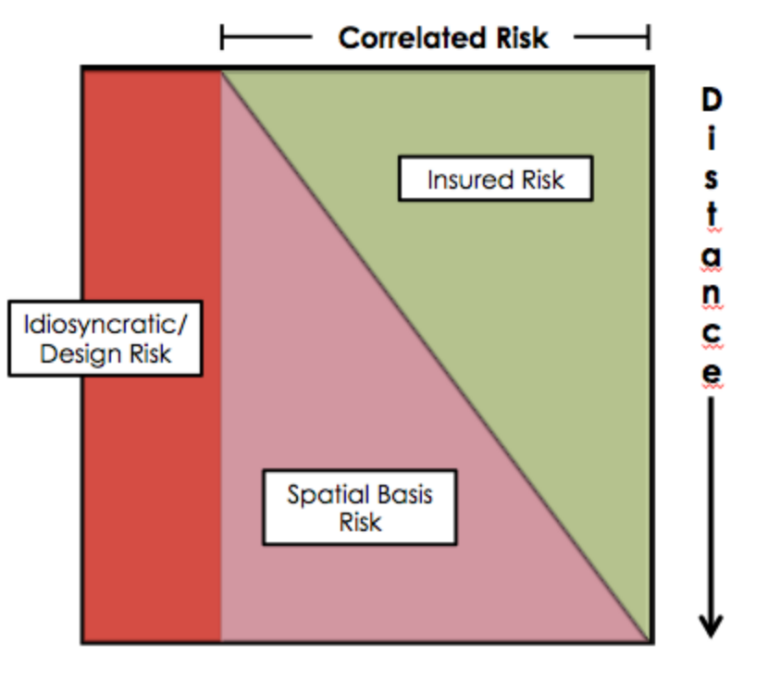
  • Basis risk: the gap between what the regional index measures and what an individual farmer actually experiences.
  • Highly variable climate and terrain, which complicates product design and pricing.
  • Low uptake at full cost, suggesting subsidies or social protection integration may be necessary for meaningful scale.

A representative from the World Bank noted at the recent stakeholders’ meeting that agricultural insurance in Lesotho remains complex due to the country’s variable climate and terrain. Farmers must carefully consider the specific risks they wish to insure against, including drought, excessive rainfall, or hail, as well as the cost implications, since broader coverage results in higher premiums.

What Success Looks Like

International Case Study · Nepal

A partnership between a microfinance institution, an insurance technology company, and the UN Capital Development Fund enabled over 15,000 smallholder farmers, primarily low-income rural women, to receive coverage protecting their rice yields against frost, excessive rainfall, heatwaves, hail, flood, drought, pests, and disease. The lesson is consistent: index insurance works best when embedded within a wider support system of agricultural practice improvement and infrastructure development.

Reaching farmers at scale requires more than a well-designed product. It requires addressing digital literacy, rural accessibility, and the need for products tailored to the specific crops and risk profiles of different communities across Lesotho’s varied terrain.

A Window of Opportunity

The convergence of government intent, international partnership, and growing evidence for what works makes this a genuine moment of opportunity. Index insurance is not a solution to every problem facing Lesotho’s agricultural sector. But as a tool for stabilising farm incomes, encouraging productive investment, and building resilience against a climate that is becoming less predictable, it deserves a central place in the country’s agricultural development strategy.

For the millions of Basotho whose lives depend on what the land produces each season, the promise of a financial safety net has rarely been more urgent.

Lesotho Tribune Farmer’s Corner

Confronting the AI Paradox: Efficiency Without Employment, Intelligence Without Understanding

There is a paradox at the heart of artificial intelligence, and it is not a technical one. It is economic, social, and increasingly political.

AI promises efficiency. It writes, analyses, predicts, designs, optimises. It compresses hours into seconds. For businesses, that is a breakthrough. For economies, it sounds like growth.

But efficiency has a shadow. It reduces the need for labour.

That is the paradox. The same technology that can expand output can also shrink opportunity. And for countries like Lesotho, where unemployment is not an abstract concern but a lived reality, the stakes are not theoretical.

Expands output Shrinks opportunity
Simulates intelligence Lacks understanding
Lowers barriers Only for those with access

The Productivity Trap

In classical economic thinking, productivity gains are unambiguously good. When workers produce more in less time, incomes rise, costs fall, and economies expand. AI disrupts that sequence. It allows firms to increase output without proportionally increasing employment. In some cases, it allows them to reduce it.

A small team, equipped with the right tools, can now perform tasks that once required entire departments. A media company can generate drafts, edit video, analyse audiences, and optimise distribution. A law firm can review documents in minutes. A marketing agency can produce campaigns at scale.

The result is not just efficiency. It is substitution. And substitution, if unmanaged, creates displacement.

Intelligence Without Understanding

AI systems are extraordinarily capable. They can simulate reasoning, generate language, and identify patterns at a scale no human can match. But they do not understand in the human sense. They predict. They do not comprehend.

“Outputs can appear authoritative, even when they are flawed. For businesses and governments, this introduces a new kind of risk.”

Lesotho Tribune

This distinction matters because it creates a false sense of reliability. Decisions may be informed by systems that are powerful but not accountable in the way human institutions are. In smaller economies, where regulatory capacity is often limited, this risk is amplified.

Lesotho’s Position: Consumer or Creator?

The global AI race is largely being driven elsewhere. The United States, China, and parts of Europe are investing heavily in infrastructure, talent, and research. The more relevant question for Lesotho is not whether it can compete at that level, but whether it becomes a passive consumer of AI technologies or an active participant in shaping how they are used locally.

At present, the trajectory leans toward consumption. Businesses adopt tools developed abroad. Governments explore digital systems built elsewhere. Data flows outward more easily than value flows inward. This creates a dependency dynamic where the benefits of AI are partially captured, but the underlying economic value is not fully retained.

The Labour Question

If AI reduces the need for certain types of labour, what replaces them? The conversation often turns vague here, with talk of new jobs and reskilling. But the transition is rarely smooth.

In Lesotho, where youth unemployment remains high, the margin for disruption is thin. If entry-level roles in sectors like media, administration, and customer service are automated, the ladder into the formal economy becomes narrower. AI does create demand for new skills, including data analysis, prompt engineering, digital strategy, and AI oversight. But these roles require training, infrastructure, and access. Without deliberate intervention, the risk is a bifurcated labour market: a small group benefiting from AI, and a larger group excluded from its gains.

Opportunity Hidden in the Paradox

The equaliser argument

AI lowers barriers to entry in ways that are difficult to ignore. A small business in Maseru can now access tools that were once available only to large corporations. Content can be produced at scale. Data can be analysed without large teams. Markets can be reached digitally.

A media platform can use AI to expand coverage and personalise content. A farmer can draw on AI-driven insights on weather and pricing. A logistics company can optimise routes and reduce costs. The technology is, in that sense, an equaliser. But only for those who can access and use it effectively.

Governance in an Age of Algorithms

AI systems increasingly influence decisions in credit scoring, hiring, content moderation, and public service delivery. In larger economies, these questions are already shaping regulation. In smaller states, the frameworks are still emerging.

The governance questions Lesotho must confront
  • Who audits AI systems influencing public and private decisions?
  • Who ensures fairness when algorithms shape access to credit, jobs, or services?
  • Who is accountable when they fail?
  • How does data protection apply to systems built and hosted abroad?

Lesotho will need to confront these questions sooner rather than later. Not necessarily by building complex regulatory regimes overnight, but by establishing principles: transparency, accountability, data protection. Without these, the adoption of AI risks outpacing the ability to manage it.

Confronting the Paradox

The AI paradox does not resolve itself. It requires choices. Policy choices about education and skills development. Business choices about how technology is integrated into operations. Societal choices about what kind of economy is being built.

There is a temptation to view AI as inevitable, as something that simply arrives and reshapes everything in its path. But that framing is incomplete. AI is a tool. Powerful, yes. Transformative, certainly. But still shaped by how it is deployed.

For Lesotho, the challenge is not to compete with global AI giants. The challenge is to ensure that as AI reshapes the global economy, it does not leave local realities behind.

AI can make economies more productive while making societies more unequal. It can expand capability while narrowing opportunity. It can simulate intelligence while lacking understanding.

Confronting that paradox requires more than adoption. It requires intent.

Technology does not determine outcomes. Choices do.

Lesotho Tribune

LCA Takes Action on Airtime Credit for Minors and Illegal Radio Use

LCA Moves to Protect Minors, Enforce Licensing | Lesotho Tribune
Sectors

The Lesotho Communications Authority (LCA) has announced a set of measures aimed at protecting young people and tightening compliance across the telecoms sector. Effective 1 April 2026, persons under the age of 18 will no longer be able to access Airtime Advance Services from either of the country’s two local network providers — meaning minors will not be permitted to borrow airtime or mobile credit. Any outstanding balances already incurred will, however, remain the financial responsibility of their parents or guardians.

At a glance

  • Minors banned from airtime advance services from 1 April 2026
  • Existing debts remain payable by parents or guardians
  • Unlicensed radio equipment use draws fresh warnings from LCA
  • Postal and courier businesses urged to secure operating licences

We want to protect our young people from getting into debt they cannot manage.

— Thato Poonya, LCA

LCA spokesperson Thato Poonya described the restriction as a safeguard against financial vulnerability, saying the authority was seeking to instil responsible borrowing habits among younger users.

Separately, the LCA has renewed warnings against the use of radio communication equipment without a valid licence. Unregulated frequencies, the authority noted, risk disrupting essential services including security systems, emergency response operations, and transport infrastructure.

Businesses operating in postal and courier services were also put on notice to obtain the appropriate licences. Officials said proper licensing not only protects consumers who may lose parcels or belongings but also contributes to the smooth running of those industries and to broader economic growth.

The LCA said it is working directly with network service providers to ensure the changes are rolled out without disruption. The authority framed the steps as part of an ongoing effort to strengthen consumer protection and regulatory compliance in the sector.

Residents have been advised to contact their service providers for further details on the changes. Businesses yet to obtain the required licences are urged to do so promptly to avoid penalties.

Ministry of Agriculture and WFP Meet to Boost Crop Insurance

Crop Insurance & Smart Subsidies | Lesotho Tribune
Sectors

At a glance

  • Ministry of Agriculture and WFP convene stakeholder meeting on crop insurance and smart subsidies
  • Smart subsidy programme to be data-driven and more targeted for smallholder farmers
  • Agricultural insurance to cover losses from natural disasters
  • WFP reviewing progress since August 2025 on the joint project

The Ministry of Agriculture, Food Security and Nutrition, together with the World Food Programme (WFP), convened a stakeholder meeting to deliberate on crop insurance and smart subsidies — measures intended to support farmers, particularly smallholders, as they contend with climate change and other pressures.

Director of Field Services Thabo Sekhonyana explained that the smart subsidy programme will be redesigned to be more targeted and data-driven, making resource allocation fairer and more efficient for smallholder farmers. He added that agricultural insurance will be introduced to shield farmers from losses caused by natural disasters.

Collaboration among stakeholders is key to building a strong agricultural sector.

— Thabo Sekhonyana, Director of Field Services

Sekhonyana noted that the ministry is also pursuing digital transformation to improve service delivery. The meeting reviewed past farming seasons to identify gaps and draw recommendations, with officials stressing that coordinated efforts across stakeholders are essential to the sector’s resilience.

WFP’s Nancy Chawawa said the gathering was aimed at updating stakeholders on developments since August 2025, accounting for both the project’s achievements and the obstacles encountered. The initiative forms part of broader efforts to promote agricultural investment and build a more resilient farming environment in Lesotho.

Smallholder farmers — considered central to Lesotho’s agricultural sector — are expected to be the primary beneficiaries. With improved insurance coverage and better-targeted subsidies, farmers would be better positioned to invest in their operations, potentially lifting both productivity and food security.

The meeting concluded with stakeholders reaffirming their commitment to working collectively on the challenges facing the farming community. Both the Ministry of Agriculture and WFP expressed confidence that, with the right support structures in place, the agricultural sector can become more adaptive and productive.

UN classes slave trade as ‘gravest crime against humanity’

0

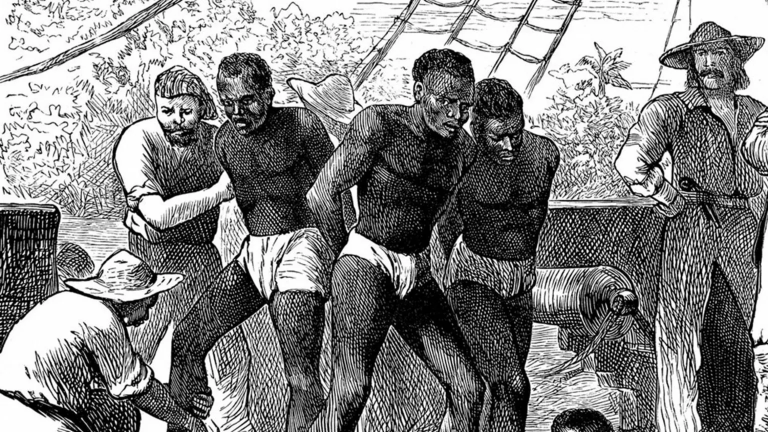
The UN General Assembly has adopted a resolution recognizing the trafficking of enslaved Africans as the “gravest crime against humanity.”

123 countries voted in favor of the resolution, which was championed by Ghana and backed by the African Union and Caribbean nations.

The United States, Israel and Argentina were the only countries to vote against Wednesday’s non-binding resolution.

The United Kingdom and all 27 members of the European Union were among the 52 countries which abstained.

Ghana said the resolution was needed because the consequences of slavery still persist today, ⁠including ⁠racial disparities.

What else did Ghana say about the resolution on slavery?

After the vote, Ghana’s Foreign Minister Samuel Okudzeto Ablakwa posted a photo of the results, saying: “We did it for Africa and all people of African descent.”

Speaking on behalf of the African Union, Ghanaian President John Dramani Mahama said before the vote: “Today, we come together in solemn solidarity to affirm truth and pursue a route to healing and reparative justice.”

“The adoption of this resolution serves as a safeguard against forgetting.”

The transatlantic slave trade between the 15th and 19th centuries involved the kidnapping, enslavement and transport of at least 12.5 million Africans to the Americas and the Caribbean.

Conditions on the journey were so horrific that only 10.7 million survived.

What does the resolution say?

The resolution is entitled “Declaration of the Trafficking of Enslaved Africans and Racialized Chattel Enslavement of Africans as the Gravest Crime Against Humanity.”

It “unequivocally condemns the trafficking of enslaved Africans and racialized chattel enslavement of Africans, slavery and the transatlantic slave trade as the most inhumane and enduring injustice against humanity.”

It also calls on UN member nations to engage in talks “on reparatory justice, including a full and formal apology, measures of restitution, compensation, rehabilitation, satisfaction, guarantees of non-repetition and changes to laws, programs and services to address racism and systemic discrimination.”

Before the vote, Ghana’s Foreign Minister Ablakwa said that some nations had refused to acknowledge their crimes.

“The perpetrators of the transatlantic slave trade are known, the Europeans, the United States of America,” he told the French AFP news agency. “We expect all of them to formally apologize to Africa and to all people of African descent.”

The Netherlands remains the only European country to have issued a formal apology for its role in ‌slavery.

The main European nations involved in slaving were Portugal, Spain, Britain, France, the Netherlands, Denmark and Sweden.

Ablakwa also suggested that institutions continue to address structural racism and that “compensation” could be offered to those affected.

One pathway toward restorative justice, Ablakwa said, is that “all the looted artifacts are returned to the motherland.”

Why were some countries opposed to the resolution on slavery?

Some UN members argued that today’s states and institutions should not be held responsible for historical wrongs.

They also voiced concerns that the resolution could imply a hierarchy among crimes against ⁠humanity, treating some as more serious than others.

Before the vote, the deputy US ambassador to the UN, Dan Negrea, said the US “does not recognize a legal right to reparations for historical wrongs that were not illegal under international law at the time they occurred.”

“The United States also strongly objects to the resolution’s attempt to rank crimes against humanity in any type of hierarchy,” he added.

The EU ⁠representative, Gabriella Michaelidou, said the bloc would have supported a resolution highlighting the “scale of the atrocity” but raised “legal and factual” concerns, including applying international law retroactively.

Speaking at the UN, Ghana’s Foreign Minister Ablakwa said, “History does not disappear when ignored, truth does not weaken when delayed, crime does not rot … and justice does not expire with time.”

Independent business & current affairs journalism · Lesotho Subscribe — M85/month
| Independent business & current affairs journalism · Lesotho